Old Town clicks into place quickly. This private 4-hour English walking tour threads the story of Mexico City in order, with a local guide who connects today’s street corners to the big eras that shaped the capital. I love the free stop plan at major landmarks, and I love how the route gives you an instant orientation for future wandering. The main catch: expect real walking, so comfortable shoes matter.
I also appreciate the human touch from guides like Alejandro and Tlilal. Their style is clear, chronological, and built around answering questions on history, architecture, and what’s going on now.
The tour runs with a mobile ticket and includes bottled water, so you’re not juggling logistics mid-walk. It finishes at the Plaza de Palacio de Bellas Artes, which is a handy spot to branch off afterward.
In This Review
- Key highlights that make this tour worth your time
- Mexico City Historic Center icons, explained in the order you’ll actually see them
- Start at Plaza de la Constitución and walk into the main storyline
- Catedral Metropolitana: seeing how religious power became city power
- Museo del Templo Mayor: the Mexica layer under Mexico City
- Gran Hotel Ciudad de México: art nouveau in the middle of Centro
- House of Tiles: an 18th-century standout you can actually picture later
- Palacio Postal: early-1900s civic style in a post office
- Palacio de Bellas Artes: the icon finish that also helps you plan the rest
- Price and value: what $98 buys in the Historic Center
- What the guide quality looks like in real life
- Timing, walking pace, and what to bring
- Who should book this tour (and who might want a different plan)
- Should you book? My straight answer
- FAQ
- How long is the Mexico City Historical Center Icons tour?
- Is this a private tour?
- Is the tour offered in English?
- What is included in the price?
- Where does the tour start and end?
- Are there entrance fees included?
- What fitness level is needed, and what about weather?
Key highlights that make this tour worth your time
- Private group, local pacing: You won’t be rushed through the highlights.
- Chronological storytelling: The guide explains how one era leads to the next, not just what you’re looking at.
- Major icons, short stops: You get meaningful time at each site without spending half your day in line.
- Free entry at the named stops: Catedral, Templo Mayor, and the key Centro landmarks are listed with admission ticket free.
- Guide flexibility when plans change: If something is closed, your guide can often swap to keep the visit on track.
- Ends in the right place: Finishing near Bellas Artes sets you up for an easy next step in Centro.
Mexico City Historic Center icons, explained in the order you’ll actually see them
This tour is built for first-time orientation, and it shows. Instead of treating the Centro Histórico like a list of attractions, you move along a route that keeps the timeline straight: Catholic power and civic grandeur, then the Mexica layer under the city, and finally the architectural shine of the late 1800s into the early 1900s.
The private format matters more than it sounds. With only your group on the walk, you can ask follow-up questions and get answers that fit what you’re looking at right now—cathedral details while you’re in front of the cathedral, and archaeology context while you’re standing where the Mexica past is visible.
If you’re the type who likes to understand a place instead of just photographing it, you’ll likely enjoy this. It’s also practical: the stops are short enough to keep your energy up, but long enough to not feel like you’re speed-reading in the open air.
You can also read our reviews of more city tours in Mexico City


Start at Plaza de la Constitución and walk into the main storyline
You meet at Pza de la Constitución 803, Centro Histórico. This is a central starting point, and it helps you get your bearings fast on Day 1 in the area.
The tour ends near Av. Juárez S/N, at the Palacio de Bellas Artes square. That finish is smart. Bellas Artes is a landmark that many people want to reach anyway, so you don’t have to fight your way into the right neighborhood at the end of a long day.
One more thing: this is offered in English, and the guide’s spoken English is praised as clear. That matters in Mexico City, where you can easily end up with broken fragments if you don’t have a solid language connection.
Catedral Metropolitana: seeing how religious power became city power
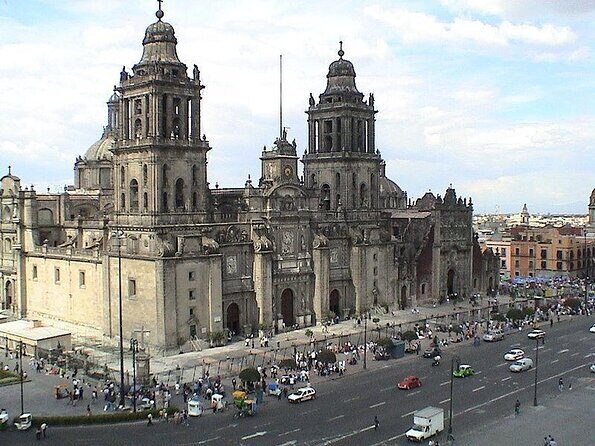
Your first stop is Catedral Metropolitana de la Ciudad de México. You’ll visit this monumental temple, and the focus is on its role as the head of the Catholic Church in Mexico—plus the history behind it.
Why this stop works early: once you understand the cathedral’s place in the city’s story, a lot of Centro starts to make sense. Streets, plazas, and institutions feel less random. They feel like parts of a plan that unfolded over centuries.
Practical expectations: the visit is listed at about 30 minutes, and the admission is ticket free. So you’re not stuck for hours, but you do get time for the key context and to look around rather than just walking past.
Museo del Templo Mayor: the Mexica layer under Mexico City
Next you go to Museo del Templo Mayor, where you’ll see Mexica ruins from the pre-Columbian city. This stop is also listed at 30 minutes, with admission ticket free.
This is the kind of visit that changes how you see the city. Mexico City is built on earlier cities—so when you learn how the Mexica capital looked and functioned, the Centro Histórico becomes more than a postcard of colonial and modern buildings. It becomes a place that keeps stacking eras on top of each other.
In plain terms, the guide’s job here is to translate what you’re seeing into a story you can hold in your head. If you like archaeology context without feeling overwhelmed, this is a good length.
Gran Hotel Ciudad de México: art nouveau in the middle of Centro
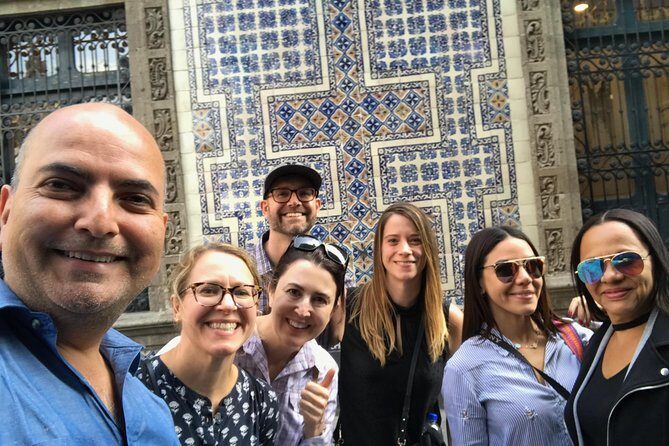
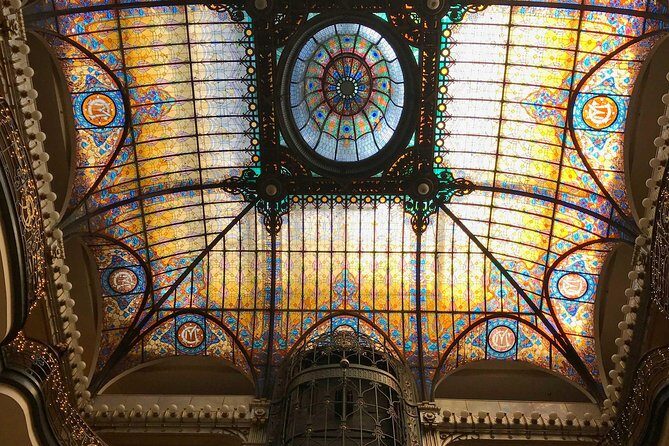
After the ancient layer, the tour jumps forward to Gran Hotel Ciudad de México. You’ll spend about 15 minutes at this impressive art nouveau building from the turn of the 19th to 20th centuries, and admission is listed as ticket free.
Short stop, but it’s not filler. This is one of those places where the architecture tells you about ambition and money—how a city showcases itself as it grows. You’ll likely notice decorative details and grand scale, and the guide helps you place it in the broader timeline.
If you’re wondering whether 15 minutes is enough: for an orientation walk, it’s a fair trade. You’re not doing a full museum day; you’re learning how to recognize different eras at street level.
You can also read our reviews of more historical tours in Mexico City






House of Tiles: an 18th-century standout you can actually picture later
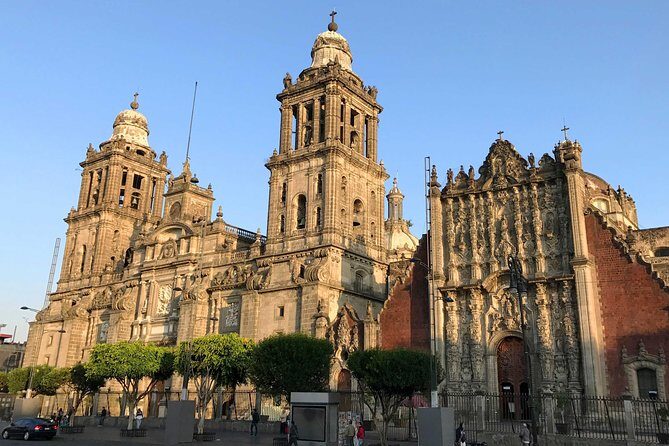
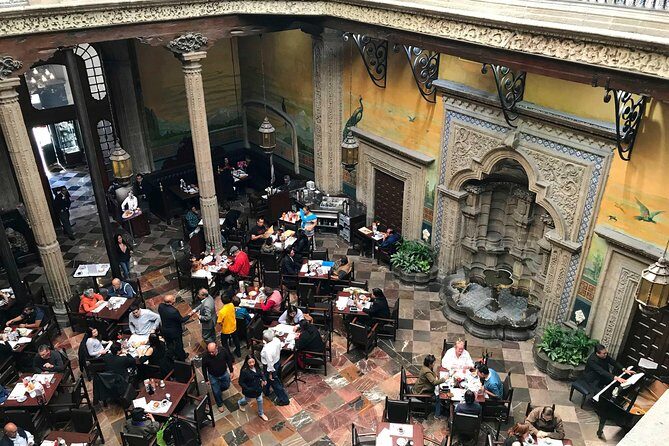
Then comes House of Tiles (listed as an 18th-century house). Plan about 30 minutes, and the stop is again listed with admission ticket free.
This is the moment when the tour stops feeling like a history lecture and starts becoming visual. The House of Tiles is unusual enough that it sticks in your memory, and that matters on a first visit. Later, when you see other decorative architecture in Centro, you’ll have a comparison point.
Potential drawback here: if you’re the type who wants deep time inside every site, you may wish this stop lasted longer. The whole tour is designed around movement and orientation, so the time is portioned.
Palacio Postal: early-1900s civic style in a post office
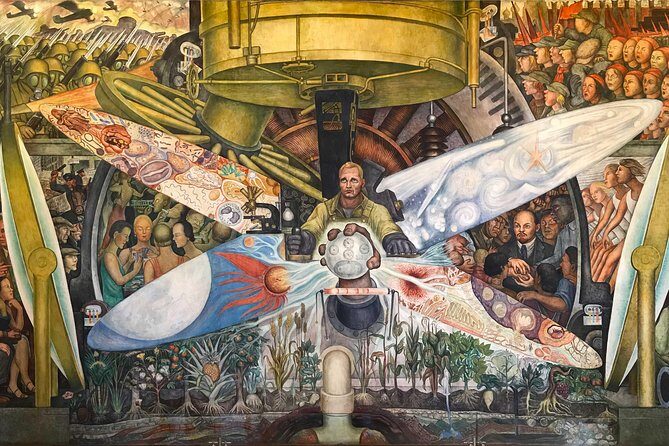
Next is Palacio Postal, the outstanding post office from the beginning of the 20th century. You’ll spend about 15 minutes here, with admission ticket free.
This stop is surprisingly satisfying if you like the civic side of architecture. A post office sounds mundane until you see the scale and intention behind it. You get a sense of how the city projected order, connection, and importance through public buildings.
This is also a nice break from the heavier atmosphere you get at places like the cathedral. It gives you a different angle on what “power” looked like in daily life.
Palacio de Bellas Artes: the icon finish that also helps you plan the rest
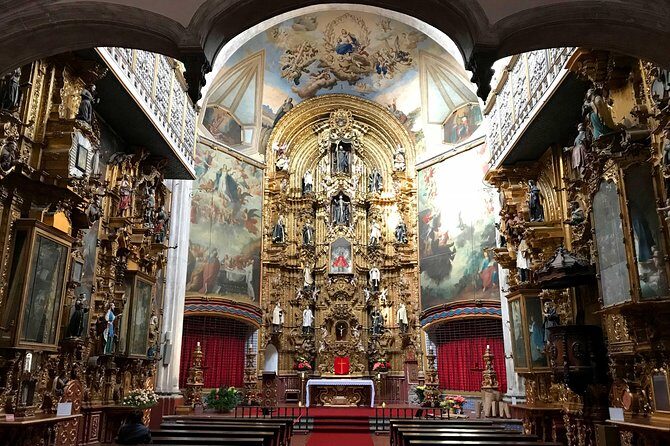
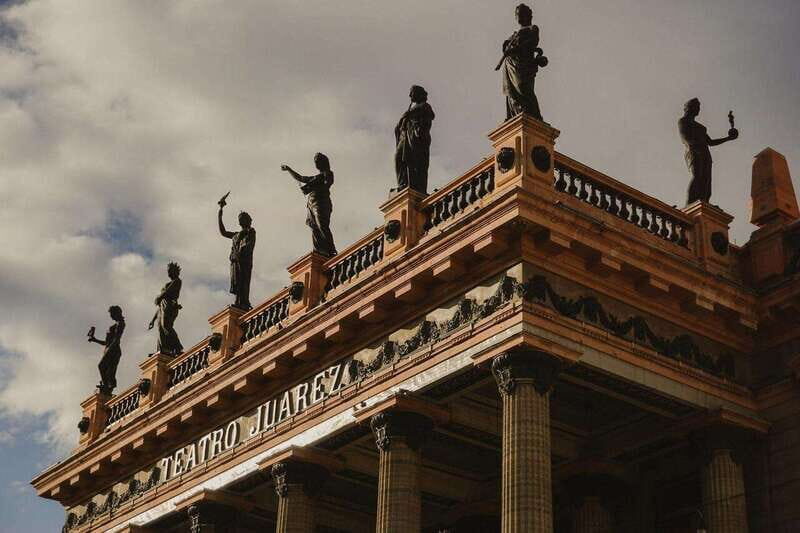
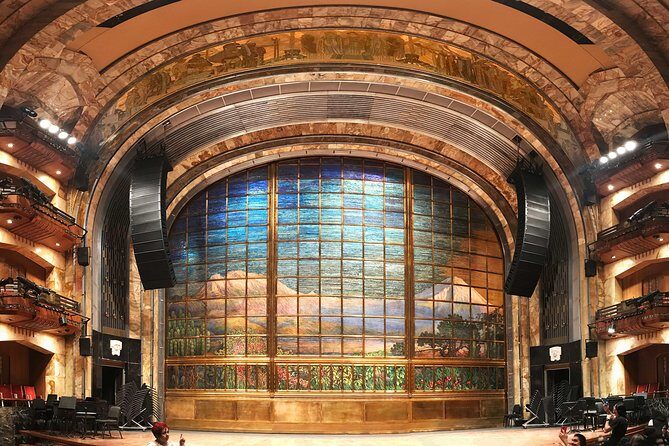
The tour concludes at Palacio de Bellas Artes, one of the most recognizable theater landmarks in the Centro Histórico. You’ll spend about 30 minutes and the stop is listed with admission ticket free.
This is a smart ending point because Bellas Artes is a hub. Once you’re done, you can choose what fits your mood: nearby streets, museums, or a simple sit-down meal in the area.
It also helps if you came to Mexico City to see how the city mixes old and new. Bellas Artes represents a later chapter—modern cultural identity in a space that still feels monumental.
Price and value: what $98 buys in the Historic Center
At $98 per person for about 4 hours, the value comes from three places:
- You’re doing a private tour, not a group shuffle.
- Key named stops are listed with ticket-free admission, so you’re not paying repeatedly just to enter.
- Bottled water is included, which is genuinely helpful on a walk.
What’s not included matters too. The tour does not include private transportation, and you’ll want to handle your own snacks. Also, it notes that any entrance fees to museums not specified in the tour aren’t included—so if you plan to add extra stops on your own, it’s worth checking prices ahead.
If you’re comparing alternatives, think about what you’d pay for a guide for the same amount of time. In many cities, $98 buys a lot less than you’d expect once you add guided interpretation.
What the guide quality looks like in real life
This tour doesn’t just promise history—it’s praised for how history is explained. Guides such as Alejandro are singled out for bringing the city to life through a clear chronological telling, with the ability to answer questions about architecture, culture, and current events.
There’s also a practical detail worth noting: if something is unexpectedly closed (like certain murals people may plan around), your guide may adjust to keep the experience connected to what you’re interested in. That flexibility can save your day.
Timing, walking pace, and what to bring
The tour is about 4 hours, and it’s a walking route through Centro. The listing calls for moderate physical fitness, so don’t plan this as a sit-and-stare museum day.
What I suggest you bring:
- Comfortable shoes for uneven sidewalks and lots of street-level walking
- A small water bottle as backup, even though bottled water is included
- A light layer if you get chilly indoors at major buildings
Also keep weather in mind. The experience requires good weather, and if it’s canceled for poor weather you’ll be offered a different date or a refund.
Who should book this tour (and who might want a different plan)
This tour is a great fit if you:
- Want a smart first-day orientation in the Centro Histórico
- Enjoy seeing major landmarks in a logical timeline
- Prefer a private format so your questions don’t get lost
You might consider a different style if you:
- Want a long, slow museum crawl with lots of interior time at each site
- Have very limited mobility, since walking is part of the core experience
Should you book? My straight answer
Yes, I’d book it if you’re going to be in Mexico City for the first time or you want to understand how the Historic Center became what you see today. The short, well-chosen stops, the private setup, and the guide’s ability to connect eras make the $98 feel like you’re buying clarity, not just sightseeing.
If you’re sensitive to walking time, plan for that up front and wear the comfiest shoes you own. Do that, and you’ll come away with a mental map of Centro that lasts long after the tour ends.
FAQ
How long is the Mexico City Historical Center Icons tour?
It’s approximately 4 hours.
Is this a private tour?
Yes. It’s private, and only your group participates.
Is the tour offered in English?
Yes, the tour is offered in English.
What is included in the price?
The tour includes bottled water. Admission is listed as ticket free for the specific stops on the itinerary.
Where does the tour start and end?
You start at Pza de la Constitución 803, Centro Histórico and finish at Av. Juárez S/N, Centro Histórico, at the Palacio de Bellas Artes square.
Are there entrance fees included?
For the named stops on the itinerary, the admission is listed as ticket free. The tour also notes that entrance fees to museums not specified in the tour are not included.
What fitness level is needed, and what about weather?
The tour requires moderate physical fitness. It also requires good weather; if canceled due to poor weather, you’ll be offered a different date or a full refund.