REVIEW · MEXICO CITY
Private Walking Tour Gems of the Historic Center of Mexico City
Book on Viator →Operated by TRAVELEZZA · Bookable on Viator
Mexico City’s core, explained on foot. This private, English-friendly walking tour is built for first-timers who want clarity and context fast, without getting lost in dates and map pins. You start at the Zócalo and follow a smart route that connects the Aztec city, Spanish colonial power, church architecture, and Mexico’s 20th-century art.
Two things I really like: you get a true private guide who can slow down, pause for shade, and answer your questions, and the day ends with the Palacio de Bellas Artes murals explained in a way that makes them click. One thing to consider: this is a solid walking day, and some highlights are exterior-only or have limited access (Templo Mayor focuses on the ruins outside; the National Palace interior isn’t part of it).
In This Review
- Key Highlights Worth Clearing Your Calendar For
- Entering Templo Mayor: Mexico City Starts Here (Outside Views)
- Zócalo: The National Living Room and the Architecture Around It
- National Palace from the Plaza: Powerful History, Limited Access
- Catedral Metropolitana: Church Architecture You Can Actually Recognize
- Madero Street: A One-Hour Walk With Coffee and Real Stories
- Iturbide Palace Exterior Details: Baroque in Plain View
- La Profesa (The Professed Temple): Baroque Altarpiece and Sacred Art
- House of Tiles: Case Studies in Color, Craft, and Power
- Former Convent of San Francisco: Chapel Remains Across the Street
- Plaza Tolsa and the Mining Palace Exterior: A Strategic Pause
- Palacio Postal: Stained Glass in the Courtyard (Entry Included)
- Palacio de Bellas Artes: The Finale for Art Lovers
- Price and What Makes This Feel Like Value
- Logistics: How the Walking Day Really Feels
- Who This Tour Suits Best
- Should You Book This Private Historic Center Walk?
- FAQ
- Is this tour private or shared?
- Is it offered in English?
- What’s included in the ticket price?
- Do we visit the interior of the National Palace?
- Do we go inside Templo Mayor?
- How long is the tour and how much walking is involved?
Key Highlights Worth Clearing Your Calendar For
- Private pacing with a certified bilingual guide so you can ask questions and steer the day a bit
- Templo Mayor exterior views that set up Mexico City’s Aztec origins without museum-ticket pressure
- A church stop that can include special areas like the Sacristy or close-up views of the organ, depending on access and timing
- Madero Street as a walking museum with a coffee break built in
- Palacio Postal courtyard with stained glass included, not just seen from the outside
- Bellas Artes murals on the upper floors, with major muralists highlighted and explained clearly
Entering Templo Mayor: Mexico City Starts Here (Outside Views)
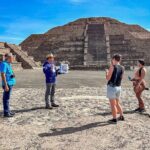
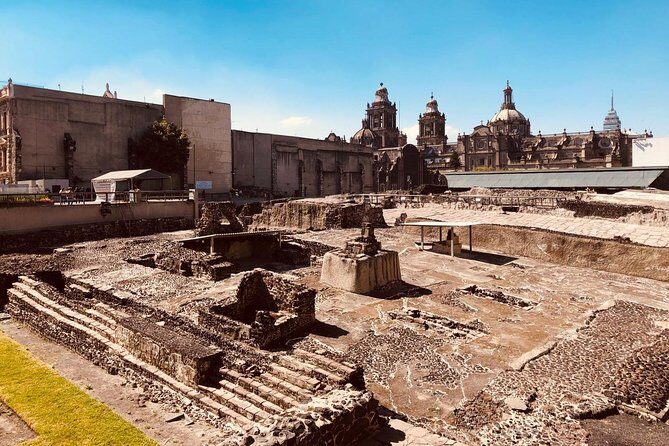
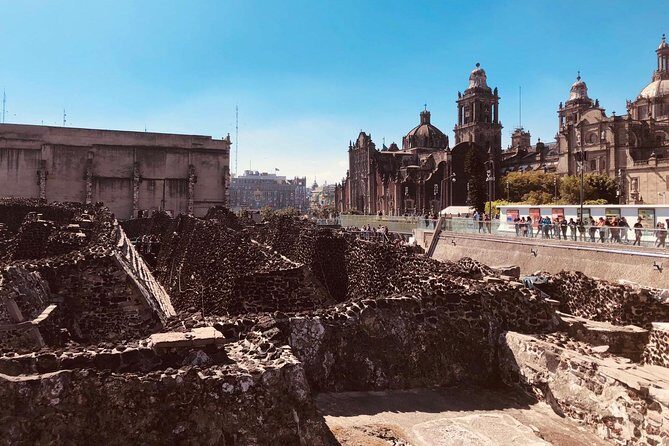
Your walk really begins at the source: Templo Mayor and the old Aztec city of Tenochtitlan. The tour starts with a panoramic look from outside, where the ruins of the Temple of the Sacred Center give you a physical sense of how the city was organized around religion and power.
What I like about this approach is the pace. You’re not stuck trying to do a full museum program before you’ve even gotten your bearings. You get the big picture first: how a civilization rose quickly, how its sacred center shaped city life, and why the Spaniards later tried to rebuild the political map on top of what was already there.
Small heads-up: the focus here is the archaeological site exterior. A guided museum visit is not included, and admission for the Templo Mayor Museum isn’t part of this stop. You’ll still get the “ah-ha” moment of seeing where the story begins.
You can also read our reviews of more walking tours in Mexico City

Zócalo: The National Living Room and the Architecture Around It
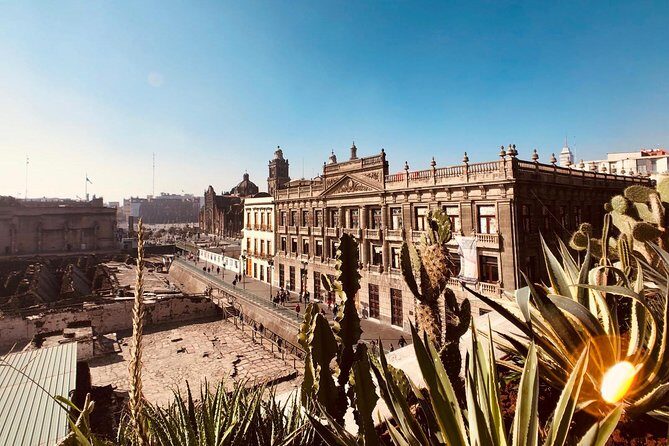
Next comes the Zócalo, formally Plaza de la Constitución, the vast square that has been the stage for centuries of Mexican life. This isn’t just a place to take photos. Your guide uses the surrounding buildings as a timeline—how colonial authority worked, how independence reshaped the center, and how modern life still gathers right here.
When I’m reviewing tours like this, I look for one thing: do they teach you what to notice? In this case, you’ll be walking across the square while the guide explains why the buildings matter. The result is that when you see the Zócalo again later on your own, it won’t feel like empty real estate—it will feel like the city’s center of gravity.
National Palace from the Plaza: Powerful History, Limited Access
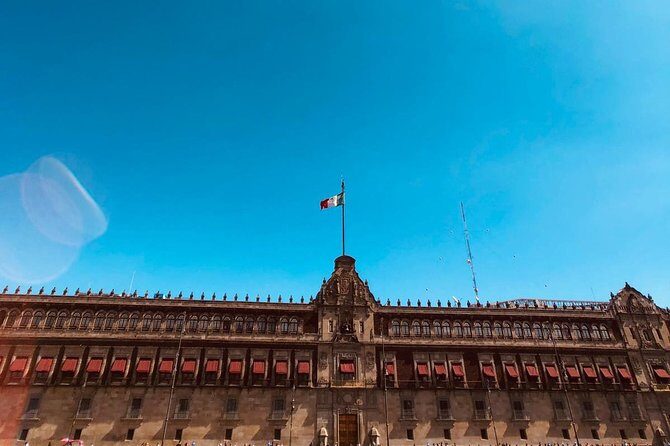
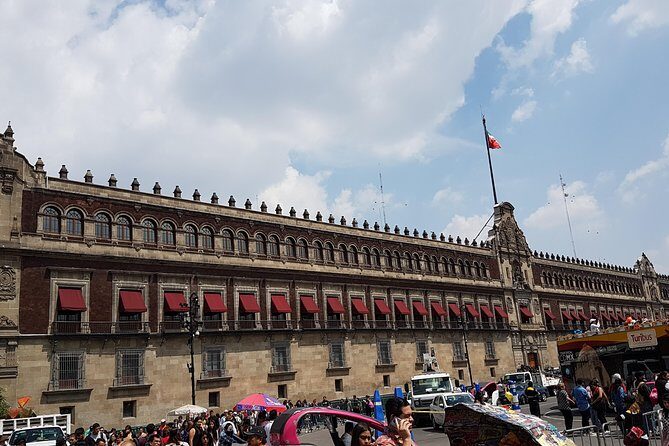
From the Zócalo you’ll get a panoramic view of the National Palace, sitting on the ground once associated with Moctezuma’s palace complex. This stop is all about reading the layers: Aztec political ground → Spanish-era power → modern presidents in the same general political footprint.
Do note the limitation: you won’t be able to visit the interior of the palace. The tour is designed so you can still learn the significance of the place without time being eaten up by access rules and security lines.
This is also where a good guide earns their keep. Even from the outside, you can walk away understanding what you’re looking at and why the building keeps mattering.
Catedral Metropolitana: Church Architecture You Can Actually Recognize
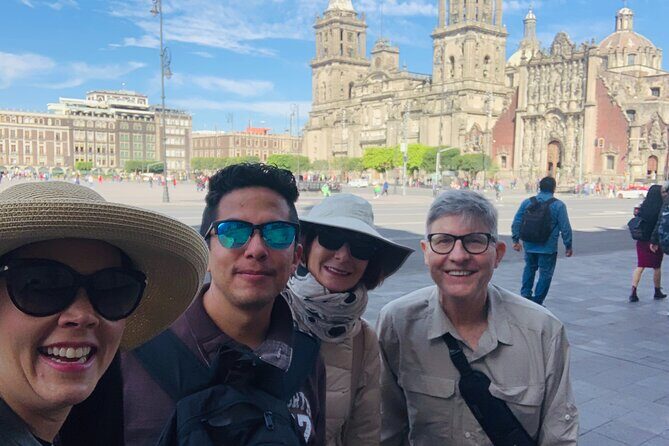
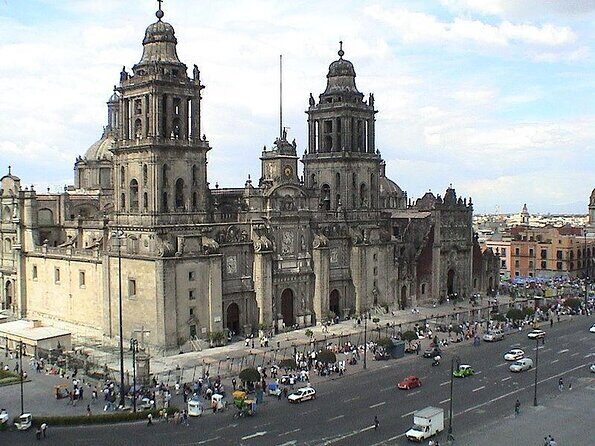
Then you move to the Metropolitan Cathedral, a major stop if you care about architecture. What makes this part satisfying is the style mix. The cathedral blends Gothic, Herrerian, Mexican Baroque, and Neoclassical elements. In person, you can start spotting the different “languages” of design instead of just thinking, big church.
Inside, expect ornate chapels and a long Catholic history expressed through decoration and art. Your guide may also help you access special areas depending on timing and what’s open. The tour mentions possible access to the Sacristy—often compared to the Mexican Sistine Chapel in reputation—and/or the chance to see the cathedral’s organ up close.
What I’d tell you to do here: don’t rush your eyes. Look for repeated motifs and think about how different centuries left their fingerprints. If you love churches, this stop can feel like a visual storybook.
Madero Street: A One-Hour Walk With Coffee and Real Stories
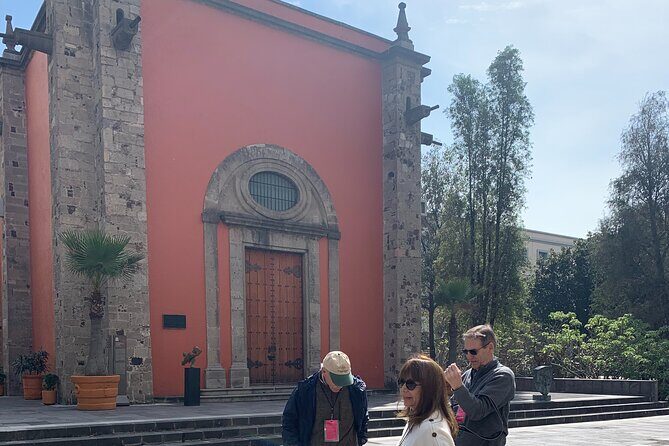
After the cathedral, the tour turns into a street walk on Francisco I. Madero Avenue, one of the best-known pedestrian corridors in the historic center. This is where your guide makes history feel less like homework.
You’ll pass important colonial-era buildings and historic churches. Your guide shares anecdotes and facts tied to what you’re looking at right now. And yes, they build in a practical break: you get a complimentary coffee and/or tea, with pauses so you can reset without falling behind.
In several guide reviews, I noticed the same pattern: the best guides on this route adjust the pace based on the group. Some people wanted more shade and seating; others wanted extra time at key points. That flexibility is one of the reasons the private format works so well here.
You can also read our reviews of more city tours in Mexico City


Iturbide Palace Exterior Details: Baroque in Plain View
You’ll make a brief stop at the Museo Antiguo Palacio de Iturbide, known for its strong Baroque feel. The highlight here is the exterior, where your guide points out architectural details and ties them to Agustín de Iturbide, an important figure in Mexico’s early national era.
This stop is short by design. It gives you a taste of Mexican Baroque without demanding a full museum commitment. If you’re paying attention, you’ll leave noticing curves, ornament, and design choices that signal “this isn’t just one style, it’s a whole mood.”
La Profesa (The Professed Temple): Baroque Altarpiece and Sacred Art
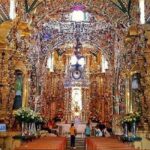
Next is the Professed Church, associated with the Temple of San Felipe Neri. Expect Baroque religious art—especially the altarpiece—plus a look at a broader collection of sacred artwork connected to Mexico’s Catholic heritage.
This is another brief stop, but it’s the kind that can hit hard if you like art and religious history. Even when you’re only there for a short time, your guide’s pointing and timing can help you focus on what matters instead of scanning randomly for interesting bits.
House of Tiles: Case Studies in Color, Craft, and Power
At the end of Madero Street you’ll reach Casa de los Azulejos, the House of Tiles. The building’s name tells you what to look for, and the tour sets you up with the history so the decoration isn’t just eye candy.
What’s especially helpful is the chance to appreciate the interior and murals, if access allows on the day. That interior glimpse matters because it turns the place from a postcard exterior into a fuller slice of colonial-era design and storytelling.
Former Convent of San Francisco: Chapel Remains Across the Street
Across the street you’ll be able to admire preserved elements of the original Church and Former Convent of San Francisco, including the Chapel of Aranzazú, described as a depressed section of the remains. This is one of those stops that feels like stepping into the city’s ongoing repair work.
It’s also a good breather between the more ornate buildings earlier in the day. You’re not just chasing the next grand façade—you’re seeing how history survives, gets altered, and remains visible in fragments.
Plaza Tolsa and the Mining Palace Exterior: A Strategic Pause
Before your grand finale you’ll stop at Manuel Tolsá Square and see the exterior of the historic Mining Palace building. This part of the route is basically a smart pause: you regroup before the big art finish.
If your legs are starting to feel it, this is the moment to slow down and hydrate. And if you’re the type who likes symbolism, your guide will connect the building to the “who had money and influence” story that runs through the center.
Palacio Postal: Stained Glass in the Courtyard (Entry Included)
Now for one of the more rewarding surprises: the tour includes entry to the interior courtyard of the Postal Palace. This is where you’ll get the stained glass—exactly the kind of detail that’s easy to miss if you only view the building from the street.
The value here isn’t just the photo opportunity. It’s that this courtyard gives you a different perspective on civic buildings in the center: not all of it is church or palace. Some of it is public-facing design built to function daily, yet still visually ambitious.
Palacio de Bellas Artes: The Finale for Art Lovers
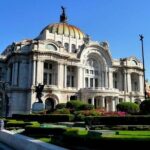
The tour culminates at Palacio de Bellas Artes, with entry included. You’ll spend about 50 minutes exploring the lobby area and then heading up to the second and third floors to see major murals from the 20th century by major Mexican artists such as Diego Rivera, David Alfaro Siqueiros, and Rufino Tamayo.
This is the part that many guides seem to do best, and the reviews you’ve got in front of you back that up: guides often focus on how the mural program tells Mexico’s identity story, not just what the paintings look like. In particular, Rivera’s murals get a lot of attention because they’re both visually bold and historically dense.
If you’re wondering what to do while you’re inside: let your guide point out the themes and relationships between scenes. Then step back and view murals as a sequence, not isolated artworks. You’ll understand them faster that way.
Price and What Makes This Feel Like Value
At $156 per person for an approx. 4-hour private tour, you’re mainly paying for three things: a certified bilingual guide, your route planning, and the included admissions (Palacio Postal courtyard and Palacio de Bellas Artes).
Here’s the practical angle: many stops in the route are free, but you still need someone to interpret what you’re seeing, help you prioritize, and manage the order. I like that this itinerary mixes paid entries with free stops so you don’t feel like you’re paying twice—once for the tour and again at each corner.
You also get a complimentary coffee and/or tea break. It’s a small line item, but it makes a real difference during a walking-heavy route.
Compared to paying for individual tickets plus a guide (separately), this package keeps everything in one plan—so you can spend your energy on the art and history, not on logistics.
Logistics: How the Walking Day Really Feels
This is a walking itinerary starting at Zócalo Central Hotel on Av. 5 de Mayo and ending at Palacio de Bellas Artes on Av. Juárez. It runs close to a half-day, and you’ll cover major historic landmarks without using private transportation.
One review estimated close to 10,000 steps (about four miles), with the guide adjusting if needed. So think of this as a “wear comfortable shoes” day, not a sit-on-a-bench sightseeing day. If it rains, the experience can be adjusted since the tour requires good weather.
One other real-world factor: access can change. The tour already notes that Templo Mayor is exterior-focused and that the National Palace interior isn’t included. It also flags that special cathedral areas (Sacristy/organ) depend on timing and accessibility. Build your expectations around that flexibility.
Who This Tour Suits Best
This works best if you want:
- A fast orientation to Mexico City’s historic center with a guide who can answer questions
- Strong art and architecture focus, especially the Bellas Artes murals
- A route with included entries where you won’t be constantly buying tickets
- A private format that can slow down for shade, food, or personal preferences
It may be less ideal if you:
- Want to go inside every major building (the palace and some museums aren’t part of the plan)
- Expect zero walking or zero waiting anywhere
- Are traveling on a day when closures or crowd restrictions limit access (the tour does note exterior-only and limited interior elements, and real-life restrictions can happen)
Should You Book This Private Historic Center Walk?
If you’re doing Mexico City for the first time and you want your time in Centro Histórico to make sense, I’d book this. It’s structured like a story: Aztec roots outside Templo Mayor, the Zócalo as the national stage, major power from the National Palace view, cathedral architecture, then a full art payoff at Bellas Artes with murals you can actually understand.
Book it if you like your sightseeing explained, not just photographed. Skip it (or pair it with other plans) if you’re chasing maximum interior access at every stop. But for most first-timers—especially history and art lovers—this is one of the best ways to get your bearings fast.
FAQ
Is this tour private or shared?
It’s a private tour, meaning only your group participates.
Is it offered in English?
Yes, it’s offered in English. It also includes a private certified bilingual guide.
What’s included in the ticket price?
You get entry to Palacio Postal’s interior courtyard and admission to Palacio de Bellas Artes. Coffee and/or tea is also included, plus the guide.
Do we visit the interior of the National Palace?
No. You’ll have a panoramic view from the Zócalo, but interior access isn’t part of the tour.
Do we go inside Templo Mayor?
This tour focuses on the exterior archaeological site of Mexico-Tenochtitlan. A guided museum visit is not included, and Templo Mayor museum admission is not included.
How long is the tour and how much walking is involved?
It’s approximately 4 hours. It’s a walking tour through the historic center, with a planned coffee break along Madero Street.