REVIEW · MEXICO CITY
Mexico City: Hop-on Hop-off Bus Tour
Book on GetYourGuide →Operated by JULIA TRAVEL · Bookable on GetYourGuide
Mexico City can feel like a lot. This bus tour gives you a simple way to stretch it across 1 or 2 days at your own pace, with audio that connects pre-Hispanic, colonial, and modern Mexico City. You hop on, ride, listen, and hop off again—no scheduling yourself into exhaustion.
I really like the freedom of the stop-to-stop setup, especially when you want to spend extra time somewhere. I also love the multilingual digital audio system, and I picked up extra confidence from guides people singled out by name, like Lillie and Ellie, Cristian and Diane, and Estefania—good signs that the info is more than just generic facts.
The main thing to plan for is audio clarity: Spanish announcements and some Spanish audio can be loud enough that English is hard to catch through headsets, so bring your own earphones and avoid sitting right beside the bus speakers.
In This Review
- Key things to know before you ride
- Ticket Value and Timing: What $21 Really Gets You
- The Four Routes: How to Choose Your Mix (Downtown, Polanco, South, Basilica)
- Historic Downtown Route (the “main highlights” line)
- Polanco Route (shopping and modern architecture focus)
- South Route (Coyoacán bohemia + UNAM area)
- Basilica Route (religious Mexico City in one sweep)
- Historic Downtown Route (9am–7pm): Zócalo, Reforma landmarks, and museum stops
- Polanco Route: Fashionable streets, Antara and Museo Soumaya stops
- South Route (11am–7pm): Coyoacán neighborhoods, Frida Kahlo area, and UNAM
- Basilica Route: Zócalo to Garibaldi and Basílica de Guadalupe
- Audio Guide Reality: Headsets, languages, and how to not miss the English
- Open-Top Buses in Mexico City: Comfort tips that actually help
- Getting the Most From Hop-On Hop-Off (without wasting half a day)
- Who Should Book This Tour, and Who Might Skip It
- Should You Book the Turibus Mexico City Hop-On Hop-Off Bus Tour?
- FAQ
- How long is the Turibus Mexico City hop-on hop-off ticket valid?
- How many routes are available on this ticket?
- Where do I start the tour?
- What time does the bus run?
- How often do the buses come?
- Is the audio guide included?
- Does the bus have restrooms?
- Do children get free admission?
- Is the tour wheelchair accessible?
- Can I cancel for a refund?
Key things to know before you ride
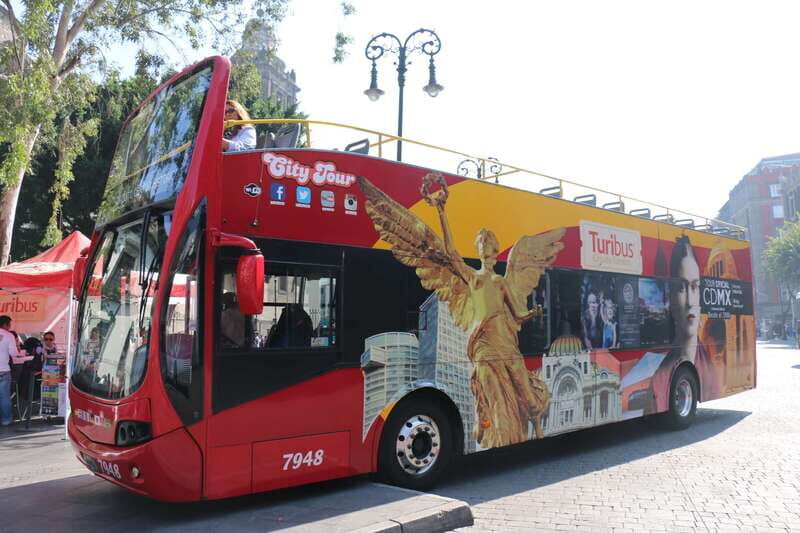
- Four routes on one bracelet: Downtown, Polanco, South, and the Basilica circuit let you mix neighborhoods without rebooking.
- Hop on and off as much as you want: You can treat the bus like transportation plus a narrated “orientation lap.”
- Audio guide does the heavy lifting: It’s built to explain what you’re seeing as you pass landmarks and museum areas.
- Open-top views, not open-top comfort: Sun and heat can be intense in daytime, especially when the metal seats heat up.
- Traffic affects timing: Frequencies are set, but real Mexico City roads can slow things down.
Ticket Value and Timing: What $21 Really Gets You

At $21 per person for a 1- or 2-day hop-on hop-off ticket, this tour is less about one “big attraction” and more about buying mobility. In a city where rides by car add up fast, the value here comes from combining transportation with narration—so you’re not paying extra just to get from one side of town to the other.
The ride window is also long enough to be useful: the Historic Downtown Route runs daily roughly from 9:00 am to 7:00 pm, with buses every 30 minutes or so. Other routes start later and run fewer departures, so your strategy matters—plan your day around which circuit you’re using as your backbone.
One practical mindset shift: think of the bus as your moving map. You’ll see major stops, but you’re really using it to decide where to go next—whether that means stepping off near a museum area, a market zone, or a big religious landmark.
You can also read our reviews of more city tours in Mexico City


The Four Routes: How to Choose Your Mix (Downtown, Polanco, South, Basilica)
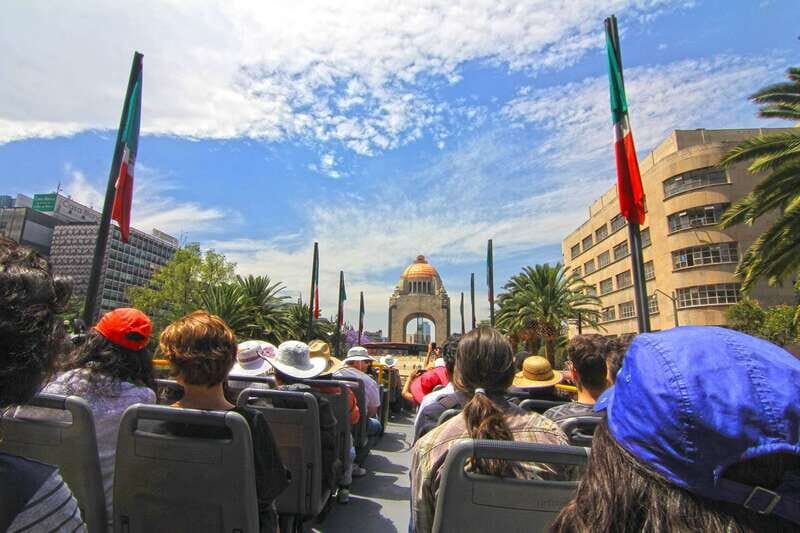
The best part of this setup is that the routes aren’t all trying to be the same sightseeing loop. Each one leans into a different side of Mexico City, which makes it easier to build a plan that matches your interests and your energy level.
Historic Downtown Route (the “main highlights” line)
This is the route built for getting your bearings fast. It focuses on the historic center areas, including El Zócalo, which is described as the city’s most important center of activity, plus key spots along Reforma. If it’s your first day, this is the one I’d aim for.
Polanco Route (shopping and modern architecture focus)
This circuit is designed for a more stylish, modern walk through town. It’s positioned as the most fashionable route, with an emphasis on shopping options and avant-garde architecture.
South Route (Coyoacán bohemia + UNAM area)
The South circuit is for laid-back neighborhood vibes and a different pace. It includes bohemian areas and lots of stops tied to the Coyoacán side of the city, plus major landmarks around UNAM and other cultural spots.





Basilica Route (religious Mexico City in one sweep)
If your must-do is Basílica de Guadalupe, this one is your friend. It’s framed around Mexico City’s religious core and also ties that feeling to earlier time periods, moving through pre-Hispanic, colonial, and modern layers.
Historic Downtown Route (9am–7pm): Zócalo, Reforma landmarks, and museum stops

This is your “greatest hits” ride. The Downtown circuit runs daily 9:00 am to 7:00 pm, about every 30 minutes, and includes a long list of stops that help you plan return visits.
Start near Auditorio or Museo del Arte Moderno if you want a cultural start, then glide toward the Reforma corridor where you’ll see big, photo-friendly monuments and architectural landmarks in sequence. Stops like Monumento a la Independencia, Hemiciclo a Juárez, and Monumento a la Revolución are the kind of names that make the city feel mapped—once you spot them from the open-top deck, you can decide what you’d rather walk to later.
The Downtown route’s anchor is Zócalo, plus nearby points like Plaza Manuel Tolsá and Museo Franz Mayer. Even if you don’t go inside everything, getting off here gives you the chance to connect the city’s big central square to what you’ll see around Reforma.
It also includes museum and attraction areas such as Museo de Antropología, which is a big decision point for many first-timers. If you’re short on time, hop off there for just a timed look, then get back on for the rest of your loop—this tour works best when you treat major sights as “choose your own length.”
Watch-outs: this route is popular, and the city’s traffic can make any schedule feel longer than expected. If you’re sensitive to long waits, aim for earlier departures, and build in buffer time around peak periods.
Polanco Route: Fashionable streets, Antara and Museo Soumaya stops

The Polanco circuit is shorter and more targeted. It starts from Auditorio with departures daily at 10:00 am, 11:30 am, 1:00 pm, 2:30 pm, 4:00 pm, and 5:30 pm, which means it’s easier to use as a half-day plan rather than a full-day backbone.
The route is framed around shopping and avant-garde architecture, and the stops reflect that. You pass through high-energy areas like Centro Comercial Antara and the Museo Soumaya stop. There’s also a Museo del Papalote listed, plus neighborhood stops such as Arquímedes Campos Elíseos and Masarik/Moliere.
Why you might love this circuit: Polanco is the kind of district where walking can be tiring, but the bus lets you scan the vibe without committing to a long route on foot. It’s also a good option if you want photos and “I get the layout now” understanding rather than racing between museums.
Timing tip: because departures are fixed within the day, you’ll want to decide ahead of time whether you’re jumping off for shopping breaks or turning it into a “ride-through and photograph” day.
South Route (11am–7pm): Coyoacán neighborhoods, Frida Kahlo area, and UNAM

The South circuit runs daily 11:00 am to 7:00 pm, with frequency described as every 1 hour / 1 and a half hours. In practice, that means it works best when you plan for getting on at a stop with a clear departure time, then enjoying your time off when you’re ready.
This is the route I associate with slower, more neighborhood-focused sightseeing. It’s described as getting you into bohemian areas, with touches of archaeology and architecture, and it includes places that still preserve an “old times” feel.
Key stops on this route include:
- Mercado Roma (and Mercado Roma Coyoacán) if you want a market-area feel without committing to one neighborhood on foot
- Museo Frida Kahlo as a standout magnet
- Centro Histórico Coyoacán and Centro Histórico Coyoacán listed again, which signals it’s a main anchor area
- Jardín botánico and the Rectoría de la UNAM area for a more campus-and-greens type day
- Estadio de C.U and Centro Cultural San Ángel for cultural/architecture breaks
- Centro Comercial Perisur and KidZania Cuicuilco for the “stop for facilities” side of the city
One very practical note: if Museo Frida Kahlo is on your list, start early. Doing the South/Coyoacán area first can save you from spending a chunk of time stuck in traffic trying to reach it later in the day.
Trade-off: you may spend more time waiting between buses compared with the Downtown route’s steadier rhythm. Build your day around that reality—don’t treat this circuit like a “show up whenever” option.
Basilica Route: Zócalo to Garibaldi and Basílica de Guadalupe
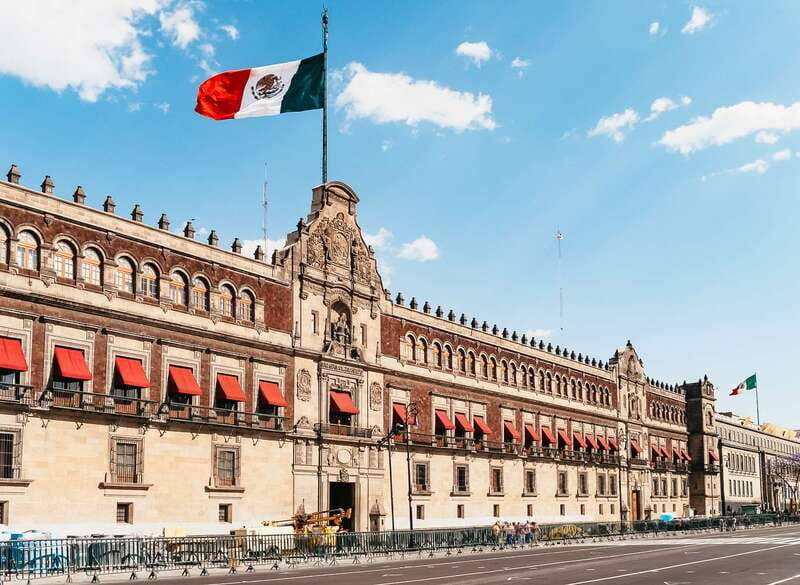
The Basilica route is designed around one theme: Mexico City’s religious core. It runs daily with departures from Zócalo at 10:00 am, 11:30 am, 1:00 pm, 2:30 pm, 4:00 pm, and 5:30 pm.
This route’s stop list is short, which can be a good thing if you’re focused. Stops include:
- Zócalo (your likely start point)
- Garibaldi
- Basílica de Guadalupe
- Palacio de los Condes de Miravalle
Even if you’re not someone who plans every church visit like a checklist, this circuit is valuable because it helps you connect these places as one journey, rather than separate taxi trips. It’s also one of the clearest ways to structure a day around a major landmark without feeling rushed.
Timing and comfort: because you’re likely spending time outside near major attractions, plan for heat and sun. The bus is open-top, and that’s great for views, but not great if your schedule leaves you under direct sun too long.
Audio Guide Reality: Headsets, languages, and how to not miss the English
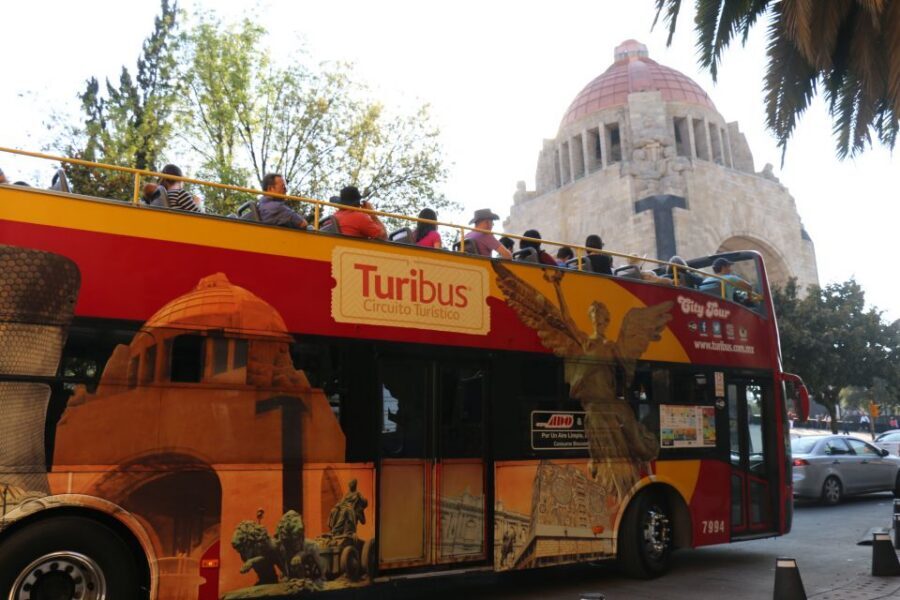
The audio guide is included, and you can switch languages through the digital system. It’s available in Spanish, English, German, French, Italian, Chinese, Japanese, Portuguese, and Russian, plus a special audio channel for kids.
Here’s the issue: the bus experience doesn’t always match the clean idea of “select your language and hear everything perfectly.” In real use, the Spanish audio can be loud enough to make English harder to hear through headsets. I’d treat that as the default and plan accordingly.
What to do:
- Bring your own earphones so you’re not stuck with whatever adapter or headset happens to be available.
- If English sounds faint, move seats. Some speakers can overpower headset audio depending on where you sit.
- Don’t sit right beside the main bus speakers, especially if you’re trying to listen in English.
- Expect that street noise can make the system harder to catch in crowded areas, so do some of your listening while the bus is rolling through less chaotic stretches.
Also note that stop announcements can be in Spanish, so if you’re relying on hearing the timing through the onboard voice, don’t be surprised if it’s not your language.
Open-Top Buses in Mexico City: Comfort tips that actually help
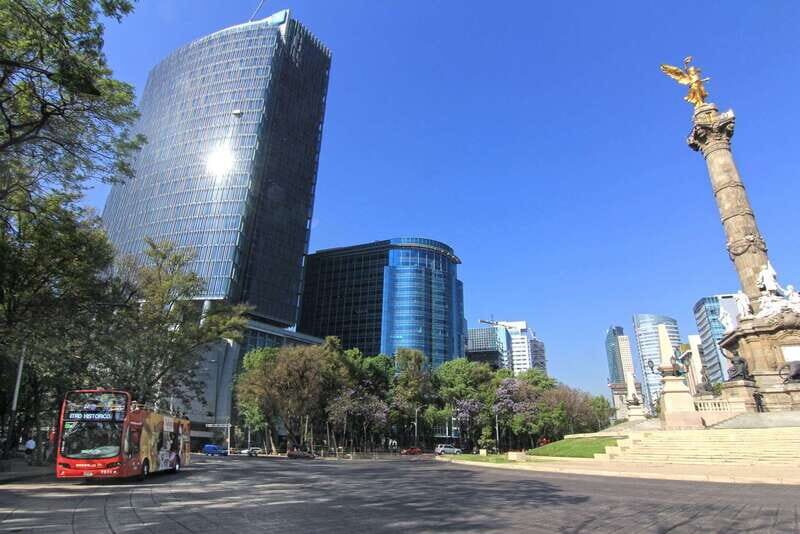
You’re riding a double-decker open-top motor-coach, and there are no restrooms on the bus. That alone changes how you should plan your stops: go before you board, and plan your time off with restroom breaks in mind.
Comfort wise, the top deck is the best spot for views, especially in the morning and late afternoon. But in the middle of the day, especially in warm months, you’ll want to protect yourself from the sun—some seats can get extremely hot, and direct light can make even a short stop feel longer.
A few practical habits help a lot:
- Use morning/early afternoon for riding and photos, and schedule indoor time midday (museums) if you can.
- Bring water, sunscreen, and a hat. You’ll thank yourself on the top deck.
- If you hate long standing lines, hop off and walk only what you need, then use the next bus back to reposition.
Getting the Most From Hop-On Hop-Off (without wasting half a day)

Hop-on hop-off is great until it becomes hop-on hop-off chaos. The trick is to choose one or two “anchors” per day.
A solid approach:
- Pick your main route first (Downtown if it’s your first day, South or Basilica if you’re targeting specific neighborhoods).
- Decide what you want to do during “off” time: quick photo stop, museum visit, or walking around just one area.
- Plan your next move by watching the route timings. The Downtown route’s steadier frequency makes it forgiving; the Polanco and Basilica departures are more fixed.
Also, don’t underestimate how much traffic can shape your schedule. Schedules are meant to run as planned, but delays happen. Build in buffer time, especially when you’re trying to connect from one side of town to another.
Who Should Book This Tour, and Who Might Skip It
This tour is a great fit if you’re:
- In Mexico City for 1 to 2 days and want broad coverage without spending the whole time trapped in planning
- Trying to get your bearings across major districts quickly
- Interested in a city-wide narrative, where the audio connects landmarks to changing time periods
It’s less ideal if you:
- Need crystal-clear English audio at every stop and you’re very sensitive to competing announcements and headset clarity
- Want a tour that replaces walking completely. This is transportation plus narration, not a private guide that manages every moment for you
If you’re the type who loves to map your next day while you ride today, this works especially well.
Should You Book the Turibus Mexico City Hop-On Hop-Off Bus Tour?
I’d book it if you want efficient city coverage with minimal stress. For $21, you get multi-route access with audio narration, plus enough flexibility to tailor your day around the sights you actually care about—especially if you start with the Historic Downtown Route to orient yourself.
Before you commit, I’d also plan for the two real-world factors that can change your experience: heat on the open-top deck and audio clarity when Spanish is loud. If you come prepared with your own earphones, and you treat the buses as a moving orientation tool rather than a strict tour schedule, this can be one of the easiest ways to enjoy Mexico City without feeling like you’re constantly sprinting.
FAQ
How long is the Turibus Mexico City hop-on hop-off ticket valid?
Your ticket is valid for 1 or 2 days, depending on what you choose.
How many routes are available on this ticket?
You can ride 4 routes using a single bracelet and access to all stops on those routes.
Where do I start the tour?
You can begin at any of the listed stops. Show your printed or electronic voucher when boarding.
What time does the bus run?
Hours depend on the route. The Historic Downtown Route runs daily from 9:00 am to 7:00 pm. The Polanco Route runs daily with departures from Auditorio at set times starting at 10:00 am. The South Route runs daily from 11:00 am to 7:00 pm. The Basilica Route runs daily with departures from Zócalo starting at 10:00 am.
How often do the buses come?
Frequency is route-specific: the Historic Downtown Route is about every 30 minutes, while the South Route is described as every 1 hour / 1 and a half hours. The Polanco and Basilica routes run at specific departure times listed for the day.
Is the audio guide included?
Yes. The digital audio system is included, with channels in Spanish, English, German, French, Italian, Chinese, Japanese, Portuguese, and Russian, plus a special kids channel.
Does the bus have restrooms?
No. The buses are open-top and do not have restrooms.
Do children get free admission?
Children up to age 3 travel free, but they must sit on a parent’s lap.
Is the tour wheelchair accessible?
Yes, the tour is wheelchair accessible.
Can I cancel for a refund?
Yes. You can cancel up to 24 hours in advance for a full refund.