REVIEW · MEXICO CITY
Historic center walking tour through time and space
Book on Viator →Bookable on Viator
Three hours, a lot of time travel. This route strings together major layers of Mexico City in one smooth loop, from Tenochtitlan ruins at the Museo del Templo Mayor to the grand 20th-century monuments along Reforma-era style streets. I love that you get a clear timeline you can actually feel under your feet, not a random list of stops.
I also love the way the guide ties architecture and history to what you’re standing in front of. In the past, guides like Ricardo and Joss have led the walk with detailed explanations about culture, building design, and how places have been affected over time.
One possible drawback: the tour ends at the Museo de Arte Popular, but entry there isn’t included, so if you want to go inside, plan for that extra ticket cost (or just enjoy the building entrance).
In This Review
- Key highlights you should know before you go
- Price and what $39.45 buys you in Mexico City
- Starting at Templo Mayor: where the timeline begins
- Cathedral Metropolitana and the Zócalo: seeing power in stone and space
- El Atrio del Templo de San Francisco: the city’s older footprints
- House of Tiles: Moorish decoration in a 16th-century palace
- Museo Nacional de Arte and Palacio de Mineria: major landmarks, quick context
- Palacio Postal and Palacio de Bellas Artes: great interiors start outside
- Alameda Central to the finish: park legends and art deco popular culture
- What makes this tour work: timing, pacing, and guide-led connections
- Small logistics that matter on a 3-hour walking route
- Who should book this tour, and who might skip it
- Should you book this Historic Center walking tour?
- FAQ
- How long is the tour?
- Is the tour offered in English?
- Where does the tour start and where does it end?
- Does the price include admission to all stops?
- What is included in the tour price?
- Is this a private tour?
- What should I bring or plan for if I want to go inside the last museum?
- Can I cancel for free if my plans change?
Key highlights you should know before you go
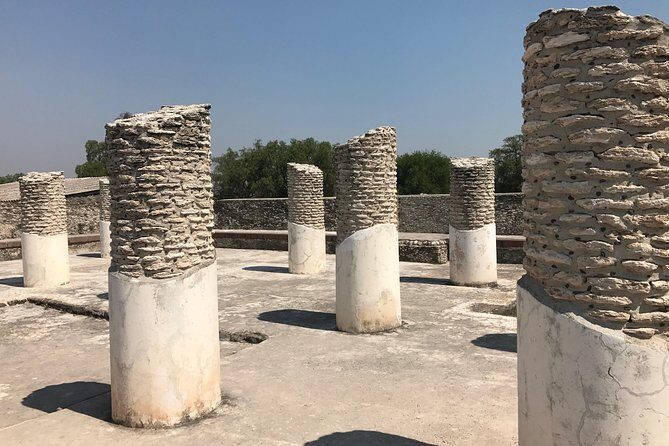
- Fourteen-century-to-20th-century flow in one walk: you move from Aztec ruins to colonial and then into major modern landmark buildings.
- Free admission tickets at most stops: many key sites in the route are free with the tour’s ticket.
- A private tour with only your group: your guide works at your group’s pace, in English.
- Some stops are quick, others reward lingering: you’ll hit short 5–15 minute moments and a few longer 20–25 minute pauses.
- You end at Museo de Arte Popular: the art deco entrance and popular art setting make a strong final visual.
- You’ll get a water bottle included: soda/pop water bottle is part of the deal, helpful in walking heat.
Price and what $39.45 buys you in Mexico City

This tour costs $39.45 per person for about 3 hours of guided walking. For central Mexico City, that’s a solid value because you’re paying for two things: a guide who explains what you’re seeing, and a route that covers multiple major landmarks back-to-back. Add in that many stops include admission tickets, and it becomes less like a sightseeing stroll and more like a guided “choose-your-own timeline” in public space.
It’s also a private tour, meaning only your group participates. That matters on this kind of itinerary, because you’ll want to ask questions when you hit something that catches your eye—then keep moving before the day gets away from you. Plus, you’ll get a mobile ticket and the tour runs in English.
One practical note: it’s typically booked about 10 days in advance, so if you want a specific time window, don’t wait until the last minute.
You can also read our reviews of more walking tours in Mexico City



Starting at Templo Mayor: where the timeline begins
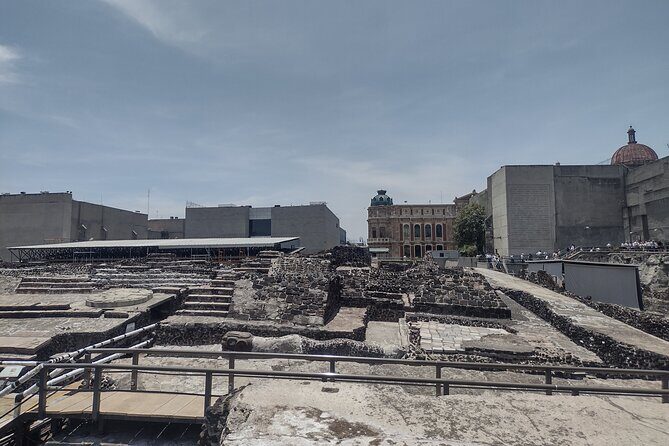
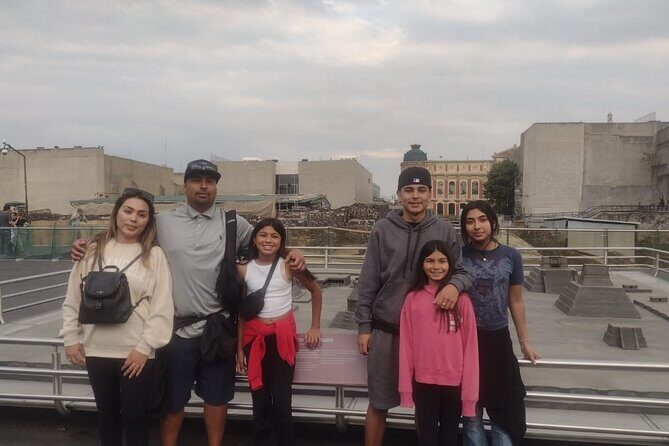
Your walk starts at the Museo del Templo Mayor, at Seminario 8 in the Centro Histórico area. The first stop is designed to set the stage: you’ll begin in the 14th century and look at the ruins of the great Tenochtitlan.
This is a smart start because it anchors everything else. Once you’ve seen that the city’s story begins with a major pre-Hispanic civilization, it’s easier to understand why the later layers feel so built-in—rather than like separate, disconnected attractions. Expect a short stop (about 15 minutes), so you’ll want to focus on what your guide points out and avoid trying to read everything alone.
If you tend to rush, this is the stop where you can slow down just a touch. It’s the one that makes later “how did we get here?” questions make sense.
Cathedral Metropolitana and the Zócalo: seeing power in stone and space
After Tenochtitlan ruins, you move to the Catedral Metropolitana de la Ciudad de Mexico. This quick stop is about the cathedral’s architecture and the damage it has suffered over time, which gives you a useful way to read the building: not as a perfect monument frozen in time, but as something shaped by history and events.
From there, you head to the Zócalo, the city’s most important square. This stop is brief (about 5 minutes), but it’s worth it because the Zócalo isn’t just a pretty plaza—it’s a central stage for how Mexico City organizes public life. In a walking tour format, you’re not trying to spend an afternoon here. You’re getting oriented to why the square matters, then moving on while the day still feels energizing.
If you’re the type who likes taking photos, Zócalo will be your “snap and breathe” moment. Keep an eye on the time because the itinerary moves.
El Atrio del Templo de San Francisco: the city’s older footprints

Next comes the El Atrio del Templo de San Francisco, where you’ll see the first church in Mexico City. You’ll have about 15 minutes here, which is just enough time to take in the main area and understand the significance without getting stuck.
This is a stop that helps you shift from “ancient civilization” to “how the city transformed.” Even if you’re not chasing every architectural detail, the point is to recognize that Mexico City’s center became a layered space where new buildings grew on top of older eras.
A small strategy that helps: choose one or two elements to remember from each stop. Then when the guide points out connections between eras, your brain has something concrete to attach them to.
House of Tiles: Moorish decoration in a 16th-century palace

The House of Tiles is a 16th-century palace known for its Moorish decoration. Your time here is about 20 minutes, which gives you a bit more breathing room than the ultra-fast stops.
This is where the tour does something great: it slows just enough for you to notice visual style. If you like texture, pattern, and decorative surfaces, this stop is often the kind you wish you had more time in. Don’t worry about photographing everything; instead, look for the repeating motifs and the way the decoration frames the building as a whole.
If you’re with someone who cares less about ornamentation, this is also a good compromise stop because the guide can connect the design to historical influences, while your eyes can simply enjoy the visual feast.
You can also read our reviews of more historical tours in Mexico City




Museo Nacional de Arte and Palacio de Mineria: major landmarks, quick context
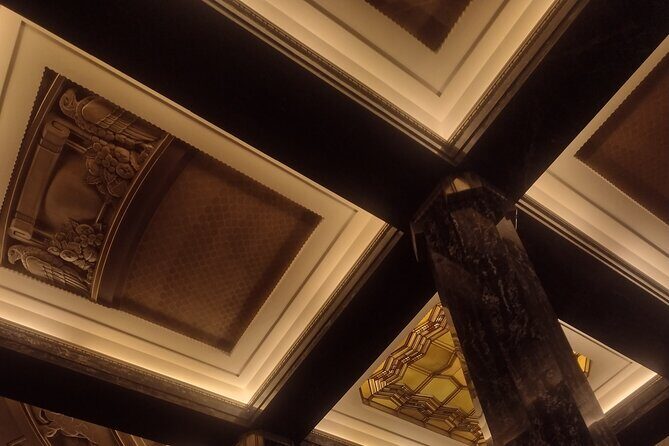
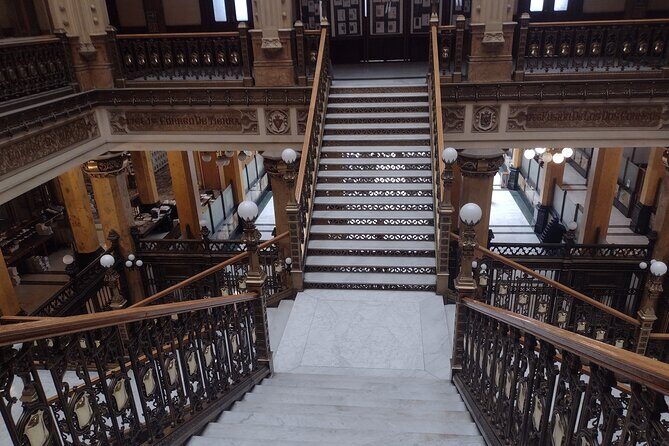
Then the route moves into the 20th century with a visit to the Museo Nacional De Arte. The key promise here is the building itself: the stop is about one of the most beautiful buildings built in the 20th century, with time focused on the lobby and some history.
You’ll get around 15 minutes, so again, the goal is understanding rather than exhaustive museum time. Use the lobby to get your bearings for scale and style; it helps later when you see how other palaces and civic buildings present themselves in the city center.
Next is the Palacio de Mineria, where you’ll see the exterior of the Old Mining Palace and learn history tied to the place. This is about 10 minutes, which is short but efficient for landmark spotting. The outdoor format also keeps your momentum, especially since Mexico City weather and crowds can change quickly.
Palacio Postal and Palacio de Bellas Artes: great interiors start outside

Palacio Postal is next, and the itinerary calls it the Palacio de Correos, the Fifth House of the Post Office. You’ll spend about 15 minutes, and the best part is that it’s described as super instagrammable.
This is one of those stops that pays off even if you don’t love history lectures. You get both the architectural impression and the sense of what the building was meant to do in city life. If you’re traveling with phone and camera in hand, this is a good place to do it right—get one or two wide shots to capture the whole feel, then one close-up for details the guide mentions.
After that, you’ll head to Palacio de Bellas Artes for about 25 minutes. Here, you’ll see it from the outside and also take a look at the lobby, with the guide explaining history along the way. This longer window matters because it gives you time to switch modes: watch, listen, then look closer.
Alameda Central to the finish: park legends and art deco popular culture
The final stretch starts at Alameda Central, described as the largest park in the city center. You’ll walk for a moment through the park and hear history and legends, with about 15 minutes set aside. In an itinerary packed with buildings, this green break is useful. It resets your brain and gives your feet a chance to relax slightly before the last stop.
Then the tour ends at the Museo de Arte Popular entrance (Revillagigedo 11, Centro). The focus here is the building’s art deco architecture and expressions of the city’s popular art. The time is about 15 minutes for the entrance visit, and the itinerary notes that the tour ends here if you choose to visit the museum.
Important practical catch: admission for Museo de Arte Popular isn’t included. So if you’re the type who wants to go beyond the entrance, budget for the extra ticket and time. If you just want the architectural entrance and context from the guide, you can keep it simple and still get a satisfying ending.
What makes this tour work: timing, pacing, and guide-led connections
This walk hits a good rhythm: most stops land in the 10–20 minute range, with one quick 5-minute square moment. That pacing is a big deal. It prevents the itinerary from turning into a drag where everyone loses interest mid-stop. It also means you’re constantly moving between eras, which makes the history feel like a continuous storyline.
And the guide quality is a standout piece. The past guides I’ve seen praised—Ricardo and Joss—are singled out for being able to explain history and culture in a way that sticks. In practical terms, that means you’re not just collecting locations; you’re learning how to read them. You start noticing patterns like how later construction reacts to earlier spaces, and how buildings show damage and change rather than pretending nothing ever happened.
If you want to get even more out of it, bring a simple mindset: each stop should answer one question. For example:
- What era does this represent?
- What role did this place play in the city?
- What does the building show about how people lived or governed?
You’ll find the guide naturally connects those dots as you go.
Small logistics that matter on a 3-hour walking route
A few details help you plan smoothly:
- Meeting point: Museo del Templo Mayor, Seminario 8, Centro Histórico (Centro, Cuauhtémoc).
- End point: Museo de Arte Popular, Revillagigedo 11, Colonia Centro (Cuauhtémoc).
- Duration: about 3 hours, so wear shoes you’d use for a moderate walk, not a fashion photo sprint.
- Language: English.
- Included: a soda/pop water bottle, plus you’ll have mobile ticket access.
- Not included: tips, and the Museo de Arte Popular admission if you go inside.
Because you’re near public transportation, you can also use the end point to hop to lunch or your next activity without backtracking. And since this is described as most travelers can participate and service animals are allowed, it’s designed to be broadly workable for a typical sightseeing day.
Who should book this tour, and who might skip it
Book it if you want:
- A focused historic center walk with a guide doing the heavy lifting for context.
- A short itinerary that still covers major “you should see this” places.
- An English tour where you won’t feel lost in translation.
Consider skipping or supplementing it if you:
- Want to spend long, deep hours inside museums. This walk is timed; it’s about guided highlights, not a full museum day.
- Plan to visit Museo de Arte Popular inside. You can do it, but you’ll need extra ticket planning since it’s not included.
Should you book this Historic Center walking tour?
I’d book it if your goal is to understand Mexico City’s core quickly and confidently. For $39.45, you get a private English guide, a smart route, and many free admission moments that keep you from feeling like you paid for walking only. The ending at Museo de Arte Popular is a strong finish, especially if you like art deco style and popular art—and if you do want the museum inside, just remember the ticket isn’t bundled.
If you’re trying to choose between “wandering alone” and “having a timeline in your head,” this tour is the better bet. You’ll leave with a clearer sense of how Tenochtitlan, colonial-era power, and 20th-century landmarks all fit together in one city center.
FAQ
How long is the tour?
It runs for about 3 hours.
Is the tour offered in English?
Yes, the tour is offered in English.
Where does the tour start and where does it end?
It starts at the Templo Mayor Museum (Seminario 8, Centro Histórico de la Cdad. de México). It ends at the Museo de Arte Popular (Revillagigedo 11, Colonia Centro).
Does the price include admission to all stops?
Many stops include admission tickets (free with the tour), but the Museo de Arte Popular admission is not included.
What is included in the tour price?
A soda/pop water bottle is included.
Is this a private tour?
Yes. It’s private, and only your group participates.
What should I bring or plan for if I want to go inside the last museum?
The tour includes the entrance to Museo de Arte Popular, and the museum admission is not included. If you want to enter, plan for the additional ticket cost.
Can I cancel for free if my plans change?
Yes. You can cancel up to 24 hours in advance for a full refund.