A fun game makes the city feel new. This self-guided quest takes you through the quieter streets of Chimalistac, turning famous-looking corners into a puzzle trail you can finish at your own speed. I especially like the fact that it’s built around Questo, so you’re not stuck waiting on a guide or a schedule. I also like that the route is open air and designed to help you beat the crowds.
One thing to consider: because it’s challenge-based, you’ll do a bit of slow looking—great for detail lovers, but less ideal if you want a fast, sit-and-listen tour with zero thinking.
In This Review
- Key highlights worth your time
- A Game-Based Walk Through Quiet Chimalistac
- How the Questo Phone Game Works (and Why It Beats Crowds)
- Stop-by-Stop: Parque de la Bombilla to San Sebastián Mártir
- Parque de la Bombilla: a memorial you find by paying attention
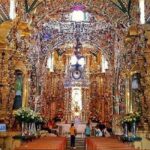
- Hermitage of the Secret (Chamber/Hermitage dedicated to the Virgen de los Dolores)
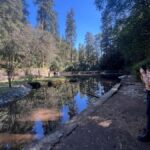
- La Fuente en el Huerto: the fountain built for a 400-year moment
- Tagle Park: a local tribute to Protasio Tagle
- Chapel of San Sebastián Mártir: oldest construction energy
- Getting the timing right: 1 hour 40 minutes in the real world
- Price and value: why $7.51 can make sense
- Who should book this quest in Mexico City?
- Should you book this Mexico City exploration game?
- FAQ
- Is this tour self-guided or do I need a guide?
- What language is the experience offered in?
- How long does the exploration game take?
- Do I need to buy entry tickets for the stops?
- Where do I start and where do I end?
- Can I cancel for free?
Key highlights worth your time
- Quieter Chimalistac streets make the walk feel more local than central hotspots
- Questo app quests guide you to answers by looking closely at landmarks
- Gradual difficulty: start simple, then get more challenging as you go
- No ticket hassle: the tour doesn’t require paid entry to complete the route
- Photo-friendly stops with fountains, chapels, and memorials
- Flexible pacing so you can pause, take breaks, and continue
A Game-Based Walk Through Quiet Chimalistac
Mexico City can hit you with traffic, noise, and big crowds fast. This experience gives you a break, without leaving the city. You’re headed to Chimalistac in the Álvaro Obregón area, where the streets feel calmer and the landmarks feel closer.
What I like most is that you’re not just moving from point A to point B. You’re solving little challenges as you go. That small change turns even a plain sidewalk into something worth noticing—like carvings, plaques, and the way buildings sit at street level. It’s also a nice fit for families because it turns walking into a shared activity, not just sightseeing.
The format is simple: you follow the route with your phone, find the answers the app asks for, and move on. You’ll likely spend a bit longer at the stops that catch your eye. The route is intentionally paced (the main stops are set for around five minutes each), but you control how long you linger.
Just keep your expectations realistic. You’re not doing a museum-style tour. You’re doing a neighborhood-style quest—outdoors, mostly strolling, with a few religious and memorial sites that invite quiet attention.
You can also read our reviews of more city tours in Mexico City


How the Questo Phone Game Works (and Why It Beats Crowds)
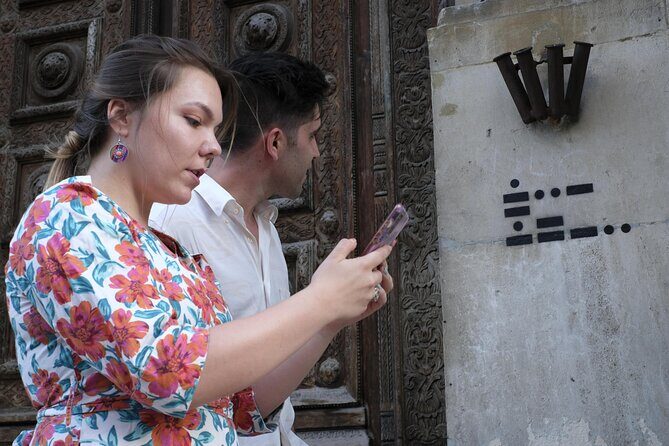
This is a self-guided exploration game using the Questo app. That matters for two reasons. First, you don’t need a guide’s voice schedule, so you can start when it fits you. Second, it’s much easier to dodge the worst crowd flow because the route stays flexible and open-air.
It’s set up as a mobile ticket, with full availability every day of the year. In practice, that means you don’t have to build your day around one fixed departure time. If you’re timing your Mexico City sightseeing carefully—maybe you’re planning around meals or morning errands—you’ll appreciate the flexibility.
The safety angle is also straightforward: because you’re walking outdoors at your own pace, you avoid that packed, “everyone moves together” feeling. You’re still in the city, of course, so use normal street sense (like you would anywhere). But you’re not navigating by yourself with zero structure—the game keeps you pointed in the right direction.
The best part is how the challenges build. The puzzles start reasonably approachable and then ramp up, so the experience feels like a real game rather than a checklist. If you like hunting for details, it becomes satisfying fast. If you’d rather have a narrative lecture, you’ll still get the story beats tied to the spots—but the app keeps pulling you back to observe and search.
Stop-by-Stop: Parque de la Bombilla to San Sebastián Mártir

The route is built around five standout stops in and around Chimalistac. Some are parks and memorials; others are chapels tied to the neighborhood’s older religious life. Each one includes a “look around” challenge that keeps you attentive.
Parque de la Bombilla: a memorial you find by paying attention
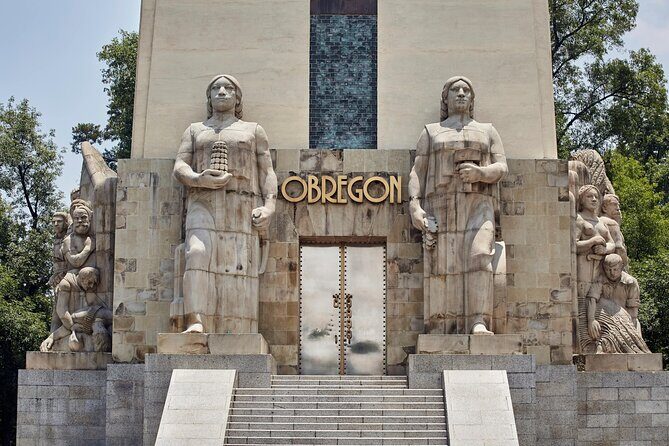
Your first stop is Parque de la Bombilla in the San Ángel area (within Álvaro Obregón). This park isn’t just greenery. It memorializes Álvaro Obregón, who served as president (1920–1924) and was assassinated in 1928. The story you’ll connect to here is specific: he was killed while dining at a restaurant called La Bombilla, and the monument now marks that site.
A useful detail for your visit: the monument complex opened on July 17, 1935. That date gives you something concrete to remember when the app asks you to find an answer. If you’re the kind of traveler who likes a meaningful first stop, this one does the job. It also sets the tone—your time here is about noticing context, not just snapping a photo.
Hermitage of the Secret (Chamber/Hermitage dedicated to the Virgen de los Dolores)
Next comes the small construction known as the Hermitage of the Secret, on Del Secreto street at the corner of the Huerto alley. Even the name feels literary, and the site lives up to it.
This hermitage ties directly into Chimalistac’s old orchard roots, since it was part of the orchards of the area. The building was created in 1626 under the tutelage of the Carmelite friar Andrés de San Miguel. It’s dedicated to the Virgen de los Dolores, and the interior includes religious artwork, including paintings such as the Sermon on the Mount.
Inside, there’s also a stone cross that reaches up to the ceiling. That physical detail is the kind of thing the app’s challenge style works well with: you slow down, look up, and you actually see what’s in front of you instead of walking past it.
If you’re visiting during warmer hours, this stop can feel like a quiet pocket of calm—just remember it’s a religious place, so keep your volume down and move respectfully.
You can also read our reviews of more tours and experiences in Mexico City




La Fuente en el Huerto: the fountain built for a 400-year moment
Then you’ll reach La Fuente en el Huerto, a fountain built in 1896. You’ll want to pause here because it’s not random decoration. The fountain was created to commemorate 400 years of the Carmelites’ arrival in the Chimalistac neighborhood.
It’s a small detail, but it makes the whole thing click: this neighborhood has layers, and the landmarks reflect anniversaries, orders, and long timelines—not just one era.
Photographically, fountains are always a win in Mexico City, especially when light hits the stone and water creates movement. Even if you don’t plan a formal photo session, you’ll likely end up taking at least a few here.
And again, the app’s challenge approach nudges you to look closely rather than rushing through.
Tagle Park: a local tribute to Protasio Tagle
After the religious and commemorative sites, Tagle Park gives you a change of pace. It’s named for Protasio Tagle, a military and politician who later became governing secretary of the Federal District (what we now call Mexico City). He also served as Secretary of Justice and Public Instruction.
This stop is a good reminder that neighborhoods carry political memory too, not only churches and memorials. If you like learning how names on streets and parks connect to real people and roles, this one will stick with you.
The game makes it easy to pay attention: you’ll be looking for the answer as you move through the space, so you don’t feel lost or impatient.
Chapel of San Sebastián Mártir: oldest construction energy
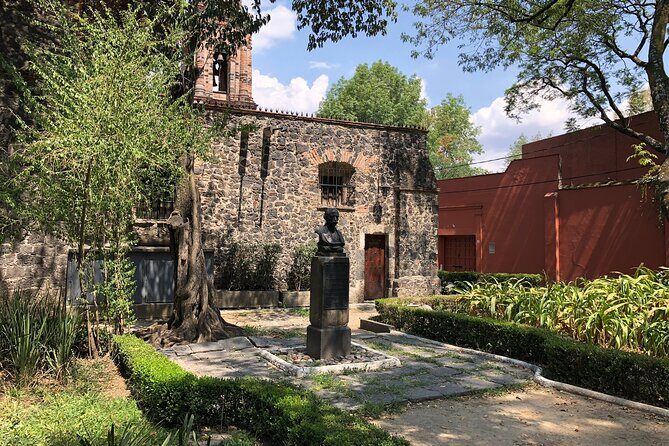
Your last stop is the Chapel of San Sebastián Mártir, in the old town of Chimalistac. This small Catholic temple is notable for being among the oldest constructions in the area, built at the end of the 16th century and modified in the 17th and 20th centuries.
It was declared a historical monument on September 1, 1932, and its patronal feast is celebrated on January 30. Those specifics help you understand why the chapel matters locally: it’s not just pretty. It’s a living piece of neighborhood identity.
If you’re traveling with kids, this ending can work well because it feels like a finish line with a real sense of place. If you’re traveling solo or as a couple, it’s a thoughtful last stop that rewards slower observation.
Getting the timing right: 1 hour 40 minutes in the real world
The experience runs about 1 hour 40 minutes (approx.), and the itinerary is paced so you’re not constantly sprinting. The main stops are set for short periods—around five minutes each—though you’ll naturally spend more time if something pulls your attention.
Because it’s self-guided and open air, your timing depends on your pace. If you’re traveling in Mexico City during peak heat, plan quick breaks and water. If you’re there in the cooler part of the day, you can probably keep a steady rhythm and finish right around the planned duration.
One advantage is the range of when you can start. The experience is listed as available every day, and the on-site hours show 5:00 AM to 11:30 PM. That gives you flexibility if you’re trying to avoid midday crowds in other parts of the city.
Transport-wise, the meeting point is near public transportation, which helps a lot in Mexico City. You’ll start at San Luis Potosí in Chimalistac and end at Federico Gamboa 11, also in Chimalistac. That end point matters: it can save you time getting back to where you’re staying, since you’re not doubling back across town.
Price and value: why $7.51 can make sense

At $7.51 per person, this is priced like a budget-friendly way to explore. And the value isn’t just the cost—it’s what you’re getting for that cost.
You receive:
- A phone-based exploration game (Questo app)
- A mobile ticket
- A self-paced route built to avoid crowds
- Open-air walking time with photo opportunities
- English-language availability
You’re also not paying extra entry fees for the sites as part of completing the tour. The route is designed so the challenges don’t require paid museum-style admissions. That matters in Mexico City, where some paid sights can quickly add up.
Also, the experience is a private activity for your group, meaning you’re not dealing with random mixing. That’s a small perk, but it keeps the vibe more controlled—especially if you’re traveling with family or friends.
The trade-off is you’re doing the discovery work yourself via the app. If you want a classic guide who tells stories at length, you might miss that layer. But for travelers who enjoy wandering with purpose, the cost-to-time ratio is strong.
Who should book this quest in Mexico City?
This is a great fit if you like:
- Walking at an easy pace and noticing details
- Puzzle-style exploration (answers come from looking around)
- Seeing a quieter part of the city without committing to a full-day itinerary
- A family-friendly format where everyone can participate
It also works well if you’ve already seen the big-ticket central areas and want something calmer. Chimalistac offers a different flavor—more neighborhood rhythm, less mass-tour energy.
If you’re someone who hates reading screens while walking, or you need nonstop narration, this might not be your style. The app is central to the experience, and the challenges are part of the point.
On the practical side, most travelers can participate. Service animals are allowed, and the route is open air, which can feel comfortable and low-stress compared with indoor attractions.
Should you book this Mexico City exploration game?
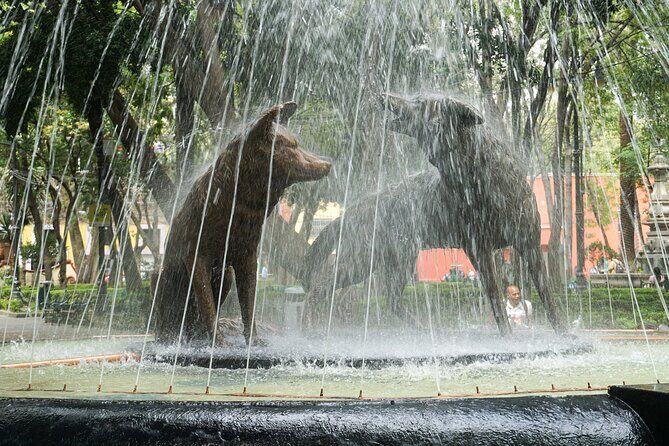
I’d book it if you want a fun, low-cost way to see meaningful landmarks in Chimalistac without crowd pressure. The strongest reason is the format: a phone game that turns observation into a game. You get memorial context at Parque de la Bombilla, deep neighborhood-era details at the Hermitage of the Secret, and finishing touches at the Chapel of San Sebastián Mártir.
I’d skip it if you want a guided lecture, or if puzzles and “find the answer” style tasks annoy you. Also, if your idea of sightseeing is mostly quick photo stops, the challenge approach may make you slow down more than you planned.
If you’re happy walking for about 1 hour 40 minutes and you like to solve things while you travel, this is a smart, practical way to explore Mexico City like you live here—one quiet street at a time.
FAQ
Is this tour self-guided or do I need a guide?
It’s self-guided. You use the Questo app on your phone for the city exploration game, so there’s no tour guide included.
What language is the experience offered in?
The experience is offered in English.
How long does the exploration game take?
It’s approximately 1 hour 40 minutes.
Do I need to buy entry tickets for the stops?
No. The tour notes that admission tickets are free and entry tickets are not needed to complete the tour.
Where do I start and where do I end?
You start at San Luis Potosí, Chimalistac, Álvaro Obregón, and you end at Federico Gamboa 11, also in Chimalistac.
Can I cancel for free?
Yes. You can cancel for a full refund if you cancel at least 24 hours in advance of the experience start time. If you cancel within 24 hours, the amount you paid is not refunded.