REVIEW · MEXICO CITY
Self-Guided Audio Tour – Mexico for Beginners
Book on Viator →Operated by SOUNDWALKRS · Bookable on Viator
Mexico City can feel big fast, but this route helps you land. This is a self-guided audio tour made for beginners, with offline chapters and maps that keep you moving through key historic stops without needing a live guide. I like that it’s short enough to fit a first visit, and it teaches you what to look for along the way.
You also get audio facts that connect the dots between places and people. The guide covers how the Aztecs protected themselves, plus background you’ll hear around major landmarks like the Latin American Tower and the Bellas Artes theater complex. One consideration: the narration style may feel a bit flat for some adults, and one feedback note said the voice could get tiring and the details felt too basic.
If you’re the type who likes quick orientation and simple stories while you walk, you’ll probably enjoy the pace. If you want heavy historical depth and a more dramatic, adult-focused audio voice, you might find it less satisfying.
In This Review
- Key highlights worth your attention
- A 40-minute walk that teaches you where to look
- Starting at Palacio de Bellas Artes: your easy anchor point
- Alameda Gardens: where the audio slows down a notch
- Legends and Mexican myths: learning without a classroom vibe
- Aztecs protected themselves: a focused historical thread
- Latin American Tower and Bellas Artes theater facts
- The museum, scenic stop, and monument finish
- Offline chapters and maps: how to make it work smoothly
- What to bring, and how to stay comfortable
- Who this Mexico City audio tour is best for
- Should you book this self-guided tour in Mexico City?
- FAQ
- How long is the Mexico for Beginners self-guided audio tour?
- Is the audio tour available in English?
- Where does the tour start and end?
- Can I use the audio offline?
- What is not included?
- Is this tour private?
- Can I cancel and get a full refund?
Key highlights worth your attention

- Offline audio with maps and tips so you can keep going even with spotty data
- Beginner-friendly pacing at about 40 minutes, designed to be a quick “first circuit”
- Story-driven stops that connect monuments, gardens, and legends to what you’re seeing
- Aztec background included in the audio, not just random landmark facts
- Iconic Centro landmarks from Palacio de Bellas Artes to Hemiciclo a Juárez
A 40-minute walk that teaches you where to look

This tour works like a guided walk in disguise. You start at Palacio de Bellas Artes, then move through the surrounding Centro Histórico area in a loop that ends at Hemiciclo a Juárez. With an estimated 40 minutes, it’s a smart choice when you want context fast, but you don’t want to spend half a day in a classroom.
The structure matters for beginners. Instead of listing a bunch of far-flung sights, the audio keeps you tied to a sequence of walkable stops: the grand theater area first, then Alameda Gardens, then a set of additional moments (a museum stop, a scenic spot, and a monument) before you finish at Hemiciclo a Juárez. That kind of rhythm helps you remember the city, because each stop builds on the last.
I also like that it’s offered in English and uses a mobile ticket. If you’ve ever arrived somewhere iconic only to realize you don’t have the right ticket, this setup cuts down on friction. And since it’s described as a private activity, it should feel calmer and more controlled than big group tours.
You can also read our reviews of more guided tours in Mexico City
Starting at Palacio de Bellas Artes: your easy anchor point
The tour begins at Palacio de Bellas Artes, at Av. Juárez S/N, Centro Histórico de la Cdad. de México, Centro, Cuauhtémoc, 06050 Ciudad de México, CDMX. This is a strong starting point because the building is instantly recognizable, and it gives you a clear “start line” in a part of town that can feel confusing if you’re new.
Expect the first segment to be quick, like a warm-up. The itinerary notes a 5-minute stop at Palacio de Bellas Artes, described as a speedy way to learn the basic history of Mexico City. That’s a useful approach. In that short time, the audio gives you background you can carry while you wander nearby, so you’re not just staring at stone and gold leaf wondering what it means.
One practical detail: admission is not included. So if you plan to go inside Palacio de Bellas Artes, you’ll need to handle tickets on your own. Even if you don’t enter, the exterior area alone gives you plenty to look at, and the audio should help you connect the building to Mexico City’s bigger story.
Alameda Gardens: where the audio slows down a notch

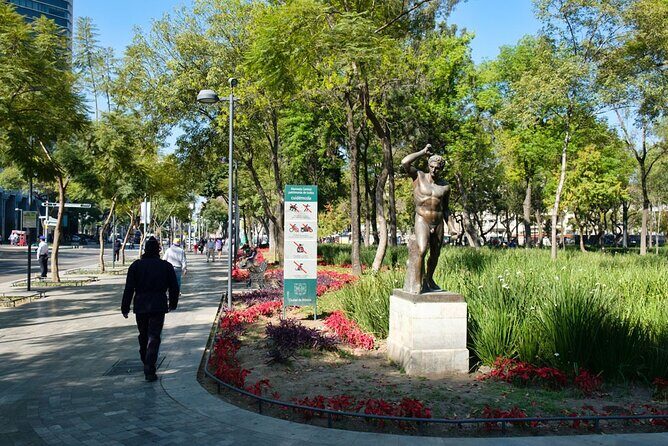
After the theater start, you’ll head to Alameda Gardens. The tour frames this section as a walk where you learn about Mexican traditions and cultural heritage. For beginners, gardens are great learning spaces because you can look around without feeling rushed. You can also pause, take photos, and reset your legs while the audio tells you what you’re seeing.
This stop also has a purpose beyond scenery. Mexico City’s cultural story isn’t only inside museums. It’s in the public spaces people use every day. Alameda Gardens gives you that “living city” feeling, so the history doesn’t stay trapped behind ticket counters.
The tour’s language here is about learning and getting oriented, including hints of storytelling and legend. It encourages you to walk around and treat the area like a lesson in place. If you prefer learning that feels human and not overly academic, this part is likely to work for you.
Legends and Mexican myths: learning without a classroom vibe
One of the audio segments is described as learning more about Mexican legends. That matters because myths are often the easiest way to remember cultural ideas. They’re not only stories for entertainment; they’re a way societies explain values, fears, heroes, and how the world works.
In practice, this kind of chapter works best when you’re listening while moving, not sitting still. As you pass through the Centro area, the legends section can make the streets feel like more than routes between landmarks. You start looking at the city the way the audio wants you to: as a set of stories layered over time.
There’s also a small hint, from the tour highlights, that the audio connects these legends to broader themes. For example, it includes learning how the Aztecs protected themselves. Even if you only catch parts of a longer idea, having this context can change how you interpret the whole experience. You stop treating monuments as standalone objects and start seeing them as parts of a long chain of survival, identity, and change.
Aztecs protected themselves: a focused historical thread
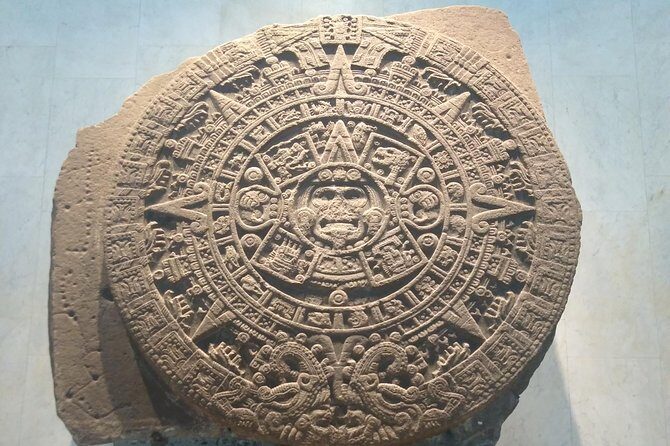
The standout topic mentioned for the audio guide is learning how the Aztecs protected themselves. Even with a short tour length, having one focused historical theme is what turns a walk into something more meaningful.
Why this is valuable for you: protection and survival are practical lenses on history. Instead of only memorizing dates, you’re invited to think about choices, strategies, and how people handled pressure. That’s a strong way to learn in a limited timeframe, because it gives your brain a handle to hold onto.
A heads-up: this tour is described as a beginner-friendly overview, and one piece of feedback said the information felt a bit normal and that more detail would help. So if you want deep context, you may need to supplement with your own reading or a longer guided visit later. But as a first pass to spark curiosity, this kind of chapter is exactly the right size.
You can also read our reviews of more tours and experiences in Mexico City




Latin American Tower and Bellas Artes theater facts
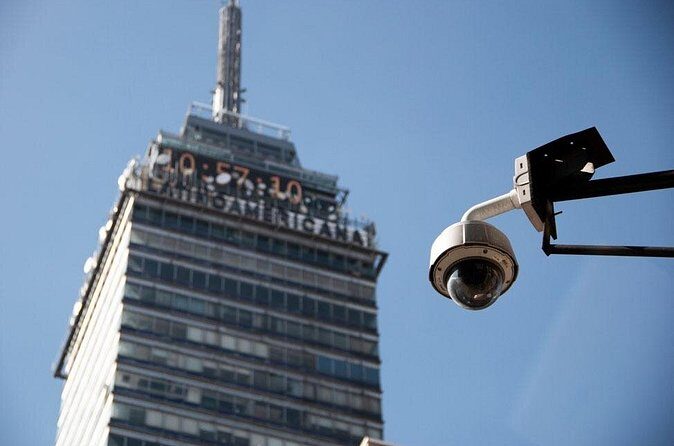
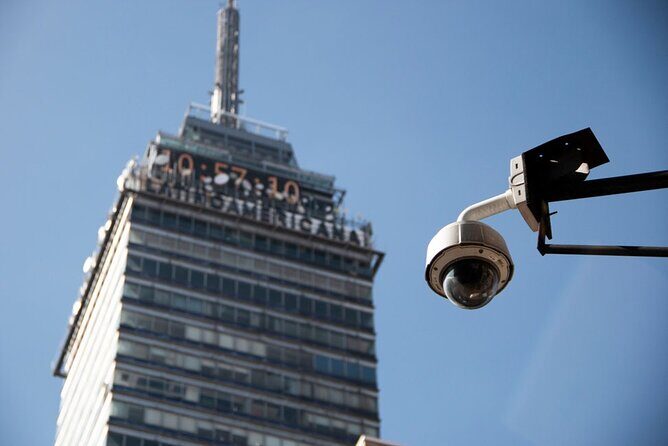
The highlights also note interesting facts around the Latin American Tower and the Bellas Artes Theater. In a walking tour, these “facts” segments are often less about you visiting one specific interior and more about you learning what to notice as you look at the city’s skyline and landmark cluster.
This is where an audio guide shines for beginners. When you don’t know the difference between architectural eras or why a tower is notable, you lose time. A short audio fact can prevent that. It tells you what you should care about, so your photos and mental notes become more than tourist snapshots.
One possible drawback to keep in mind: if the narration voice is not engaging for you personally, you might struggle to hold attention through these fact-heavy sections. A feedback note mentioned that the voice felt more like it was made for children and became tiring. That’s not a deal-breaker for everyone, but it’s a real consideration if you rely on audio for your main learning.
The museum, scenic stop, and monument finish

The itinerary includes a museum stop, then a scenic spot, and then a monument before the final arrival. The tour data doesn’t provide specific names for all of these middle stops, so you should plan for a more flexible experience: you’re being guided by chapter sequence and walking flow rather than a strict, museum-to-museum checklist.
That said, I like how the pacing is designed. A museum stop can give you something tangible—information tied to objects or displays—while the scenic spot shifts you into observation mode. Then the monument segment acts like a finale, helping you end with a strong sense of arrival.
Your tour ends at Hemiciclo a Juárez, located at Av. Juárez 50, Colonia Centro, Centro, Cuauhtémoc, 06050 Ciudad de México, CDMX. Finishing here makes sense because it’s another visual anchor in Centro. It helps you close the loop: you start with one iconic cultural building and end at a monumental civic landmark.
Offline chapters and maps: how to make it work smoothly

The tour includes all chapters with offline use, maps, and tips to explore Mexico City. That’s a huge quality-of-life feature in Mexico City, where data can be inconsistent depending on where you are and how busy things get.
Here’s how to set yourself up well:
- Download and open the audio chapters before you start walking.
- Keep your phone on a brightness you can comfortably read and follow.
- Use the offline maps to confirm you’re on track between stops, especially when streets look similar.
You’ll also want to bring your own gear. The tour explicitly says smartphone and headsets are not included, and snacks are not included. That means you control comfort. If you hate earbuds, this isn’t the type of tour that will fix that for you. Bring what you like.
Timing tip: because the tour is about 40 minutes, you don’t want to lose too much time at each stop. Use the audio like a guide, not like a playlist you squeeze in whenever. If you pause for photos, pause briefly and then restart the chapter.
What to bring, and how to stay comfortable
Since this is self-guided, your “comfort checklist” matters more than on a guided group tour. At minimum, plan for:
- A smartphone with enough battery for offline audio and maps
- Headsets you actually enjoy using
- Comfortable shoes for walking around Centro and public areas
The tour notes that it’s near public transportation, which is helpful if you’re combining it with other sights. It also notes service animals are allowed, and most travelers can participate, which suggests it isn’t designed for high mobility challenges.
One more practical consideration: because admissions aren’t included, you should decide in advance whether you want to enter the Palacio de Bellas Artes or any museum stop. If you do, the tour’s “about 40 minutes” may turn into a longer outing. If you don’t, the walk should stay closer to the intended pace.
Who this Mexico City audio tour is best for
This is built for beginners and for people who want an orderly introduction. It’s especially good if you:
- Want a quick way to understand Centro landmarks without booking a full guided tour
- Prefer to move at your own speed, with audio chapters instead of waiting for a group
- Like learning through short, focused topics like Aztec survival strategies and legends
It’s also a solid choice if you’re the type who likes “look first, read later.” The tour gives you basic history fast, then sends you walking so you can see the city while it’s fresh in your mind.
But it may not be perfect for you if you’re picky about voice narration. One negative note specifically complained that the audio voice wasn’t attractive, felt tiring, and seemed aimed at kids. If audio quality is a deal-breaker, try to use the chapter preview (if available) before committing, or plan to switch to more independent reading if you lose interest.
Should you book this self-guided tour in Mexico City?
Book it if you want a fast, beginner-friendly orientation from Palacio de Bellas Artes to Hemiciclo a Juárez, with offline audio, maps, and tips. The short 40-minute length makes it easy to fit into a first-day schedule, and the mix of gardens, legends, and landmark facts gives your walk a clear educational purpose.
Skip it or pair it with something else if you need deeper history and more detailed explanations. If you’re sensitive to narration style, you should know that at least one person found the voice off-putting and wanted richer detail. In other words, this is a good primer, not a substitute for a specialist guide.
If you want a simple, organized first look at Mexico City’s cultural core, this audio tour is a practical choice. If you crave heavy scholarship and dramatic storytelling, you may feel underfed.
FAQ
How long is the Mexico for Beginners self-guided audio tour?
It’s about 40 minutes.
Is the audio tour available in English?
Yes, it’s offered in English.
Where does the tour start and end?
It starts at Palacio de Bellas Artes (Av. Juárez S/N, Centro Histórico de la Cdad. de México) and ends at Hemiciclo a Juárez (Av. Juárez 50, Colonia Centro).
Can I use the audio offline?
Yes. The tour includes chapters with offline use, plus maps and tips.
What is not included?
You’ll need to bring a smartphone and headsets. Snacks and admission tickets are also not included.
Is this tour private?
Yes. It’s a private activity, and only your group participates.
Can I cancel and get a full refund?
Free cancellation is available. You can cancel up to 24 hours in advance for a full refund.