REVIEW · MEXICO CITY
Architecture and History of Mexico City – Small Groups
Book on Viator →Bookable on Viator
Mexico City can feel like one big time machine. This small-group walk strings together its layers of change—Mexica roots, Spanish-era buildings, and 20th-century ambition—without drowning you in facts. I especially like the tight, 3-hour format that keeps momentum, and the way the guide uses the House of Tiles balcony views to explain how the city grew. One heads-up: it is a walking tour with a moderate fitness level, so comfortable shoes matter.
What makes it work is the storytelling method. You stop at key sites, look closely at materials and design, then get context you can actually use when you wander on your own afterward—especially in the Centro Histórico. Guides like Raul (as seen in past tours) are praised for being warm, engaging, and the kind of host who lets you ask questions instead of rushing you along.
In This Review
- Key things that make this tour worth your time
- Why Mexico City’s architecture is really a story about change
- Torre Latinoamericana: seeing “layers” before you even start walking
- El Atrio del Templo de San Francisco: materials and the city’s long turning point
- House of Tiles: 300 years of evolution and those balcony views
- Palacio de Bellas Artes: art and politics in the background
- Palacio Postal: early-1900s beauty you can read like a sign
- Plaza Tolsa: eclectic details and a statue with a long shadow
- Museo del Templo Mayor: archaeology right in the center of town
- Zócalo finish: wrap-up time that actually helps you plan
- Small group, moderate walking, and how to prepare like a pro
- Price and value: why $83.59 can make sense here
- Who this tour suits best (and who might want a different option)
- Should you book this Mexico City Architecture & History walk?
- FAQ
- How long is the tour?
- How big is the group?
- What’s included in the price?
- Is admission included for all stops?
- Where does the tour start and end?
- What happens if the weather is bad?
Key things that make this tour worth your time
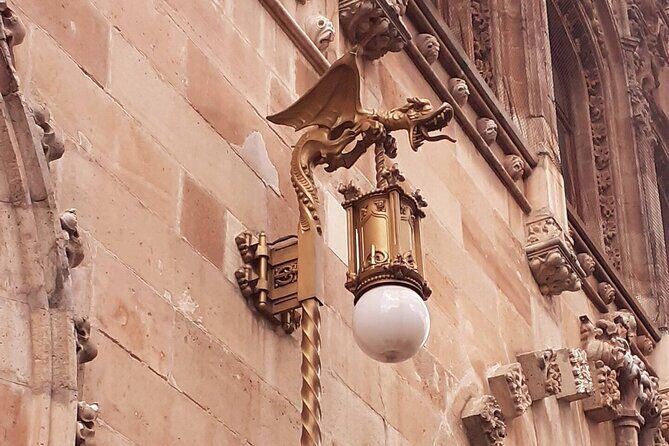
- Layer-by-layer views starting at Torre Latinoamericana, where you see different eras stacked in one frame
- Atrium of the Temple of San Francisco, used to explain Mexico City’s building materials and major shifts
- House of Tiles, explored for its near-300-year evolution plus balcony perspectives over surrounding streets
- Centro Histórico landmarks, including Palacio Postal and Plaza Tolsa, tied to art and politics in plain language
- Tempo Mayor archaeology in the middle of town, so you understand why this area matters today
- Finish at the Zócalo, with time to ask questions and get smart recommendations for the rest of your trip
Why Mexico City’s architecture is really a story about change
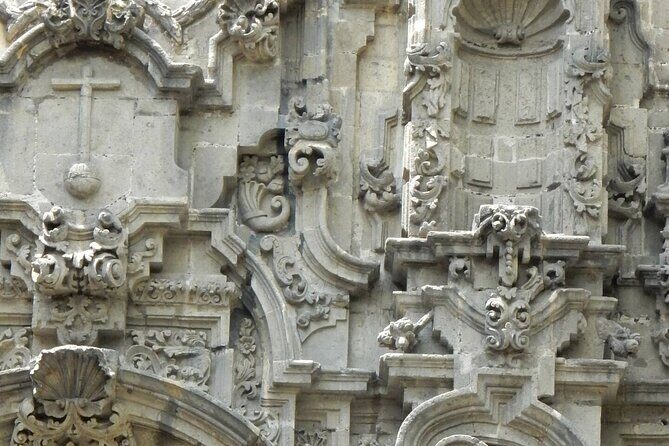
In Mexico City, buildings are like chapters. You can’t just see a façade and move on. You need context: what was happening politically, what materials were available, and how city life changed as power shifted.
That is the point of this walk. You get a sequence of stops in the Centro Histórico area that lets you compare styles across centuries. You’ll go from modern viewpoints to colonial details, then land at a major archaeological site before wrapping up at the Zócalo. The guide keeps the flow moving and helps you connect what you’re looking at to why it looks that way.
Also, the group stays small (up to 6 people). That matters because questions don’t get swallowed. If you want to know why a style looks a certain way or how one era influenced another, you can ask—and the guide can answer without repeating everything for 30 people.
You can also read our reviews of more city tours in Mexico City



Torre Latinoamericana: seeing “layers” before you even start walking
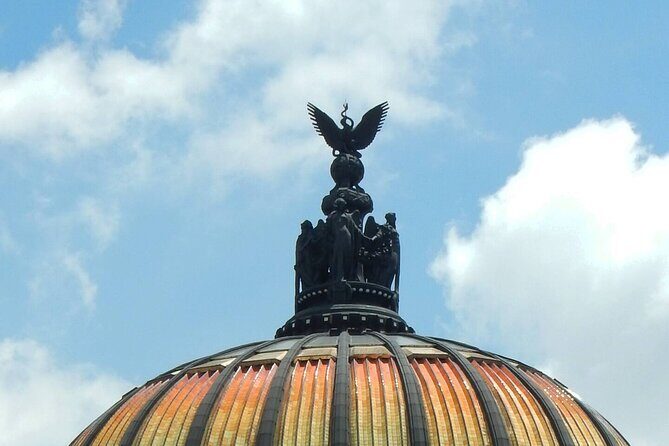
The tour opens at Mirador Torre Latinoamericana, a natural orientation point. From here, you get the big picture fast: the Centro Histórico doesn’t look like one moment in time. It looks like many moments layered on top of each other.
This stop is about perspective. You’re not just enjoying a view—you’re training your eyes for what comes next. As the guide talks about evolution over time, you’ll spot how the city’s growth changes the skyline and street-level rhythm below.
This is also a smart start because it builds momentum. You begin with a clear sense of direction, then the walking route leads you into the details. The itinerary gives you about 30 minutes here, and admission is free for this stop.
El Atrio del Templo de San Francisco: materials and the city’s long turning point
Next comes El Atrio del Templo de San Francisco, focused less on decoration and more on construction logic. This is one of those stops that helps you understand Mexico City as a place where building choices reflect history, not just taste.
You’ll hear how materials shaped what was possible, and how key historical processes helped form the city’s identity. The guide’s goal here is to get you to look past surfaces. When you know what the building is telling you, you start noticing patterns everywhere.
You’ll also spend about 25 minutes at this stop, with admission free. The timing is tight enough to keep it from dragging, but long enough to take in scale and layout rather than just snapping photos and moving on.
House of Tiles: 300 years of evolution and those balcony views
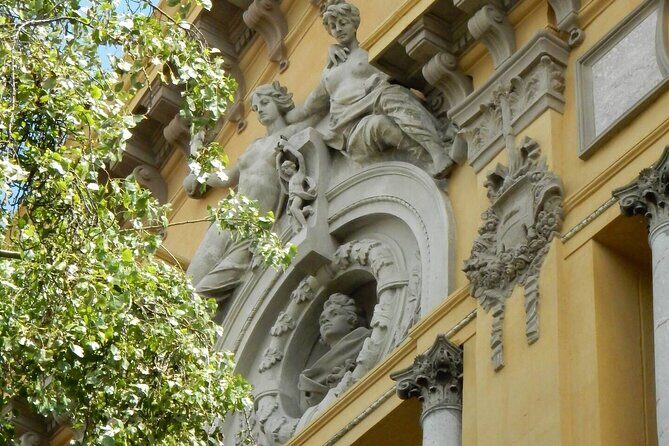
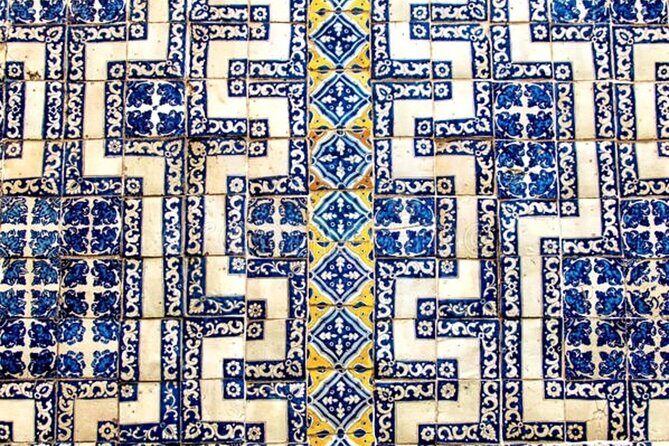
If you like visual details, Casa de los Azulejos (House of Tiles) is the star stop for many people. The tiles are the headline, but the tour treats them as a starting point. You explore how the building evolved over close to 300 years, then you use balconies to see how the surrounding architecture fits together.
That balcony strategy is practical. It turns a single building into a mini-city lesson. You begin to connect rooftops, street lines, and neighboring façades. Instead of thinking of tiles as an isolated showpiece, you understand them as part of a changing downtown.
Expect about 25 minutes here. Admission is free for this stop, and the structure of the visit makes it feel like more than a quick exterior look.
Palacio de Bellas Artes: art and politics in the background

Then you move into Palacio de Bellas Artes, where the focus shifts to historical and political context around major art projects. This stop is shorter—about 20 minutes—and admission is not included.
That doesn’t mean it’s skippable. Even from outside and in nearby viewpoints, the guide connects what you’re seeing to the larger story of Mexico City’s cultural ambitions. It’s a good checkpoint after colonial-era details, because it shows how modern Mexico wanted to represent itself through monumental buildings and art.
Practical note: since admission is not included, you’ll want to watch for what’s optional versus what is covered in the walk itself. Even if you don’t go in, the talk around the building helps you recognize why it sits where it does, and why the neighborhood around it matters.
You can also read our reviews of more historical tours in Mexico City






Palacio Postal: early-1900s beauty you can read like a sign
Palacio Postal is a great “pause and appreciate” stop. You’ll see a post office from the early 20th century, and the tour includes getting inside depending on the time of day.
This is valuable because a historic building feels different once you’re inside it. You notice how space is designed for movement, how light hits surfaces, and how a civic building signals authority and daily life all at once.
Expect about 20 minutes here, and admission is free for this stop. Even if you keep your visit brief, this is the kind of place that rewards slow looking—especially after you’ve been thinking about architecture as a timeline.
Plaza Tolsa: eclectic details and a statue with a long shadow
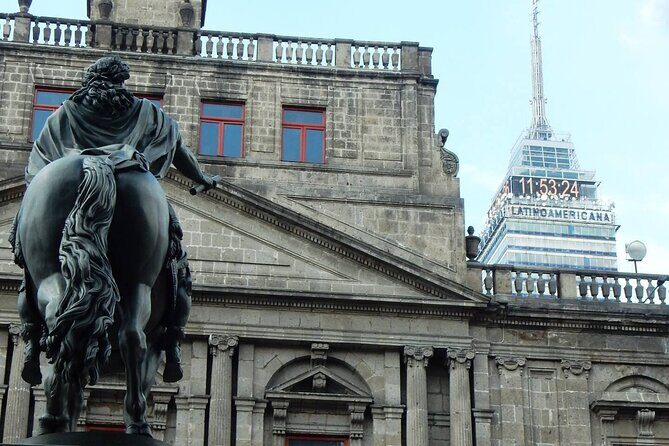
At Plaza Tolsa, the tour zooms out again to show how architecture can feel playful even in the middle of grand history. You’ll look at the different buildings surrounding the statue of Charles IV of Spain, and the guide helps you interpret why this space feels like a mix rather than a single style.
This stop is about noticing. You’ll train your eye to spot the eclectic mix of elements and then connect it to the broader colonial and European influences that still shape the Centro Histórico.
You’ll spend about 20 minutes here, with admission free.
Museo del Templo Mayor: archaeology right in the center of town
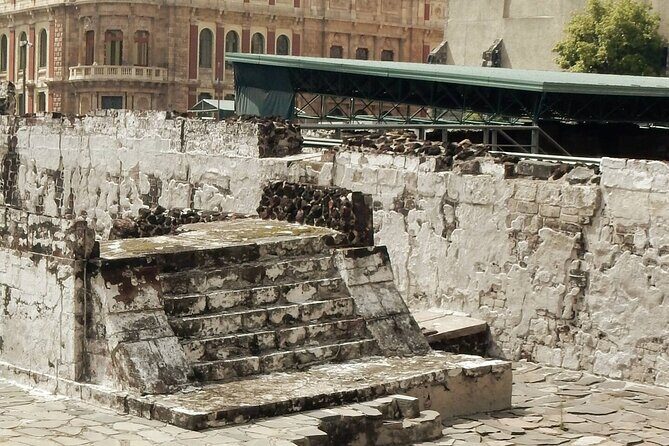
Before the tour ends, you reach Museo del Templo Mayor, a major archaeological site located in the heart of Mexico City. This stop gives you the payoff for the earlier “layers” idea. You’re no longer just comparing architecture styles—you’re seeing the ground-level roots of the city.
Expect about 20 minutes here, with admission free. This is a strong moment because it reframes everything you just walked through. The Centro Histórico area isn’t history in the abstract. It is history under your feet, and it helps explain why the city’s power and geography shifted where it did.
If you’re planning to visit other museums later, this stop acts like a bridge. It makes the rest of your sightseeing feel more anchored.
Zócalo finish: wrap-up time that actually helps you plan
The tour ends at the Zócalo area—specifically Constitution Plaza—after about 20 minutes at the final stop. The Zócalo wrap-up is more than a photo moment. It’s built for conversation.
You get time to ask questions, and you can leave with recommendations for what to do next. That’s a big deal when you arrive in Mexico City with only a rough plan. The Zócalo finish gives you an easy place to reorient, then you can keep exploring with better context.
Since the tour duration includes travel time and is set for around 3 to 3.5 hours, this ending point also helps you avoid the common problem of tours that scatter you far from your next stop.
Small group, moderate walking, and how to prepare like a pro
This is a small-group experience with a maximum of 6 travelers. That’s part of why it’s priced fairly. You’re paying for a guide who can slow down when you have questions and adjust explanations to your interests.
The tour is designed for moderate physical fitness. It’s not described as a long hike, but it is still a walking route with multiple stops. I suggest you wear shoes you’d use for a full afternoon in a city, not for a quick coffee run.
Other practical points:
- You’ll get bottled water
- You’ll receive a mobile ticket
- It runs with a set meeting point near public transportation
- Private transportation is not included, so plan to reach the starting area on your own
If you’re visiting in very hot or rainy conditions, dress for changing weather. The itinerary requires good weather, so clear skies help the experience go smoothly.
Price and value: why $83.59 can make sense here
At $83.59 per person for about 3 to 3.5 hours, the value depends on two things: access and included costs. Here, most admissions are free at the stops listed, and you also get bottled water. The only notable admission not included is Palacio de Bellas Artes.
So what are you really buying? Not just entry fees. You’re buying guided interpretation of major landmarks—explaining how styles connect and why each site matters in the city’s timeline. If you’re doing Mexico City for the first time, a well-told orientation can save you time later. You spend the morning understanding what you’re looking at, and your next museum or neighborhood walk makes more sense.
Also, being booked about 25 days in advance on average suggests it’s a popular way to start a trip. Small-group tours can sell out faster than you expect, especially around prime travel weeks.
Who this tour suits best (and who might want a different option)
This tour fits best if you:
- Want an easy first-day plan in the Centro Histórico
- Like architecture, art context, and history explained through real buildings
- Enjoy question-and-answer style guiding rather than being talked at
- Prefer small groups (up to 6)
It might be less ideal if you:
- Have zero patience for walking between multiple sites
- Want a tour that includes paid museum time everywhere (since Bellas Artes admission is not included and some interiors depend on timing)
Should you book this Mexico City Architecture & History walk?
Book it if you want a smart introduction to how Mexico City changes across time without needing a full semester’s worth of reading. The strongest reason to choose this tour is the stop sequence: you get skyline orientation, then courtyard-level building explanations, then iconic architecture, then archaeology, ending at the Zócalo with guidance for what to do next.
If you’re short on time but still want a meaningful backbone for your trip, this hits a good balance: about half a day, mostly free-access stops, and a guide who focuses on connections rather than just facts.
FAQ
How long is the tour?
It runs about 3 hours to 3 hours 30 minutes, and the total duration already includes time for transportation between stops.
How big is the group?
The tour has a maximum of 6 travelers, which keeps it more personal.
What’s included in the price?
Bottled water is included, and you’ll also receive a mobile ticket. Most admissions listed for the stops are free, with one exception noted below.
Is admission included for all stops?
Admissions are free for the stops listed, including Mirador Torre Latinoamericana, the Temple of San Francisco atrium, House of Tiles, Palacio Postal, Plaza Tolsa, Museo del Templo Mayor, and the Zócalo wrap-up. Palacio de Bellas Artes is noted as not included.
Where does the tour start and end?
It starts at Torre Latinoamericana in the Centro Histórico area (Eje Central Lázaro Cárdenas 2) and ends at Constitution Plaza in the Zócalo area (Pr. a de la Constitución S/N).
What happens if the weather is bad?
The experience requires good weather. If it’s canceled due to poor weather, you’ll be offered a different date or a full refund.