REVIEW · MEXICO CITY
Arrivals & Survival of Jews in Mexico from 1519
Book on Viator →Operated by Mex at Max · Bookable on Viator
This tour turns Mexico City’s Centro Histórico into a readable timeline. You’ll walk from places tied to Jews in hiding to surviving synagogue sites, with Spanish Inquisition-era power showing up in architecture, street corners, and religious symbolism. It also threads in surprising cultural crossovers like Diego Rivera and Frida Kahlo—so the story isn’t stuck in one era.
I especially like the focus on real landmarks tied to both Sephardic and Ashkenazi Jewish presence in Mexico. I also like how the guide (often Carlos) builds meaning around what you’re looking at, not just dates on a page. One drawback: this is also a broader Mexico religious-and-institution walk, so if you want only Jewish history, you may want to give yourself a bit of extra focus as the story shifts between sites.
In This Review
- Where the tour shines in plain sight
- Key highlights at a glance
- Librería Porrúa terrace: Aztec ruins and the Jewish story together
- Behind the Metropolitan Cathedral: the Chapel of the Souls and Inquisition-era power
- Santo Domingo and El Camino Real: trade, watchfulness, and coded symbolism
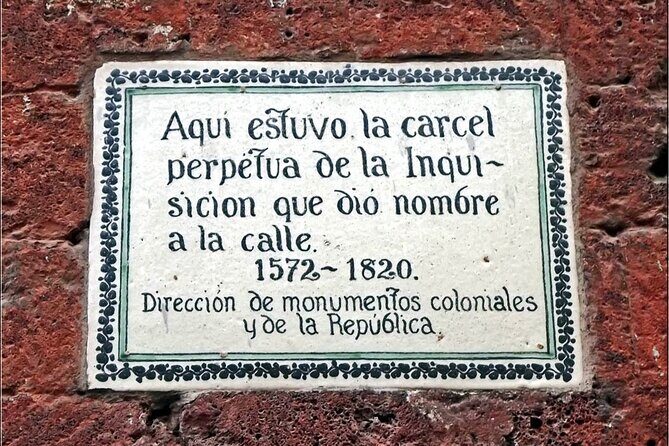
- Antiguo Palacio de la Santa Inquisición: the administrative building and the Perpetual Prison
- Diego Rivera, Frida Kahlo, and the anti-Semitism story Mexico wrestled with
- Plaza Loreto to Justo Sierra Synagogue: Mount Sinai, Nidjei Israel, and the ending you’ll remember
- Price, pacing, and whether $99 feels fair for 3.5 hours
- Should you book this Jewish history walk in Mexico City?
- FAQ
- How long is the tour?
- Where does the tour start and end?
- Is the tour offered in English?
- What’s the group size?
- Do I need to pay admission fees?
- Is it refundable if plans change?
Where the tour shines in plain sight
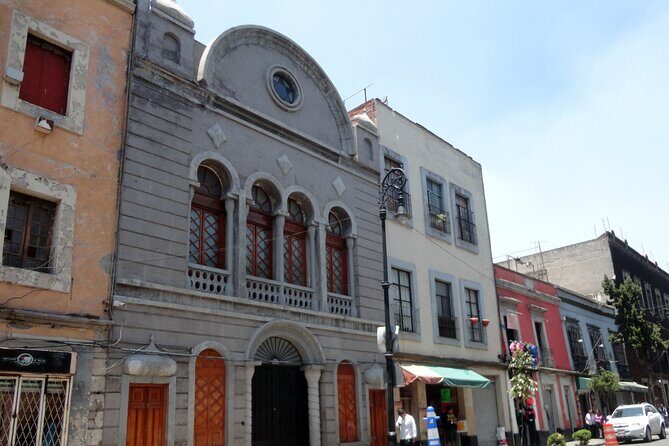
You start in a lively, central neighborhood and move at a comfortable pace through key buildings and plazas. Along the way you’ll see how Mexico’s Catholic colonial past and Jewish survival story overlap—sometimes in subtle, even coded ways. And yes, the ending matters: the final synagogue visit is the payoff.
Key highlights at a glance
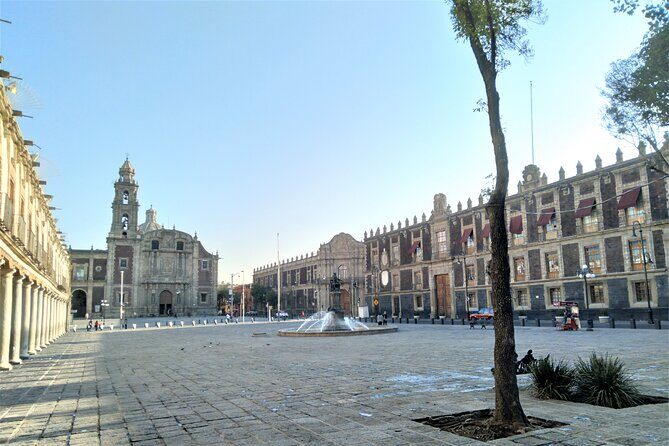
- Sephardic Mount Sinai and Ashkenazi Nidjei Israel: two historic synagogue sites you’ll pass near Plaza Loreto
- Justo Sierra Synagogue visit: a decommissioned, first Ashkenazi shul site in Mexico
- Inquisition clues without a lecture-only vibe: you’ll connect power to specific spots like the Chapel of the Souls and the Inquisition palace
- Diego Rivera meets Frida Kahlo context: the tour links them to Sephardic and Ashkenazi origin and later political history
- Small group, tight timing: about 3.5 hours with limited group size, so questions stay practical
- English-guided, mobile-ticket setup: easy to plan for a morning walk in Centro
You can also read our reviews of more tours and experiences in Mexico City.


Librería Porrúa terrace: Aztec ruins and the Jewish story together
The experience starts at Librería Porrúa in Mexico City’s Centro Histórico, with an intro chat from a terrace overlooking the ruins of the Great Aztec Temple. That detail matters more than it sounds. It sets the tone: this isn’t a single-culture museum tour. You’re in a city where layers stack—Indigenous, Spanish colonial, Catholic institutions, and Jewish communities all leave marks.
From there, you’ll begin connecting the dots between “official Mexico” and the people who had to survive inside it. The guide’s style is a big part of what makes this work. Multiple people highlight how Carlos is engaging and able to answer questions with real clarity and care. You’re not just hearing a timeline; you’re getting help seeing what the tour is pointing to.
What you’ll love here: you get a calm, scenic start before you hit the heavier historical sites. It helps you pace your attention. And because the group is small (max 10), it’s not just you standing in a crowd while someone reads bullet points.
One thing to consider: this opening is also a warm-up, so if you come craving nonstop Jewish synagogue detail from minute one, you’ll still get there—but the tour deliberately builds context first.
Behind the Metropolitan Cathedral: the Chapel of the Souls and Inquisition-era power
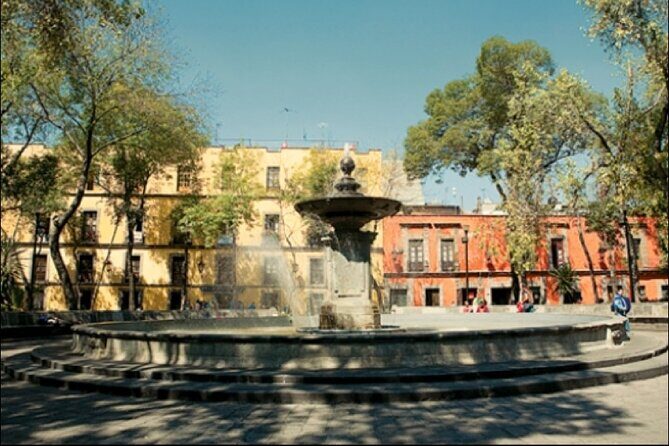
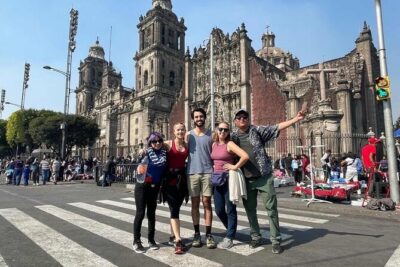
A short walk later, you’ll head behind the Catedral Metropolitana to see the Chapel of the Souls. This stop is designed to show how the Spanish colonial religious system tried to control belief. You’ll look at teachings against heresy displayed at a vantage point, tied to an era when colonial power was used to restrict other religions.
The most useful part is the way the tour links architecture to intent. The info you’ll get emphasizes that the colonial design was meant to keep Jews away, imposed by the Spanish Inquisition. That’s a specific claim, and it’s exactly why this stop works: you aren’t guessing. You’re watching how built space can enforce ideology.
You’ll likely notice how the cathedral area makes it easy to forget what was happening on the ground centuries ago. This tour keeps you from falling into that trap. It turns a familiar landmark into a historical “lens,” and suddenly the city starts acting like a document.
Potential drawback: the tone here is serious. It’s not a gentle “religious coexistence then and now” feel-good moment. If you’re traveling with someone who wants only inspiring stories, plan for a bit of emotional contrast early in the route.
Santo Domingo and El Camino Real: trade, watchfulness, and coded symbolism
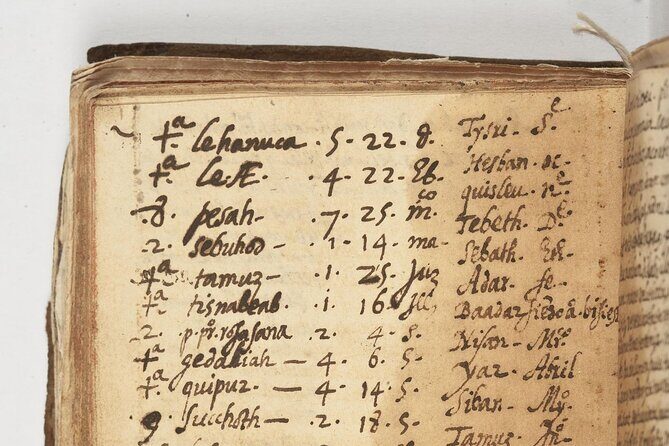
Plaza de Santo Domingo is where the tour shifts from big institutional power to everyday survival. You’ll visit the main trading marketplace area linked to the 16th through 19th centuries, and you’ll learn that Jews-in-hiding came to trade while being watched from the Palace of the Inquisition. That’s a hard idea to visualize, but the tour helps by keeping you in the same physical space where those transactions would have happened.
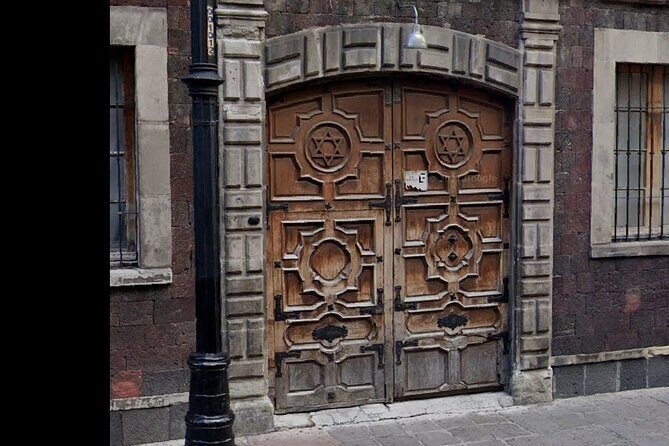
Another standout element: you’ll decipher anti-Semitic hidden messages tied to the Inquisition palace and also connected messages on the Santo Domingo church near the starting point of El Camino Real. This is one of the most “street-reading” moments in the whole tour. You’re not just seeing buildings; you’re learning how symbols can carry messages—sometimes hostile ones—without being obvious at first glance.
What makes this stop valuable for you: it explains how persecution wasn’t only about laws and sermons. It shaped commerce, movement, and public visibility. Even if you know the broad history already, the way this tour ties it to marketplace life gives it a sharper edge.
What might bother some people: this portion can feel like it asks you to hold multiple threads at once—trade, surveillance, and symbolism. If you like your history linear and simple, slow down, ask questions, and don’t be shy about saying you want one step repeated.
Antiguo Palacio de la Santa Inquisición: the administrative building and the Perpetual Prison
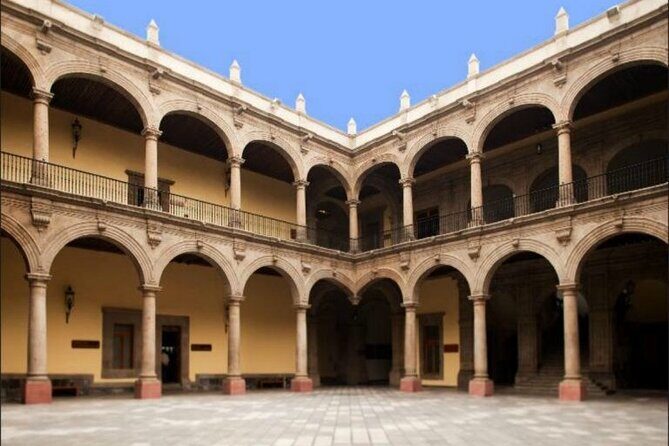
Next, you pass by the Antiguo Palacio de la Santa Inquisición—specifically the administration building and living quarters—right next to the Perpetual Prison. The tour doesn’t treat this as a distant concept. It emphasizes torture and death sentences for Jews there.
This is the stop where the tour’s “walk-and-explain” format really earns its keep. You’re outside, so you can’t rely on screens or audio to soften the edges. It’s just the location, the scale, and the guide’s framing. That’s also why this is a good moment to ask questions like: What changed? What continued? How did ordinary life get shaped by institutions like this?
The best tours don’t just tell you what happened. They help you understand what it felt like to live under that shadow. This stop is built to do that by keeping the scale of the prison complex in your mind.
Practical note: because this tour includes heavier themes, it helps to wear comfortable shoes and bring a little patience. The pace is still manageable, but the content asks for attention.



Diego Rivera, Frida Kahlo, and the anti-Semitism story Mexico wrestled with
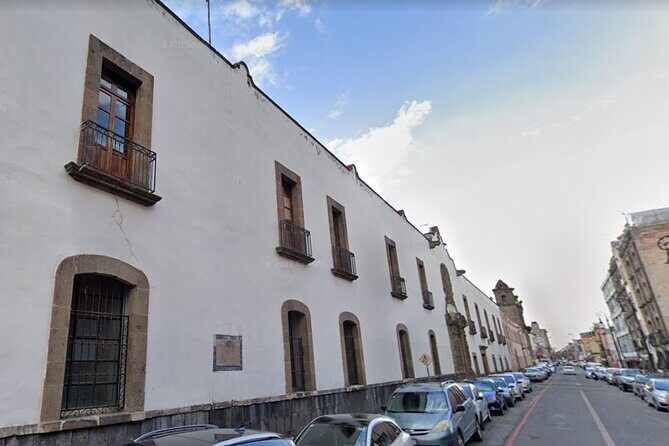
Then comes one of the most unusual pivots. At the Antiguo Colegio de San Ildefonso (seen from the outside), you’ll learn that this is where Diego Rivera—of Sephardic origin—and Frida Kahlo—of Ashkenazim origin—met. That connection can land like a plot twist, especially if your mental image of history is too tidy and separated.
From there, the tour also brings in political history tied to Mexico’s anti-Fascist movement. You’ll learn how that movement supported the cancellation of the first and only ever anti-Semitic national convention, and how it connected to the reception of Lev Davidovich Bronstein, better known as Leon Trotsky, as a refugee.
Even if you’re not a politics buff, this part helps you see something important: Jewish history in Mexico isn’t only a story of restriction. It also includes moments of political action and refuge. The tour’s strength is that it doesn’t freeze Jewish history in one emotional chapter.
One consideration: this is still an all-walking city tour, and this stop is “information-dense.” If you’re the type who likes to take notes, you’ll probably want to pause mentally and let the connections settle.
Plaza Loreto to Justo Sierra Synagogue: Mount Sinai, Nidjei Israel, and the ending you’ll remember
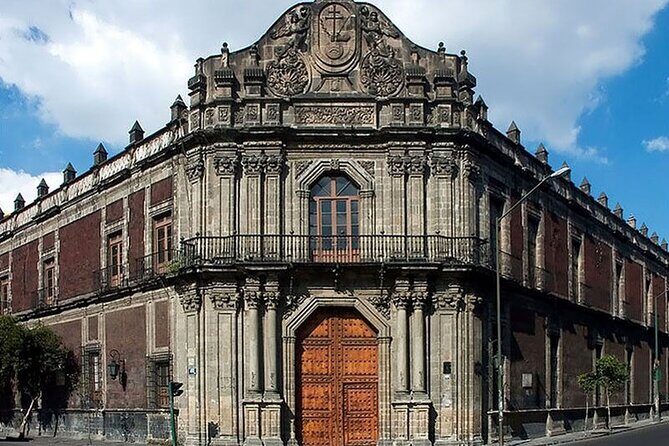
By the time you reach Plaza Loreto, the tour shifts back toward surviving Jewish sites. Here, you pass by the first purposedly-built synagogue in Mexico: Sephardic Mount Sinai. Next to it is the neighboring first Ashkenazim synagogue: Nidjei Israel. This is a powerful contrast after the Inquisition stops. You move from oppression’s structures into communities’ physical presence.
Then the tour ends with a visit to the Justo Sierra Synagogue. The key detail here is that it’s decommissioned and it’s described as the first Ashkenazi shul in Mexico. You’ll see it as part of a chain of locations that map how Jewish life took shape under changing conditions.
This ending is often what people remember most because it gives the story a “place to land.” It turns the earlier clues—architecture, messages, marketplace watchfulness—into a more grounded reality: real communities created institutions, even when circumstances were difficult.
Tip for your visit mindset: don’t just look for a pretty building. Think of it as proof. Proof that people stayed, adapted, organized, and built worship spaces that could carry identity forward.
Price, pacing, and whether $99 feels fair for 3.5 hours
At $99 per person for about 3 hours 30 minutes, you’re paying for a guided, small-group walking route through multiple historical sites in Centro Histórico. The small group cap (10 people max) is a big part of the value. It tends to make the experience feel less like a group chore and more like a conversation with a guide who actually wants you to understand what you’re seeing.
Also, the tour format is efficient: admissions are free for the stops where entrance applies, and entrance is waived or included for some places. So you’re not paying surprise entry fees on top of the tour price.
Language is another practical plus: it’s offered in English. That matters in Mexico City, where the quality of context can swing wildly if you don’t get clear interpretation.
Finally, pacing. Multiple comments point to a not-too-grueling walking rhythm and a well-paced narrative. You’re not stuck sprinting. Still, it’s a city walk with moderate fitness needs, so wear good shoes and plan for uneven sidewalks.
The one value warning: if your main interest is strictly synagogues and Jewish communal life, remember that the tour also spends meaningful time on Catholic and Inquisition-related locations. It’s not purely a synagogue crawl. For many people, that mixed approach is exactly why it feels like real history. For others, it can feel like the Jewish thread appears and disappears.
Should you book this Jewish history walk in Mexico City?
I’d book it if you want a guided walk that connects Jewish survival and identity to the specific places in Centro Histórico—without turning it into a dry lecture. The blend of Sephardic and Ashkenazi sites, the Inquisition-era “how power worked” framing, and the Rivera-Kahlo link gives you a story you can’t get from a quick museum stop.
I’d hesitate only if you’re looking for a mostly light, mostly uplifting tour, or if you want Jewish details only and nothing else. Also, do keep an eye on timing flexibility. The provider notes safety comes first for Jewish tours, so last-minute changes can happen after safety consultations.
If you want your Mexico City experience to have teeth and meaning, this is a strong choice.
FAQ
How long is the tour?
It runs for about 3 hours 30 minutes.
Where does the tour start and end?
It starts at República de Argentina 15, Centro Histórico de la Ciudad de México, Centro, Cuauhtémoc. It ends in front of Loreto Park on the Justo Sierra Street side, near Justo Sierra 71.
Is the tour offered in English?
Yes, it’s offered in English.
What’s the group size?
The tour has a maximum of 10 people.
Do I need to pay admission fees?
Admissions are listed as free for the stops included in the experience, and entrance for some places is either waived or included.
Is it refundable if plans change?
Yes. Free cancellation is available up to 24 hours in advance for a full refund.