REVIEW · SAN MIGUEL DE ALLENDE
Queretaro: colonial architecture and history
Book on Viator →Bookable on Viator
Queretaro tells its story in stone. This guided walk strings together colonial architecture and city-defining history, using churches, convents, squares, and even a cemetery to explain how the place grew into a national player. You start up in the old-town viewpoints and end at the city museum, with a built-in finish point for a snack or an easy return to your hotel.
I love how Armando Magana connects the sites to bigger chapters of Mexican and even world history, not just dates and names. I also like the value for the money: the tour is a small group (max 6), in English, and each stop lists free admission tickets, so you are paying mainly for the story and pacing, not extra site fees.
One possible drawback: this tour leans more toward religious and political history than heavy architecture analysis. If you want architecture as the main focus, you may need to ask follow-up questions to get the level of detail you want.
In This Review
- Key highlights you’ll actually feel
- A 3–4 hour walking loop through Querétaro’s old center
- Stop 1: El Acueducto de Querétaro and the love story behind the city’s start
- Stop 2: Panteón de los Queretanos Ilustres and history you can walk through
- Stop 3: Santa Cruz de los Milagros on the hilltop where Querétaro was founded again
- Stop 4: Plaza de Armas, plus the Neo-Classical faces of civic power
- Stop 5: Santuario de La Congregación de Nuestra Señora de Guadalupe
- Stop 6: San Francisco de Asís Convent and the transformations of the building
- Stop 7: Convento de Santa Clara and the architecture mix in one corner
- Why the story feels bigger than a city tour
- Architecture lovers: what you’ll notice, and what you might want to ask
- Price and value: $50 for a small-group history route with free sites
- Who this tour suits best (and who may want a different option)
- Should you book this Querétaro colonial history walk?
- FAQ
- What time does the tour start, and how long is it?
- Where does the tour meet, and where does it end?
- Is the tour offered in English, and do I get a mobile ticket?
- Are there admission fees for the stops?
- How big is the group, and is it suitable for walking?
- Can I cancel for a full refund?
Key highlights you’ll actually feel
- Small group, max 6: easier questions, better pace, less feeling like a human breadcrumb.
- Armando Magana in English: the narrative style is built around connections, not just facts.
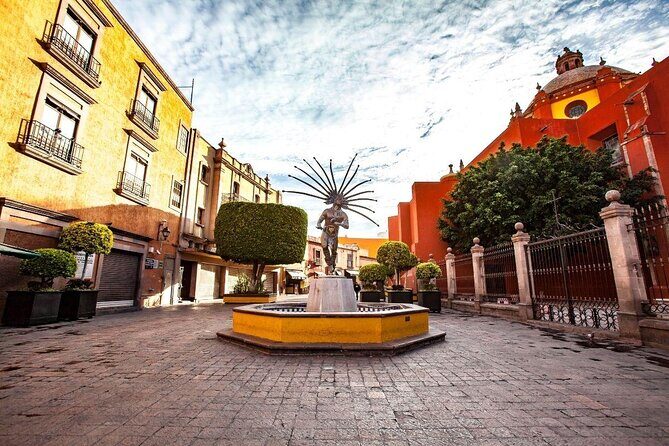
- 7 major stops, all close together: aqueduct, cemetery, hilltop convent, plazas, shrines, and more.
- Free admission at each listed site: you control your budget more easily.
- Convent variety in one route: Franciscan, Guadalupe, San Francisco, and Santa Clara all in sequence.
- Finish at Museo de la Ciudad: you end in a central old-town area, handy for dinner plans.
A 3–4 hour walking loop through Querétaro’s old center
This is a morning tour that starts at 9:00 am, and it typically lasts about 3 to 4 hours. You meet at Mirador de los Arcos (Ejército Republicano 47, La Santa Cruz, La Pastora, 76025 Santiago de Querétaro), and you end at Museo de la Ciudad (Calle Vicente Guerrero Nte. 27, Centro, 76000). That start-to-finish route matters because you get orientation up front, then end where you can keep exploring without doubling back.
The group stays small, with a maximum of 6 travelers, which helps a lot if you like asking questions or you just want the guide to slow down when something sparks your curiosity. The tour notes you should have moderate physical fitness, so plan on a steady walking pace for a few hours and bring comfortable shoes. Service animals are allowed, and the tour is offered in English with a mobile ticket.
You can also read our reviews of more historical tours in San Miguel de Allende


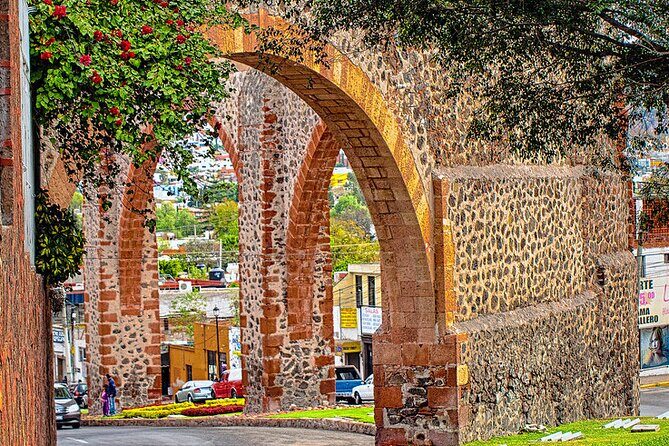
Stop 1: El Acueducto de Querétaro and the love story behind the city’s start
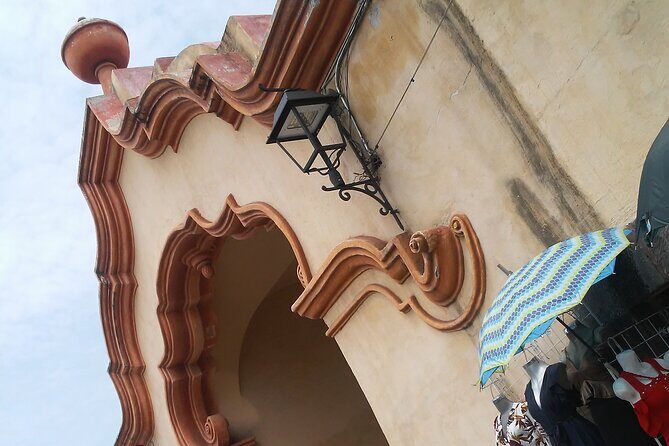
You kick things off at El Acueducto de Querétaro, with about 15 minutes at the site. This is not presented as a random pretty structure. You learn about the foundation of the city, plus a love story tied to how the aqueduct was constructed.
Why this works early in the tour: it gives you a theme. In one stop, you’re shown that infrastructure and emotion both shape a city. You also get a mental map for what comes next—how water, settlement, and power all connect in a colonial-era place.
Time note: It is a short stop, so if you want details, ask early. The guide’s format seems designed for quick story setup, then deeper context as you move on.
Stop 2: Panteón de los Queretanos Ilustres and history you can walk through
Next is Panteón de los Queretanos Ilustres, again around 15 minutes. This stop focuses on important people buried there, and how their actions influenced the course of history in Mexico.
A cemetery stop can feel strange until the guide explains the point. Here, you’re using the site as a history lesson without the usual classroom vibe. You see how national identity gets shaped by individuals—then you carry those names and ideas into the churches and convents later in the walk.
What to expect: this is more about storytelling than long sightseeing. Go in ready to listen.
Stop 3: Santa Cruz de los Milagros on the hilltop where Querétaro was founded again
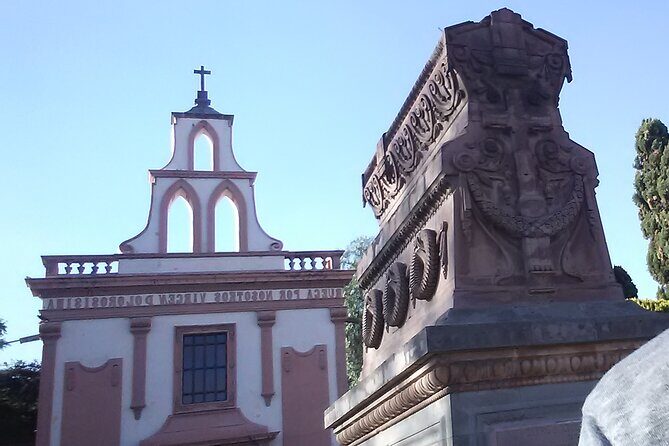
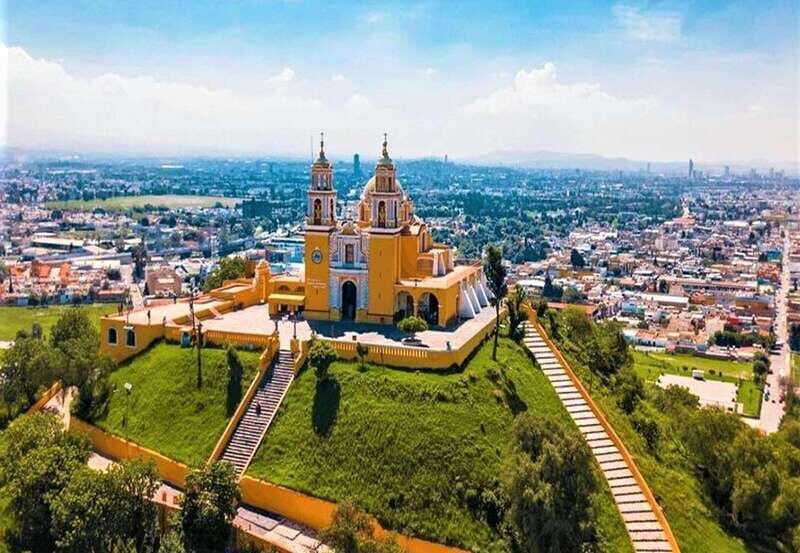
Stop 3 is Templo y ex-convento de la Santa Cruz de los Milagros, with about 40 minutes. You go to a hilltop tied to a key origin story: this is described as the place where Querétaro was founded for the second time. You’ll hear legends and the national historical chapters the Franciscan convent was involved in.
This is the first longer pause on the itinerary, and it often becomes a favorite. Why? Hilltop sites force you to look outward and think about why people built settlements where they did. You also get a shift from civic structures (like the aqueduct) into religious institutions with political reach—Franciscans weren’t just caretakers of faith; they were part of the way the community took shape.
Time note: 40 minutes lets the guide build a clearer narrative arc here, so don’t rush it. It helps you understand the route as a whole.
Stop 4: Plaza de Armas, plus the Neo-Classical faces of civic power
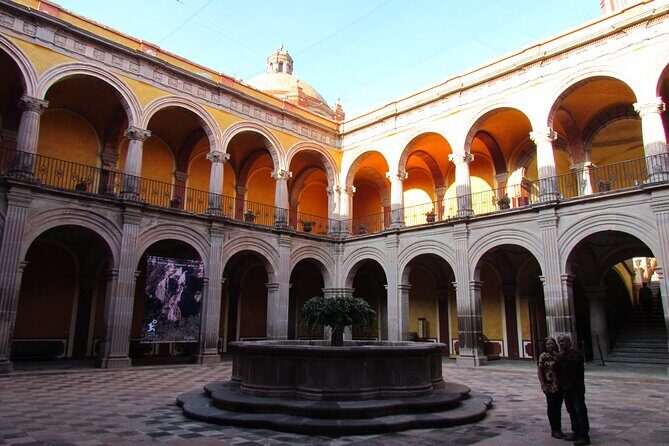
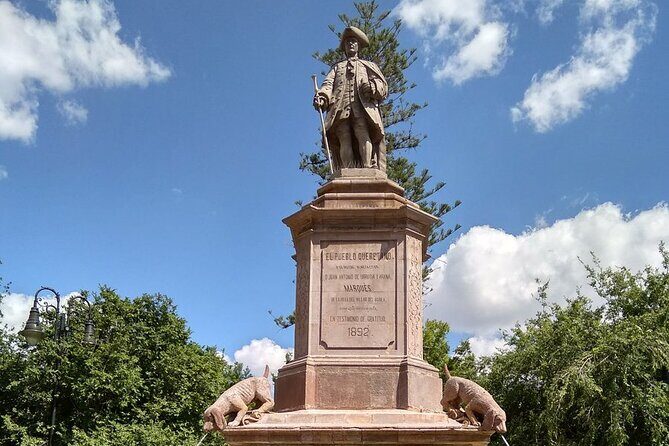
Then you arrive at Plaza de Armas for about 35 minutes. The tour frames it as a space after you’ve already learned the city’s origin and its major institutions. Along the way, you also visit architectural Neo-Classical examples, then you settle into the picturesque main square for more historical tales.
Plazas are more than scenic stops. They are where civic life and symbolism meet. After the hilltop convent and the cemetery, this square gives you the “public square” lens—who the city is, how it presents itself, and how religion and government share space in everyday life.
One practical tip: squares can get busy, so keep your attention on the guide. If the crowd grows, it helps to follow the planned flow instead of trying to photograph from the most crowded spot.



Stop 5: Santuario de La Congregación de Nuestra Señora de Guadalupe
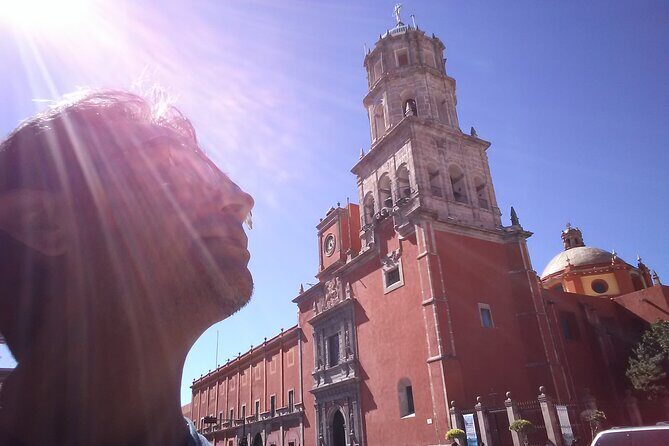
Stop 5 is Santuario de La Congregacion de Nuestra Senora de Guadalupe, with about 15 minutes. Here you appreciate a temple connected to the Virgin of Guadalupe, while learning about the historical importance of this figure in Mexico and about the builder of the temple.
This is a short stop, but it’s a meaningful pivot. You’re moving from civic space (Plaza de Armas) into a religious landmark that shapes cultural identity across the country. Even if you’re not a church devotee, it helps you understand why these sites are so central in Mexican history and daily life.
Expect a listening stop: the value is in the context, not in a checklist of rooms.
Stop 6: San Francisco de Asís Convent and the transformations of the building
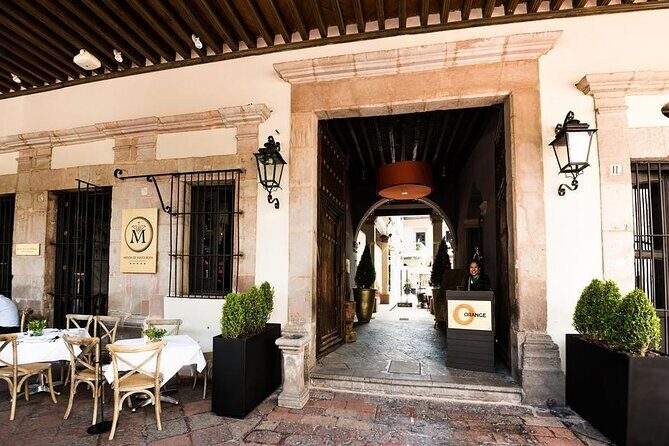
At Templo y Exconvento de San Francisco de Asis de Queretaro you spend about 15 minutes. The tour explains that from inside the ancient premises, you can appreciate transformations of the building due to historical moments in Mexico. You also learn about the spot where the ancient inner-land road started.
This is where you start seeing the city as a living timeline. Buildings get reused, reshaped, and repurposed, and you learn that history leaves physical marks. The inner-land road detail adds a transport-and-trade angle, helping explain why certain institutions ended up where they did.
Quick but important: if you want to learn how the road piece connects to the rest of the story, this is the stop to ask.
Stop 7: Convento de Santa Clara and the architecture mix in one corner
The final stop is Convento de Santa Clara for about 20 minutes. This stop stacks multiple themes side by side: it’s described as the first and largest female convent in the city, and it also served as the city’s hospital. You’ll see a Neo-Classical fountain and a standout example of baroque private house architecture, all in one area.
This ending is smart. After spending time with male religious orders and civic squares, Santa Clara gives you a different institutional perspective—women’s religious life and healthcare in the city’s development. The architecture mix helps too. Even without a long lecture on design theory, you can visually register how styles overlap and how one corner of the city can hold several layers at once.
If your legs are tired: this is still worth it. It feels like a satisfying “wrap-up” stop that ties multiple threads together.
Why the story feels bigger than a city tour
The common thread in the experience is how Armando Magana tells the route like a storyline. You’re not just looking at old buildings. You’re learning how Querétaro fits into Mexico’s bigger turns.
A few examples of the connections you’ll hear about:
- how the search for silver during the Spanish quest had global effects
- how the work of friars in the area was influenced by events in Europe
- how Querétaro mattered in the 1810 revolution
- how French-linked conflict and later events shaped the region in the 1860s era
That type of linking does two things for you. First, it stops the history from feeling like isolated local trivia. Second, it helps you walk through the city with a purpose—each church, convent, or plaza becomes a piece in the same larger puzzle.
Pacing also seems designed for real conversation. Many people highlight that Armando does not rush and answers questions patiently. If you want to know why a specific story matters, this kind of guide style makes the tour feel like a guided class, just in the open air.
Architecture lovers: what you’ll notice, and what you might want to ask
You will see Neo-Classical examples in the civic square area, and you’ll end with baroque private house architecture elements near Santa Clara. You’ll also hear about how convent buildings transformed across historical moments, which is a practical way to connect architecture to time rather than treating buildings like museum objects.
But one limitation to flag: this is not purely an architecture lecture. If you came for detailed architectural analysis—materials, design vocabulary, stylistic breakdowns—this tour may feel more history-leaning. The route still gives you solid visual variety, and you can get more architecture depth just by asking targeted questions like what features suggest the style, or how the building’s use changed over time.
If you know you care most about architecture, treat this as the history-first foundation, then follow up with your own closer look on the streets after the tour ends.
Price and value: $50 for a small-group history route with free sites
At $50 per person for about 3 to 4 hours, this is fairly easy to justify—especially because the stops list free admission tickets. You’re paying mainly for:
- an English-speaking guide telling a connected story
- a planned route through key old-town sites
- the small-group format (max 6), which makes the time feel less rushed
It’s also the kind of tour that can save you time in your planning. If this is your first morning in the area, you come away with a clear sense of where things are and why they matter. That matters for your later self-guided wandering.
One more practical note: the tour is commonly booked about 10 days in advance, so if your dates are fixed, don’t wait until the last minute.
Who this tour suits best (and who may want a different option)
This is a strong fit if you:
- love history with stories, not just dates
- want a route that explains why religious institutions and civic spaces shaped the city
- prefer a small group and time for questions
- want context that connects Querétaro to national and wider events
It may be a tougher fit if you:
- want architecture as the main focus, without much religion and political context
- are traveling with kids who struggle with a 3 to 4 hour walking and listening format (the tour notes moderate physical fitness, and several comments point out it can be a lot of listening time)
Should you book this Querétaro colonial history walk?
Yes, if you want a guided way to understand what you’re seeing. The biggest reason to book is the combination of a smart route and story-driven context. You end up knowing what the aqueduct, hilltop convent, main square, shrines, and convent architecture represent in the bigger story of the region.
I would especially book it early in your trip. The tour finishes at Museo de la Ciudad, so you can keep the momentum and decide on a next step—walk, grab dinner, or take a taxi back. Just go in with the right expectation: this is a history-first tour where architecture is part of the evidence, not the only subject.
FAQ
What time does the tour start, and how long is it?
The tour starts at 9:00 am and runs about 3 to 4 hours.
Where does the tour meet, and where does it end?
You meet at Mirador de los Arcos (Ejército Republicano 47, La Santa Cruz, La Pastora, 76025 Santiago de Querétaro). The tour ends at Museo de la Ciudad (Calle Vicente Guerrero Nte. 27, Centro, 76000).
Is the tour offered in English, and do I get a mobile ticket?
Yes. The tour is offered in English and includes a mobile ticket.
Are there admission fees for the stops?
The listed stops show admission ticket free for each site on the route, so you should not need to pay extra entry fees for those stops.
How big is the group, and is it suitable for walking?
The tour has a maximum of 6 travelers. It’s listed for travelers with moderate physical fitness, so plan on a steady walking schedule for the full session.
Can I cancel for a full refund?
You can cancel for a full refund if you cancel at least 24 hours before the experience’s start time. If you cancel less than 24 hours before, the amount paid is not refunded.