REVIEW · SAN MIGUEL DE ALLENDE
San Miguel de Allende and Queretaro Private Guided Day Tour
Book on Viator →Operated by Aaron Trejo · Bookable on Viator
San Miguel de Allende and Queretaro in one day?
This private guided tour strings together two historic centers with a real sense of how Mexico’s colonial-era culture still shapes everyday city life. You’ll start with San Miguel’s iconic church and main square, then trade street views for quiet parks, markets, monasteries, and Queretaro’s grand plazas.
I especially like the focus on place-by-place context—church symbolism, what certain spaces were built for, and why the buildings look the way they do. I also love the pace of a private day: you get time to walk, look, and ask questions without the squeeze of a big group, plus comfortable minivan transport.
The main thing to consider is the time commitment. Plan on about 8 to 9 hours, some walking through squares and museum areas, and no lunch included—so you’ll want to eat before or plan for snacks.
In This Review
- Key highlights you’ll actually feel on the day
- What this private San Miguel de Allende and Queretaro tour is really about
- How the timing and minivan transport keep you sane
- San Miguel de Allende: Parroquia de San Miguel Arcángel and the Jardin Principal
- A quiet park break and the Mercado de Artesanías food-and-craft mix
- Queretaro’s 17th-century aqueduct: why water history still matters
- Santa Cruz de los Milagros: active monastery, church square, and a thorn-tree detail
- Plaza de Armas and Queretaro’s Government Square gravitas
- Museum of Arts courtyard: baroque carvings you can see up close
- Templo de Santa Rosa de Viterbo: major baroque altarpieces and an active church/ex-convent
- Aaron Trejo’s guiding style is part of the value
- Price and value: is $190 per person worth it?
- What you should pack and expect from the walking
- Should you book this San Miguel de Allende and Queretaro private tour?
- FAQ
- What’s the duration of the San Miguel de Allende and Queretaro private tour?
- Where does pickup happen?
- Is the tour private?
- What language is the tour offered in?
- Is lunch included?
- Can I cancel for a full refund?
Key highlights you’ll actually feel on the day
- Private guide attention so you can ask follow-ups as you walk, not just listen
- Iconic historic cores of both cities, with time built in for stops and photos
- A 17th-century aqueduct visit in Queretaro, tied to how towns got water
- Monastery and active church sites, including a thorn-tree detail shaped like a cross
- Baroque art focus, from carved courtyard figures to major altarpieces
- Comfortable minivan pickup from your place in San Miguel de Allende
What this private San Miguel de Allende and Queretaro tour is really about
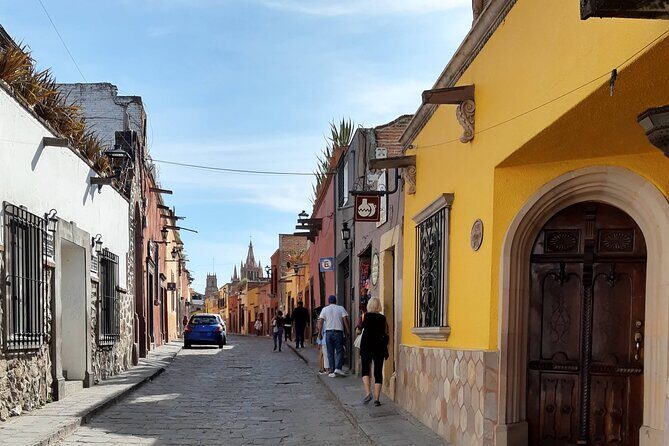
This isn’t a checklist of landmarks. It’s a day where your guide helps you read what you’re seeing—why a church is shaped the way it is, why plazas matter, and how Queretaro’s historic buildings connect to daily life and faith.
You’re paying for a dedicated person in your corner. That matters when you want more than captions. With Aaron Trejo as the guide (mentioned directly in the reviews), the experience is described as fun, friendly, and packed with information that makes the sites click instead of fading into a blur.
You’ll also appreciate the structure. The day moves through both cities’ “best of” areas, with enough breathing room to enjoy squares, markets, and museum spaces rather than rushing from door to door.
You can also read our reviews of more guided tours in San Miguel de Allende

How the timing and minivan transport keep you sane
The tour runs about 8 to 9 hours, and you’re picked up directly from your hotel, AirBnB, or house in San Miguel de Allende. That door-to-door convenience is a big part of the value, especially if you’d rather not manage taxis or parking on your own.
The day is also paced with short, practical stop times. Expect around:
- 30 minutes for San Miguel’s cathedral area and main square
- 20 to 35 minutes for parks, markets, and Queretaro religious sites
- 20 to 45 minutes for plazas, a museum courtyard, and a major baroque church/ex-convent area
Walking is part of it, but the itinerary is built around manageable chunks. The tour is listed for moderate physical fitness, so think comfortable shoes and a steady walking pace rather than endurance hiking.
San Miguel de Allende: Parroquia de San Miguel Arcángel and the Jardin Principal
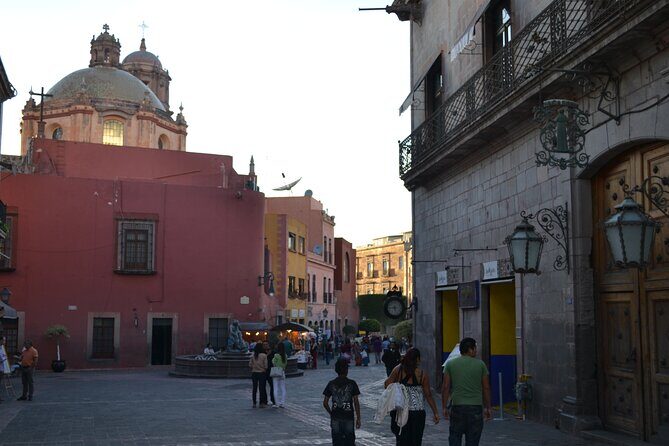
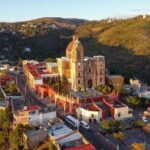
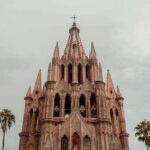
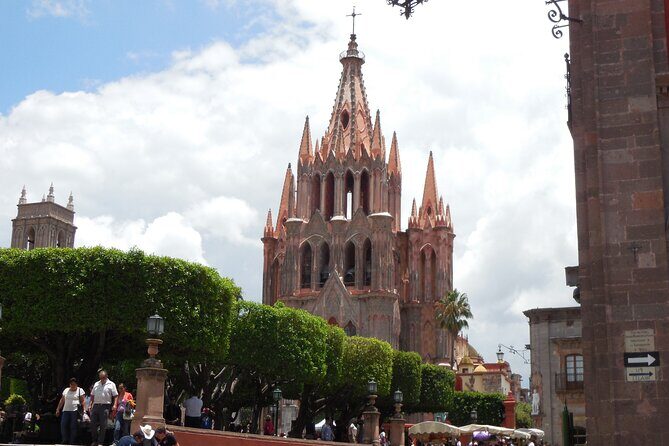
Your day anchors in San Miguel with the Parroquia de San Miguel Arcángel—the church that has become the symbol of the city. This stop is more than a photo op. The time you spend there is designed to help you notice details and understand why the church stands as a defining image for San Miguel de Allende.
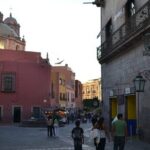
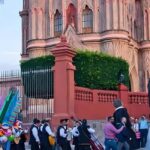
After that, you’ll walk around the Jardin Principal, the main square. This is where you get your bearings fast. Even without reading every plaque, you’ll feel the rhythm of the town: open public space, street activity, and that “this is the center” energy.
Practical tip: wear something comfortable for standing and looking up. Church exteriors are the kind of thing you’ll naturally tilt your head at, and the longer you look, the more you’ll notice.
A quiet park break and the Mercado de Artesanías food-and-craft mix
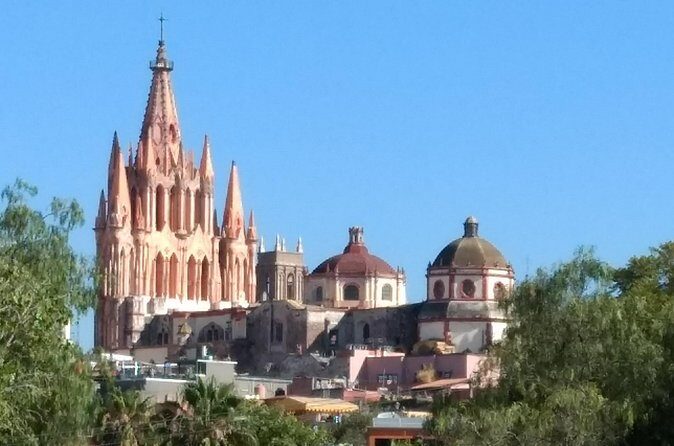
Next comes a calmer shift of pace at Parque Benito Juárez. The point here is not to rush through it. You’re given time (about 20 minutes) to feel the nature and quiet, which is exactly what you want after church-and-square concentration.
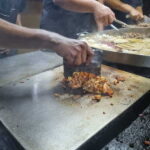
From there you move to the Mercado de Artesanías, with time set aside to explore both artisan shops and the traditional food market. What I like about this stop is the balance. You’re not forced into just browsing souvenirs. You also get a real look at the kind of products and regional foods people actually buy and eat.
What to watch for:
- If you’re hungry, this is the easiest place to grab something, since the tour does not include lunch.
- If you’re shopping, go slow and compare a few stalls. Markets like this are easier to enjoy when you’re browsing for quality, not rushing for a deal.
Queretaro’s 17th-century aqueduct: why water history still matters
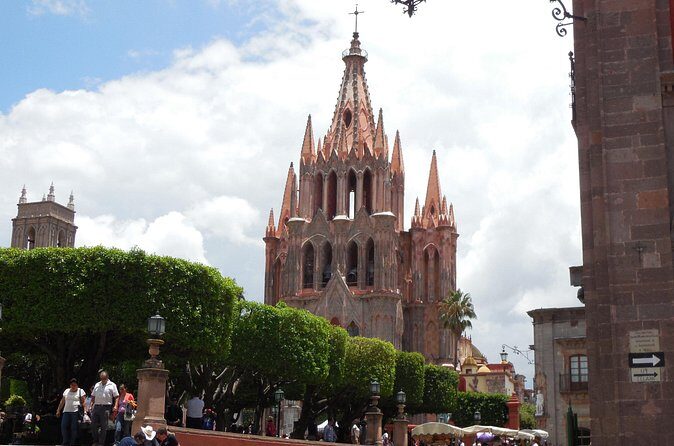
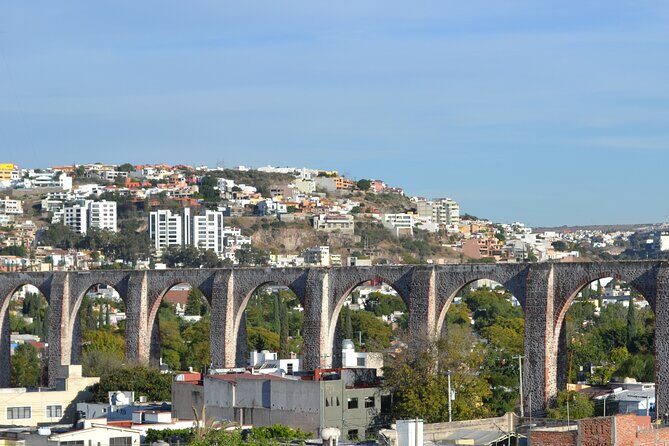
Then the day tips into Queretaro with El Acueducto de Queretaro, an aqueduct built in the 17th century. This stop is short (about 20 minutes), but it hits one of the most important themes of historic cities: water infrastructure.
Even if you don’t go into technical details, seeing an aqueduct in person gives you context instantly. It turns abstract history into something physical—built routes for clean water that would shape settlement and everyday life. It’s also a great visual contrast to the churches and plazas. One is about belief and community space; the other is about survival and public service.
Practical tip: bring your camera, but also take a moment to look at the lines and scale. Aqueducts reward stepping back and understanding the route, not just the closest angle.
You can also read our reviews of more private tours in San Miguel de Allende





Santa Cruz de los Milagros: active monastery, church square, and a thorn-tree detail
The tour includes Templo y ex-convento de la Santa Cruz de los Milagros, a monastery that is still active. You’ll spend about 35 minutes here, including time to see the church and the square.
One detail that really sets this place apart is the mention of a tree with thorns shaped like a cross. That’s the kind of symbolic element that makes a site memorable, and it’s exactly the sort of thing a good guide helps you interpret so you don’t miss the meaning.
Important note: access to the inside areas can depend on whether it’s open. Since the monastery is functioning, expect that schedules or access rules may affect what you can see during your visit.
Plaza de Armas and Queretaro’s Government Square gravitas
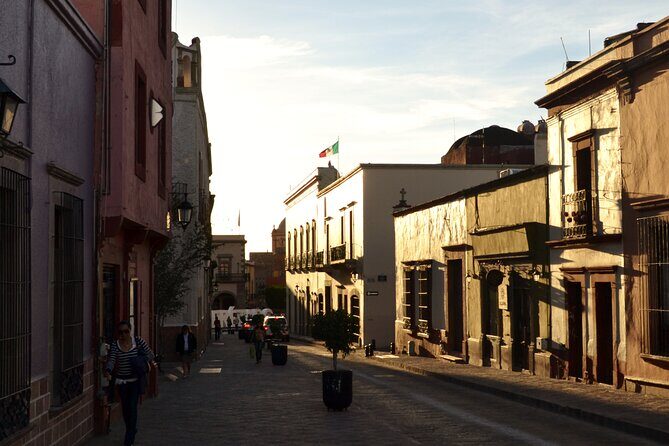
Back in Queretaro’s center, you’ll visit Plaza de Armas—the main square and the area where you’ll see Queretaro’s government building and stately houses around it. This stop is about 20 minutes, which is ideal for soaking in the overall layout.
Why it matters: plazas are where historic power and community life visibly overlap. Even a short stop gives you the “map” of Queretaro’s old city pattern—public space, civic buildings, and surrounding architecture working together.
If you like cities that feel planned and purposeful, you’ll get a lot out of this stop. If you prefer fast-moving markets and shops, this might feel more “sit and look” than you expect—but that’s also part of the value of the itinerary.
Museum of Arts courtyard: baroque carvings you can see up close
Next up is the Museum of Arts of Queretaro, where you enter the building for time in an amazing baroque courtyard. You get about 20 minutes here, and that’s enough to appreciate the main visual idea: carved stone used to create unique figures of fantastic animals and human figures.
This is one of those stops where your brain will do better work with a guide beside you. Baroque details can look like decoration until you understand the symbolism and the style logic behind it. Even if you don’t get every interpretation, the visual impact is still strong.
Practical tip: if you tend to rush museums, set your own mini-goal—like finding the animals first, then scanning for human figures. It keeps the short time meaningful.
Templo de Santa Rosa de Viterbo: major baroque altarpieces and an active church/ex-convent
One of the longer blocks in Queretaro is Templo de Santa Rosa de Viterbo, with about 45 minutes allotted. The big draw here is the church’s baroque altarpieces, which are a must when you visit Queretaro.
This is also an active church. Depending on services and availability, you may be able to visit inside. Your time includes not just the church area but also the ex-convent, which is currently used as a cultural center.
Here’s why I think this stop works so well:
- You get both the religious space and the cultural-adaptive use of the ex-convent.
- You can see how historic buildings keep evolving, not just being frozen in time.
- Baroque altarpieces are visual storytelling. Even at a quick pace, they can hold your attention.
If you’re someone who loves architecture and religious art, this will likely be a highlight. If you prefer shopping and street life, it may feel more structured—but it’s still the kind of stop that pays off when you want depth, not just photos.
Aaron Trejo’s guiding style is part of the value
A private guide can be hit-or-miss, but the reviews for Aaron Trejo point to a consistent strength: he’s described as superb, full of knowledge, and genuinely fun to be around over an 8+ hour day.
That’s not a small detail. When you spend this much time in transit and on foot, the guide sets the mood. You want someone who can keep the day moving while still answering questions and sharing useful context. Based on the feedback you have here, Aaron Trejo seems to treat guests like old friends while keeping the information flowing.
If you like learning without feeling lectured, this style tends to work well.
Price and value: is $190 per person worth it?
At $190.00 per person for a private guided day with pickup and minivan transport, the value depends on what you compare it to.
You’re getting:
- Private touring (only your group participates)
- Comfortable transportation in a minivan
- A professional guide/driver
- Multiple major stops across two cities
- Admission included for at least one key site, while other stops are listed as free
What’s not included:
- Lunch
So the question becomes: does paying for private guiding save you time and help you get more from the sites? If you’re visiting San Miguel de Allende and Queretaro for the first time, and you want the history and culture explained as you go, the price can make sense fast. You’re not paying just for access—you’re paying for interpretation and convenience.
If you’re the type who loves wandering on your own and you’re comfortable reading your way through historical places with just a guidebook, you might spend less independently. But if you want your day to feel organized and meaningful—especially across two cities—this setup is the kind that tends to feel worth it.
What you should pack and expect from the walking
Even though this is a private day, it still includes walking in outdoor historic cores, plus museum time and church/ex-convent visits. The tour is described as suitable for people with moderate physical fitness, so plan for:
- Comfortably walking around main squares and market areas
- Standing and looking at church architecture
- Some museum/courtyard walking and indoor time
Your best friend here is practical footwear. Also bring water and consider a light snack strategy, because lunch isn’t included. If you want to keep energy steady for the longer 35- to 45-minute stops, plan your food timing accordingly.
Should you book this San Miguel de Allende and Queretaro private tour?
Book it if you want a guided day that links San Miguel’s symbol church and central square with Queretaro’s aqueduct, baroque art, and active religious sites—all without you having to organize transport and timing.
Skip it (or consider a different format) if you only want the shortest possible time in each place, or if you’re strongly budget-focused and don’t want to pay for private guiding. Also, since lunch isn’t included, make sure you’re comfortable handling food plans on your own.
If you’re in the mood for a day with structure, context, and a guide who keeps things friendly and engaging—this tour is a strong match.
FAQ
What’s the duration of the San Miguel de Allende and Queretaro private tour?
It runs about 8 to 9 hours.
Where does pickup happen?
Pickup is offered from your hotel, AirBnB, or house in San Miguel de Allende.
Is the tour private?
Yes. It’s a private tour/activity, and only your group participates.
What language is the tour offered in?
It’s offered in English.
Is lunch included?
No. Lunch is not included.
Can I cancel for a full refund?
Yes. You can cancel up to 24 hours in advance for a full refund.