REVIEW · SAN MIGUEL DE ALLENDE
Come to Querétaro to know the EVENTS that changed the History of Mexico
Book on Viator →Operated by ALEJANDRO VILLAR AGUILAR · Bookable on Viator
History leaves fingerprints on streets.
This tour strings together three iconic sites in Querétaro to show how key events shaped Mexico, from the start of the independence story to the city’s early roots and its 18th-century water problem. I like that it’s a private outing in English, with a guide (Alejandro Villar Aguilar) who keeps the storyline moving and answers questions along the way.
My favorite part is the value: the main stops include free admission tickets, so your money goes to the experience, not entry fees. I also like how the guide ties major moments—indigenous peoples in Meso-America, the Spanish arrival, the conquest, colonial life, even Cinco de Mayo and 1800s political change—into a clear timeline you can actually follow. The main drawback to plan around is practical stuff: snacks aren’t included, and the tour needs good weather to run smoothly.
In This Review
- Key highlights before you go
- Walking Querétaro’s “Event Map” in 3–6 Hours
- Meeting at Plaza de Armas: How the Logistics Work
- Stop 1: Palacio de Gobierno y Casa de la Corregidora (1810 Independence)
- Stop 2: Santa Cruz de los Milagros, From 1531 Foundations to El Calvarito
- Stop 3: El Acueducto de Querétaro and 1726 Water Engineering
- Why the Guide’s Style Makes the Timeline Stick
- Price and Value: What $83.59 Buys You
- What to Bring and How to Keep the Morning Comfortable
- Who Should Book This Querétaro Events Tour
- Should You Book This Tour or Not?
- FAQ
- FAQ
- Where does the tour start?
- What time does the tour begin?
- How long is the experience?
- How much does it cost?
- Is pickup available?
- What language is the tour offered in?
- Are admission tickets included?
- What’s included, and what should I bring?
- What happens if the weather is poor?
- Can I cancel for a refund?
Key highlights before you go
- 1810 independence trigger point at Palacio de Gobierno and Casa de la Corregidora
- El Calvarito baptism chapel connected to the earliest indigenous conversions in the area
- 1531 city foundation story at Templo y ex-convento de la Santa Cruz de los Milagros
- 1726 aqueduct engineering explained with real numbers (1280 meters, up to 28 m high)
- Early start at 8:00 am for more comfortable walking and more time to sit when you want
- Private group with pickup coordination and a guide who can flex to your questions
Walking Querétaro’s “Event Map” in 3–6 Hours
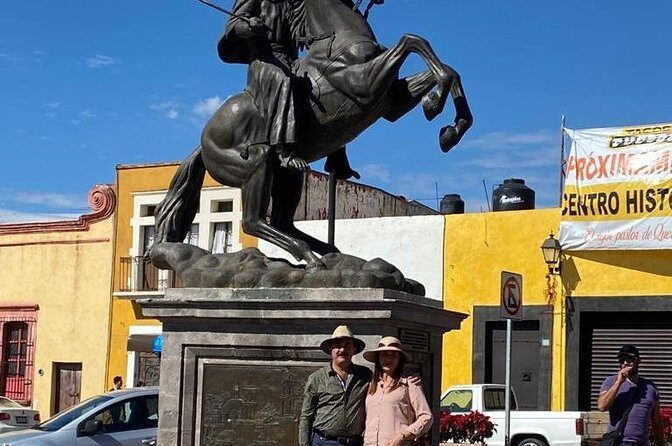
Querétaro is the kind of city where history isn’t stuck in museums. It’s in walls, doorways, and architecture you can stand in front of and connect to bigger moments. This tour does that with a tight route that follows cause-and-effect: early foundations → religious/colonial organization → independence sparks → city growth needs.
The pacing is built for real life. Expect a 3 to 6 hour window and a mix of walking plus time inside or seated listening. If you prefer learning without a long, exhausting hike, this format is a good fit.
You’ll also feel the “day plan” advantage. It starts at 8:00 am from the Plaza de Armas area, so you’re less likely to be fighting the hottest part of the day while still getting meaningful daylight for photos.
You can also read our reviews of more historical tours in San Miguel de Allende

Meeting at Plaza de Armas: How the Logistics Work
Your meeting point is Plaza de Armas, Centro, 76000 Santiago de Querétaro, Qro., Mexico. The tour ends back at the same meeting point, which makes it easy to plan lunch right after.
Pickup is offered, but it works through coordination. They’ll ask you what hotel or location you’re at and then agree on a pickup time with you. That can be great if you don’t want to navigate on your own, especially if you’re arriving in Querétaro for the day.
It’s also designed to be simple on your phone. You’ll have a mobile ticket, and the tour is offered in English. Service animals are allowed, and the route is near public transportation—helpful if you’re coming from elsewhere and want options.
Stop 1: Palacio de Gobierno y Casa de la Corregidora (1810 Independence)

The first stop is where the independence story gets personal. You’ll visit Palacio de Gobierno / Casa de la Corregidora, and you’ll look at the exact place associated with the independence of New Spain beginning in 1810. The tour then connects that moment to how, 11 years later, Mexico becomes independent—so you’re not just hearing dates, you’re seeing the starting point.
This site ties directly to the people behind the push. You’ll focus on the Government House of the Corregidores and the story around Don Miguel Domínguez and Doña Josefa Ortiz. That pair matters because their roles show how independence wasn’t one heroic scene—it was organized pressure and risk by real people.
You’ll spend about 40 minutes here, and admission is free. Practical note: this is a place where you’ll get the most out of the time if you’re ready to listen. Wear comfy shoes anyway, but don’t worry if you want to pause—some time here is built for absorbing the story.
Stop 2: Santa Cruz de los Milagros, From 1531 Foundations to El Calvarito
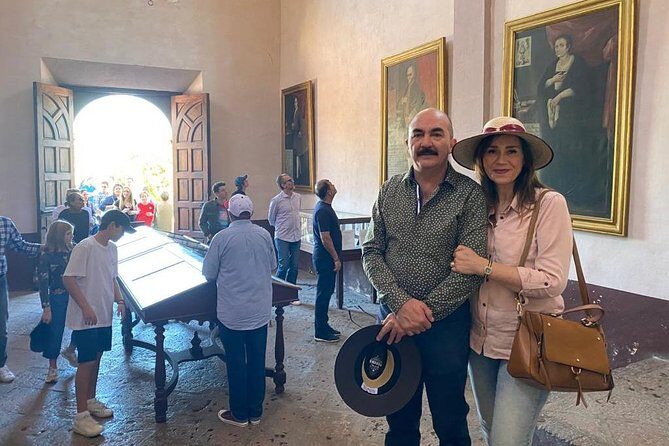
Next comes the kind of stop that changes how you see the city’s age. At Templo y ex-convento de la Santa Cruz de los Milagros, you’ll hear that the foundation of the city took place in 1531. That shifts the focus away from the independence era and reminds you Querétaro has deep roots long before 1810.
Then the tour moves forward through layers of religious and cultural history. You’ll visit the El Calvarito chapel, where the first indigenous people are baptized, and that connects the story to early colonial religious outreach. After that, you’ll see how the site became home to the Franciscan convent, described here as the first Fide propaganda College of America.
Expect about 50 minutes at this stop, with free admission. This is a great place to slow down and look at how the religious spaces are arranged. Even if you don’t know architectural terms, the guide can translate what you’re seeing into the broader story of settlement, conversion, and education.
Possible drawback: if you prefer purely political history, this stop leans more into how colonial institutions and religious systems took shape. It’s still part of the same timeline, but it’s a different flavor than “independence drama.”
Stop 3: El Acueducto de Querétaro and 1726 Water Engineering
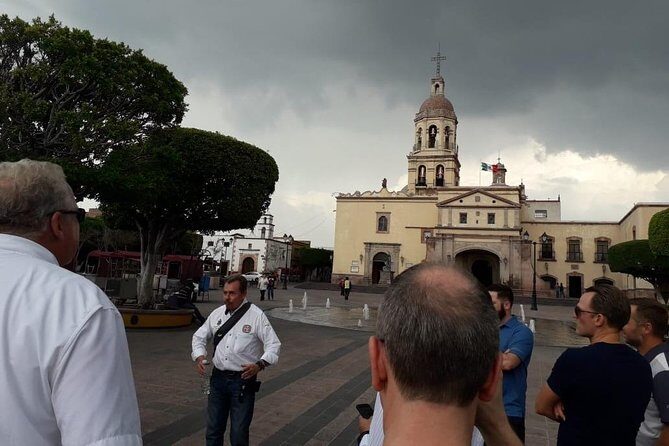
The final stop is dramatic in a very practical way: El Acueducto de Querétaro. It’s the huge monument built to solve the water supply problems that came with the city’s growth. The tour places it in 1726, so you understand it as an engineering response to real urban pressure, not just a pretty old structure.
Here, the numbers do the storytelling. The aqueduct is 1280 meters long, and its arcade rises to as high as 28 meters. That scale is hard to grasp without standing near it, and it makes the point that infrastructure is also history.
You’ll spend about 30 minutes here, with free admission. This is also the stop where you’ll likely want a few photos from different angles, but don’t rush it. The guide’s explanations help you see the aqueduct as a symbol of city planning and survival.



Why the Guide’s Style Makes the Timeline Stick
Alejandro Villar Aguilar is the named provider for this experience, and what stands out in the learning approach is clarity plus flexibility. The tour format supports questions, and you’ll get direct answers instead of a lecture that shuts down conversation.
A big reason this works well is the way the story crosses centuries. Many tours hit one era. This one moves from early foundations to Spanish-era change to independence momentum and then into later political shifts in the 1800s. If you like history as a chain of cause and effect, you’ll appreciate the structure.
You’ll also get connections that can make the subject feel less distant. The guide can relate key topics to the history of the United States—so concepts like independence, colonial rule, and political transformation land with familiar reference points. That’s especially helpful if you’re new to Mexico and want a framework before you wander on your own.
One more practical benefit: the tour includes built-in time where you can sit and listen. If you prefer breaks (or you’re traveling with someone who does), that pacing helps a lot.
Price and Value: What $83.59 Buys You
At $83.59 per person, this isn’t a “cheap and fast” walking tour. It’s a guided, timed route across three major sites, with a focus on events that shaped Mexico.
Here’s the value math in plain terms:
- The core sites have free admission at each stop, so you’re not paying extra for entry
- You get a private group experience, which usually means less waiting and more interaction
- A bottled water is included, which matters on a morning walk
- You’re paying for a guide to connect the dots, not just for someone to point at buildings
The part to plan for is what’s not included. Snacks aren’t included, so if you get hungry, bring something small or plan to eat right after you finish back at Plaza de Armas. Since the tour runs 3 to 6 hours, your body will care more than your calendar.
What to Bring and How to Keep the Morning Comfortable
This is a walking tour, but it’s not described as a hardcore ordeal. Still, you should treat it like a real morning out on cobblestones and historic streets.
I’d pack:
- Comfortable walking shoes you trust
- A light layer, since mornings can feel cooler at start time and warmer as you go
- A snack (because none is included)
- A phone for the mobile ticket and for photo stops
Hydration is partly covered: bottled water is included. That’s great, but don’t assume it’s the only drink you’ll want over a longer 3 to 6 hour window.
Also remember the tour runs best with good weather. If conditions are poor, it can be adjusted or refunded—so check the forecast before you commit your whole day.
Who Should Book This Querétaro Events Tour
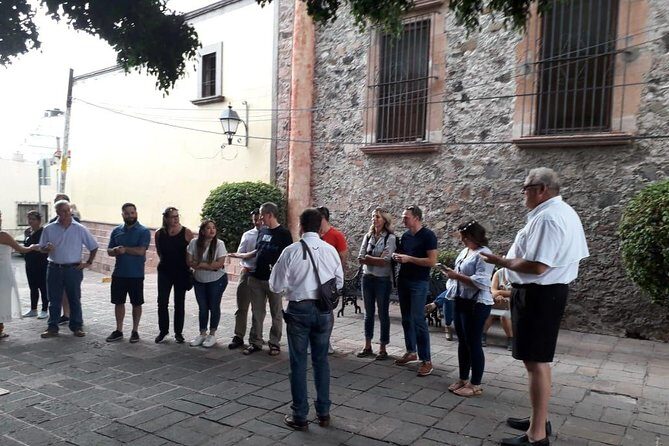
Book this if you want a guided connection between major moments and the places where they happened. It’s especially good for people who like:
- Clear timelines (1810 → independence 11 years later, plus earlier city roots)
- Political and social context, not just dates
- English explanations and the chance to ask questions
It can also be a comfortable choice if you don’t want nonstop walking. The structure mixes movement with listening time, and the guide’s approach can include periods where you’re seated.
If your goal is only “take photos and move on,” you might find the storytelling-heavy format slower than you want. But if you care about what the buildings meant, this route gives you a lot to work with in just a half-day.
Should You Book This Tour or Not?
I’d book it if you’re in Querétaro for a limited time and want the easiest route to understand how the city’s landmarks connect to the history of Mexico. The free admissions, the English private guide, and the tight 8:00 am start make it feel practical, not touristy.
Skip it if you need food included in the price, or if you’re traveling with someone who can’t manage any walking at all. Also consider weather: it depends on good conditions, so keep a flexible plan for your day.
If you want one outing that gives you a strong historical framework and still leaves you energy to explore afterward, this is a solid pick.
FAQ
FAQ
Where does the tour start?
The tour starts at Plaza de Armas, Centro, 76000 Santiago de Querétaro, Qro., Mexico.
What time does the tour begin?
The start time is 8:00 am.
How long is the experience?
It lasts about 3 to 6 hours.
How much does it cost?
It costs $83.59 per person.
Is pickup available?
Yes, pickup is offered. They will ask what hotel or location you’re in and then agree on a time.
What language is the tour offered in?
The tour is offered in English.
Are admission tickets included?
Admission tickets are free for the listed stops.
What’s included, and what should I bring?
Bottled water is included. Snacks are not included, so plan accordingly.
What happens if the weather is poor?
This experience requires good weather. If it’s canceled due to poor weather, you’ll be offered a different date or a full refund.
Can I cancel for a refund?
Yes. You can cancel up to 24 hours in advance for a full refund.