REVIEW · MEXICO CITY
Half-Day Small-Group Historical Center Mexico City Tour
Book on Viator →Operated by Bikes and Munchies · Bookable on Viator
Biking through Mexico City’s center can feel like a crash course. This half-day tour turns that energy into a clear, friendly route with bikes, lunch, and history you can actually remember—all in a small group. I like that you get a practical intro to riding in Mexico City first, then you’re steered past key landmarks with context, not just photos. I also like the food element: you’re not stuck hunting for lunch on your own. One possible drawback: since it’s a bike tour, you’ll want a moderate fitness level and comfortable street riding (even with support).
You’ll be capped at 10 people and led by two guides, which matters. It means you can ask questions, adjust pace, and still cover a lot in about four hours. The route is designed for a strong “first time in Centro” feel, with quick stops at major sites and a longer, more relaxed block around La Alameda and the Diego Rivera mural.
In This Review
- Key Things I’d Prioritize Before You Go
- Why This Bike-and-History Format Works in Mexico City
- Getting Started at Londres 37: How the Day Flows
- Bazar Fusion: Snack Welcome + a Bike-Handling Lesson
- Plaza Tlaxcoaque: A Quick Stop That Adds a Local Lens
- Regina Coeli Parish: Architecture and Community Importance
- Zócalo: The Heart of Centro Histórico
- Museo del Templo Mayor: Aztec Center View From Outside
- Museo Mural Diego Rivera in La Alameda: Where the Tour Slows Down
- Palacio de Bellas Artes and the Revolution Monument: Short Pass-By, Big Meaning
- Safety and the Two-Guide System in Heavy Traffic
- Lunch and Food Stops: Eating Like You Live Here
- What to Wear and Bring for a 4-Hour Centro Bike Day
- Who This Tour Is Best For
- Should You Book This Half-Day Historical Bike Tour?
- FAQ
- How long is the Mexico City half-day historical center bike tour?
- What time does the tour start?
- Where does the tour meet?
- How big is the group?
- Do I need to bring my own bike or helmet?
- Is lunch included?
- What admission tickets are included or not included?
- Do you stop at Zócalo and major landmarks?
- Is the tour in English?
- Can I cancel for a full refund?
Key Things I’d Prioritize Before You Go
- Max 10 people, 2 guides: easier questions and tighter control in traffic.
- Bikes and optional helmets included: fewer things to plan before you meet.
- Snack + lunch built into the ride: you’re feeding the day, not squeezing it in later.
- A mix of grand squares and quieter stops: Zócalo and also smaller local spots.
- Diego Rivera mural stop is included: you get real time at art, not just passing by.
- Temple Mayor viewed from outside: big Aztec context without the full museum commitment.
Why This Bike-and-History Format Works in Mexico City
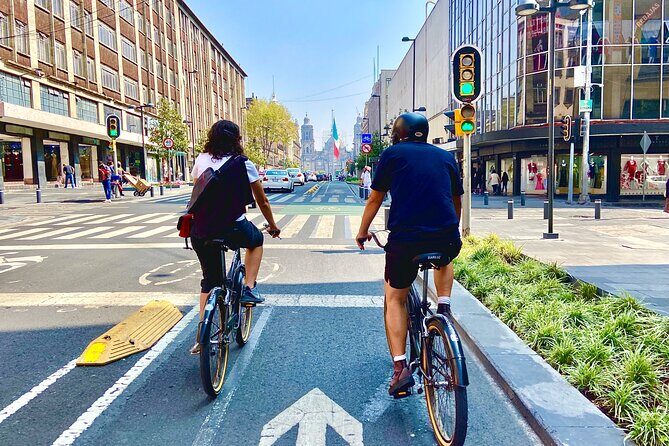
Mexico City’s Centro Histórico is full of layers: Aztec roots, Spanish-era power, and later revolutionary change. The smart move is not trying to “see everything” by foot. On a bike, you move faster between clusters, so the day stays coherent instead of turning into a scatter of disconnected stops.
This tour keeps the storytelling tight. You don’t just roll past monuments. You get the “why it matters” in plain language—how each place connects to the city’s role for locals, and how newer Mexico grew out of older worlds. That’s the value of a history-themed tour that’s also small-group and active: you build your bearings, then the landmarks start clicking into place.
Also, the pacing is built around short, focused site moments. You’re not stuck waiting in long lines at every stop. Instead, you get time where it’s worth it—especially around La Alameda and the mural—then keep moving.
You can also read our reviews of more city tours in Mexico City

Getting Started at Londres 37: How the Day Flows
The tour meets at Londres 37, Juárez, Cuauhtémoc, 06600 CDMX. It starts at 9:00 am, and it returns you to the same meeting point.
The first stop, Bazar Fusion, sets the tone. You’ll receive a snack, get an introduction to what you’ll see, and—crucially—learn how to handle a bicycle in Mexico City conditions. This matters because traffic patterns here can feel intense if you’re new. The tour design helps you avoid that “I’m lost and worried” feeling right away.
From there, the route angles toward Historic Center with small checkpoints along the way. The day is long enough to feel like a true outing, but short enough that you’re not drained before you reach the best parts.
Bazar Fusion: Snack Welcome + a Bike-Handling Lesson
At Bazar Fusion, you get about 40 minutes. The tour includes a snack and an intro to the plan, plus guidance on riding a bike through Mexico City.
What I like about this start: it respects the reality that many people arrive feeling excited but not necessarily confident. When a guide gives you practical steps early—how to position yourself, how to move with traffic flow, when to slow down—you start the rest of the day calmer. That calm shows up later, when you’re actually listening instead of focusing only on balance.
This is also where you can settle your stomach. You’re going to be cycling and standing at sites, so having that early snack is a small thing that pays off.
Plaza Tlaxcoaque: A Quick Stop That Adds a Local Lens
Next you pause at Plaza Tlaxcoaque for about 15 minutes. The guide explains the history tied to the plaza, and you’ll check a street mural.
This kind of stop is underrated. Big names get attention—Zócalo, grand palaces, major museums. But it’s the smaller plazas and street art that help you understand how locals experience the city day to day. In a short stop like this, you’re not trying to master the whole neighborhood. You’re grabbing a single detail that makes the bigger areas feel more human.
Drawback to consider: 15 minutes moves fast. If you love reading deeply on your own, you may wish the mural stop had more time. But as a “context booster” between bigger sites, it does its job.
Regina Coeli Parish: Architecture and Community Importance
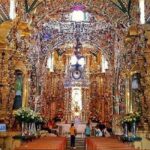
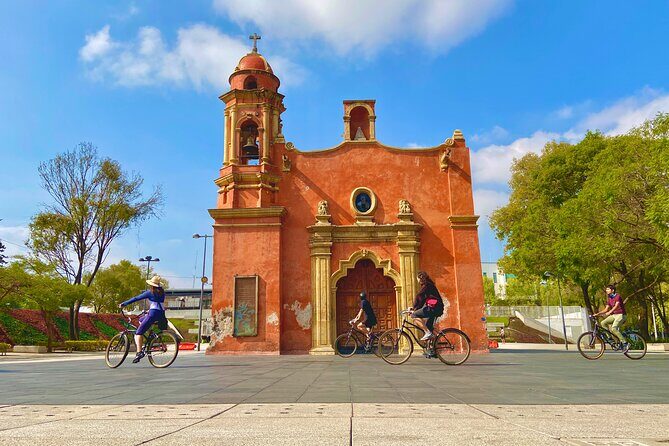
At Regina Coeli Parish / Convent Church, you get about 30 minutes. This Roman Catholic parish church is also a former convent in the Historic Center.
You’ll focus on architecture and the importance of this area for locals. That’s a solid match for a bike tour. Churches and convents can feel like static stone from the outside, but when you’re told what to look for—materials, layout, and the role of religious spaces over time—you see more than a facade.
One practical point: this is the kind of stop where you’ll likely want to look up and around. Wear shoes you’re happy to stand in.
You can also read our reviews of more historical tours in Mexico City





Zócalo: The Heart of Centro Histórico
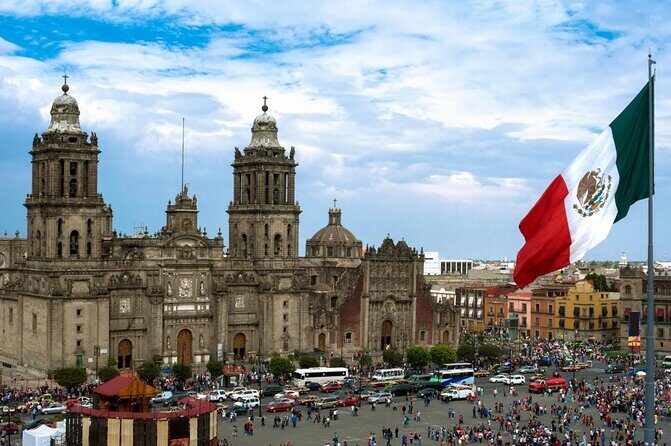
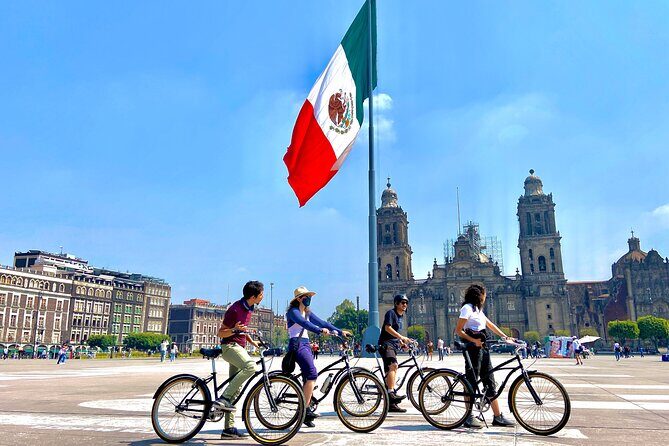
Then it’s off to Zócalo, roughly 15 minutes. This is the pulse of Mexico City, and the tour explains the history tied to this important place.
Zócalo is one of those locations where people either feel overwhelmed or underwhelmed, depending on how much context they have. This quick stop gives you that context without trying to turn it into a full museum lesson. You’ll get the story hook, then you’re back on your bike before fatigue sets in.
If you plan to return to Zócalo later (and you probably will), this stop is a great primer. You’ll understand what you’re seeing when you come back for a longer wander.
Museo del Templo Mayor: Aztec Center View From Outside
Next comes Museo del Templo Mayor. You spend about 15 minutes, but it’s specifically from outside only. The tour highlights that the Aztec empire’s heart is here, with much of it covered by colonial-era buildings around it.
Even from the street, Temple Mayor has a strong impact. It’s one of those places where the name alone isn’t enough. The guide’s explanation helps you connect the site to the bigger story of how Mexico City formed over time—new power layered on top of older worlds.
Consideration: if your museum time is limited and you want to go inside, this stop won’t scratch that itch by itself. The upside is you’re not delayed, and you still get a meaningful Aztec anchor before heading to La Alameda.
Museo Mural Diego Rivera in La Alameda: Where the Tour Slows Down
This is the standout stop for art lovers. You’ll park the bikes at Museo Mural Diego Rivera and spend about 40 minutes. The ticket for this stop is included.
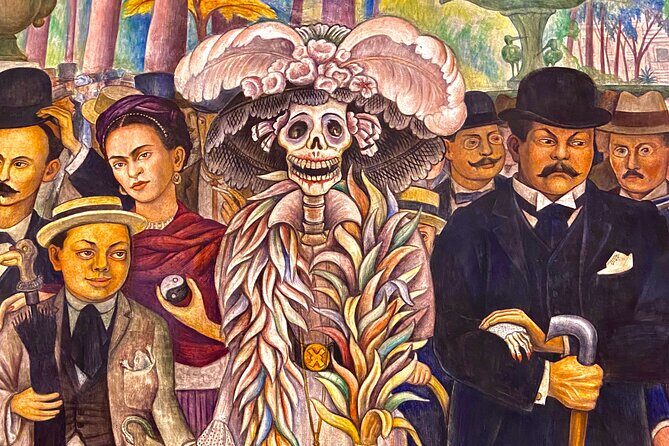
The mural here tells the story of Mexico in the setting of La Alameda, a park where the museum is located. The guide team is focused on muralism, so you get more than “this is by Diego Rivera.” You learn how the mural reads as a narrative—how art communicates national identity and historical change in a single sweeping visual language.
I really like that the bike tour gives you this longer art window. You’re not just sprinting from one postcard to another. You pause, watch details, and take in the bigger idea. For many first-timers, this is where Centro Histórico stops feeling like a list and starts feeling like a story.
Practical tip: museums can mean stairs, sheltered areas, and some standing time. Comfortable clothing is worth it.
Palacio de Bellas Artes and the Revolution Monument: Short Pass-By, Big Meaning
After La Alameda, you get two quick pieces of architecture and revolution-era context.
First, Palacio de Bellas Artes: about 5 minutes, and it’s a pass by. You’ll talk about the building’s architecture and how the Mexican Revolution interfered with its construction. Even in five minutes, that fact reframes the building. It stops being just beautiful and starts being historical in its own making.
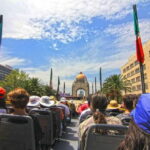
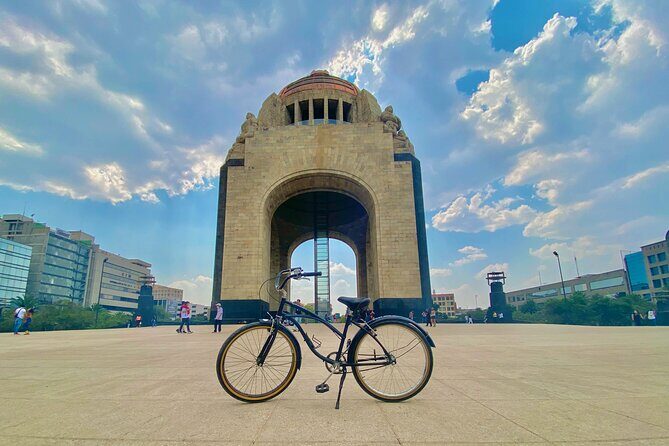
Then the tour continues to Monumento y Museo de la Revolución. You’ll drive past, then stop in the middle to learn about the Mexican Revolution. Time here is about 20 minutes.
The key value is that you’re getting the “why this matters” while you’re already in motion. These monuments can be easy to ignore if you’re not told what to look for. With a guide speaking to the context, they become part of the timeline you’ve been building all morning.
Drawback: since these are shorter, you won’t get a full museum experience. If you want to linger, you’ll need to plan a separate visit afterward.
Safety and the Two-Guide System in Heavy Traffic
Biking in Mexico City is not about pretending traffic isn’t intense. It’s about riding with a plan.
This tour is built for control: two guides handle the movement, and the group stays small at 10 people max. From the way guides are described on the tours, you can expect close coordination—helpers who manage crossings, and a steady pace that keeps you from bunching up.
In one real-life incident, a guide team checked on an unwell rider repeatedly and even offered antiemetic pills until the person felt better. That kind of support can’t replace your own common sense, but it does say something about how the team handles situations while still running the route.
My advice: if you’re nervous, start by telling your guide. The whole system works better when you communicate early.
Lunch and Food Stops: Eating Like You Live Here
Lunch is included. And the tour is structured so you don’t lose the day to searching for food between sites.
The snack at the beginning helps you avoid the classic tourist trap: arriving hungry, then getting stuck with overpriced stuff later. The food-and-history pairing also makes sense culturally. You’re learning the city while tasting it, which keeps your brain engaged even when you’re just riding between stops.
One more note: because you’re cycling and standing in public areas, pick lunch items that sit well with you. If you’re sensitive to spice or rich flavors, keep that in mind when you order.
What to Wear and Bring for a 4-Hour Centro Bike Day
You don’t need to bring special gear, but you do need to plan for real street time.
Bring:
- Comfortable, closed-toe shoes
- A light layer (morning weather can shift)
- Water if you run hot (you might prefer it during breaks)
Wear:
- Clothes that let you move easily
- Sunglasses if the sun hits you on open stretches
Use:
- The provided bike and optional helmet (I’d strongly consider a helmet if you’re even slightly cautious)
Moderate physical fitness is the baseline. If you’re recovering from injury or you’re not steady on a bike, you may want a different style of tour.
Who This Tour Is Best For
This is a great fit if you:
- Want a first-time orientation to Centro Histórico
- Like history but also want movement and variety
- Want authentic street-food style stops alongside landmarks
- Prefer small groups (10 max) with real chances to ask questions
It’s less ideal if you:
- Have no interest in biking at all
- Need a very slow, stop-everywhere pace
- Want full museum entry time for everything (Temple Mayor and Bellas Artes are pass-by or outside-focused here)
Should You Book This Half-Day Historical Bike Tour?
I’d book it if you want a smart introduction to Mexico City’s center without spending the day glued to your phone or stuck in transport lines. The value is in the mix: bikes + lunch, small-group attention, and a route that moves you from major landmarks to art and architecture with context.
Skip it only if biking traffic makes you uneasy beyond your comfort level or if you’re mainly chasing long museum time. For most people, though, this hits the sweet spot: you leave with a clearer map in your head and stories that actually connect the places you saw.
FAQ
How long is the Mexico City half-day historical center bike tour?
It runs about 4 hours (approx.).
What time does the tour start?
The start time is 9:00 am.
Where does the tour meet?
The meeting point is Londres 37, Juárez, Cuauhtémoc, 06600 CDMX.
How big is the group?
The tour is capped at a maximum of 10 travelers and is led by 2 guides.
Do I need to bring my own bike or helmet?
No. Bicycle use is included, and helmets are optional (so you don’t have to bring one).
Is lunch included?
Yes. Lunch is included.
What admission tickets are included or not included?
The Museo Mural Diego Rivera admission is included. Museo del Templo Mayor admission is not included, and you view the temple from outside only. Other stops listed as free include the snack and site visits, while Palacio de Bellas Artes and Monumento y Museo de la Revolucion are not included.
Do you stop at Zócalo and major landmarks?
Yes. You visit Zócalo, pass by Palacio de Bellas Artes, and then stop at the Monumento a la Revolución area for explanation.
Is the tour in English?
Yes, it’s offered in English.
Can I cancel for a full refund?
Yes. Free cancellation is available if you cancel up to 24 hours in advance for a full refund. If it’s canceled because the minimum traveler number isn’t met, you’ll be offered a different date or a full refund.