REVIEW · MEXICO CITY
Explore Mexico City: A Journey Through History, Art, and Cuisine!
Book on Viator →Operated by Andares Free Walking Tour · Bookable on Viator
History walks here. This 2-hour Mexico City tour stitches together Aztec, colonial, and 20th-century art in one easy route, with an English-speaking guide and a small max group of 20. I especially like how the morning starts at Museo del Templo Mayor, then pivots to a real taste of tradition at Dulcería de Celaya.
One thing to plan around: museum-style entries are not always bundled. Some stops may require you to buy tickets yourself, and notes include that Palacio de Bellas Artes tickets may not be sold online.
In This Review
- Key highlights you’ll feel fast
- A practical way to see Mexico City’s “big layers” in 2 hours
- Meeting point and route flow: how the walk actually works
- Stop 1: Museo del Templo Mayor and the Aztec origin story
- Stop 2: Zócalo, the National Palace, and why the name matters
- Stop 3: Catedral Metropolitana de la Ciudad de México
- Stop 4: Dulcería de Celaya, the city’s oldest candy store experience
- Stop 5: House of Tiles and its decorative language
- Stop 6: Palacio Postal, a landmark that’s still about logistics
- Stop 7: Palacio de Bellas Artes and what to watch for
- Stop 8: Diego Rivera murals at Secretaría de Educación Pública
- Price and value: why $20 can be a good deal here
- What the small details say about the guide experience
- Who should book this tour
- A short check before you go: tickets and pace
- Should you book Explore Mexico City: History, Art, and Cuisine?
- FAQ
- What is the duration of this tour?
- How much does the tour cost?
- What language is the tour offered in?
- Where does the tour start and end?
- What time does the tour start?
- Is a mobile ticket used?
- Is bottled water provided?
- How many people are in a group?
- Is the tour tip-based?
- Are service animals allowed, and is the area near public transportation?
- Are museum or attraction tickets included?
Key highlights you’ll feel fast
- Centro Histórico orientation in one walk: you’ll connect the dots between Aztec power, Spanish-era rule, and modern Mexican identity.
- Real art in public space: Diego Rivera’s murals at Secretaría de Educación Pública are a standout way to read the city.
- Classic Mexico City snacks and shopping culture: Dulcería de Celaya brings you into the old-school food story.
- Landmarks that still function: Palacio Postal is not just a photo stop; it’s about what’s still running today.
- Small-group feel: up to 20 people keeps the pace friendly and the explanations practical.
- End point at Bellas Artes: you finish in a perfect spot to keep exploring nearby.
A practical way to see Mexico City’s “big layers” in 2 hours
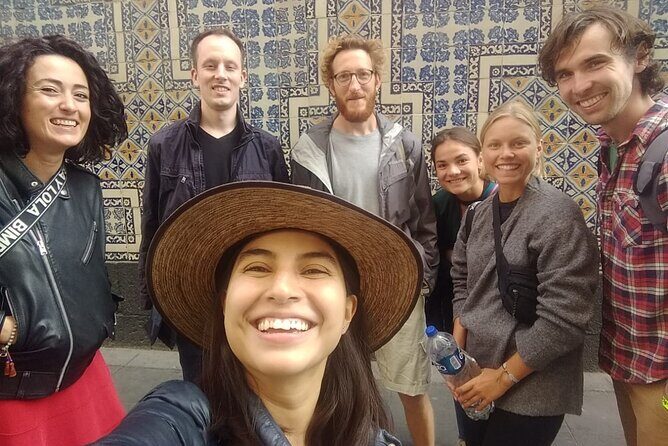
If Mexico City can feel like a giant puzzle, this tour helps you start putting pieces together. You get a guided walk through the Centro Histórico, where Aztec roots, colonial architecture, and modern murals sit close enough to connect in your mind.
The format is simple: you meet near República de Guatemala 4, then walk the area with stops that each tell a different part of the Mexico City story. The pacing is set up so you can actually absorb things without feeling like you’re sprinting between checkmarks.
And at $20 per person, the value comes from coverage. In two hours you’re hitting major sites that usually take longer to plan on your own, especially if you’re trying to understand what you’re looking at.
You can also read our reviews of more city tours in Mexico City

Meeting point and route flow: how the walk actually works
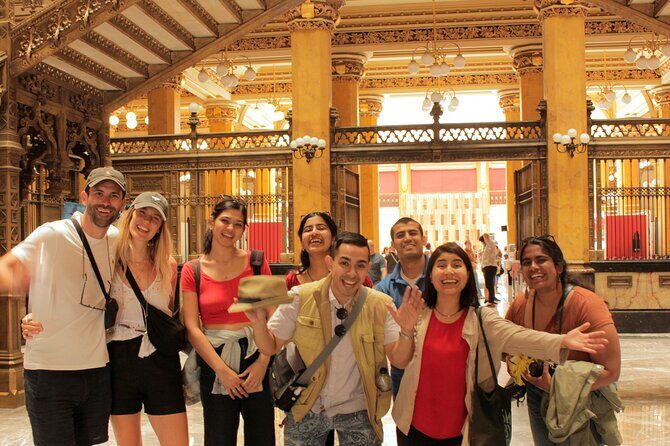
You start at República de Guatemala 4, Centro Histórico (Cuauhtémoc). The tour begins at 9:30 am and ends at Palacio de Bellas Artes (Av. Juárez S/N, Centro Histórico).
That end point matters. Finishing at Bellas Artes puts you back in the center of the action, where it’s easy to keep going on foot. You’re also positioned near lots of transit options, which helps if you’re pairing this with other neighborhoods later.
This is a walking tour, so bring comfortable shoes. The tour suggests bringing water, and you should expect the day to move at street pace, not museum-quiet pace.
Stop 1: Museo del Templo Mayor and the Aztec origin story
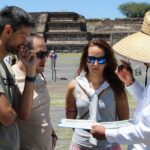
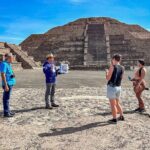
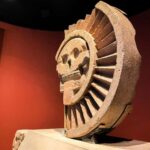
The morning starts at Museo del Templo Mayor, built around one of the most important Aztec temple sites in the region. Here, the guide explains where the Aztecs came from, how they lived, and why their empire mattered so much in its time.
What I like about starting here is that it gives your eyes a framework. When you later stand in the Zócalo area, or see colonial buildings that rose afterward, you’ll understand that you’re not looking at “separate eras.” You’re seeing layers built on the same ground.
Practical note: the schedule lists entry as 15 minutes with admission ticket free, but tickets can still be a question depending on the day and the type of entry required. I’d plan for the possibility that museum-style access may not be fully included.
Stop 2: Zócalo, the National Palace, and why the name matters
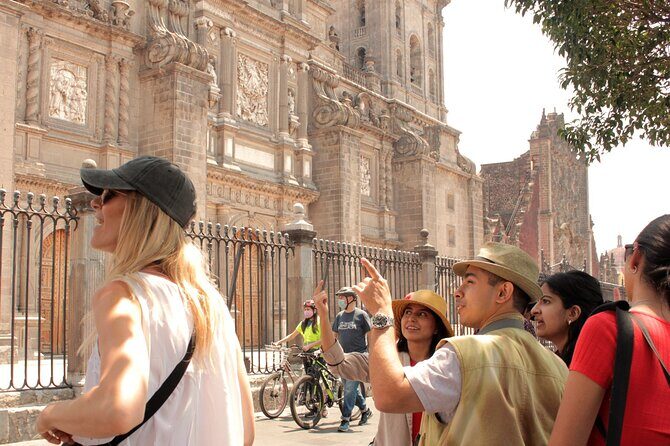
Next comes the Zócalo, Mexico City’s main square. It’s the kind of place where you can’t help noticing the scale, but without context it can feel like just another big plaza.
This stop fixes that. You’ll learn why it’s called Zócalo and what was here before the Spanish arrived. You’ll also see the National Palace from the square and get pointed at what makes the area special beyond its role as a landmark.
This is one of those moments where the guide’s job is to give you a mental map. You start to see the Zócalo not only as a view, but as a stage where political power and public life have intersected for centuries.
Stop 3: Catedral Metropolitana de la Ciudad de México

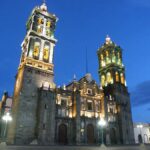
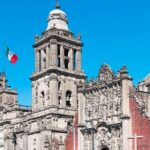
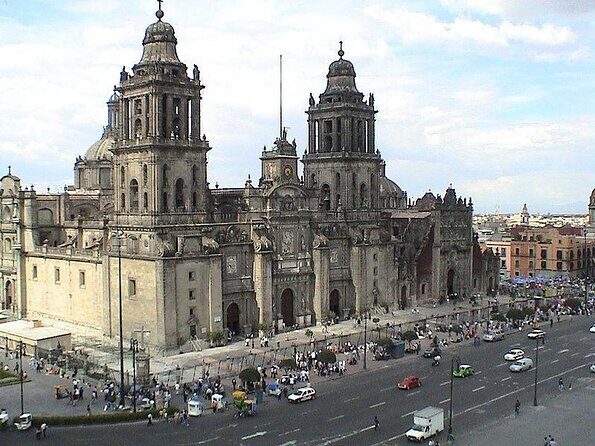
Then you move to the Catedral Metropolitana de la Ciudad de México, often described as the city’s most important church. You’ll hear about its architectural style and its history, so you’re not just staring upward without knowing what you’re seeing.
This stop is short (about 8 minutes), so it’s designed for orientation, not a long cathedral visit. If you’re the type who wants to read every plaque and take a slow interior walk, you might want to plan extra time after the tour.
Also, churches can be unpredictable for entry timing. You’ll want to stay flexible and follow your guide’s lead, especially if there are service schedules or security checks.
You can also read our reviews of more historical tours in Mexico City





Stop 4: Dulcería de Celaya, the city’s oldest candy store experience
Now for a totally different kind of history: sweets. You’ll visit Dulcería de Celaya, billed as the oldest candy store in the city.
This stop is about more than dessert. You’ll hear what candies are traditional, how they’re prepared, and where those flavors and recipes come from. It’s a great way to understand that “culture” in Mexico City isn’t only buildings and paintings. It’s also what families buy, share, and preserve.
The time slot is about 10 minutes, so it’s a quick look rather than a long tasting session. Still, it’s memorable because it gives your trip an edible anchor point right in the middle of the Centro Histórico.
Stop 5: House of Tiles and its decorative language
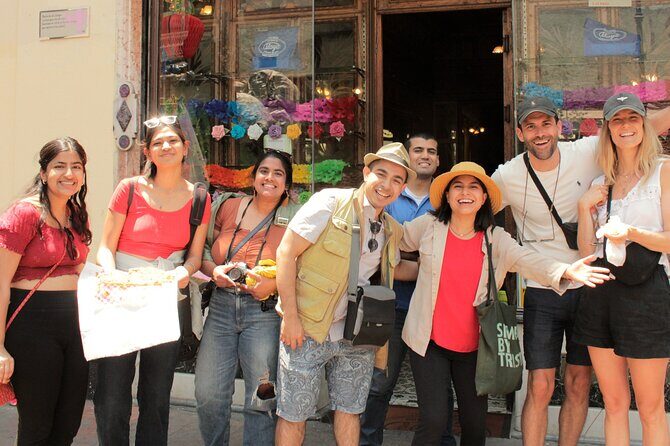
The tour then takes you into the Casa de los Azulejos, often called the House of Tiles. This is one of the city’s most emblematic spots for decorative design, and your guide explains its history and helps you “read” the art you see there.
I love stops like this because they break up the major landmarks with a different kind of message. Instead of only talking power and religion, you get a slice of everyday aesthetics—how style, wealth, and craftsmanship show up on walls.
The scheduled time is about 15 minutes, which is enough to understand why it’s famous. If you want to linger for photos, you may have to do it quickly or come back on your own later.
Stop 6: Palacio Postal, a landmark that’s still about logistics
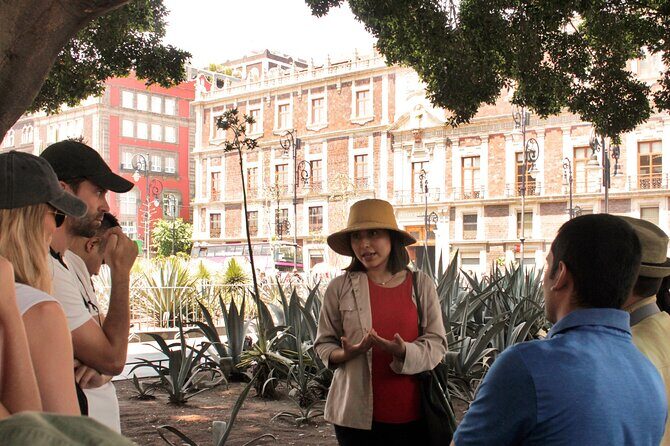
Next is Palacio Postal, the postal palace. You’ll learn what it was before, how it still works today, and the history behind the building.
This is a smart stop for travelers who like “how things function” as much as “what things look like.” It’s not just a pretty facade. It ties the past to daily life, which is a big deal in a city where so many historic buildings still have jobs.
Your tour time here is about 15 minutes. Again, it’s orientation-level, but it gives you enough context to make the building more than a backdrop.
Stop 7: Palacio de Bellas Artes and what to watch for
You’ll spend time at Palacio de Bellas Artes, learning about architectural style, curious facts, history, and its billboard.
Two practical considerations matter here. First, this is one of the most popular landmarks in the city, so expect crowds nearby. Second, while the tour schedule lists admission as free, notes say that entry for this site may require you to buy tickets yourself, and that tickets may not be sold online.
So if this stop is a must-do for you, plan to handle ticket time on the day. If you miss it during the tour window, you can still enjoy the exterior and then return later with a clearer plan.
Stop 8: Diego Rivera murals at Secretaría de Educación Pública
The last major art stop is at Murales de Diego Rivera en la Secretaría de Educación Pública. Here you’ll look at the murals and learn how they connect to Mexican traditions and customs through one of the most important Mexican painters of the 20th century, Diego Rivera.
This finale works well because it adds a modern cultural voice. You started with Aztec foundations and colonial-era sites, and you end with 20th-century storytelling that reflects national identity.
It also gives you something to do after the tour. Once you’ve seen Rivera’s work in context, you’ll spot references to those themes in the city’s museums, schools, and public art.
Price and value: why $20 can be a good deal here
Here’s the honest value math: you’re paying for a guided route that covers a lot of the Centro Histórico’s most recognized names in about two hours. That’s helpful if you’re short on time, want an ordered storyline, or feel intimidated by big historic zones.
The pricing is also slightly confusing at first glance. The tour lists $20 per person, but it also describes the experience and guide as free, with the option to tip at the end. In practice, this usually means it’s run like a tip-based walking tour with a small upfront booking cost.
Either way, I’d treat it like this: you’re buying guidance and structure, not a meal or all-inclusive museum entry. If you budget a little extra for possible ticket needs, you’ll feel calm instead of rushed.
What the small details say about the guide experience
The tour runs with a small group cap (again, up to 20), and the reviews highlight that guides have been friendly and strong with English explanations. Names that come up include Belen, Diego, and Sara, and the consistent theme is clear, organized storytelling.
One review also flags a small mismatch in tone: the guide suggested a specific tip amount. Tipping is normal for this style of tour, but you should keep it in your control. If you don’t want an exact figure, you can still tip at a level that feels fair to you.
Who should book this tour
This fits especially well if you:
- want an easy way to get your bearings fast in the Centro Histórico
- enjoy history that connects to what you can actually see on the street
- want a quick art and culture sweep, including Diego Rivera’s murals
- like mixing landmark time with a practical stop like a classic candy store
It’s also a solid choice for solo travelers who want company but don’t want a heavy museum day.
If you’re the type who prefers deep museum hours inside ticketed galleries, you may find some stops short. In that case, use this as your primer, then return to your favorite site afterward.
A short check before you go: tickets and pace
Your biggest decision point is ticket expectations. The itinerary schedule lists many stops with admission ticket free, yet notes say that museum entry is not bundled and that you may need to buy on your own—especially for Palacio de Bellas Artes.
So my advice is simple: check what you can do before you arrive, and keep a little flexibility in your plans. If a stop ends up requiring tickets, you’ll be glad you didn’t assume everything is automatically included.
Also remember this is a walking route with several stops and short times at each place. That’s part of the value, but it means you won’t get a slow, sit-down tour vibe.
Should you book Explore Mexico City: History, Art, and Cuisine?
Book it if you want a focused, high-impact introduction to Mexico City’s center. For $20 and about two hours, you get a guided storyline that connects Aztec origins, the Zócalo’s meaning, key architectural landmarks, classic sweets, and Rivera murals.
Skip it or pair it differently if you know you want long museum time, or if you strongly need every interior entry included. In that case, treat this as your orientation and plan follow-up time for the sites that matter most to you—especially if tickets are required.
If you book, you’ll walk away with something useful: a clearer map of the city’s “why,” not just a list of “what to see.”
FAQ
What is the duration of this tour?
The tour lasts about 2 hours.
How much does the tour cost?
It is priced at $20.00 per person.
What language is the tour offered in?
The tour is offered in English.
Where does the tour start and end?
It starts at República de Guatemala 4, Centro Histórico and ends at Palacio de Bellas Artes, Av. Juárez S/N, Centro Histórico.
What time does the tour start?
The start time is 9:30 am.
Is a mobile ticket used?
Yes, the tour includes a mobile ticket.
Is bottled water provided?
No. Bottled water is not included, and you’re advised to bring your own.
How many people are in a group?
The tour has a maximum of 20 travelers.
Is the tour tip-based?
Yes. The experience and guide are described as free, and you can pay a tip if you want at the end.
Are service animals allowed, and is the area near public transportation?
Service animals are allowed, and the meeting area is near public transportation.
Are museum or attraction tickets included?
Bottled water is not included, and notes indicate that entry to some museum-style stops may require you to buy tickets yourself, including Palacio de Bellas Artes in particular.