REVIEW · PUEBLA
Puebla: Walking Tour & Traditional Poblano Culinary Workshop
Book on GetYourGuide →Operated by Mishka Tours · Bookable on GetYourGuide
Four hours in Puebla, and your appetite learns.
This combo tour is a smart way to see the historic center while also getting your hands in real Puebla cooking. You’ll start with a guided walk through major landmarks like the Rosary Chapel and the Cathedral area, then end at a cooking lesson with professional chefs and local cooks at Nantli Restaurant. It’s the kind of tour where the sights explain the flavors.
I particularly like how the Palafoxiana Library visit connects culture to everyday life, not just sightseeing. I also love that you don’t stop at “look and listen” you get to cook traditional Puebla dishes and learn the what-and-why behind the flavors. One consideration: the walking is steady, about 2 hours and 30 minutes on foot, so you’ll want comfortable shoes and a good walking pace.
In This Review
- Key reasons this tour feels worth it
- Starting at Puebla’s Zócalo and getting your bearings fast
- Maqueta Monumental de Puebla: learn the city before you walk it
- Fuente de San Miguel Arcángel: photo stop with a local centerpiece
- Rosary Chapel and Mexican Baroque on full display
- Calle de dulces de Sta. Clara: where Puebla sweetness has roots
- Serdán Brothers House Museum: history you can pace through
- El Patio Tiles and the Artist Quarter: design meets snacks
- Parían Market and Alfeñique: the market lane that tells a story
- Palafoxiana Library: one of the first public libraries in the Americas
- Talavera museum stop: UNESCO craft with a reason behind it
- Walking to Santo Domingo’s Rosary Chapel area and enjoying the theatre streets
- The cooking workshop at Nantli Restaurant: make Puebla food, not just talk about it
- Value check: why $114 can make sense for a 4-hour combo
- What to bring, and how to plan your day
- Who this tour suits best
- Should you book this Puebla walking tour and Poblano cooking workshop?
- FAQ
- Where is the meeting point?
- How long is the tour?
- What languages are available for the live tour guide?
- What does the tour include?
- Do I get to visit the Palafoxiana Library?
- Does the tour include Talavera?
- Is the cooking class part of the experience?
- How much walking is involved?
- What should I bring?
- Is flash photography allowed?
- Is the tour good for wheelchair users?
Key reasons this tour feels worth it
- Chef-led cooking at Nantli Restaurant: you’re learning from professional chefs plus local cooks, not just watching a demo
- Palafoxiana Library ticket included: you get access to one of the first public libraries on the American continent
- Talavera museum stop: you’ll see why Puebla Talavera matters as UNESCO Intangible Cultural Heritage of Humanity
- Historic-center walking with real stops: Rosary Chapel, Parían, Los Sapos (Alley of the Toads), and more are built into the route
- Food tastings during the walk: you sample along the way while learning where Puebla gastronomy comes from
Starting at Puebla’s Zócalo and getting your bearings fast
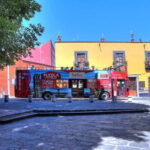
You meet at the main square, Zócalo, next to the Saint Michael fountain, and your guide waits with a blue umbrella. That’s a small detail, but it actually helps. Puebla’s historic center can feel like a maze of beautiful streets, so starting right where locals gather helps you orient quickly.
The first stretch is all about context. This isn’t just a checklist of churches and facades. You’re building a mental map of Puebla’s identity—where it comes from, how different cultural influences show up in the architecture, and how that same mix later turns into food traditions.
If you’re the type who likes to understand why a place looks the way it does, this approach is a big win. You’ll get a walking route that makes sense, then the cooking lesson will feel like a natural next chapter instead of a random add-on.
You can also read our reviews of more walking tours in Puebla
Maqueta Monumental de Puebla: learn the city before you walk it
One of the smartest early moves is the stop at the Maqueta Monumental de Puebla. It’s brief, about 10 minutes, but it sets the tone for the day.
You’ll hear about the foundation of the city of angels, the valley of Cuetlaxcoapan, and the legends tied to how Puebla was imagined. Even if you’re not a big mythology person, these stories help you read the city as something layered, not a bunch of separate sights.
Practical tip: use this moment to study your route. After the model, the streets and landmarks start to click into place.
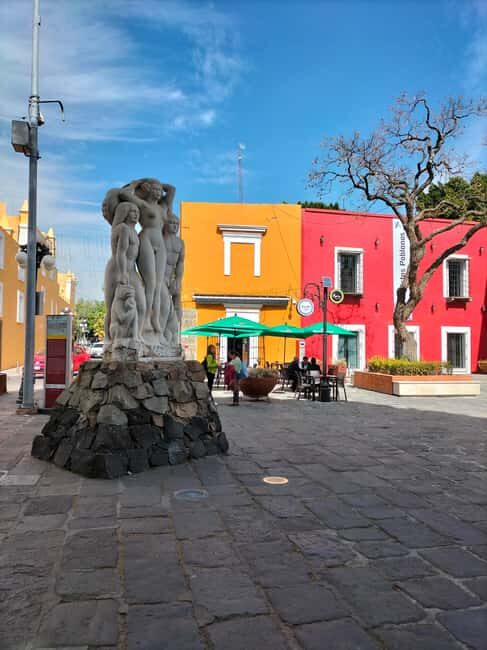
Fuente de San Miguel Arcángel: photo stop with a local centerpiece
Next is the San Miguel Arcangel fountain area and a short photo stop (about 5 minutes). This works because you’re not rushing through every stop. It’s enough time to frame a shot without turning the tour into a sprint.
It also gives you a clean transition point. Once you’ve got your camera check-in done, the tour pivots toward bigger architectural highlights.
Rosary Chapel and Mexican Baroque on full display
The Rosary Chapel visit takes around 20 minutes. This is one of the standout visual stops of the route, and the reason is simple: Mexican baroque shows off in a way that feels almost theatrical.
You’ll contemplate the chapel’s striking exterior and learn about it as an exponent of Mexican baroque. Even if you’re not an architecture buff, you’ll likely notice the details that make Puebla’s churches look different from the more plain styles you might see elsewhere.
What to watch for: slow down for the close-up views. Baroque style is mostly about repetition, texture, and ornamental rhythm. A fast glance can miss what makes it special.
Calle de dulces de Sta. Clara: where Puebla sweetness has roots
You’ll walk the Calle de dulces de Sta. Clara for about 10 minutes. This is a short sightseeing segment, but it ties directly into the cooking portion later.
You’ll get insight into the origins of Puebla gastronomy. In plain terms, this is where you learn that sweets and savory traditions aren’t random. They reflect history, trade, and local adaptation.
If you’re hoping to snack your way through Puebla, this is a useful early moment. You’ll also get food tastings in the artist quarter later, so you’re not stuck with just photos.
You can also read our reviews of more tours and experiences in Puebla
Serdán Brothers House Museum: history you can pace through
The Serdán Brothers House Museum stop runs about 15 minutes. You’ll tour it with the guide, which means you’re not wandering alone trying to figure out what each room is for.
The main value here is that it keeps the tour from becoming only religious-and-ornamental. Puebla’s story includes political and social history too, and this stop is part of rounding out what the city means.
Time tip: if you’re a slower reader, you might want to linger here a touch after the guide moves on, just enough to catch details—without falling behind.
El Patio Tiles and the Artist Quarter: design meets snacks
After that, you visit El Patio Tiles (around 15 minutes). Then you continue toward the Artist Quarter for about 15 minutes of sightseeing and food tasting.
This is where the tour starts to feel more like a lived-in city. Tiles and decorative surfaces are part of Puebla’s everyday visual language, not just museum stuff. And in the Artist Quarter, you get a break from pure architecture: you sample food while the guide explains connections to Puebla’s culinary origins.
Here’s the practical angle: use this segment to regroup. You’ll be walking the city for hours, and this is a natural time to refuel while you still stay in “guided mode.”
Parían Market and Alfeñique: the market lane that tells a story
You’ll reach the Parían Market for about 10 minutes. The Parían is one of those places where it’s easy to see why Puebla became known for craft traditions and market culture.
Then the route continues through Los Sapos (the Alley of the Toads) for about 10 minutes, with a break time and photo stop. The alley is famous for the toads, but the real win is the energy of the street itself. It’s fun to look at, easy to photograph, and it keeps the tour from feeling too stiff.
As you walk, you’ll also pass by the Alfeñique area. That matters because it signals the city’s relationship to sugar art and traditional confection culture. You’re basically seeing the visual side of Puebla’s food story before the cooking class.
Palafoxiana Library: one of the first public libraries in the Americas
Next comes the Palafoxiana Library, about 20 minutes. This is one of the more meaningful stops on the route, and here’s why: you’re not just seeing a beautiful building. You’re visiting a piece of public learning.
The tour frames it as one of the first public libraries on the American continent, and that helps you understand Puebla’s role as more than colonial scenery. It’s a city that invested in knowledge and public access.
What to do in your time: look up. Historic libraries often have ceiling and lighting details that people miss when they stare only at the shelves. Also, be mindful of the tour rules—flash photography isn’t allowed, and touching exhibits is off limits.
Talavera museum stop: UNESCO craft with a reason behind it
After the library, you’ll visit the first Talavera Museum of Puebla. The experience is tied to Talavera as an Intangible Cultural Heritage of Humanity by UNESCO, which gives you the context for why people care about the craft beyond aesthetics.
This stop matters for your cooking later. Talavera traditions connect to materials, methods, and cultural identity. If you’re someone who notices how crafts show up in architecture, this is your chance to see how the craft continues into the city’s visual personality.
It also helps you understand the “why” behind Puebla’s reputation. Talavera isn’t just decoration; it’s part of the region’s cultural system.
Walking to Santo Domingo’s Rosary Chapel area and enjoying the theatre streets
As the tour moves through the historic center, you’ll also see the Church of Santo Domingo, including the Rosary Chapel area (the tour mentions it in connection with the baroque stop). You’ll then walk past the Bohemian Artist square and admire the facade of the main theater and its architecture.
This is a good stretch for people who like variety. You go from religious baroque to craft-heavy markets to public learning, and then toward performance spaces. It keeps your attention without needing any special effort.
Also, you’ll walk the street of sweets. Even when you’re not stopping to taste, you’ll feel the theme of Puebla gastronomy all around you.
The cooking workshop at Nantli Restaurant: make Puebla food, not just talk about it
The day ends at Nantli Restaurant for the culinary workshop, lasting about 2 hours and 45 minutes. This is where the tour earns its value.
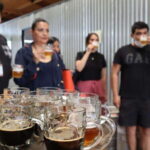
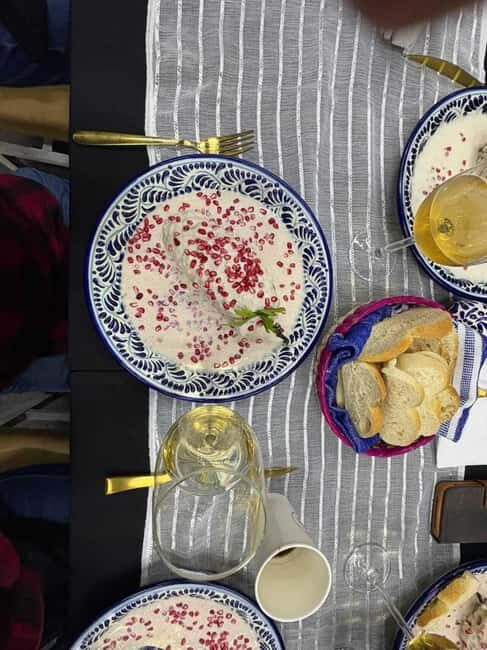
You’ll cook with professional chefs and local cooks from Puebla. The atmosphere includes music and traditional drinks, which makes the class feel like a shared meal rather than a classroom.
What you can expect to learn: traditional Puebla dishes with unique flavors. The guide and chefs focus on technique and flavor-building rather than just handing you a recipe. That’s important. If you want to recreate Puebla food later, you need to understand how the flavors are assembled, not just what goes into the dish.
Practical notes so you enjoy it:
- Wear shoes you can stand in comfortably.
- Come ready to taste. You’re going to sample flavors, and the class is designed around that.
- Extra food or drinks are not included, so don’t assume every drink is covered.
If your goal is a hands-on cultural experience, this cooking portion is the core. The walking tour sets the stage; the workshop gives you the memory you can use.
Value check: why $114 can make sense for a 4-hour combo
At $114 per person for about 4 hours, you’re paying for more than a guided walk. Your ticket includes:
- a guided tour through Puebla’s historic center
- entry to the Palafoxiana Library
- a visit to the first Talavera museum
- the chef-led cooking lesson at Nantli Restaurant
In practical terms, you’re getting three things that are expensive to replicate on your own: guided interpretation, timed entry to specific sites (including skipping the ticket line), and a structured cooking class with real instruction.
Could you build a DIY day in Puebla for less? Sure. But you’d be doing more research and more ticket juggling. This tour compresses the “most worthwhile” parts into one route and one meal-making session. For people who want maximum learning per hour, the price is fairly grounded.
What to bring, and how to plan your day
Bring comfortable shoes, sunscreen, water, and a camera. You’ll walk for about 2 hours and 30 minutes total, and the historic center walking pace is steady.
Know the rules too: smoking isn’t allowed, flash photography isn’t allowed, and touching exhibits is not permitted.
You’ll also want a relaxed mindset. Some stops are short (10 to 15 minutes). Others give you space (like the chapel and library). That’s normal for a four-hour mix, but it helps to accept that you’re sampling the highlights rather than spending an entire afternoon in one building.
Who this tour suits best
This is a strong fit if you:
- want a guided path through Puebla’s historic center without mapping every turn yourself
- care about culture tied to food (not just food alone)
- like hands-on learning, especially cooking with local instruction
- enjoy architecture and museums but still want time to feel the city through markets and streets
It’s likely less ideal if you can’t handle extended walking. The tour isn’t suitable for wheelchair users, and the schedule expects you to keep moving for the walking portion.
Should you book this Puebla walking tour and Poblano cooking workshop?
I’d book it if you want a compact Puebla experience that blends interpretation with real participation. The walking tour gives you context at the Rosary Chapel, the Palafoxiana Library, Parían, Los Sapos, and the Talavera museum. Then the Nantli Restaurant class turns those cultural themes into something you make and taste.
Skip it if you’re only interested in architecture photos and don’t want a cooking lesson. This tour is clearly built around the culinary workshop as the payoff.
If you’re traveling with limited time and you want Puebla to feel personal instead of like a checklist, this is a smart, well-structured choice.
FAQ
Where is the meeting point?
You’ll meet at the main square, Zócalo, next to the Saint Michael fountain. The guide will be waiting with a blue umbrella.
How long is the tour?
The total duration is 4 hours.
What languages are available for the live tour guide?
The tour is offered in English and Spanish.
What does the tour include?
It includes a guided tour of Puebla’s historic center, a professional walking guide, a ticket to visit the Palafoxiana Library, a visit to the first Talavera museum, and a cooking lesson with professional chefs.
Do I get to visit the Palafoxiana Library?
Yes. The tour includes a ticket to visit the Palafoxiana Library.
Does the tour include Talavera?
Yes. You’ll visit the first Talavera museum in Puebla.
Is the cooking class part of the experience?
Yes. The workshop at Nantli Restaurant is the main hands-on component and lasts about 2.75 hours.
How much walking is involved?
The tour includes walking for about 2 hours and 30 minutes, so you’ll need a physical condition level that fits this.
What should I bring?
Bring comfortable shoes, a camera, sunscreen, and water.
Is flash photography allowed?
No. Flash photography isn’t allowed, and you also can’t touch the exhibits.
Is the tour good for wheelchair users?
No. It’s not suitable for wheelchair users.