REVIEW · MEXICO CITY
Mexico City: Historical walking tour of Tenochtitlan
Book on GetYourGuide →Operated by Mexploretenochtitlan · Bookable on GetYourGuide
Big history, on foot.
This tour gives you a tight, logical route through Tenochtitlan and Mexico City’s later layers, and I love that the guide, Prof. Cristina Ríos (PhD), ties sites together with clear explanations you can actually follow. Second, I like the practical setup: a small group (3 to 10) and earphones when it gets busy, so you don’t have to lean in like a student in the back row. One thing to consider: it’s not a museum day—ticketed entries are not included, and some stops are pass-by only, so you’ll want extra time for independent sightseeing afterward.
You’ll start near Centro Cultural España and spend the morning moving between archaeology-adjacent landmarks, major churches, and art-and-architecture stops. If you want a first-day orientation that turns famous buildings into a story you can repeat (and even recommend), this is a strong pick.
In This Review
- Key highlights you’ll feel right away
- A three-hour walk that teaches you how Mexico City is layered
- Who this tour fits best
- Meeting at Centro Cultural España: where the story starts
- Templo Mayor models and outdoor views: get the map before the temples
- Behind the Cathedral: Animas del Purgatorio and the Calmecac connection
- Cortés’s lodging at the Old Axayacatl Palace: the power story underfoot
- Banamex Cultural Center (Iturbide Palace): where style meets status
- Church of San Francisco façade: a quick hit with long roots
- Casa de los Azulejos and the Orozco mural: art with a viewpoint
- Passing by Palacio de Bellas Artes: what you get and what you miss
- Earphones, small groups, and the pace that keeps your attention
- Price and value: why $43 can make sense (and when it won’t)
- What to bring so the morning feels easy
- Should you book the Mexico City Historical Walking Tour of Tenochtitlan?
- FAQ
- How long is the tour?
- What is the meeting point?
- Do we enter the Templo Mayor Museum?
- Is the guide Prof. Cristina Ríos?
- What languages are offered?
- Does the price include tickets and food?
- Are earphones provided?
- Is this tour wheelchair accessible?
- Is it okay for kids?
- What should I bring?
Key highlights you’ll feel right away
- Prof. Cristina Ríos (PhD) leads the story of 700 years of Mexico City–Tenochtitlan history
- Earphones in louder areas help you hear details while walking and standing outdoors
- A smart, compact route from Templo Mayor views to Centro Histórico landmarks
- Architecture-focused stops that connect Aztec foundations to Spanish and early Mexican independence eras
- House of Tiles + José Clemente Orozco mural explained in context
- Small groups (3–10) for a more personal pace and easier question time
A three-hour walk that teaches you how Mexico City is layered
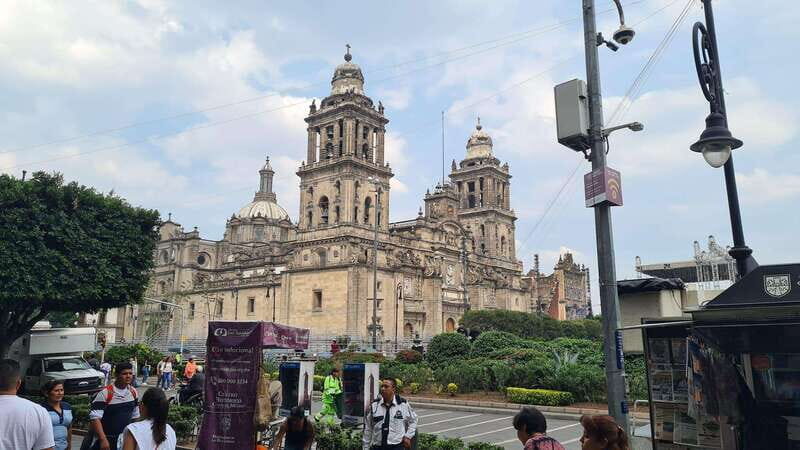
Mexico City can feel like a maze, but this tour gives it structure fast. In just 3 hours you move through places that represent different chapters of the city—starting with Tenochtitlan’s sacred center and then stepping into the Spanish colonial and post-independence eras. The payoff isn’t just seeing famous spots. It’s learning how the city’s power, religion, and design changed over centuries, sometimes literally building over earlier spaces.
What makes the experience work is the pacing. You’re not sprinting from one photo-op to the next. You get time at each stop for the guide’s explanations, plus audio support (headsets) when the group grows beyond 7 people. That means the tour remains understandable even around crowds, traffic noise, and constant street activity.
You can also read our reviews of more walking tours in Mexico City


Who this tour fits best
This is an adult-leaning walk (it’s listed as not suitable for children under 10). It also helps if you like history and architecture—especially when those topics connect. If you’re the type who reads wall labels at museums, you’ll enjoy how the guide explains what you’re seeing and why it mattered.
Meeting at Centro Cultural España: where the story starts
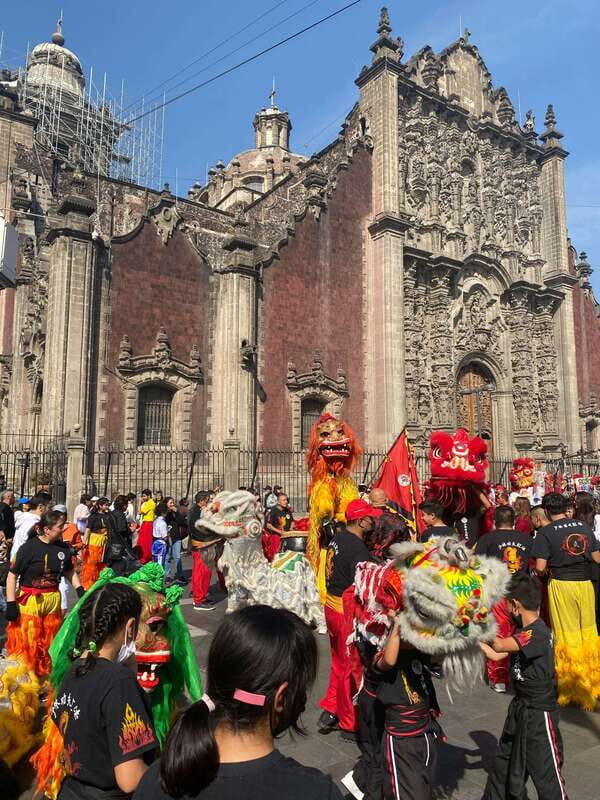
Your tour begins at the Centro Cultural de España en México (Centro Cultural España), at Guatemala #18. You meet at the entrance there, and the first part sets the tone: you’re going to Templo Mayor, but you won’t do it by entering the museum.
I like this approach for day-one visitors. You get the big-picture geography first—models and views that help you understand where the Tenochtitlan core was—before you start dealing with individual buildings and details. Think of it as getting your bearings fast, so every next stop clicks into place.
Templo Mayor models and outdoor views: get the map before the temples
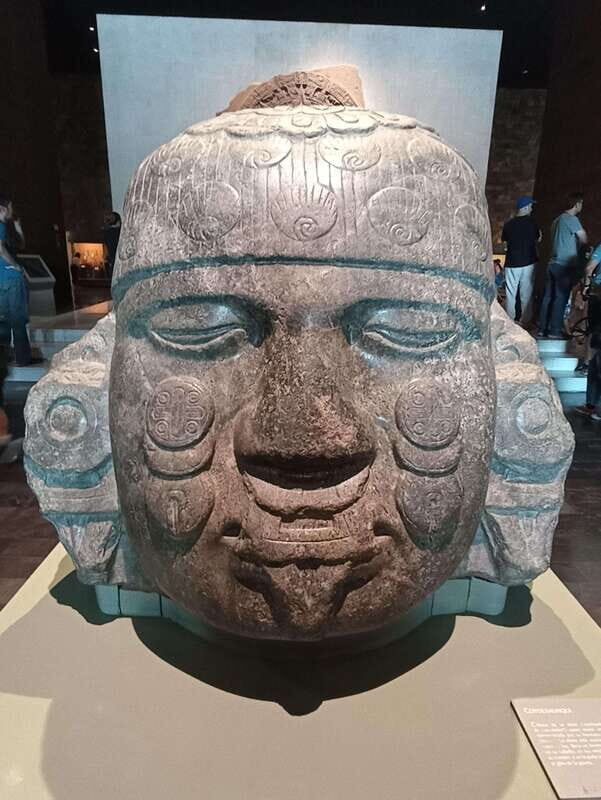
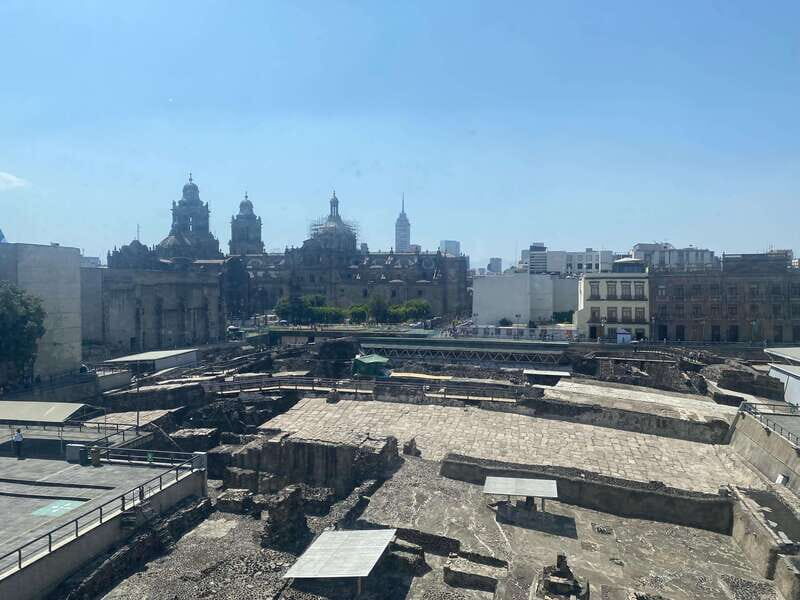
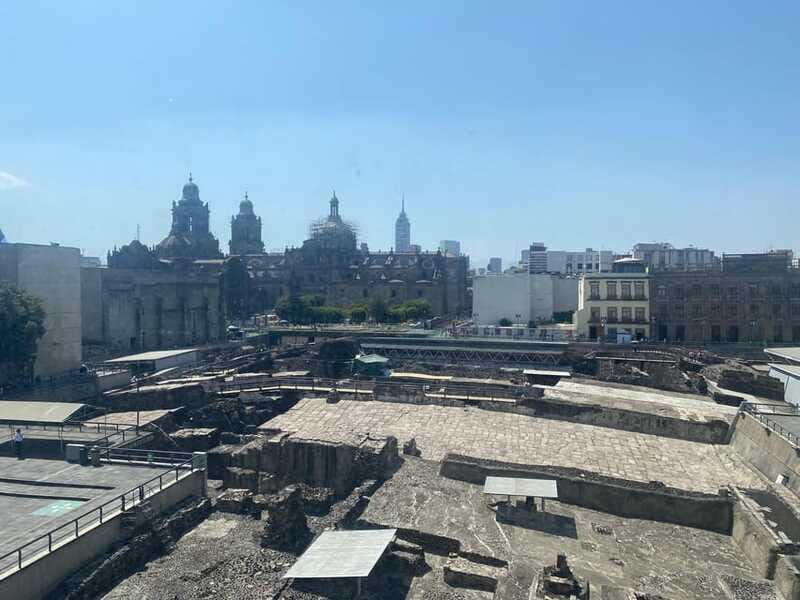
The tour’s first real anchor is Templo Mayor. You’ll spend about 40 minutes guided, focusing on models and an outside view of the archaeological zone. Even without entering the museum, this section does a lot of heavy lifting because Templo Mayor is one of the keys to understanding Tenochtitlan.
Here’s what you’re aiming to grasp: what Tenochtitlan was built for, how that sacred center functioned, and how Spanish colonization transformed the area you’re now walking through. The guide’s explanations help you see beyond the ruins-as-ruins idea and instead understand the site as a living political and religious system.
A practical note: you’ll be outside for portions of this walk, so comfortable shoes and sun protection matter. The tour also recommends a hat or sunglasses and sunscreen—good advice in Mexico City’s bright morning light.
Behind the Cathedral: Animas del Purgatorio and the Calmecac connection
Next you head to the area behind Catedral Metropolitana de México, with a stop that includes Animas del Purgatorio and the Calmecac site museum connected with Centro Cultural España. This is one of those sections where Mexico City’s layers feel most personal, because you’re moving through a modern city built over older stories.
You spend about 20 minutes here guided. The value is not just that you see a church-related landmark. It’s that the guide connects religious and educational life across eras. Calmecac is tied to education in the pre-Hispanic world, and the way the story is presented helps you understand that these were not separate histories—they kept influencing each other, even as the Spanish arrived and institutions changed.
If you’re hoping to understand how the colonial era shaped what came next, this stop helps you connect the dots without needing a full day in a museum.
You can also read our reviews of more city tours in Mexico City

Cortés’s lodging at the Old Axayacatl Palace: the power story underfoot
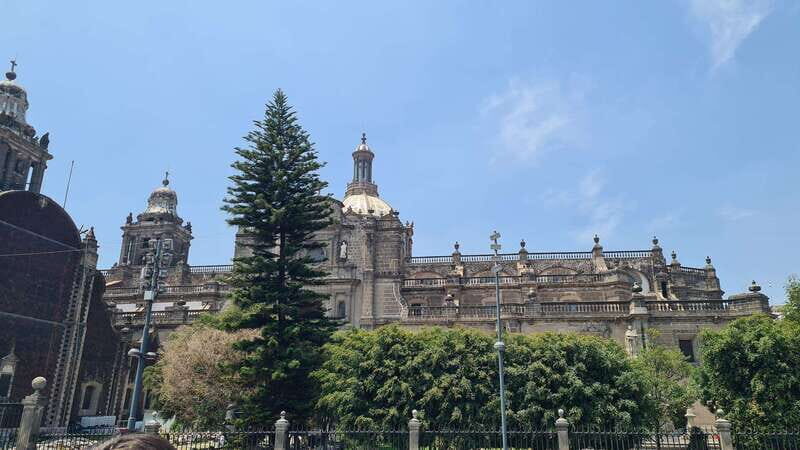
After the Cathedral area, the tour moves to Cortés’s Lodgings at the Old Axayacatl Palace, also described as part of the old houses associated with Moctezuma. You get around 20 minutes guided here.
This is where the tour turns from “what did they build” into “who had power and how that power shifted.” You’re looking at a location tied to Spanish conquest, and the guide’s explanations help you understand why this kind of site mattered so much. It’s not just a curiosity stop. It’s a hinge point between civilizations—because conquest wasn’t only about fighting. It was also about taking control of symbols, spaces, and narratives.
One extra bonus (based on the way the guide works): you may get taken off the main path to see the tomb of Cortés. That kind of added context is often what makes a walking tour feel more than just a list of landmarks.
Banamex Cultural Center (Iturbide Palace): where style meets status
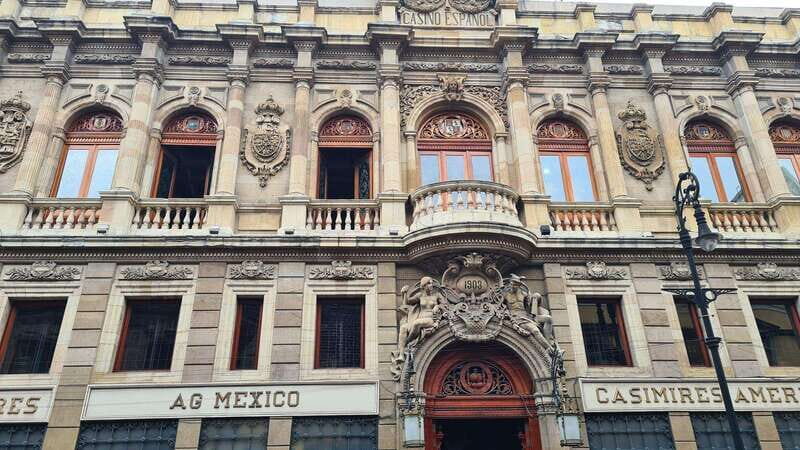
Then you’re heading to the Iturbide Palace, presented here through the Banamex Cultural Center stop. This section runs about 20 minutes guided.
I like this stop because it shifts the focus to architecture and refinement. You’re no longer only tracking conquest and religious transformation. You’re also seeing how later elite power expressed itself through grand building projects. The guide’s commentary helps you notice details you’d likely skip on your own, especially if you’re not sure what to look for in a façade or palace-style building.
This is also a good contrast moment after churches and archaeological-adjacent history. It reminds you that Mexico City’s evolution is not linear—it’s a stack of eras, with each era borrowing from and reacting to what came before.
Church of San Francisco façade: a quick hit with long roots
Next is the Church of San Francisco, where you’ll spend about 20 minutes, focused on the façade. Short stop. Big impact when the guide frames it right.
Façades matter in Mexico City because they’re built for street-level reading—how the city presents itself. A guided focus here is useful if you tend to think of churches as one-size-fits-all. With explanation, you start seeing design choices as messages: who paid for it, what style language meant at the time, and how religious authority showed itself to the public.
If you’re catching this on the morning pace, you’ll likely appreciate that the tour doesn’t overstuff the stop. It gives you a meaningful snapshot, not a long detour.
Casa de los Azulejos and the Orozco mural: art with a viewpoint
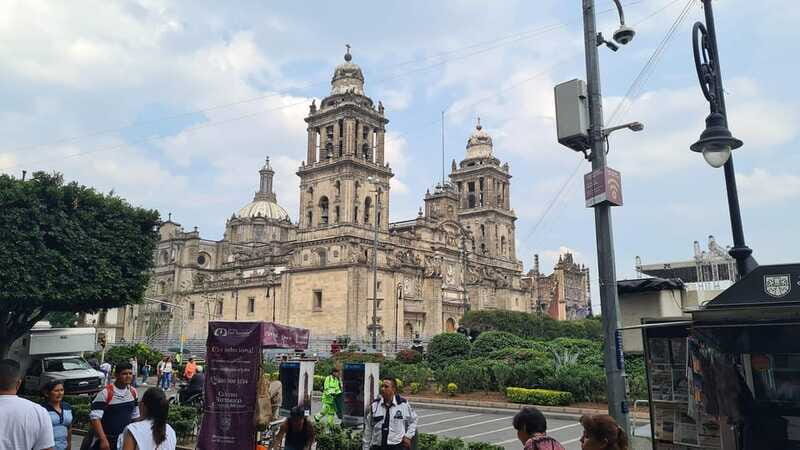
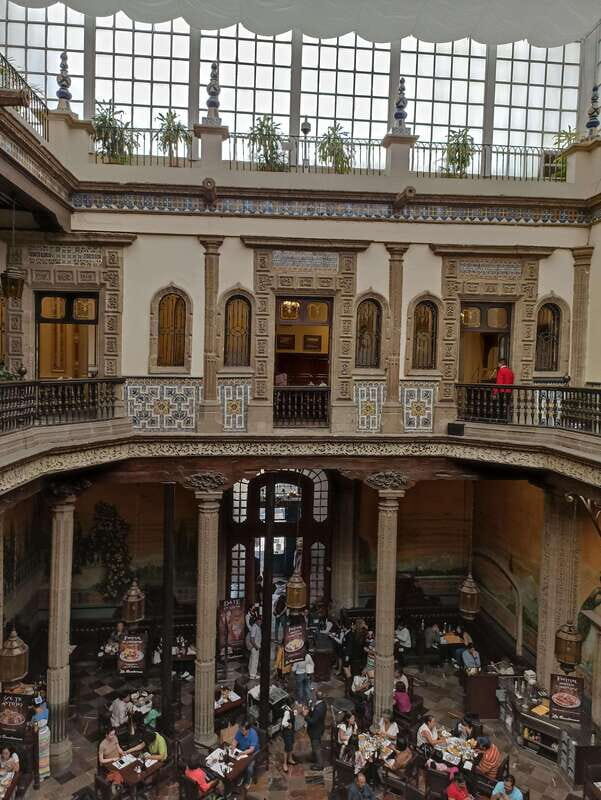
The tour’s most visually memorable mid-to-late stop is Casa de los Azulejos (House of Tiles), about 30 minutes guided. You’ll see the building from outside and also go inside to see the José Clemente Orozco mural, with a detailed explanation.
This is where the walking tour turns into something more personal for art lovers. The tiles are eye-catching, yes, but the real value is how the guide explains the mural. Orozco’s work is often discussed in terms of Mexican identity and social themes, and here you get context that helps you interpret the art as part of Mexico City’s larger story, not as something stuck in a separate category called art history.
This is also a practical stop if you want a break from the strongest sun and street noise. Going inside can give your legs and head a short reset before the final stretch.
Passing by Palacio de Bellas Artes: what you get and what you miss
Near the end, you’ll do a pass-by only at the Palacio de Bellas Artes and the tour finishes at Palacio de Bellas Artes. The tour time listing shows it as around 30 minutes, with the Palace itself described as pass-by only.
That means you’ll leave seeing the building and its setting, but you shouldn’t count on this tour as your only Bellas Artes time. If the palace museum spaces or exhibitions matter to you, plan to return on your own with more time. The tour is doing something more useful here: setting you down at a major landmark, where you can keep exploring without hunting.
I find this “finish at” approach handy for planning the rest of your day. You end near an area where you can find food and continue sightseeing routes.
Earphones, small groups, and the pace that keeps your attention
A few details make this tour feel easier than many other walks:
- Small group size: 3 to 10 people. That matters because it keeps the guide’s voice and attention on you, not just on the mic system.
- Earphones/headsets when groups are larger than 7. You’ll hear the guide’s explanations clearly even outdoors.
- Morning start: you’re seeing the Centro Histórico in daylight, when façades, façades again, and church details show up best.
- Question-friendly pace: multiple guides’ stops are set up for you to ask what you’re still not getting.
From people who took the tour, the pace also includes practical pauses. Some mention water and bathroom breaks working into the rhythm. So even if you’re not expecting “tour comfort,” you’re not stuck in a marathon either.
Price and value: why $43 can make sense (and when it won’t)
The price is $43 per person for about 3 hours. You’re not paying for museum tickets, and you’re not paying for meals. What you are paying for is the specialized guide and the way the route is built around interpretation, not just sightseeing.
Here’s how I think about the value:
- If you want a guided overview of Tenochtitlan and Mexico City’s core history, the guide’s explanations are the main product. The PhD credential (Prof. Cristina Ríos) signals that you’re getting more than casual commentary.
- If you already know a lot and you just want to roam and photograph, you might find the price steeper than self-guided wandering—especially since some key places are pass-by or outside-only.
- If you’re the kind of traveler who likes building context before you enter museums on your own, the $43 feels like a smart investment. You’ll know what to look for later.
In short: if you want your first day in the Centro Histórico to feel organized and meaningful, this is good value. If you want a ticketed highlights circuit with lots of indoor time, you’ll need to add that separately.
What to bring so the morning feels easy
This is a walking tour through the historical center, so keep it simple:
- Comfortable shoes
- Hat or sunglasses (sun protection matters)
- Sunscreen
The route stays outdoors for multiple segments, so don’t show up with sandals and hope for the best.
Should you book the Mexico City Historical Walking Tour of Tenochtitlan?
Book it if you want:
- A structured, first-day understanding of Tenochtitlan and Mexico City’s later layers
- An art-and-architecture-informed approach, especially for Casa de los Azulejos and the Orozco mural
- A guide who keeps explanations clear enough that you can follow along and ask questions
Skip or add extra plans if:
- You’re hoping for lots of museum entry time. The Templo Mayor stop is outside-focused, and some other sections are pass-by.
- You prefer a long sit-down tour or a mainly indoor experience.
- You’re traveling with children under 10 (this one isn’t suitable).
If your goal is to leave Mexico City’s Centro Histórico with a real storyline—rather than a memory cloud of buildings—this tour is a strong match.
FAQ
How long is the tour?
The tour lasts 3 hours.
What is the meeting point?
You meet at the entrance of Centro Cultural España en México at Guatemala #18.
Do we enter the Templo Mayor Museum?
No. You view the Templo Mayor models and archaeological zone from the outside, and you do not enter the museum.
Is the guide Prof. Cristina Ríos?
Yes. The guide is Prof. Cristina Ríos (PhD).
What languages are offered?
The live tour guide works in English and Spanish.
Does the price include tickets and food?
No. Tickets are not included, and food and drinks are not included.
Are earphones provided?
Yes. Headsets/earphones are included, especially when the group is larger than 7 people.
Is this tour wheelchair accessible?
Yes. The tour is listed as wheelchair accessible.
Is it okay for kids?
It is not suitable for children under 10.
What should I bring?
Bring comfortable shoes and sun protection like a hat and sunscreen (sunglasses are also recommended).