REVIEW · MEXICO CITY
Hop-on Hop-off or Night Tour Tourist Bus in Mexico City
Book on Viator →Operated by Amigo Tours · Bookable on Viator
Mexico City can feel huge on day one. This hop-on hop-off bus tour helps you get your bearings fast while you ride an open-top, double-decker for wide views and English audio commentary. The big win is freedom: your ticket is valid for 24 hours, so you can plan a quick loop or come back for a second pass without rushing.
I like how the route strings together the city’s most important neighborhoods and landmarks, from the Zócalo area with the massive Mexican flag and National Palace to major museums and big-photo stops along Avenida Paseo de la Reforma. The main drawback is time at each stop: some are only around 15 minutes, so you’ll be better off doing quick sightseeing and deciding later which places deserve longer visits on your own.
In This Review
- Key things to know before you ride
- Getting on at Parada Capital Bus Zócalo: timing and expectations
- How the 24-hour hop-on hop-off ride actually helps you plan
- From El Ángel to the Zócalo: where the big landmarks live
- Bosque de Chapultepec: the quick-stop version of a major park
- Plaza Carso in Nuevo Polanco: museums without the commitment
- Polanco’s Lincoln Park and the Avenida Molière stretch
- Auditorio Nacional: the performance hall you can’t miss
- Paseo de la Reforma’s fountains: Diana and the Cibeles connection
- Where to eat and shop: Santa Fe and Paseo de la Reforma breaks
- The value question: who this bus tour is best for
- Should you book Amigo Tours for Mexico City?
- FAQ
- Is the tour offered in English?
- How long can I use the ticket?
- What views do I get on the bus?
- Where does the tour start?
- What time is the tour operating?
- How often do buses depart?
- Does the tour return to the start?
- Are there any limits on group size?
- Can I cancel for a full refund?
Key things to know before you ride

- 24-hour ticket means you can spread sightseeing across the day at your own pace
- Open-top double-decker views make the ride itself part of the experience
- English onboard audio commentary gives context as you pass major landmarks
- Frequent departures help you build a plan without feeling trapped by one tight schedule
- Max 45 travelers keeps things from feeling like a cattle car
Getting on at Parada Capital Bus Zócalo: timing and expectations
This tour starts at Parada Capital Bus Zócalo, C. de Monte de Piedad in the Centro Histórico area. It’s convenient because the meeting point is near public transportation, which matters in a city where traffic and routes can change how long everything takes.
The operating window shown is 9:15 AM to 8:00 PM, with the activity running across the dates listed (02/01/2023–03/05/2027). That gives you flexibility for a long first day, a half-day intro, or a late afternoon-and-evening sightseeing run.
What you’re really buying here is rhythm. The bus is designed to keep moving between neighborhoods, so you can hop off, take photos, and then return later. With a maximum group size of 45 travelers, you’re also less likely to feel overwhelmed while trying to choose your seat for photos.
You can also read our reviews of more city tours in Mexico City


How the 24-hour hop-on hop-off ride actually helps you plan
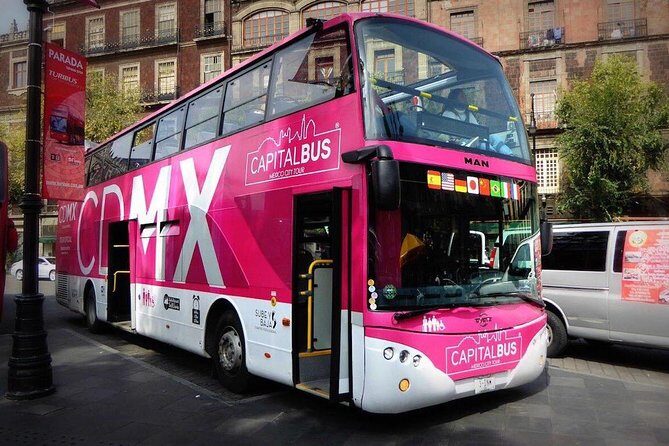
The route is built for choice. You can stay on for as long as you want, then hop off and back on within your ticket’s validity period of 24 hours. The duration is listed as 1 to 11 hours, which matches real-life behavior: some people want one loop, others want to sample a few areas early and then return later for more time.
You’ll also appreciate the open-top layout. Even when streets are busy, the higher platform plus the open sides make it easier to spot landmarks and take cleaner photos than you’d get from a smaller bus or walking on crowded sidewalks.
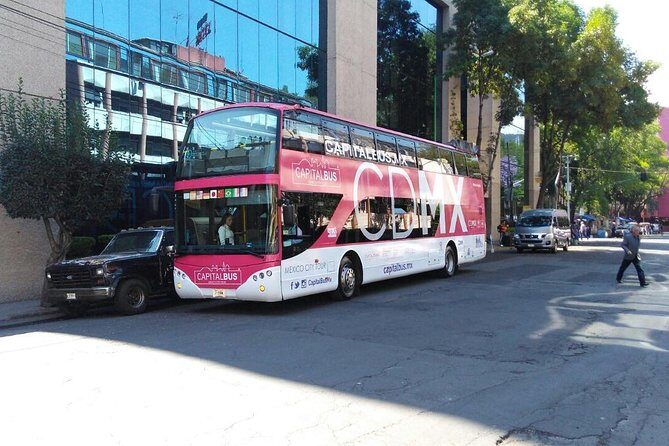
The other planning advantage is that you’re not locked into a single guided path. There are regular departures, so if you miss a timing window, you usually have another bus option soon. Just keep one thing in mind: road traffic can affect timing, so if you’re trying to reach a specific museum entry time, use the bus as a guide for where to go next, not as a guarantee of minute-by-minute arrival.
From El Ángel to the Zócalo: where the big landmarks live

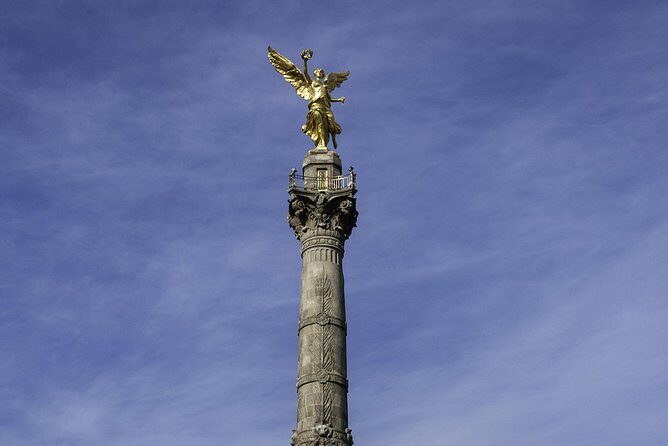
The route begins with classic Mexico City symbolism. One of the first standout landmarks on the list is the Monumento a la Independencia, commonly called El Ángel. It’s that honorary column in the traffic circle where Paseo de la Reforma meets Río Tíber and Florencia Streets. It was inaugurated in 1910 to commemorate the Centennial of the Mexican War of Independence. From the top deck, you get the kind of skyline view that makes you understand why Paseo de la Reforma is the city’s showpiece corridor.
Then you move toward the Zócalo area. From the bus, you’ll pass key sights such as the massive Mexican flag at the center and the National Palace nearby. Even if you’re not going inside that moment, this is the heart of Mexico City’s civic identity—wide, dramatic, and hard to miss.
This section of the ride is also where onboard audio really helps. As the bus passes landmark clusters, you’re not just looking out the window—you’re getting context for what you’re seeing, in English.
Bosque de Chapultepec: the quick-stop version of a major park
One of the biggest stops is Bosque de Chapultepec, with a scheduled 15 minutes and admission listed as ticket free. The park is described as the largest urban park in the Western Hemisphere, and it’s home to key tourist sites, including the National Museum of Anthropology. That’s why it’s a favorite for both residents and visitors.
There’s also an archaeological layer to the story. The forest is declared an archaeological zone because it contains historical vestiges, and nearly 4 thousand archaeological objects have been found there. So even if you only have time for photos and a short walk, you’re stepping into a place with deep layers—not just trees and trails.
Because your stop is short, think strategically:
- Use the time for orientation and a few landmark shots
- Decide on a later, deeper visit if you want museum time
A 15-minute stop won’t replace a full day in Chapultepec, but it’s a smart way to decide what deserves your attention next.
Plaza Carso in Nuevo Polanco: museums without the commitment

Next up is Plaza Carso in the Nuevo Polanco area, also with 15 minutes and admission listed as ticket free. This is a mixed-use complex that claims to be the largest mixed-use complex in Latin America, and it concentrates a lot of recognizable cultural spaces in one area.
The lineup mentioned here includes Museo Soumaya, Museo Jumex, and Teatro Telcel. Even if you don’t enter any museums during the bus stop, you can still use the time to get a feel for the architecture and neighborhood layout. It’s a useful move when you’re new to the city and want to understand how Polanco-area culture and shopping tie together.
The catch is the same as many hop-on stops: you’ll likely be doing a look-around, not a full museum visit. If a museum here is a must for you, treat the bus stop like a preview, then plan your entry time on your own schedule later.
You can also read our reviews of more evening experiences in Mexico City






Polanco’s Lincoln Park and the Avenida Molière stretch

Between big landmarks, you’ll also pass through a calmer stretch of neighborhood sightseeing. One part of the route suggests crossing Avenida Molière to discover important sites it hosts, and then includes a stop related to Lincoln Park in southern Polanco.
Lincoln Park is described as a park located in the Miguel Hidalgo Mayor’s Office area, and it’s noted as the first park designed for the colony there. Around it, you’ll see some of the early mansions and apartments from the neighborhood’s beginnings, plus more modern office and apartment buildings. In other words, this is a quick way to see how Polanco evolved over time—older residential character next to newer city energy.
If you like streetscapes and neighborhood texture, this stop can feel more meaningful than a stop that’s only about one famous building. And since the bus is open-top, it’s easier to take in the surrounding architecture without constantly weaving through traffic and crowds.
Auditorio Nacional: the performance hall you can’t miss
Another scheduled 15-minute stop is Auditorio Nacional, described as Mexico’s main presentation venue and one of the world’s important performance halls. The tour information emphasizes why it matters: the quality of artistic manifestations it hosts, the number of attendees, the number of performances, tickets sold, and its impressive audiovisual infrastructure.
From a sightseeing viewpoint, Auditorio Nacional is a strong photo and landmark stop. It’s one of those places where the building itself signals that this is a major cultural hub. Even if you’re not attending a show, seeing it from the road gives you a sense of scale.
Also, if you’re the kind of traveler who likes to match buildings with what they do, this is a great stop. The audio context makes it easier to understand the significance without needing deep background research beforehand.
Paseo de la Reforma’s fountains: Diana and the Cibeles connection
A lot of Mexico City’s “wow” factor comes from Avenida Paseo de la Reforma, and the tour highlights two big fountain moments.
First is the Fountain of the Diana the Huntress, located on Paseo de la Reforma Avenue. The sculpture originally relates to an idea called The Arrow of the North Stars, representing the ancient Greek goddess Artemis (also known by the Roman version, Diana). It’s the naming theme that brings the monument to life: Diana as the huntress, arrowing stars.
Then there’s the Cibeles fountain, described as a replica of the Cibeles fountain in Plaza de Cibeles in Madrid, Spain. In Mexico City, it sits at the intersection of Oaxaca, Durango, Medellín, and El Oro streets, about two blocks from the Insurgentes roundabout. The information also gives a story angle: it was created as a symbol of brotherhood between Spanish and Mexican communities in 1980, and it was remodeled in 2011 as part of a city maintenance and remodeling program.
These fountain stops are great for a break from walking and for getting iconic views from the upper deck before and after you hop off.
Where to eat and shop: Santa Fe and Paseo de la Reforma breaks
When you need a pause between sights, the tour suggests hopping off at Santa Fe shopping mall or at Paseo de la Reforma Avenue. This is practical. You’ll have a built-in place to reset with food and shopping without having to figure out the best neighborhood for your next meal.
Santa Fe is a big destination type spot, while Paseo de la Reforma is more of a “stroll and graze” corridor. If your goal is souvenirs and a casual meal after several bus stops, these are sensible choices.
Just be realistic: shopping and food don’t always mix well with quick hop-off timing. If you’re planning a longer meal or browsing more than a few minutes, consider taking a bit more time and letting the 24-hour ticket give you breathing room. That’s exactly what the validity window is for.
The value question: who this bus tour is best for
This tour is a smart pick if you need a fast orientation layer for a huge city. It’s especially useful for:
- First-timers who want to connect dots between neighborhoods
- People who like architecture and street-level landmarks
- Travelers who want a flexible plan with English audio instead of a strict schedule
You’ll also like it if your museum time is flexible. The route includes major museum-adjacent areas, including Bosque de Chapultepec with the National Museum of Anthropology, and Plaza Carso with Museo Soumaya and Museo Jumex nearby. Even if you don’t enter everything on the bus stop, you’ll know where to aim later.
Who should be careful: if you want in-depth time at each major attraction during the same day, the short stop durations are a limitation. Plan to use the bus for selection and orientation, then return on your own for the places that truly call your name.
Should you book Amigo Tours for Mexico City?
If you’re trying to see a lot without committing to one long guided day, I think it’s a solid booking. The open-top format plus English audio plus a 24-hour ticket is a strong combination for solo travelers, couples, and anyone who likes to control pacing.
Your decision comes down to how you like to travel. If you enjoy quick photo stops, neighborhood peeks, and then choosing the best places for deeper visits later, this bus fits neatly. If you prefer slow museum time from the start, you might feel the stops are too brief.
One more reality check: the overall rating shown is 3 based on 127 reviews. That doesn’t mean it’s bad; it means it’s the right tool for the right traveler. For a first-time orientation day in Mexico City, it’s often exactly that.
FAQ
Is the tour offered in English?
Yes. The experience is offered in English.
How long can I use the ticket?
Your ticket is valid for 24 hours, and you can hop on and hop off within that time period.
What views do I get on the bus?
You ride on an open-top, double-decker bus, which is designed for unobstructed views.
Where does the tour start?
The meeting point is Parada Capital Bus Zócalo, C. de Monte de Piedad, Centro Histórico de la Cdad. de México, Centro, Cuauhtémoc, 06000 Ciudad de México, CDMX, Mexico.
What time is the tour operating?
Operating hours are shown as 9:15 AM to 8:00 PM, across the listed date range.
How often do buses depart?
Buses leave regularly, so you can plan your day without depending on one exact departure time.
Does the tour return to the start?
Yes. The activity ends back at the meeting point.
Are there any limits on group size?
Yes. This activity has a maximum of 45 travelers.
Can I cancel for a full refund?
Free cancellation is available. You can cancel up to 24 hours in advance for a full refund. Canceling less than 24 hours before start time does not provide a refund.