REVIEW · PUEBLA CITY
Cacaxtla Archaeological Site and Tlaxcala Day Trip from Puebla
Book on Viator →Operated by Tip Tours & DMC · Bookable on Viator
Cacaxtla beats most one-day archaeology stops. This trip is a smart mix of 1,300-year-old frescoes at Cacaxtla and a classic church visit at the Basilica de Nuestra Señora de Ocotlán, with a guide who keeps things moving at a good pace. I also like that the schedule isn’t just ruins and driving: you get a real taste of Centro Histórico de Tlaxcala with its public murals before you head into the archaeological zone.
One catch: it’s tightly timed, and food and drinks aren’t included, so you’ll want to handle that on your own. If you expect a long, free-roam day, you may find the town stops a bit short. Still, for a first look at this part of central Mexico, it’s an efficient, well-structured day.
In This Review
- Key Things I’d Know Before You Go
- From Puebla to Tlaxcala and Cacaxtla: how this day stays on track
- Stop 1 in Tlaxcala’s Centro Histórico: murals at a human scale
- Cacaxtla Archaeological Site: what to focus on in 2 hours
- The 1980s roof over Cacaxtla: why it changes your experience
- Basilica of Our Lady of Ocotlán: barroque architecture with a clear origin story
- Timing, pace, and small-group comfort: how you get better photos and better understanding
- Price and value check: what $120 covers and what you’ll spend extra
- Practical notes: dress code, tickets, and what to bring
- Who should book this Cacaxtla and Tlaxcala day trip
- Should You Book This Tour?
- FAQ
- How long is the Cacaxtla and Tlaxcala day trip from Puebla?
- What is the price per person?
- Does the tour include hotel pickup and drop-off?
- Are admission tickets included?
- Is food or drinks included?
- What language is the tour offered in?
- How big are the groups?
- Where does the tour start?
- What is the cancellation policy?
Key Things I’d Know Before You Go
- Hotel pickup and drop-off from Puebla makes the day feel effortless.
- All admission tickets included, so you don’t have to figure out entry costs on the fly.
- Cacaxtla’s Gran Basamento frescoes are the real star, tied to specific spaces like the Templo de Venus and Templo Rojo.
- A guide-led pace helps you understand what you’re seeing in the ruins instead of just walking past them.
- Ocotlán’s barroque story connects the basilica to the 1541 appearance to Juan Diego Bernardino.
- Small group size (max 12 people) keeps it comfortable and photo-friendly.
From Puebla to Tlaxcala and Cacaxtla: how this day stays on track
This is a 6-hour day trip built for people who want a meaningful cultural hit without juggling transport on their own. You start in central Puebla, then head to Tlaxcala for a short town stop, move on to Cacaxtla for your main archaeological time, and wrap at the Basilica of Ocotlán before returning.
The rhythm matters here. You’re not there for lingering at every corner, so it’s best if you like guided highlights and clear priorities. The good news: the visit blocks are timed well—about 30 minutes in Tlaxcala, 2 hours at Cacaxtla, and 45 minutes at Ocotlán—so you get variety without running out of daylight or attention.
You can also read our reviews of more tours and experiences in Puebla City.
Stop 1 in Tlaxcala’s Centro Histórico: murals at a human scale
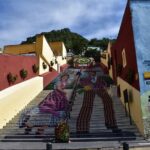
Your first stop is Centro Histórico de Tlaxcala, where the focus is art in the public eye. You’ll admire murals on the Ayuntamiento (city hall), painted by a famous Mexican artist, in a setting that’s easy to understand fast. This is the kind of stop that helps you get your bearings before you jump into pre-Columbian sites.
You’ll also get the feeling of Tlaxcala as a small, historic city rather than a single landmark. That matters because Cacaxtla can feel like a different world—so warming up with the town first gives context for the day.
The main limitation is the time. 30 minutes is enough to see what you came for, but not enough for a deep wander or museum detours. If you want extra browsing, you’ll need to plan it for another day.
Cacaxtla Archaeological Site: what to focus on in 2 hours
Cacaxtla is where the tour earns its keep. The site tells a story of long occupation and a major flourishing between 650 and 900 A.D., linked to the Olmecas-Xicalancas who lived in and around the area. But here’s the practical truth: you won’t enjoy it as much if you treat it like random ruins.
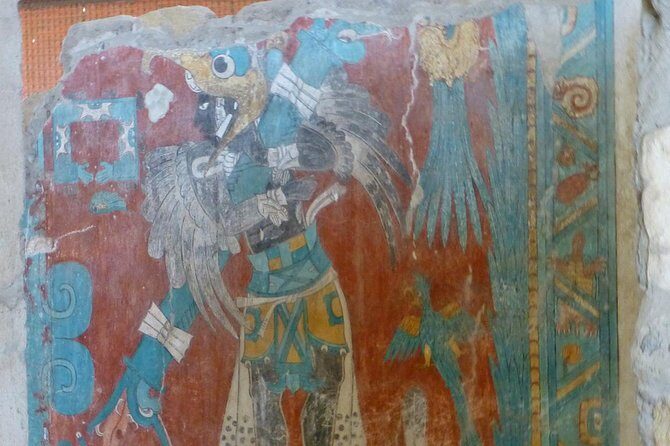
In your time on-site, concentrate on the Gran Basamento, a large architectural complex made of superimposed and attached structures. This is also where the frescoes come in—painted murals that are the reason many people love this place.
Within that broader area, you’ll hear about specific features such as:
- Templo de Venus
- Templo Rojo
- Mural de la Batalla
- Pórtico A
Even if you don’t know much about Mesoamerican art, these names help you anchor what you’re seeing. The murals aren’t just decoration; they’re part of how the buildings communicate identity, power, and narrative.
One heads-up from the way this site is described by others: if your ideal archaeological visit is mostly about the biggest monuments and sweeping views, Cacaxtla can feel less about size and more about painting and interpretation. Still, for fresco lovers, it’s a standout.
The 1980s roof over Cacaxtla: why it changes your experience
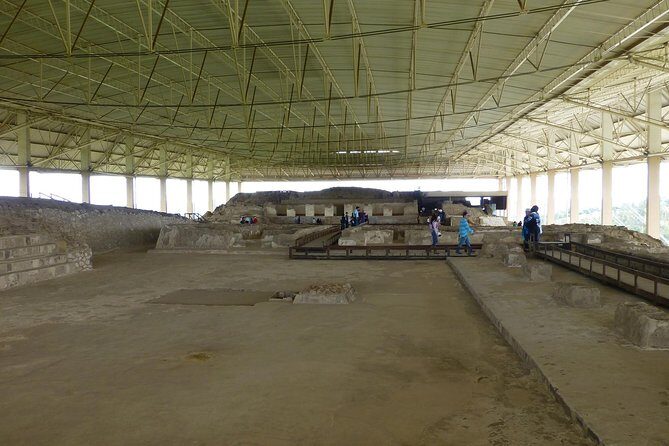
Cacaxtla has one of those conservation decisions you really feel once you’re there. Because the paintings are so valuable, a large roof was installed in the 1980s—around 10,000 square meters—covering the core portion of the Gran Basamento. That means you’re not just looking at ruins; you’re looking at ruins under protection.
For your visit, that can be a plus and a limitation. It’s a plus because the frescoes are preserved enough to remain a major visual focus instead of fading away. It’s a limitation because you’re experiencing the site within a protective structure, so you won’t get the same open-air atmosphere as some other archaeological zones.
This is also why a good guide helps. When you’re standing in protected sections, it’s easy to assume everything is self-explanatory. A guide can point out the mural details and help you understand what you’re looking at beyond the obvious shapes.
Basilica of Our Lady of Ocotlán: barroque architecture with a clear origin story
After Cacaxtla, you’ll head to the Basilica de Nuestra Señora de Ocotlán for about 45 minutes. The tour frames it with a story that starts in 1541, when the Virgen María is said to have appeared to the indigenous man Juan Diego Bernardino. Even if you’re not focused on religious history, that origin story gives the building meaning in a way that photos alone can’t.
Architecturally, this basilica is known for its baroque expression from the 18th century, and there’s a special highlight: the Camarín de la Virgen, described as barroco indígena. That blend is part of what makes the site feel more than just another church stop.
You’ll get enough time to appreciate the main areas without feeling rushed. The drawback is simple: you won’t have hours here. If you want a slow, contemplative visit or you enjoy reading every inscription, 45 minutes may feel short.




Timing, pace, and small-group comfort: how you get better photos and better understanding
This tour caps at 12 people, which is one of the best things about it for a day like this. Small groups mean less waiting, more chances to hear the guide clearly, and fewer moments where you’re trying to squeeze past the crowd to see the next wall or mural.
The pace also matters. One of the nicest things people report is that the guide keeps a strong flow and explains at a level that makes the site click. In at least one case, the English-speaking guide Ronald was highlighted for clarity and for taking good care with photos—useful if you’re the type who wants images that actually capture what you were seeing.
For you, the practical takeaway is to arrive ready to move. Wear comfortable shoes, keep your camera handy, and don’t treat the day as a sightseeing free-for-all. You’ll get more out of it if you lean into the structure.
Price and value check: what $120 covers and what you’ll spend extra
At $120 per person, the value comes from what’s included rather than the headline number. You get a professional guide, hotel pickup and drop-off, and private vehicle transport. You also get admission tickets included for every planned stop: Tlaxcala’s town murals area, Cacaxtla, and the Basilica de Ocotlán.
The main things not included are food and drinks. That’s common for day trips, but it still affects your budgeting. You’ll want to plan a snack strategy so you don’t feel stuck paying whatever is convenient at the last moment.
Also consider that this tour tends to book ahead. If your dates are fixed, it’s smart to lock it in rather than gambling on last-minute availability.
Net: if you want a guided day that includes admissions and transport, this pricing structure is hard to beat.
Practical notes: dress code, tickets, and what to bring
The dress code is smart casual. That’s usually easy in Mexico if you keep it comfortable and avoid anything too formal for walking. You should also be okay with a moderate physical fitness level, since archaeological sites naturally involve uneven ground and standing.
You’ll likely use a mobile ticket, so have your phone charged and ready. For most people, the real “bring” list comes down to basics: comfortable shoes, a light layer if you run cool, and a plan for water or snacks since food and drinks aren’t provided.
And yes, punctuality matters. The tour notes that you need to be ready 15 minutes before the scheduled pickup time, and lateness can affect whether you can join. If you’re the type who runs late, set an extra alarm.
Who should book this Cacaxtla and Tlaxcala day trip
Book this if you want:
- A guided first-time look at Cacaxtla focused on frescoes and key structures
- A day that includes both pre-Columbian art and an important baroque church
- A low-effort format with pickup, admissions, and transport handled
It’s also a good match if you like the idea of learning something in a structured way. The most satisfying moments at Cacaxtla are the ones where someone explains what you’re seeing, why it matters, and where to look next.
Skip it if you want a long, independent day where you can wander for hours. The stops are short by design, and you’re on a guided schedule.
Should You Book This Tour?
If you’re staying in Puebla and you want one high-impact day outside the city, I think this tour is worth considering. The biggest reason is the combination: Cacaxtla’s fresco focus plus Tlaxcala’s historic center plus Ocotlán’s baroque architecture—all packaged with admissions included and hotel pickup.
The only strong reason not to book is if you hate schedules or you’d rather spend most of your time self-guiding without a guide pointing out specific elements. If that sounds like you, you might prefer a more flexible option.
Otherwise, this is a clean, efficient way to spend a day seeing real art history and meaningful sites without spending your energy figuring out logistics.
FAQ
How long is the Cacaxtla and Tlaxcala day trip from Puebla?
The tour is about 6 hours (approximately).
What is the price per person?
The price is $120.00 per person.
Does the tour include hotel pickup and drop-off?
Yes. Hotel pickup and drop-off are included.
Are admission tickets included?
Yes. Admission tickets are included for the Centro Histórico de Tlaxcala stop, the Cacaxtla Archaeological Site, and the Basilica of Nuestra Señora de Ocotlán.
Is food or drinks included?
No. Food and drinks are not included.
What language is the tour offered in?
The tour is offered in English.
How big are the groups?
The group size is capped at a maximum of 12 people.
Where does the tour start?
The meeting point is Av. Don Juan de Palafox y. Mendoza 14, Centro histórico de Puebla, 72000 Heroica Puebla de Zaragoza, Pue., Mexico.
What is the cancellation policy?
You can cancel for a full refund if you cancel up to 24 hours in advance of the experience start time. If you cancel less than 24 hours before, the amount paid is not refunded.