REVIEW · MEXICO CITY
Guided Walking Tour to the Archaeological Zone of Teotihuacán
Book on Viator →Operated by native tour guide teotihuacan · Bookable on Viator
Teotihuacán rewards a slow walk. This guided route helps you read the site as you move, from the viewpoint down toward the Temple of Quetzalcóatl, and all the way past the Road of the Dead to the Pyramid of the Sun and the Pyramid of the Moon. I especially like how the guide ties the big monuments to everyday Teotihuacán life, including stops that hint at where people lived and practiced city life.
Two standout things I’d seek out: you get the story of how the pyramids were built and why the layout matters, and you also get sound and symbolism—claps and attention to acoustics are part of the magic. The only real consideration: it’s a steady walk with moderate fitness required, and you’ll want to plan for limited shade.
In This Review
- Key Highlights You’ll Actually Use
- A Guided Walk That Turns Teotihuacán From Flat to Alive
- Getting In: Gates, Bathrooms, and a Calm Start
- Stop-to-Stop: The Route That Builds a Story
- Orientation Viewpoint to the Temple of Quetzalcóatl
- Explaining the Citadel and the Road of the Dead
- Sunken Patios, West Plaza, and Clues of Daily Life
- Pyramid of the Sun: Scale, Layout, and Symmetry
- Palaces and the Lead-In to the Moon
- Pyramid of the Moon: Acoustics and the Big Finale
- Price and What You’re Really Paying For
- Who This Tour Fits Best
- Practical Tips to Make It Feel Effortless
- Should You Book This Guided Teotihuacán Walk?
- FAQ
- How long is the Guided Walking Tour to the Archaeological Zone of Teotihuacán?
- What’s included in the price?
- Is the tour offered in English?
- Where do the tour meet and end?
- What fitness level do I need?
- What if I need to cancel?
Key Highlights You’ll Actually Use
- English-speaking guidance that keeps the route understandable as you shift from viewpoint to temples and plazas
- Road of the Dead plus major pyramids in one morning, without wasting time guessing where to go next
- Local sound and symbolism moments, including acoustics the guide may show with a clap
- Everyday-life clues like sunken patios and areas that suggest how people lived
- A small group cap (max 40) that makes it easier to hear and ask questions
A Guided Walk That Turns Teotihuacán From Flat to Alive
Teotihuacán can feel huge and oddly quiet when you arrive on your own. This tour helps you avoid that “I’m just looking at rocks” problem. The pacing is built around moving sections of the archaeological zone in a logical flow: start with a reset and orientation, then walk the main ceremonial spine, and finish with the skyline drama of the big pyramids.
What I like most is the way the guide connects structure and meaning. You’re not only seeing famous shapes—you’re learning why the city was laid out the way it was, and how the major ceremonial areas relate to daily life. The route also has built-in moments where the site’s symmetry and design features click into place, especially when you’re standing at key points and looking along long sight lines.
And yes, the place is charming in a way that goes beyond postcard pyramids. It’s also one of those rare ruins where sound seems to matter. One review specifically points to the bird sound effect when clapping near a temple where the moon rises on a full moon day, which tells you the guide is paying attention to acoustics and timing details that you’d easily miss alone.
You can also read our reviews of more walking tours in Mexico City



Getting In: Gates, Bathrooms, and a Calm Start
You’ll start at the archaeological zone’s parking area at Puerta 1 (Stationamiento Puerta 1). Before you move into the site, you’ll be directed to the door/gate area where bathroom access is available and you can buy water if needed. It’s a sensible setup for a 3-hour walk—take care of basics early so you can focus on the monuments once you’re inside.
This tour runs in the morning window (the site’s listed hours include 8:30 AM to 11:30 AM). That matters because Teotihuacán is exposed. Starting earlier usually makes the walk more comfortable and gives you a better chance to enjoy the full route without feeling rushed.
Logistically, I’d still treat this as a walking tour first. You’re moving between viewpoints, plazas, temples, and large stair-stepped structures. If you’re the type who likes to linger and take photos every few minutes, plan for slightly fewer stops along the edges—your guide’s pacing will keep the overall flow on track.
Stop-to-Stop: The Route That Builds a Story
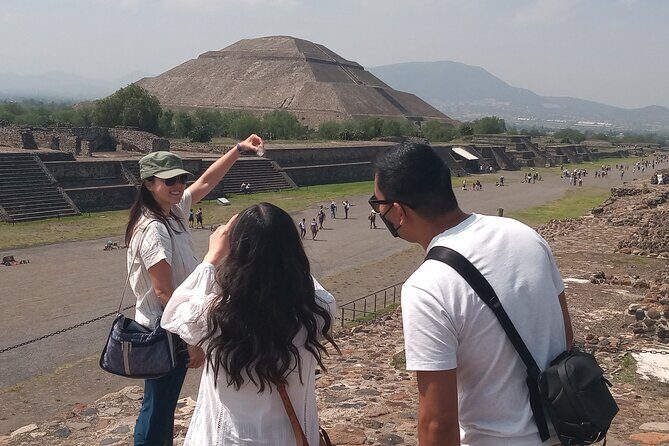
Orientation Viewpoint to the Temple of Quetzalcóatl
The first major phase starts with a viewpoint stop. This is where the guide helps you get your bearings fast—what you’re looking at, which direction the ceremonial axis runs, and how the site’s main landmarks relate. From there, you walk toward what’s called the Temple of Quetzalcóatl.
This part is valuable because it changes your perspective. Instead of treating each pyramid like a separate attraction, you begin to see the site as an organized plan. When you understand the relationship between the temple area and the city’s main route, the later sights make more sense.
A practical note: the road between points can feel long before you hit the main “wow” structures. That’s why the viewpoint orientation helps—those first minutes are the difference between enjoyment and confusion.
Explaining the Citadel and the Road of the Dead
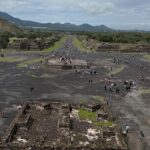
Next comes the area associated with the citadel and then the walk along the Road of the Dead. The guide uses this stretch to explain not just what you’re seeing, but how the ceremonial city worked as a whole.
The Road of the Dead is the backbone of Teotihuacán. It’s also where many people realize the site’s design isn’t accidental. Straight lines, alignment, plazas, and built spaces guide your movement and attention. With a guide, you don’t just walk it—you understand why it’s there.
If you’re sensitive to crowds, this is one of the sections where group pacing helps. You can keep moving without constantly stopping to re-check directions.
You can also read our reviews of more guided tours in Mexico City

Sunken Patios, West Plaza, and Clues of Daily Life
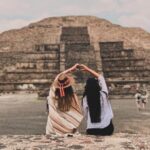
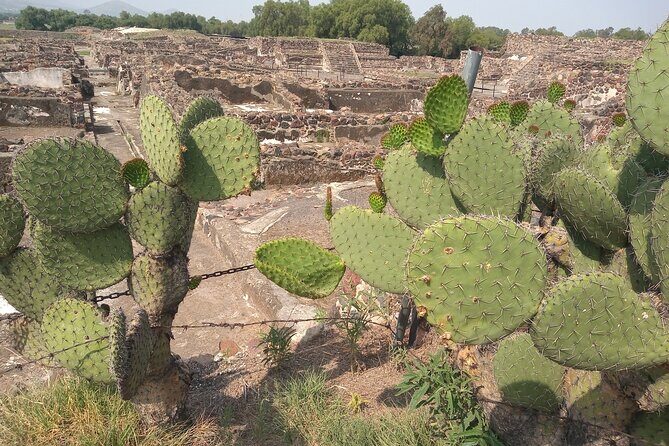
As you continue, you’ll see sunken patios, the West Plaza, and also areas that suggest where Teotihuacanos lived. This is one of the best “value-per-minute” parts of the tour. Pyramids often dominate your attention, but these quieter spaces help you picture the human scale of the city.
This matters for two reasons:
- It breaks the “just monuments” feel.
- It makes the site feel inhabited rather than frozen in time.
You’ll also hear how the pyramids were made, which connects craft and labor to the monument scale. Even without technical details, that kind of explanation changes how you look at construction features and why certain structures were built where they were.
Pyramid of the Sun: Scale, Layout, and Symmetry
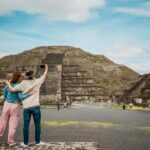
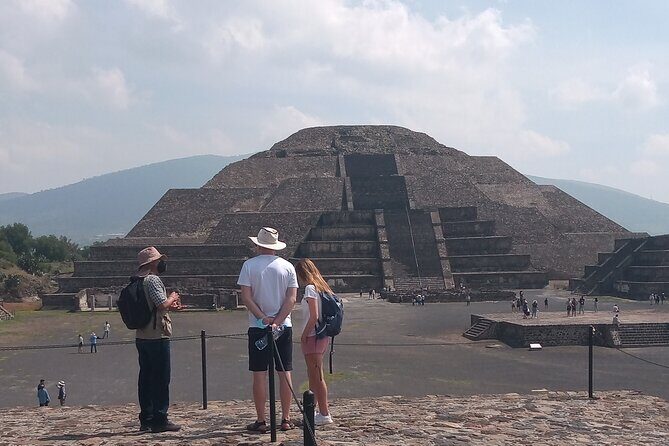
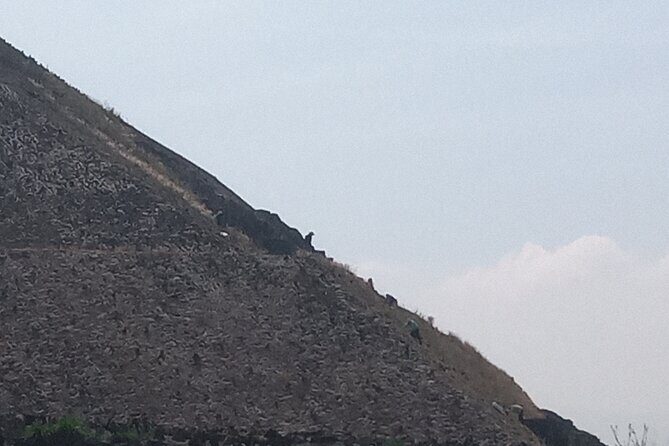
The route brings you to the Pyramid of the Sun. This is where the tour’s focus on symmetry and natural resources starts to pay off. You’re not only seeing size—you’re seeing proportion. The guide’s explanation helps you read the pyramid as part of the larger city design rather than a random giant mound.
This is also a great place to slow down, because you’re likely to notice sight lines and the way your position changes what aligns with what. When you hear the guide’s framing, the pyramid feels like it belongs to a plan, not just a famous landmark.
Palaces and the Lead-In to the Moon
After the Sun, you’ll pass through areas that include palaces before continuing toward the Pyramid of the Moon. This segment is important because it adds variety to the walk. It helps you shift from the big, iconic pyramid moment to the more detailed city spaces that connect the ceremonial core.
If you’re someone who likes “in-between” areas, don’t rush these. The palaces and connected structures make the city feel organized and layered rather than only monumental.
Pyramid of the Moon: Acoustics and the Big Finale
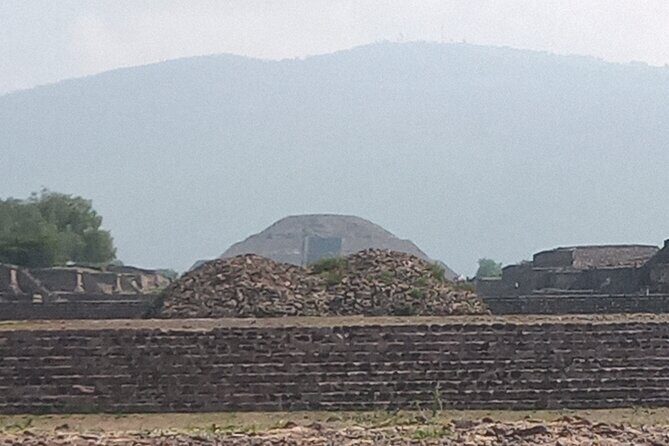
Finally, you reach the Pyramid of the Moon. This is the emotional finish. The guide’s emphasis on acoustics and symmetry helps you experience the space as more than stairs and stone. One review mentions a bird-sound moment linked to a clap in front of a temple where the moon rises on a full moon day. Even if you’re not there on a full moon, it’s a good clue that the guide knows how to point out sound and timing in ways you won’t find on a simple self-guided loop.
This finale works well for photos too, but more importantly, it gives the walking route a conclusion with meaning.
Price and What You’re Really Paying For
At $73 per person, this tour isn’t the cheapest way to see Teotihuacán. But it’s also not an overpriced “just drive you there” product.
Here’s where the value comes from:
- Admission is included (and it lists that admission ticket is part of the tour).
- All fees and taxes are included.
- You get a guide in English for about 3 hours, with interpretation built into the route.
- It’s capped at 40 travelers, which usually helps everyone hear key points.
What isn’t included: bottled water. That’s common, but it matters at Teotihuacán. Plan to bring your own or buy once you’re near the start area so you don’t get stuck mid-walk.
If you’re doing Teotihuacán as a half-day and you care about understanding what you’re seeing, this price-to-time ratio makes sense. If you’re the type who only wants a quick highlight reel and doesn’t care about interpretation, you might find cheaper self-guided options. But for the “teach me what I’m looking at” crowd, the guide-led walk is the point.
Who This Tour Fits Best
This tour is best for you if you want:
- a structured walk across the main areas (Sun, Moon, Road of the Dead),
- an English guide who shares local knowledge,
- and moments that focus on design, acoustics, and symbolism—not just photo stops.
It’s also a good match for small-group comfort. With a max of 40 travelers, you’re less likely to feel swallowed by a herd.
The main mismatch: if your fitness is low or you dislike steady walking on uneven archaeological surfaces, you may struggle. The tour lists moderate physical fitness as the requirement, so be honest with your pace expectations.
Practical Tips to Make It Feel Effortless
- Start with water planning even if you’ll have a chance to buy it near the entrance—Teotihuacán can be slow-going when you’re also managing thirst.
- Bring a camera strategy. This is a long visual circuit with many “main” moments, so decide upfront whether you’ll pause for video or just still shots.
- Listen for the guide’s structure. When the tour makes connections between plazas, temples, and construction, your viewing experience improves fast.
- Wear shoes you trust for walking and steps. You’ll be on a mix of paths and stair-stepped areas.
Should You Book This Guided Teotihuacán Walk?
If you want Teotihuacán to feel like a story you can follow, I think you should book it. The biggest advantage is that the guide doesn’t just point. They explain the city’s layout, how pyramids were made, and what details like sunken patios and plazas can hint about everyday life. The reviews highlight guides like Joël for being kind, hospitable, and taking people to the best spots—and that kind of on-the-ground help really matters at a complex site.
Skip this tour (or consider a different format) if you only want a short sightseeing hit and don’t care about interpretation. Also skip it if the idea of a steady 3-hour walk over archaeological terrain makes you nervous.
For most people doing Teotihuacán from Mexico City, this is a solid, time-efficient way to see the essentials with context, plus a few acoustics-and-meaning moments that make the place feel less like a museum and more like a functioning city from another era.
FAQ
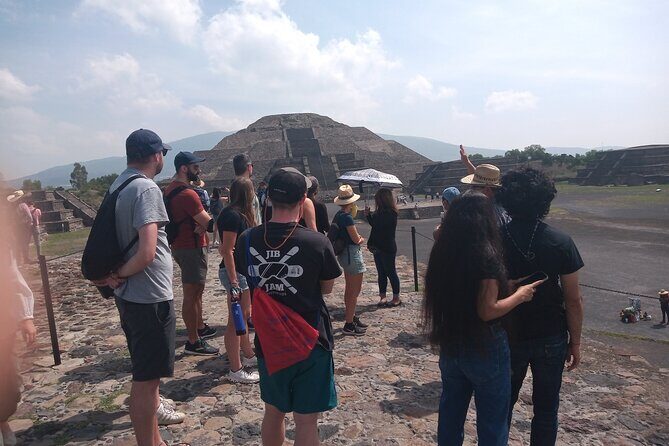
How long is the Guided Walking Tour to the Archaeological Zone of Teotihuacán?
It’s about 3 hours (approx.).
What’s included in the price?
Admission ticket, and all fees and taxes are included. Bottled water is not included.
Is the tour offered in English?
Yes, it’s offered in English.
Where do the tour meet and end?
The tour starts at Zona Arqueológica de Teotihuacan Estacionamiento Puerta 1 and ends at Estacionamiento Puerta 3 (Acceso por Prta 3).
What fitness level do I need?
It’s listed as requiring moderate physical fitness.
What if I need to cancel?
This experience is non-refundable and cannot be changed for any reason.
If you want, tell me your travel dates and whether you prefer early morning or slower pacing—I can help you plan how to fit this into a Mexico City itinerary.