REVIEW · MEXICO CITY
Anthropology Museum Guided Tour
Book on Viator →Operated by Amigo Tours · Bookable on Viator
Big museum. Clear story.
The National Museum of Anthropology is packed with objects that can feel overwhelming at first glance, but this 2.5-hour guided tour helps you understand what you’re looking at and why it matters. You’ll move through major pre-Columbian worlds and connect them to the Spanish colonial era, with an added focus on how Mesoamerican cultures shaped modern Mexico.
I really like two things about this tour. First, the price includes museum admission, so you’re not juggling separate ticket lines or extra costs. Second, the guide leans on iconic anchor pieces—think the Stone of the Sun and the giant Olmec heads—to build a timeline you can actually keep in your head after you leave.
One thing to consider: this is an English tour, and the museum itself is mostly Spanish signage. In the best cases, guides like Alexa, Leonardo, and Ligia make it very understandable—but on some days, audio/English clarity can affect how much you catch.
In This Review
- Key points that make this tour worth it
- Why the National Museum of Anthropology feels different with a guide
- Good value: what you’re really paying for at $39
- Meeting at Bosque de Chapultepec: how to set yourself up
- Stop you’ll care about: getting your bearings at the museum itself
- The objects that anchor the story (and why your brain will thank you)
- Going beyond artifacts: the Aztec capital model and Spanish-period framing
- How the pacing usually works (and where it can snag)
- English tour reality check: what to do if you’re language-sensitive
- Turning this tour into a better day in CDMX
- Should you book this anthropology museum guided tour?
- FAQ
- How long is the Anthropology Museum guided tour?
- What does the $39 price include?
- Is the tour offered in English?
- Where do we meet for the tour?
- Do I need to print a ticket?
- Are backpacks allowed inside the museum on this tour?
- How large is the group for this tour?
- Is confirmation sent after booking?
- Is there free cancellation?
Key points that make this tour worth it
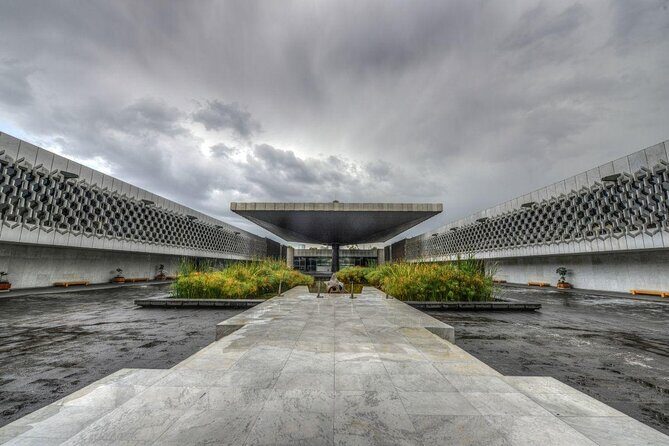
- Admission is included in the $39 price, saving you a step in a museum this big
- Guides connect the dots between artifacts instead of just describing them
- You get fast access to the museum’s must-see anchors, including Olmec and Maya highlights
- The tour focuses your time on the ideas behind what you see (not just where things sit)
- Group size is capped at 25, which usually helps the pacing stay under control
- Bag rules keep lines moving: no food, drinks, or backpacks; only a handbag is allowed
Why the National Museum of Anthropology feels different with a guide
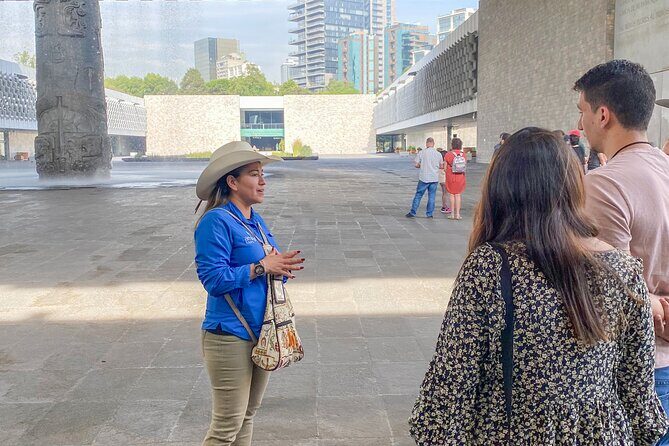
If you’ve ever walked into a museum and thought, Okay, but what am I supposed to notice, this is that museum—just on a massive scale. The National Museum of Anthropology covers multiple civilizations and time periods on the same floor plan, and without context the objects can feel like separate islands.
A good guide turns those islands into a map. You learn how major pieces connect to architecture, belief systems, and political power—then you’re not just staring at statues and stones. Instead, you start seeing patterns: what people built, what they valued, and how their ideas traveled through time and across regions.
You can also read our reviews of more guided tours in Mexico City
Good value: what you’re really paying for at $39
$39 might not sound like much for a museum day—until you remember what this includes. You’re getting a professional guide plus entrance to the museum, for about 2 hours 30 minutes.
Here’s why that matters for value: the Museo Nacional de Antropología is huge, and much of the interpretive text is not in English. Paying for a guide is like buying time and clarity. You’re not racing through galleries to guess what’s important—you’re getting a structured route through the key exhibits.
Also, the tour is designed to help you avoid the slow-start problem. One reason people feel lost in this museum is that they wander first, then realize too late what they missed. This tour gives you the foundation early, so your afterward exploring (if you choose to do it) makes more sense.
Meeting at Bosque de Chapultepec: how to set yourself up
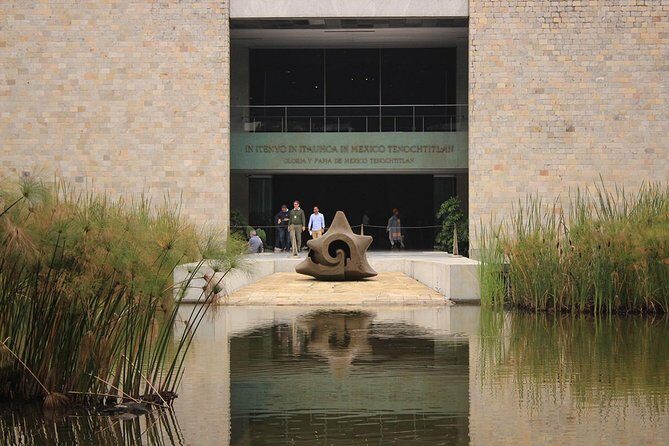
The meeting point is Museo Nacional de Antropología, Av. P.º de la Reforma s/n, Polanco (Bosque de Chapultepec area). The tour ends back at the meeting point, so you’re not committing to any long transfer schedule.
Two practical notes from the experience style here:
- This museum has rules: no food, drinks, or backpacks; only a handbag is allowed. If you pack light, you’ll move faster once you’re inside.
- It’s near public transportation, which is helpful in CDMX where timing can swing. If you’re taking the tour in the morning, aim to arrive early enough that traffic doesn’t steal your start.
If you’re booking for the afternoon, consider that the tour option described here includes a morning slot idea—this can be a smart way to keep your afternoon free for Chapultepec, parks, or a neighborhood wander without feeling museum-fatigued.
Stop you’ll care about: getting your bearings at the museum itself
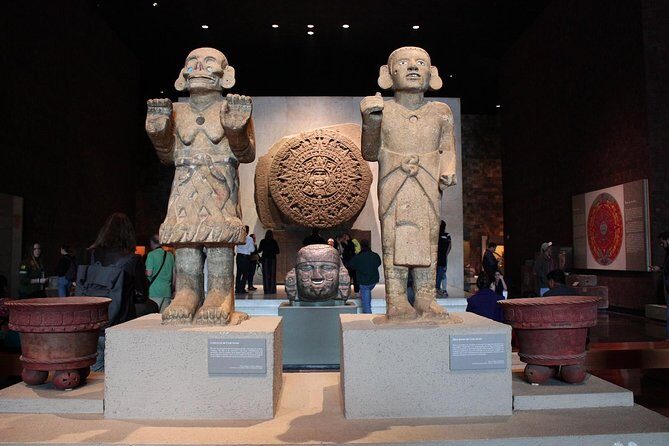
Your tour’s main stop is the Museo Nacional de Antropología, where the whole point is context. You don’t start by guessing what civilization you’re looking at—you start with an explanation of the museum’s overall “why.”
It helps that this museum is basically built for comparison. The permanent collections focus on pre-Columbian civilizations found on today’s territory of Mexico and even in parts of former Mexican territory in the southwestern United States. That means your guide can talk about continuity and change without you constantly switching mental gears.
And yes, there are visiting exhibits too. So if your day includes a temporary display, you’ll be primed to connect it to the core story rather than treating it as a random detour.
The objects that anchor the story (and why your brain will thank you)
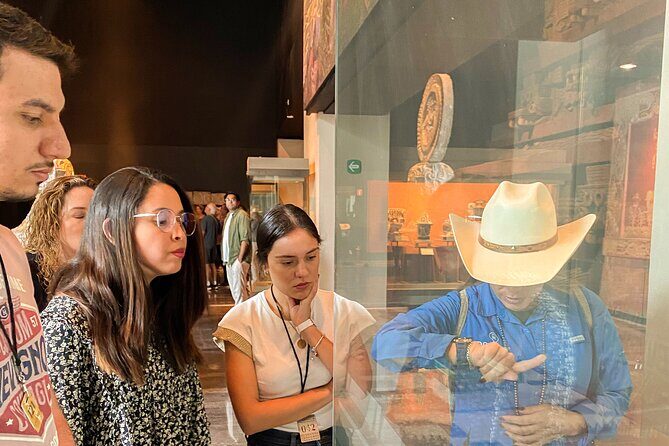
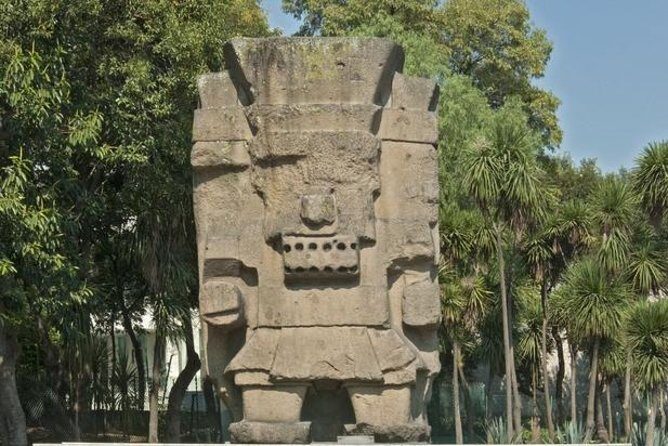
This tour’s route centers on big, unforgettable artifacts. The point isn’t that these pieces are just famous—they’re used as reference points so the rest of the galleries become easier to understand.
Here are the anchors you should watch for:
The Aztec Calendar / Stone of the Sun
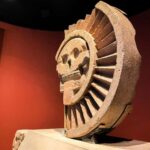
This is the centerpiece many people come to see, and a guide helps you read it as more than a cool disc. When the narration connects the imagery to belief and political meaning, the object stops being “just art” and becomes a way to talk about worldview.
Giant Olmec heads (from Tabasco and Veracruz)
Olmec art often looks “mysterious” without context. With the guide’s explanations, you start understanding the scale and what it represents—plus how Olmec influence fits into the larger Mesoamerican story rather than living in its own bubble.
Maya highlights, including sacred cenote context and tomb reconstructions
The tour includes Maya material such as reconstructions related to tombs, plus references tied to the Sacred Cenote at Chichen Itza. When a guide explains these within Maya religious and ceremonial patterns, it’s easier to understand why specific objects were made and what they likely meant.
Even if you don’t remember every detail, this approach helps you keep hold of the big timeline. You’re not collecting facts—you’re collecting relationships.
You can also read our reviews of more museum experiences in Mexico City



Going beyond artifacts: the Aztec capital model and Spanish-period framing
One of the most useful features here is the model of the former Aztec capital Tenochtitlan, showing where it once stood—now occupied by central Mexico City. A model like this does something maps sometimes can’t: it gives your brain a stable “before” while you explore the present city.
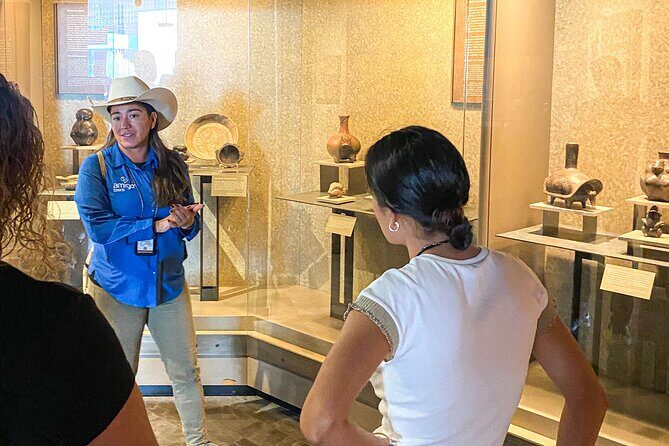
From there, the tour framing matters. A strong guide presents the arc from early regional civilizations through later developments and into the Spanish conquest period. For example, guides like Alexa were praised for taking groups through that progression and using extra visuals like their own photos and drawings to explain how things were built.
If you’ve been trying to understand CDMX history in a hurry, that framing is gold. You stop seeing “ruins” and start seeing continuity: how ideas survived, shifted, and became part of modern Mexico’s cultural identity.
How the pacing usually works (and where it can snag)
The tour runs about 2 hours 30 minutes, so it’s not trying to cover every gallery in the museum. Instead, it’s aiming to give you a “best order to see this” plan.
In great situations, you’ll get a clear structure, then some time for your own look. Some guides are described as starting with a high-level overview, then moving into deeper details as you go—while others focus on making sure you can explore specific rooms afterward.
Still, a few real-world issues show up in the experience record:
- Some groups reported delays around equipment or entry flow, like waiting for headphones to be distributed.
- A few people found the English harder to follow due to accent or audio quality.
- There are also occasional complaints about disorganization early on—like unclear meeting instructions or confusing hand-offs.
Here’s how you protect yourself from these bumps:
Arrive early, bring only a handbag, and go in knowing the museum is huge. If you can, pick an earlier start time so small delays don’t crush the rest of your day.
English tour reality check: what to do if you’re language-sensitive
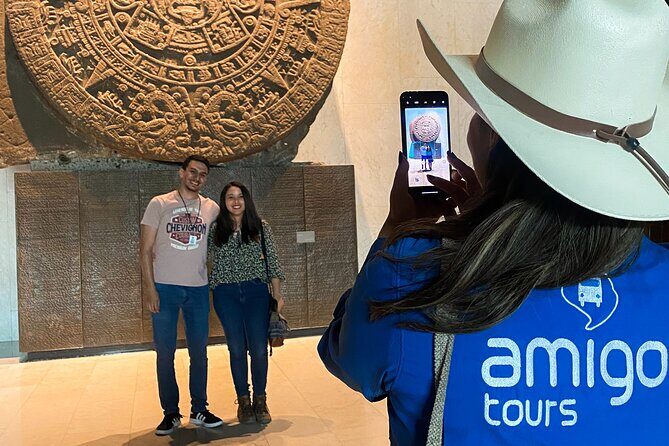
Because the museum signage is mostly Spanish, the guide’s English level becomes more important than it would at a museum with heavy English placards. In multiple positive experiences, guides such as Ligia were praised for answering questions and even handling English and Spanish.
But there are also reports of audio equipment not being easy to hear and of accents making parts of the narration tough. You can’t control that from home, but you can prepare:
- Stand where you can hear clearly in the group.
- Ask questions when you don’t get a timeline link. If the guide is strong, questions tend to unlock better explanations.
- Keep a short list of what you most want to see (Olmec heads, Stone of the Sun, Maya highlights). If the pacing feels fast, you’ll know what to prioritize afterward.
Turning this tour into a better day in CDMX
The biggest planning win is the time you save. Once you understand the big timeline, you’ll wander differently afterward. You’ll notice patterns in art style, religious symbolism, and geographic connections instead of reading everything as isolated objects.
If you book a morning tour, you’ll likely have enough energy for:
- Chapultepec-area walks and breaks
- A second museum or neighborhood stroll without feeling like you’re dragging yourself back into lineups
- A chance to zoom in on whatever objects stuck with you during the narration
Also, with CDMX transit, a structured start helps. When you know where you’ll be at a specific time, you waste less energy guessing.
Should you book this anthropology museum guided tour?
Book it if you want the museum to make sense fast. This tour is built for people who love archaeology and history but don’t want to spend half the day figuring out how the civilizations connect. The admission included part makes it feel like a straightforward deal, and the object-based timeline helps you remember what you saw.
Skip it (or pick a different option) if you’re very language-dependent and you can’t handle audio/English clarity issues. While many guides—like Alexa, Alan, Genovanna, Hector, Ligia, and Leonardo—earned praise for clear explanations, there are enough reports about difficult audio or pacing snags that I’d treat this as a “show up early, listen actively” experience.
My bottom line: for most first-timers, a guide here turns the National Museum of Anthropology from a maze into a story. If you’re eager to understand what the Stone of the Sun, Olmec heads, and Maya pieces mean in the bigger picture, this is a smart way to start.
FAQ
How long is the Anthropology Museum guided tour?
It runs about 2 hours 30 minutes.
What does the $39 price include?
The price includes professional guide time and entrance to the National Museum of Anthropology. Food and drinks are not included.
Is the tour offered in English?
Yes, it is offered in English.
Where do we meet for the tour?
The meeting point is Museo Nacional de Antropología, Av. P.º de la Reforma s/n, Polanco, Bosque de Chapultepec I Secc, Miguel Hidalgo, 11560 Ciudad de México, CDMX, Mexico.
Do I need to print a ticket?
No. It uses a mobile ticket.
Are backpacks allowed inside the museum on this tour?
No. You’re not allowed to enter with food, drinks, or backpacks. Only a handbag is allowed.
How large is the group for this tour?
The tour has a maximum group size of 25 travelers.
Is confirmation sent after booking?
Yes. Confirmation is received at the time of booking.
Is there free cancellation?
Yes, free cancellation is available if you cancel at least 24 hours in advance of the experience start time.