REVIEW · MEXICO CITY
From Mexico City: Cholula Pyramid & Puebla Small Group Tour
Book on GetYourGuide →Operated by Travis Adventures · Bookable on GetYourGuide
Cholula and Puebla in one day? Great idea. This trip links Cholula’s Great Pyramid with Puebla’s major churches and classic dessert streets, so you get big scenes and real local flavor without the stress of planning. I especially like the way the day is organized around the most meaningful stops, not random photo breaks, and you’ll get expert context as you go.
Two things I really like: the small-group size (up to 15) keeps things manageable, and the bilingual guidance helps you understand what you’re looking at. One thing to weigh: the pyramid climb is stairs-only, and there’s no elevator to reach the top.
You’ll start in Cholula, then roll into Puebla de los Ángeles with time for the cathedral, the famous Rosario Chapel (if available), and a sweet stroll down Calle de los Dulces. I like that the itinerary balances indigenous-influenced church art with major Spanish colonial landmarks, so the story of the region feels whole. If you’re tight on walking tolerance, plan accordingly and consider another option.
In This Review
- Key Highlights at a Glance
- Entering The Day: From Mexico City to Cholula and Back
- Cholula’s Great Pyramid: Museum First, Then the Climb
- Santa María Tonantzintla: Where Indigenous Motifs Live Inside Catholic Space
- San Francisco Acatepec: The Church That Feels Like a Surprise
- Puebla de los Ángeles: Cathedral Geometry and Volcano Views
- Rosario Chapel (If Available) and the Sweet Stroll at Calle de los Dulces
- Price and What You’re Really Getting for $192
- How the Guides Make This Tour Better Than the Route Alone
- Who This Trip Suits (and Who Should Rethink It)
- Should You Book This Cholula and Puebla Small Group Tour?
- FAQ
- FAQ
- Is there an elevator to reach the top of the pyramid in Cholula?
- How long is the tour?
- How big is the group?
- What’s included in the price?
- What language options do I get?
- Where does the tour start in Mexico City?
- Is the Capilla del Rosario always part of the tour?
Key Highlights at a Glance
- Cholula’s Great Pyramid with admissions plus a museum stop to ground what you see
- Our Lady of Remedies Church built on top of the pyramid, right where the climb pays off
- Santa María Tonantzintla: interior decoration mixing Indigenous motifs and Catholic themes
- San Francisco Acatepec: a church stop that tends to stick in your memory
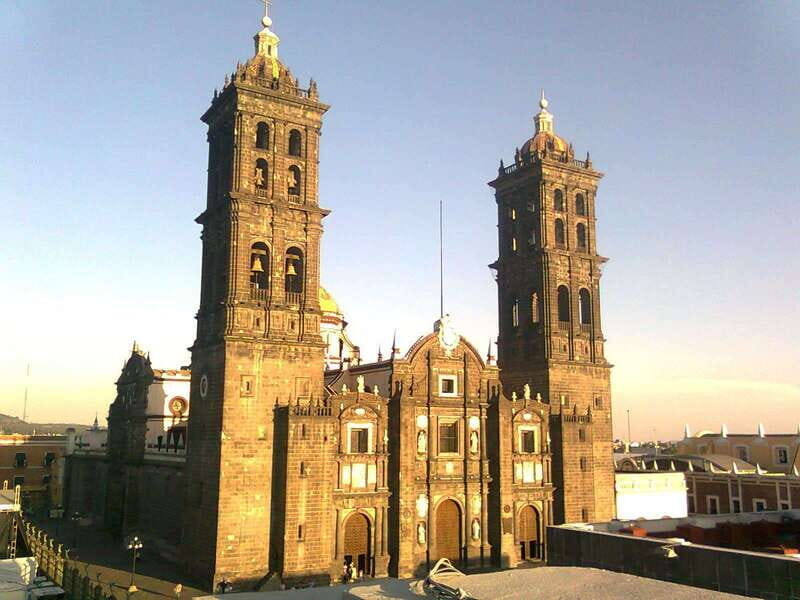
- Puebla’s cathedral with 5 naves, a cross-shaped layout, and massive bell towers
- Capilla del Rosario + Calle de los Dulces for the most famous chapel and the best sweet window-shopping
Entering The Day: From Mexico City to Cholula and Back
This is a 10-hour day trip with transport built in, so you start with less logistics and more sightseeing. You’ll be picked up at the Maria Isabel Sheraton Hotel, next to the roundabout of the Angel of Independence. The tour ends back in Mexico City at 6 PM, which is a nice, concrete finish time when you’re planning dinner or your next day.
Because it’s a small group limited to 15 people, you can actually hear your guide and ask questions. That matters on a route like this, where details like symbols in chapels and architectural layouts change what the buildings mean. You’ll also get bilingual help in Spanish and English, so you can follow even if the stops feel intense or fast.
The pacing is full-day. You’ll be on the move from Cholula’s pyramid area to Puebla’s historic center and back, so comfortable shoes are not optional. And since there’s no elevator at the pyramid top, you’ll want to treat the climb like a real activity, not a casual stop.
You can also read our reviews of more city tours in Mexico City

Cholula’s Great Pyramid: Museum First, Then the Climb
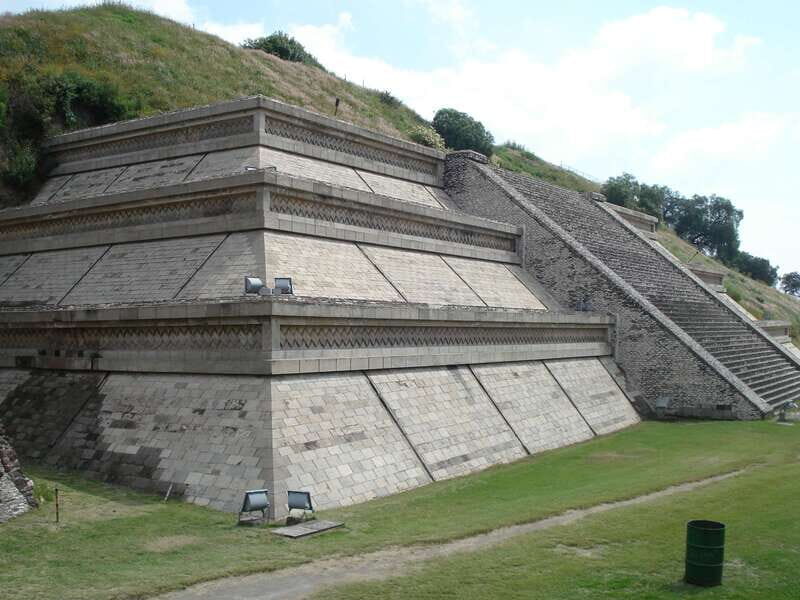
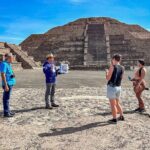
Cholula’s centerpiece is the Great Pyramid of Cholula, and the stop is more than a quick look from the ground. You’ll visit the archaeological site and the museum before you go up. That museum time helps you understand the site as something layered over time, rather than a single landmark standing alone.
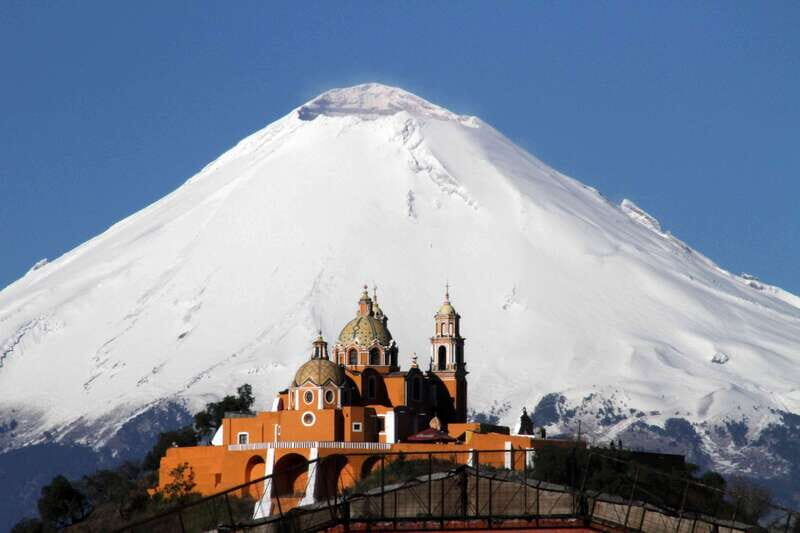
Then you’ll head up toward the Our Lady of Remedies Church, which sits on top of the pyramid. There’s no elevator, so the only route is stairs. That’s the main physical drawback of the day, and it’s worth planning around if you have mobility concerns or you tire easily.
What I like about this format is that it rewards effort. When you’re up top, you’re standing on a place that blends ancient archaeology with later religious architecture. It’s also a good moment to slow down and take in the broader view, because Cholula’s setting makes the pyramid feel connected to the land, not just to a history book.
Santa María Tonantzintla: Where Indigenous Motifs Live Inside Catholic Space
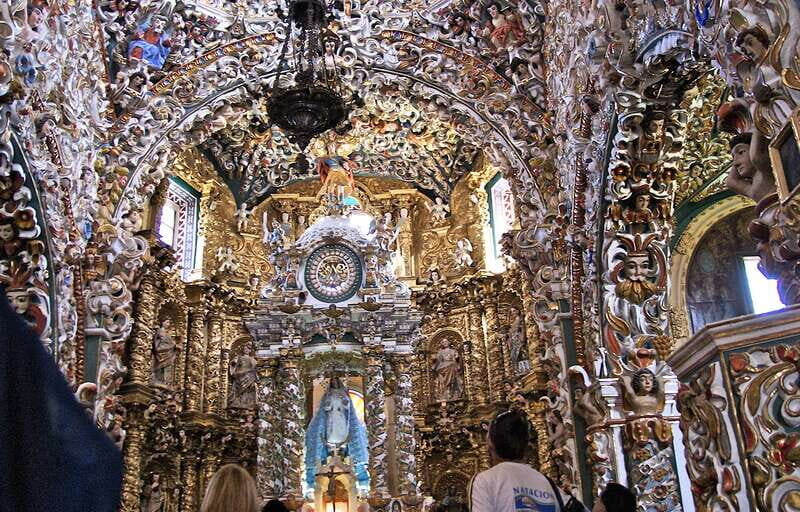
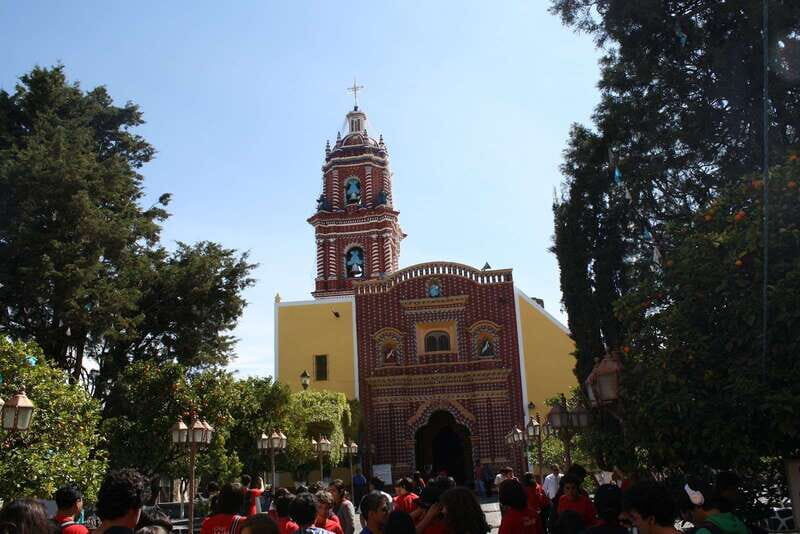
Next comes one of the most unusual church interiors you’ll see in Central Mexico: Santa María Tonantzintla. The big reason this stop is unforgettable is the decoration, which combines Indigenous motifs with Catholic elements in one visual language. You’re not just walking through a pretty building; you’re reading a message that was designed into the walls and ceilings.
You’ll learn how the Indigenous people of Tonantzintla wanted to represent Tlaloc, the rain god, in the dome of a sky chapel. That kind of detail changes how you look at the ceiling and the sky-area symbolism. Instead of treating the art as decoration, you’ll start noticing patterns and images as a coded story.
There’s also a specific way the face carvings are explained: not every carved face is an angel. Some are Indigenous people depicted in the idea of dying and being reincarnated in the sky. It’s a heavy, human concept, but it’s presented through art you can actually see up close and interpret with your guide’s help.
If you tend to love places where religion and local identity overlap, this is the stop that hits hardest. And if you’re the type who likes “why did they do it this way” answers, your guide will likely make this interior feel clear instead of confusing.
San Francisco Acatepec: The Church That Feels Like a Surprise
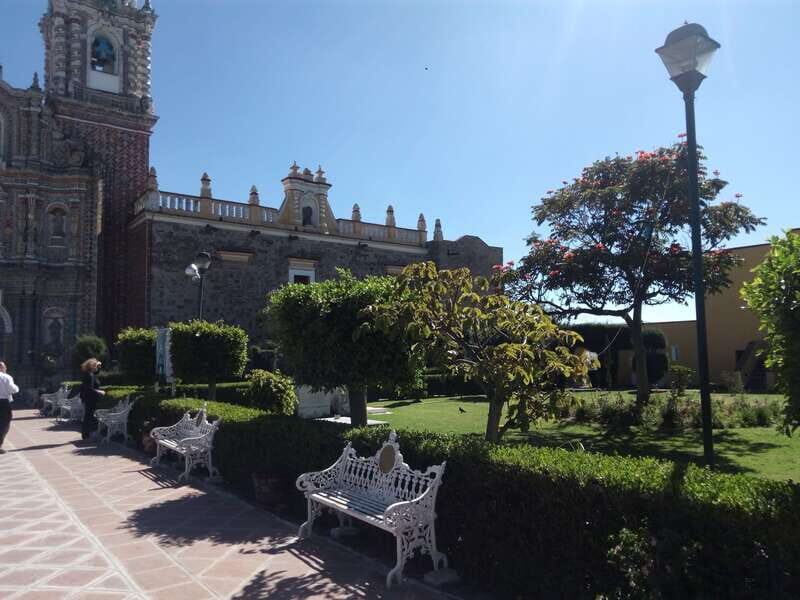
After Tonantzintla, you’ll visit San Francisco Acatepec. The tour description calls it a beautiful and unforgettable church, and that’s the vibe you should expect from this part of the route. It’s one more stop in the region where architecture works like a visual storybook.
You may not get the same level of specific iconography explained here as you do at Tonantzintla, but it’s still a strong contrast point. You’ll be moving from one style of sacred imagery to another, so your eyes stay active and you don’t feel like you’re repeating the same church experience.
This is also a good reminder that Puebla State’s church architecture isn’t only about big exteriors. Here, the real payoff often happens inside details, carvings, and the way light hits surfaces.
Puebla de los Ángeles: Cathedral Geometry and Volcano Views
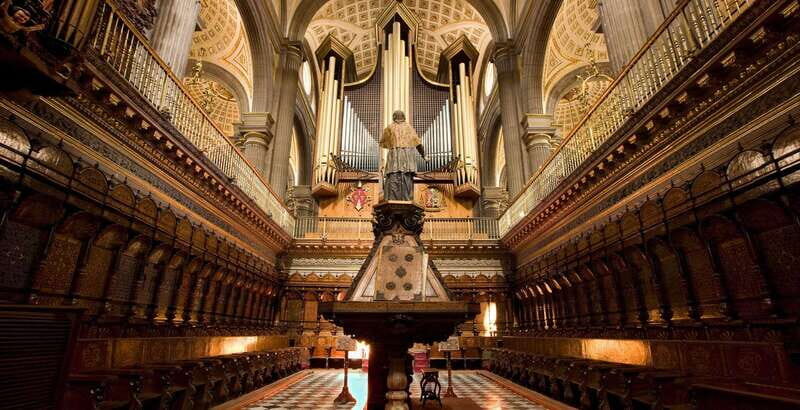
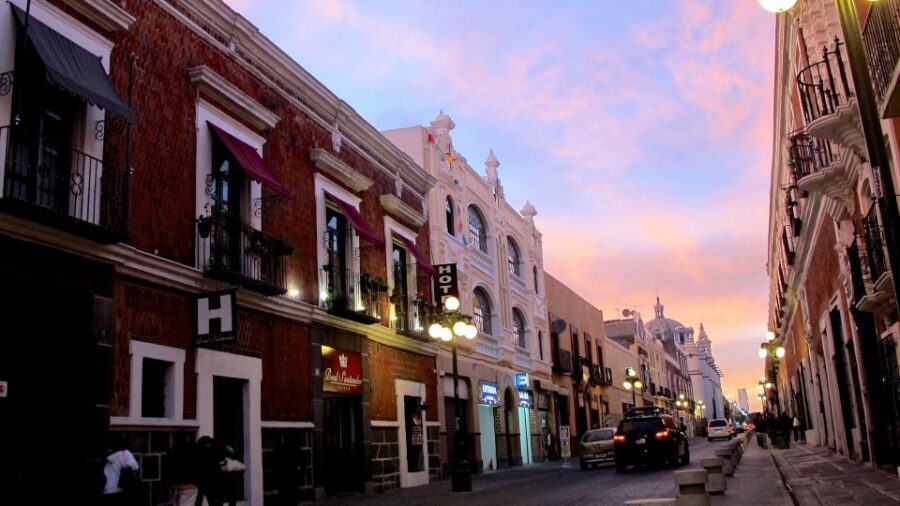
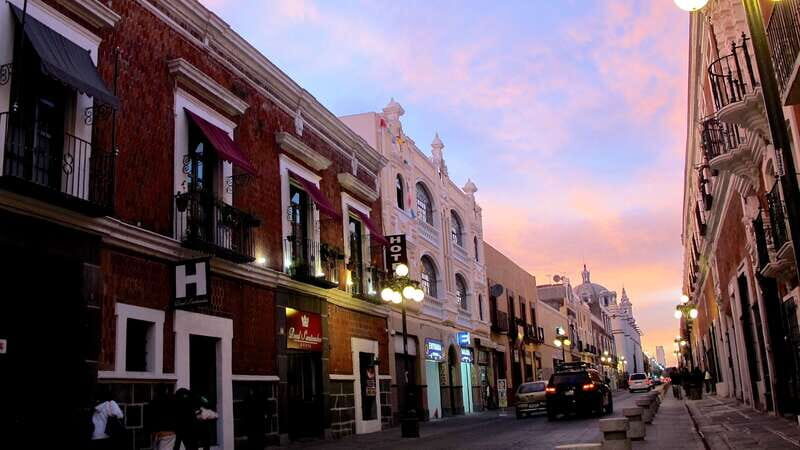
Then it’s Puebla de los Ángeles, one of Mexico’s major heritage cities, with stunning scenery framed by the volcanoes Popocatépetl and Iztaccíhuatl. You’ll see the city as more than a museum set. The view makes the historic center feel tied to real geography, and that makes the architecture more satisfying to notice.
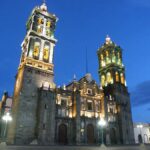
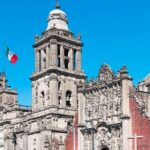
Your main architectural stop is the cathedral, which is cross-shaped and has 5 naves. The tour also highlights the altar system: the central altar was constructed in an octagonal shape, while the other four altars face in the direction of compass points. That detail is the kind that makes the cathedral feel planned, like it’s measuring the world around it.
You’ll also marvel at the bell towers, noted as the largest in Mexico. Even if you’re not counting bell towers for fun, this is the kind of structural scale that changes your sense of how Puebla asserted itself during the colonial period.
This segment is a solid example of why guided time is worth it. Without explanation, you might just see a beautiful cathedral. With explanation, you understand how the building’s layout communicates meaning.



Rosario Chapel (If Available) and the Sweet Stroll at Calle de los Dulces
The next highlight is the Capilla del Rosario. The tour notes that in its day it was considered as one of the eight wonders of the world, and that sets expectations for something unusually impressive. You’ll step inside to see a statue of the Virgin of the Rosary surrounded by saints, angels, and martyrs.
This chapel is the kind of stop where your guide’s framing matters. With a little context, you’ll notice the density of figures and the overall design logic instead of feeling overwhelmed by the amount of decoration. Even if the chapel stop isn’t available on your specific day, your itinerary still aims to deliver Puebla’s signature sights plus the food end.
At the end, you’ll stroll down Calle de los Dulces. This is your chance to sample or at least browse classic typical desserts. It’s not a “lecture then run” situation. It’s a fun payoff after the churches, and it gives you something to take home in the form of sugar memory and maybe actual treats.
Price and What You’re Really Getting for $192
At $192 per person for a 10-hour day, the big question is value. You’re not just paying for transportation. You’re paying for admissions to the Cholula pyramid site, plus a bilingual guide, plus the time saved by having the route and timing handled for you.
When I look at a day like this, I ask what would cost you time and energy on your own. Cholula and Puebla are close enough for a DIY plan, but the hard part is interpretation and efficient routing. The guide helps you understand why the art is arranged the way it is, and that turns “seeing buildings” into “getting meaning.”
It’s also small-group value. A group of 15 is large enough to be efficient but small enough that you’re not lost in the crowd during explanations. And it’s easier to manage on crowded streets in Puebla than a much larger bus tour.
The “not included” items are pretty standard: meals and drinks, plus personal expenses and any optional costs. So budget for lunch on the way in or during downtime, and consider bringing water.
How the Guides Make This Tour Better Than the Route Alone
This day is packed with high-impact sights, but the quality depends heavily on people. The experience includes bilingual guiding, and the pattern from the best-rated days shows a common theme: guides who are calm, organized, and willing to adjust when life happens.
For Cholula, names like Alberto and Javier show up in strong feedback, both for knowledge and for making the experience feel smooth. In Puebla, Francisco is highlighted for care and for staying attentive to safety and comfort while moving between stops.
One anecdote stands out as the kind of service you remember: a guide helped retrieve a lost drone the next day. That’s not guaranteed on every trip, but it tells you the team’s attitude is not purely transactional.
The same holds for pacing. On at least one day, traffic problems delayed the group, and the guide extended the experience to help everyone get the full value. That doesn’t mean you should expect miracles, but it does suggest the team tries to protect the heart of the itinerary.
Who This Trip Suits (and Who Should Rethink It)
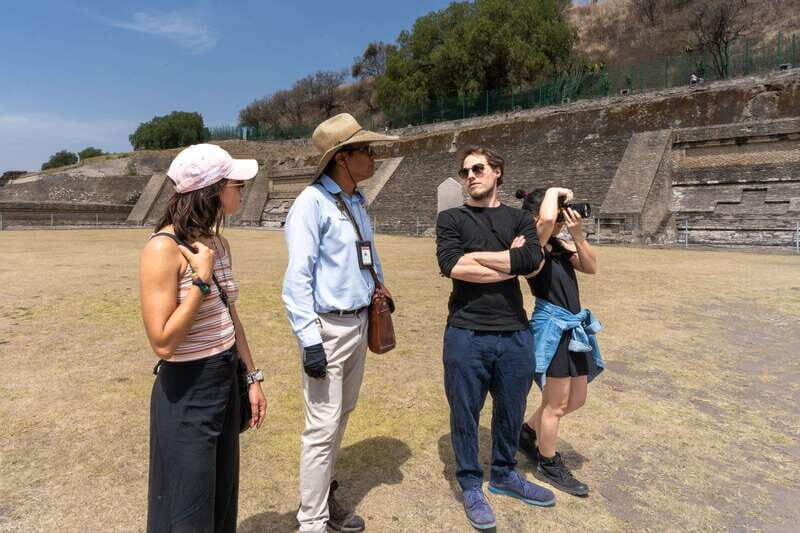
This tour is a strong fit if you want a single-day hit of two of the region’s most distinctive cultural stops: Cholula’s pyramid-and-church story and Puebla’s cathedral plus Rosario Chapel plus dessert streets. If you like architecture, symbolism, and learning what you’re actually looking at, this is your style.
It’s also a good choice if you’re traveling with people who appreciate structure. The route is logical: pyramid and museums first, then church interiors, then Puebla’s historic center, then the sweets.
The biggest “think twice” point is walking. The pyramid top requires stairs, and there’s no elevator. One piece of feedback specifically calls out that the trip may be too much for seniors. If you’re older or have mobility limits, you’ll want to judge your stamina honestly and consider a less intensive option.
Also, the day is long at 10 hours. Even if you can walk, you’ll still feel the time on your feet. Plan for downtime only where it naturally occurs between major stops.
Should You Book This Cholula and Puebla Small Group Tour?
Book it if you want a day that mixes major landmarks with meaning, with bilingual guidance and a small-group setup that keeps the day feeling personal. This is especially compelling if you care about church symbolism and architectural details, because the stops are selected to teach you what matters, not just where to stand for a picture.
Consider skipping or comparing alternatives if the pyramid climb is a deal-breaker for you, or if a full 10-hour day would likely be exhausting. If you can handle stairs and you’re okay with a packed schedule, you’ll come away with a strong sense of Cholula and Puebla as linked stories of culture, faith, and local identity.
FAQ
FAQ
Is there an elevator to reach the top of the pyramid in Cholula?
No. The tour notes there is no elevator to reach the top of the pyramid, so you’ll climb by stairs.
How long is the tour?
The duration is 10 hours.
How big is the group?
It’s a small group limited to 15 participants.
What’s included in the price?
Transport, admissions to the Pyramid of Cholula, and a bilingual tour guide are included.
What language options do I get?
The tour guide works in Spanish and English.
Where does the tour start in Mexico City?
The meeting point is the Maria Isabel Sheraton Hotel, next to the roundabout of the Angel of Independence.
Is the Capilla del Rosario always part of the tour?
It’s listed as something you’ll visit if available.