REVIEW · MEXICO CITY
Rivera and Frida Kahlo Legacy Tour Small Groups
Book on Viator →Operated by Educando con Cultura · Bookable on Viator
Mexico City’s art story is mapped for you. This small-group Rivera and Frida Kahlo Legacy Tour links architecture and mural art in a tight circuit: University City’s public murals, Diego Rivera and Frida Kahlo’s studios in a functionalist house by Juan O’Gorman, and then Museo Anahuacalli for Rivera’s pre-Hispanic collection. I like that the tour doesn’t treat “art history” like a lecture; it ties design choices to real people, real spaces, and real cultural priorities.
Two things I especially liked: the chance to see major work sites tied to Rivera’s mural world in University City, and then the quieter, more personal angle at the Diego and Frida house and studio museum. In particular, when guides like Rodrigo or Jorge are on board, you get clear context that helps the art click instead of just looking impressive.
One possible drawback: the schedule is focused and time-boxed (about 3 to 3 hours 40 minutes). If you want lots of wandering time for photos or museum browsing on your own, you may feel a bit paced, especially on the last stop.
In This Review
- Key highlights worth planning for
- Why this Rivera and Frida legacy tour works better than a DIY day
- University City (Ciudad Universitaria): where murals are part of the campus
- The Museo Estudio Diego Rivera y Frida Kahlo: studios as separate worlds
- Museo Anahuacalli: Rivera’s pre-Hispanic collection plus a living ecological space
- The guide makes the art click (and you’ll feel it fast)
- Price and value: what $95.15 gets you in real terms
- Logistics that matter: timing, tickets, and where you start/finish
- What to bring for a smooth, photo-friendly day
- Who should book this Rivera and Frida legacy tour
- Should you book? My honest take
- FAQ
- FAQ
- How long is the Rivera and Frida Kahlo Legacy Tour?
- What is the price per person?
- Is the tour in English?
- Is this a private tour?
- What are the main stops on the tour?
- Where does the tour start and end?
- What’s included in the price?
- What is not included?
- Do I get an entry ticket or is it handled for me?
- What is the cancellation policy?
Key highlights worth planning for
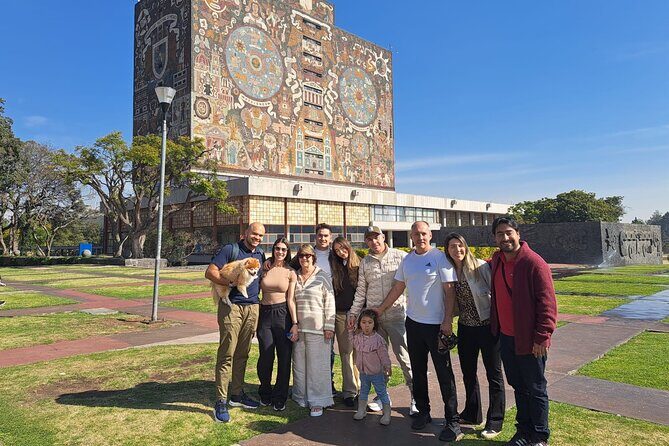
- University City murals tied to the campus plan so you see public art as part of how Mexico imagined education.
- Juan O’Gorman functionalist design explained through Rivera and Frida’s own living and studio spaces.
- Museo Anahuacalli’s pre-Hispanic collection plus an ecological space inside the same site.
- 16 Rivera mural sketches from the early 1930s for a behind-the-scenes look at composition.
- Private transportation and a certified guide so you spend less time figuring out routes and more time learning.
- English-led, small-group format with only your group participating.
Why this Rivera and Frida legacy tour works better than a DIY day
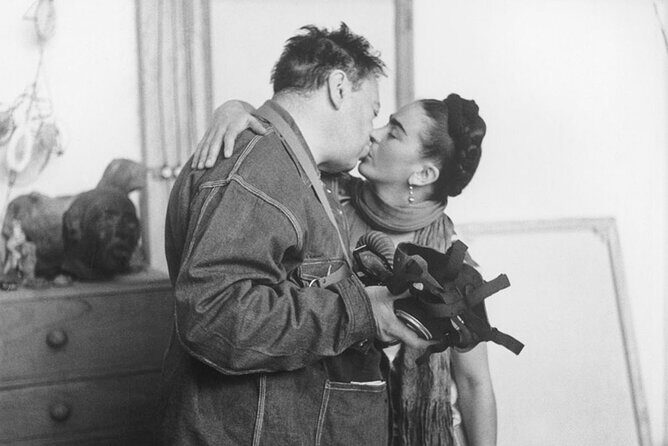
If you try to do Rivera and Frida sites on your own, you can end up with two problems: you get the “what,” but not always the “why,” and you spend time jumping between places instead of settling in. This tour is built like a story arc—from big public ideas to personal studios, and finally to Rivera’s collected pre-Hispanic world.
You’re also getting a practical value mix. You pay a set price and the tour includes private transportation, a certified guide, and entry tickets. That means fewer headaches and less fiddling around with timing, which is a big deal in Mexico City where traffic and distance can change your whole plan.
And yes, this is very much a Mexico City experience. You’ll see how art connects to education (UNAM), to design and daily life (O’Gorman’s studio houses), and to curated collecting (Anahuacalli).
You can also read our reviews of more tours and experiences in Mexico City.


University City (Ciudad Universitaria): where murals are part of the campus
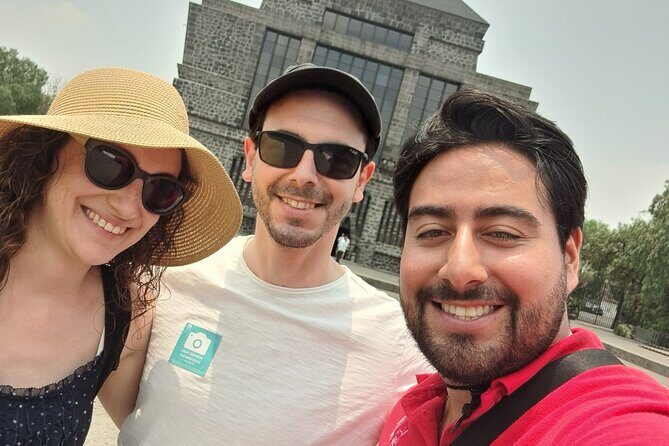
Your tour starts at Rectoría de la UNAMEscolar, C.U., Coyoacán, 04510 Ciudad de México, CDMX, Mexico, which puts you right in the orbit of UNAM’s Ciudad Universitaria. Stop 1 is University City, described as Mexico City’s most ambitious 20th-century project. Translation: this wasn’t built as an afterthought. The campus plan was made to carry Mexico’s future-minded identity.
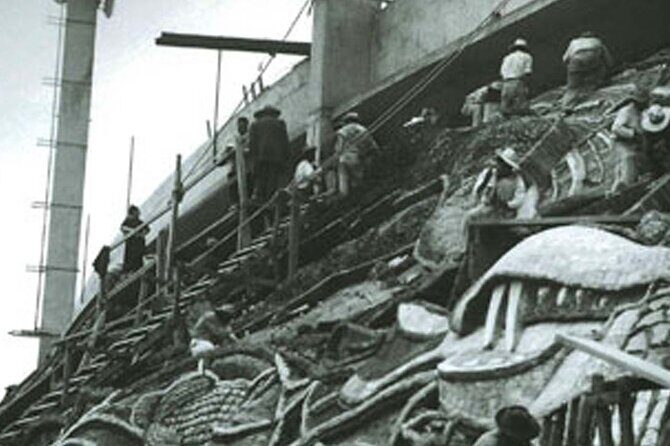
Here’s what makes this stop genuinely useful: the murals aren’t isolated “art stops.” The idea is that architecture and mural painting were planned to work together. You’ll hear about the murals and the artists connected to them, including Rivera, Siqueiros, and Juan O’Gorman. If you’ve ever wondered why Mexico’s mural movement feels so public and purposeful, this is where you see the logic.
You also get a strong education-and-ideas anchor. The tour references Octavio Paz, a Nobel Prize winner, as someone who studied there—so the campus isn’t just about buildings. It’s about intellectual life and national identity.
Time on site: about 1 hour 10 minutes.
My practical tip: wear comfortable shoes. Even when the group moves quickly, campuses encourage short walks and angle changes—perfect for photos if you’re ready to keep moving.
The Museo Estudio Diego Rivera y Frida Kahlo: studios as separate worlds
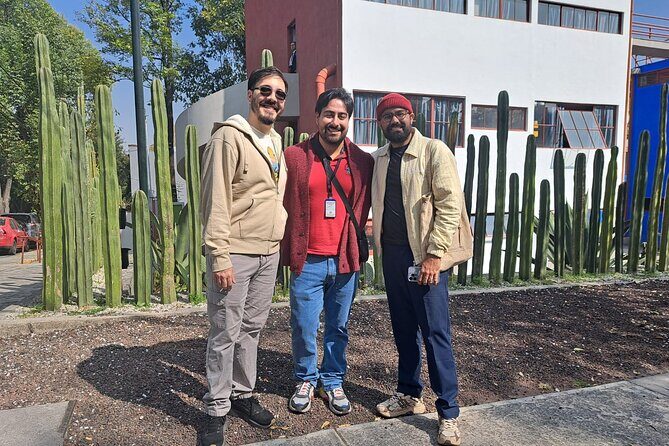
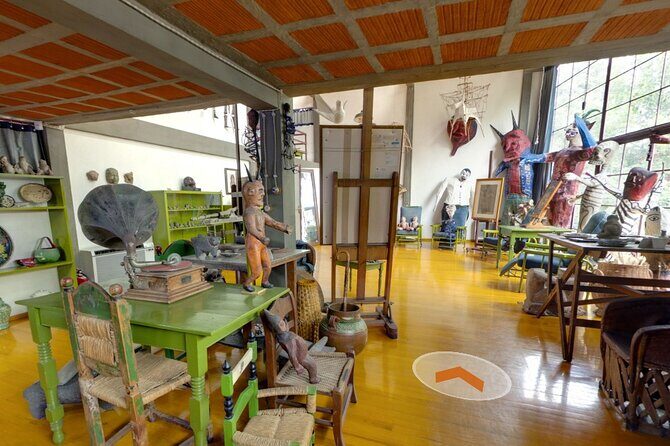
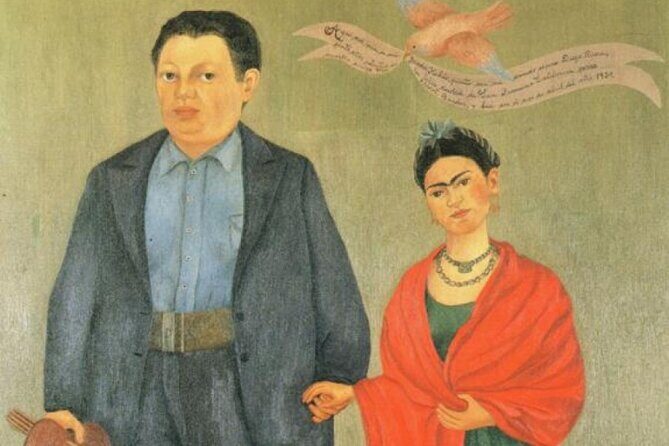
Next comes the place where the tour turns more intimate: the Museo Estudio Diego Rivera y Frida Kahlo. This is tied to a key story moment—Diego Rivera commissioned the building, and in 1931 Juan O’Gorman designed one of the early functionalist buildings in Latin America.
This stop is powerful because it’s not just “Frida and Diego stuff.” It explains how the building’s design reflects lived reality. The house was built as a home for Rivera, and also as a separate studio space for Frida Kahlo, with each having their own creative working areas. That separation matters when you’re trying to understand how both artists created their distinct bodies of work, even while sharing a relationship.
The guide also frames the museum’s mission: preserving the memory of the muralist and his wife, while supporting study and analysis of Rivera’s artistic generation. So you’re not only viewing objects—you’re getting help connecting the architecture to the wider mural-era context.
Time on site: about 1 hour 10 minutes.
What to expect: a guided walk through the studios and house logic, plus interpretation that links design choices to the working life of both artists.
Small consideration: because the tour is guided and time-boxed, you won’t get the kind of slow, independent museum browsing you might prefer if you’re a deep-dive type. If your goal is to understand the “why,” this works great.
Museo Anahuacalli: Rivera’s pre-Hispanic collection plus a living ecological space
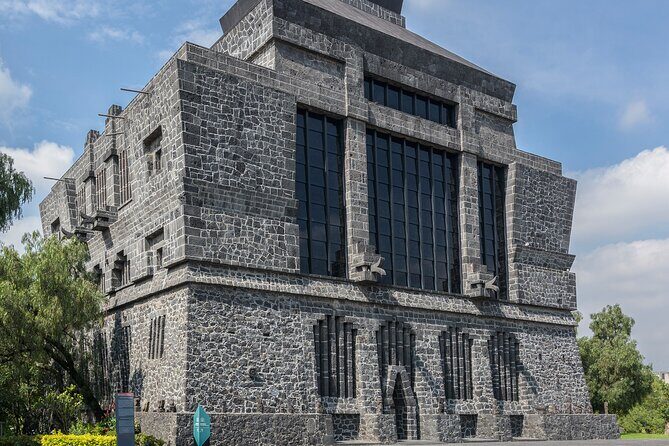
The final stop is Museo Anahuacalli, and it’s often the highlight for people who love art history with an extra visual payoff. The museum’s focus is pre-Hispanic art, and the site also includes an ecological space with endemic flora and fauna. You get both themes on the same property, which is a big part of why the last stop feels different.
Rivera designed the architectural work to protect his vast collection of pre-Columbian pieces. That detail matters. You’re not just looking at artifacts; you’re seeing how collecting and architecture shaped each other. The main building is where the most beautiful works from the complex are exhibited.
You also get a very specific learning moment: on display are 16 sketches for different murals made by Rivera in the early 1930s. Those sketches are where you can spot his composition thinking—his mastery of classical composition learned earlier in youth, as the tour explains. Even if you’re not studying art professionally, sketches like these help you understand the difference between a final mural and the design process behind it.
Time on site: about 1 hour 20 minutes.
How to enjoy it fully: this is the stop where you’ll want to slow down a bit. Look at how the sketches connect to composition habits, then look at what’s displayed from the pre-Hispanic collection. The museum layout encourages that mental comparison.
You’ll end at Museo Anahuacalli, Museo 150, San Pablo Tepetlapa, Coyoacán, 04620 Ciudad de México, CDMX, Mexico, with the guide wrapping up history and life of Diego Rivera.
The guide makes the art click (and you’ll feel it fast)
A lot of tours claim they’ll tell you stories. This one is more practical than that. With a certified guide, you’re not just hearing facts; you’re getting help interpreting what you’re seeing—mural placement in University City, functionalist logic at the Rivera–Kahlo studio museum, and the “why architecture protects collections” idea at Anahuacalli.
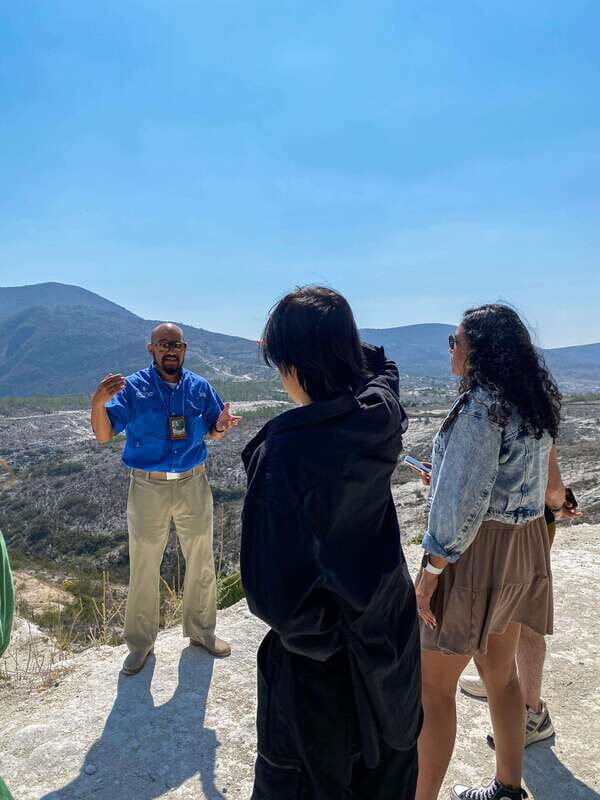
From the guides’ names shared in standout feedback, I’d keep an eye out for someone like Rodrigo or Jorge—people credited with combining Mexican history with architectural and art history insights. Even if your guide is different, the pattern is the same: you should expect clear explanations that connect art, buildings, and cultural context.
Because the tour is offered in English, it’s easier to keep the narrative straight. You can ask basic questions, and you won’t have to rely on half-understood translations.
And the transportation helps. Private transportation means you’re not standing around sorting routes. You stay in the flow.



Price and value: what $95.15 gets you in real terms
The price is $95.15 per person, for a tour lasting about 3 hours to 3 hours 40 minutes. For Mexico City, that’s the sweet spot where the cost often makes sense if the tour includes entries and transport.
Here’s what you’re paying for, specifically:
- private transportation
- a certified guide
- entry tickets
That matters because major museum sites and guided routes can easily turn into a spend-and-slog DIY day. By bundling the key costs, you protect your time and reduce uncertainty. You’re also getting three separate stops that each require a different kind of attention: outdoor mural context, studio-house interpretation, and indoor collection viewing.
What you’re not paying for:
- tips
- lunch
So if you’re budget-conscious, plan to grab food before or after the tour, not during. The itinerary timing suggests you’ll be moving through the day’s key sites rather than pausing for a long meal.
Logistics that matter: timing, tickets, and where you start/finish
This is a private tour/activity, meaning only your group participates. That’s great if you want to ask questions without feeling like you’re competing in a crowd.
It also helps that this tour uses a mobile ticket. You get confirmation at booking time, and then you can show your ticket when you arrive—less paper, fewer last-minute issues.
One practical detail: the tour starts at Rectoría de la UNAMEscolar, C.U., Coyoacán, 04510 Ciudad de México, CDMX, Mexico and ends at Museo Anahuacalli. Since you finish at a different spot than you started, plan your next move with that in mind. In other words: don’t book a late pickup expecting to return to the first neighborhood.
The tour is near public transportation, which is useful if you’re warming up for the day by arriving early or if you want options after it ends. The tour also allows service animals, and most people can participate.
What to bring for a smooth, photo-friendly day
You don’t need special gear, but a few basics make the experience easier.
- Comfortable shoes: University City especially rewards walking.
- Water: you’ll likely be outside for at least parts of the campus.
- Sun protection: Mexico City light can be strong even when it feels mild.
- A charged phone/camera: sketches and studio details are exactly the kind of things you’ll want to revisit later.
Since the tour is guided and time-boxed, you’ll get the most out of it if you come in ready to look, listen, and then take pictures fast—without trying to recreate an all-day museum schedule.
Who should book this Rivera and Frida legacy tour
Book it if you want:
- a short, structured introduction to Rivera and Frida in Mexico City
- strong ties between mural art and architecture
- guided context that explains why the spaces were designed the way they were
- a final stop that focuses on Rivera’s pre-Hispanic collecting and mural-sketch process
You might consider a different approach if you want total freedom to linger for long periods inside each site. This tour is designed for momentum and understanding, not for hours of independent wandering.
It’s also a good fit for couples, small friend groups, and anyone who prefers private transportation over battling Mexico City logistics.
Should you book? My honest take
I’d book this tour if you care about Rivera and Frida beyond surface-level name recognition. The mix of University City murals, the functionalist studio-house story, and Anahuacalli’s pre-Hispanic collection gives you a satisfying arc in one afternoon.
It’s also a smart value for what’s included—entries plus private transport plus a certified guide—so you don’t end up paying extra and then losing time.
If you’re the type who loves architecture and wants the “why” behind what you’re seeing, this is an easy yes.
FAQ
FAQ
How long is the Rivera and Frida Kahlo Legacy Tour?
The tour runs about 3 hours to 3 hours 40 minutes.
What is the price per person?
The price is $95.15 per person.
Is the tour in English?
Yes, the tour is offered in English.
Is this a private tour?
Yes. It’s a private tour/activity, and only your group will participate.
What are the main stops on the tour?
You’ll visit University City, Museo Estudio Diego Rivera y Frida Kahlo, and Museo Anahuacalli.
Where does the tour start and end?
It starts at Rectoría de la UNAMEscolar, C.U., Coyoacán, 04510 Ciudad de México, CDMX, Mexico, and ends at Museo Anahuacalli, Museo 150, San Pablo Tepetlapa, Coyoacán, 04620 Ciudad de México, CDMX, Mexico.
What’s included in the price?
Private transportation, a certified guide, and entries are included.
What is not included?
Tips and lunch are not included.
Do I get an entry ticket or is it handled for me?
The tour includes entries, and it uses a mobile ticket.
What is the cancellation policy?
Free cancellation is available up to 24 hours in advance for a full refund. If you cancel less than 24 hours before the start time, the amount paid is not refunded.