REVIEW · MEXICO CITY
Coyoacan, history and life in a magical neighborhood
Book on GetYourGuide →Operated by Camina la ciudad · Bookable on GetYourGuide
Coyoacán tells its story block by block.
In this 2.5-hour neighborhood walk, I like how you start at the church squares around Santa Catarina and then slip into quieter south-side alleys. I also like how the guide connects pre-Hispanic origins to what life looks like now—so you’re not just seeing pretty buildings, you’re understanding how the place got here. Guides such as Martin and Natalia (seen in recent tour feedback) set a steady pace and connect local streets to bigger Mexican history.
One possible drawback: it’s a walking tour, so you’ll want comfortable shoes and a water bottle, especially in warmer parts of the day.
In This Review
- Key moments that make this tour worth your time
- A 2.5-hour Coyoacán walk: what the $19 gets you
- Meeting at El Olvidado: how the tour starts smoothly
- Santa Catarina Park and the hidden south alleys: the quiet side first
- Along the main avenue: architecture that helps you read the neighborhood
- Parroquia San Juan Bautista and the former convent: where the story gains weight
- Plaza de la Conchita: older town buildings and the people behind them
- The main square with churros: a snack break that actually fits
- Coyoacán Market finish: street-level life and local rhythm
- Why the guide’s approach matters so much here
- Practical pace, small group size, and what to pack
- Who should book this Coyoacán history and life tour
- Should you book this tour
- FAQ
- FAQ
- How long is the Coyoacán history and life tour?
- Where do I meet the guide?
- What’s included in the tour price?
- Which churches and squares are part of the route?
- Is the tour wheelchair accessible?
- What should I bring, and what’s not allowed?
Key moments that make this tour worth your time
- Three squares, three churches: Santa Catarina, Juan Bautista, and the area around Plaza de la Conchita
- Lesser-known lanes to the south: you get away from the main flow and see everyday corners
- Market + churros break: snack time in the middle, then a real look at market life at the end
- Entrance included: church/former convent access plus cultural centers linked to the stops
- Small group size (max 10): easier to ask questions and follow along on tight streets
- Pre-Hispanic to today: the guide ties past and present together, not just dates and names
A 2.5-hour Coyoacán walk: what the $19 gets you
For $19 per person, this is the kind of tour that feels practical instead of fancy. You’re paying for a local guide, a timed walking route through central Coyoacán, entry into key religious sites, and food moments that are built into the plan—starting with special churros and ending with a look at Mercado de Coyoacán.
Most short neighborhood tours do one or the other: scenery or story. Here, you get both. The route is designed so you hit three major squares (each tied to a church) and still have time for the smaller streets and alleys that make Coyoacán feel like its own world inside Mexico City.
You can also read our reviews of more historical tours in Mexico City

Meeting at El Olvidado: how the tour starts smoothly
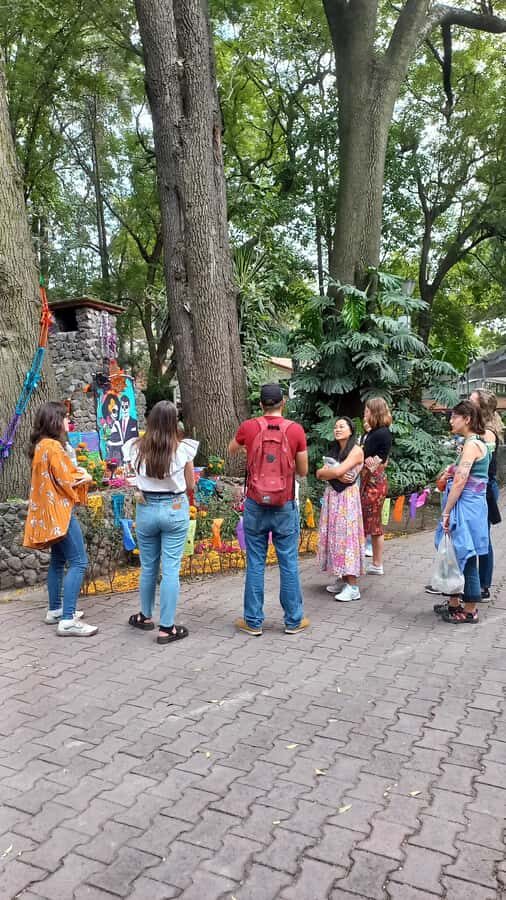
You’ll meet by the bench in the park in front of the café at El Olvidado. That’s a smart setup. You can grab a coffee or quick bite before you start, and you’re already near the neighborhood’s pedestrian zone instead of scrambling across busy streets.
Then the tour gets moving fast: you’ll do a short walk that quickly puts you into the feel of a traditional village center. This matters because Coyoacán can look like one big postcard from far away. Up close, the differences are in the details—street angles, the way plazas sit beside churches, and the rhythm of doorways and small storefronts.
Santa Catarina Park and the hidden south alleys: the quiet side first
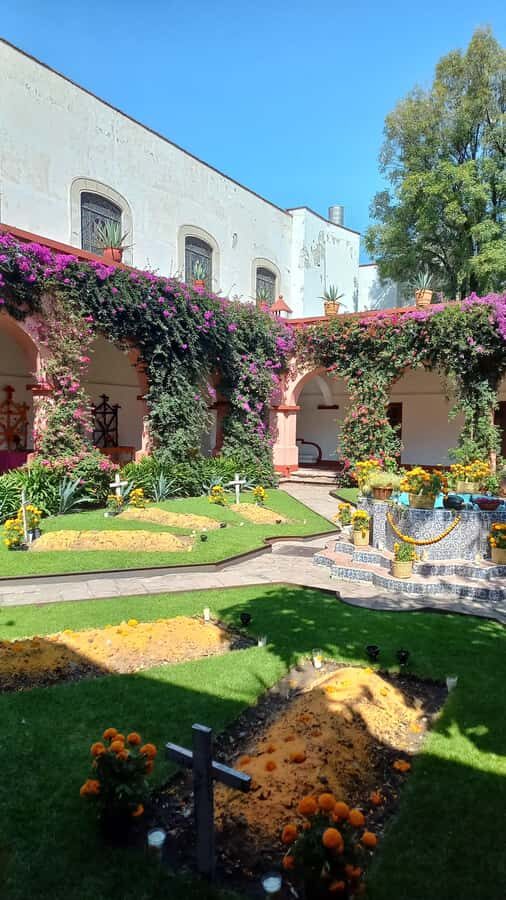
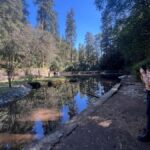
The itinerary begins around Santa Catarina Park, starting with the squares and gardens near the Santa Catarina church. This first section is a great way to get your bearings because it frames the neighborhood visually: you see how the church complex relates to open space, and you understand why locals gather in these exact corners.
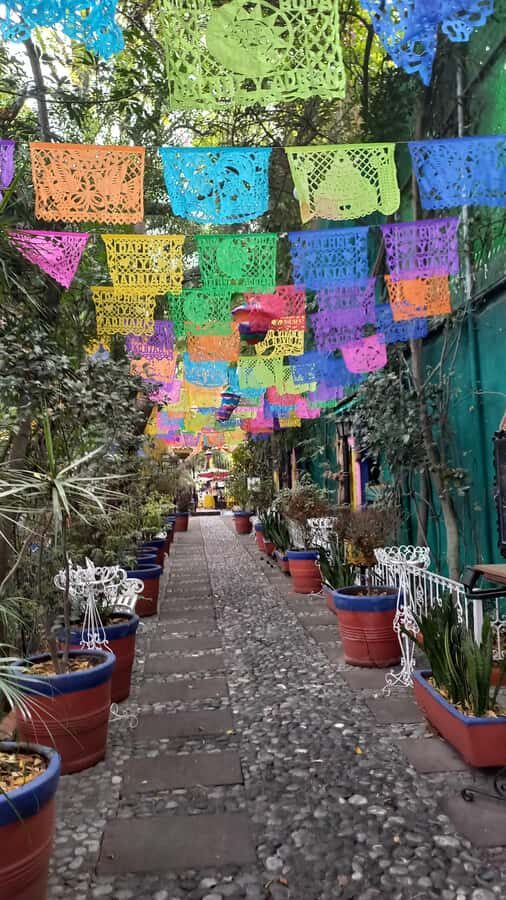
What I like most here is the way the tour shifts from the obvious to the under-the-radar. After the church-square area, you’ll head into hidden alleys to the south of Coyoacán. These narrow lanes are where you start noticing textures: walls close together, small thresholds, and those in-between spaces that don’t show up in typical photo spots.
The route choice makes a difference. If you only stick to major avenues and plazas, Coyoacán can feel like a set of monuments. With these alleys early on, the neighborhood feels lived-in from minute one.
Along the main avenue: architecture that helps you read the neighborhood
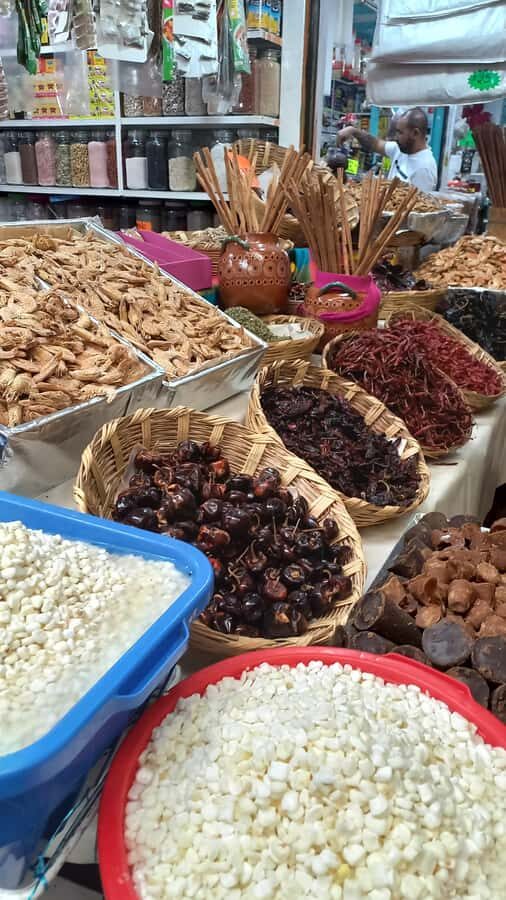
After the quieter lanes, you rejoin the main avenue. This stretch is about scale and structure. You’ll enjoy the architecture and the presence of larger mansions, then walk toward the main square.
I find this part useful even if you’re more interested in history than buildings. It gives you an orientation line: once you’ve walked a wide avenue toward a plaza, later you can better understand how everything connects. In Coyoacán, the big squares aren’t random. They anchor the streets that branch off and shape neighborhood flow.
This section also helps set the tour’s pace. You go from tight alleys to a wider view, which keeps you from feeling like you’re always squeezing between walls.
Parroquia San Juan Bautista and the former convent: where the story gains weight
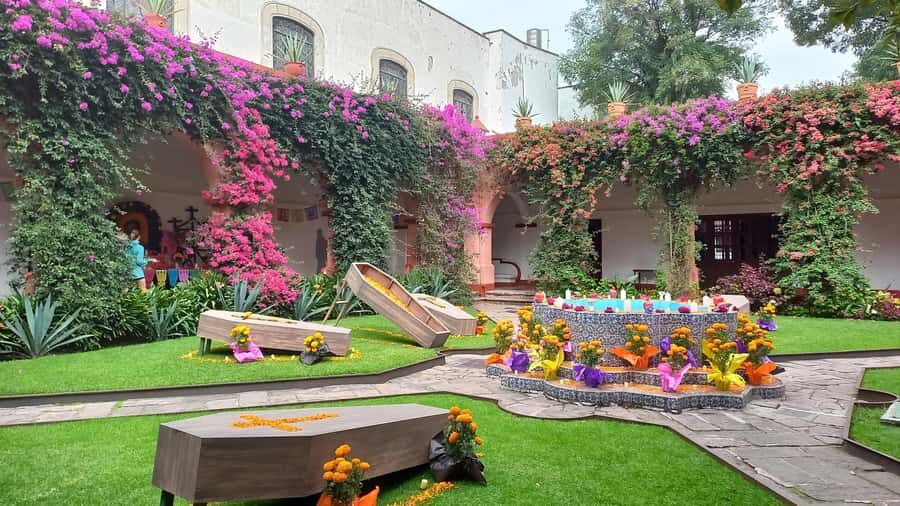
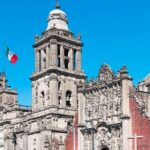
Next comes a key stop: Parroquia San Juan Bautista Coyocán. You’ll spend time sightseeing, and the tour includes entrance to the church and former convent.
This is one of those moments where a guided explanation matters. Churches in Mexico City neighborhoods often act like landmarks and records at the same time. They show you how communities organized around religious and civic life, and how those structures carried forward across centuries.
You’ll likely notice how the church-and-convent complex changes the feel of the surrounding street. Even before you go inside, it creates a different atmosphere: more pause, more space, more sense of permanence. And when you do enter, the time feels worth it because it’s not just “look at a pretty building.” The tour’s history thread runs here too, linking the area’s timeline from earlier roots to what came later.




Plaza de la Conchita: older town buildings and the people behind them
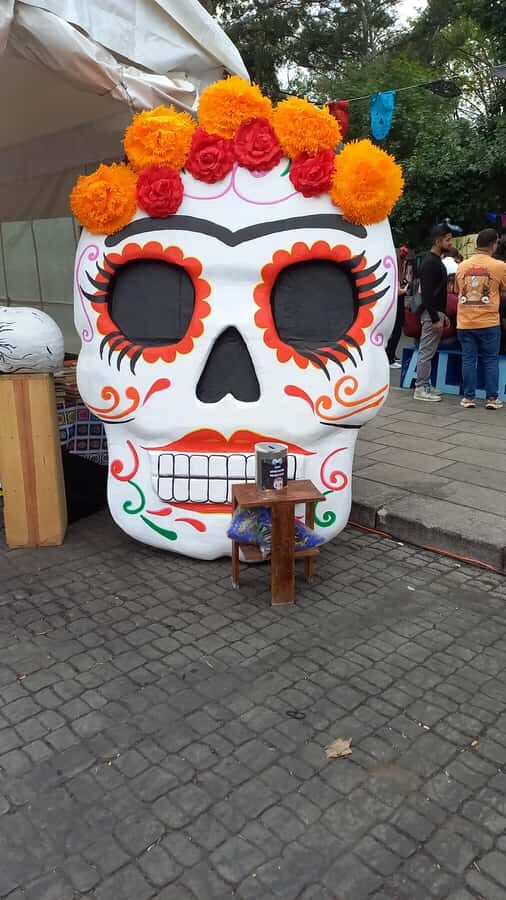
Then you move to Plaza de la Conchita. Here, you’ll see older town buildings and spend time exploring the neighborhood’s layout at a human scale.
This stop also includes a special kind of storytelling: the tour visits homes of important figures in Mexican history connected to this area. That detail matters because it turns Coyoacán from a set of landmarks into a place tied to real decisions, movements, and change.
The benefit is twofold. First, you get a deeper sense of why specific streets matter. Second, you start seeing Coyoacán less as a static “historic district” and more as an active neighborhood that has repeatedly shaped Mexican cultural life.
The main square with churros: a snack break that actually fits
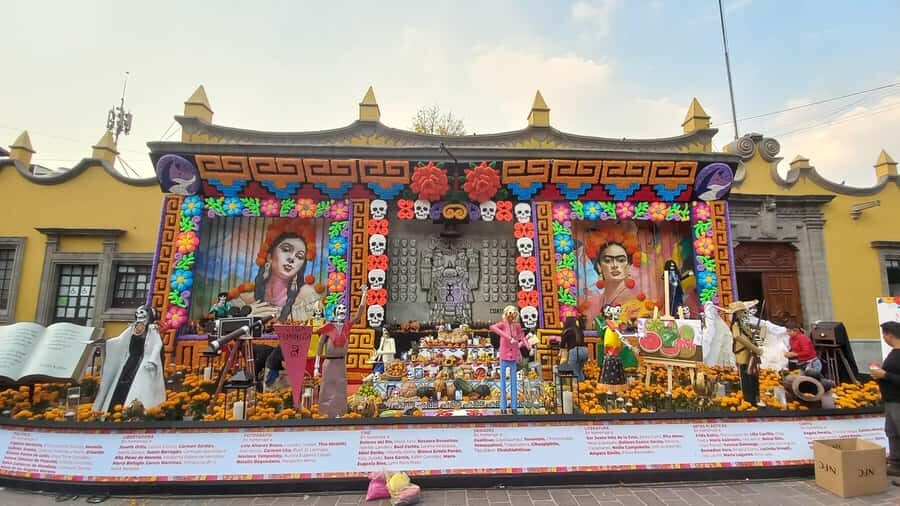
When the tour reaches the main square, you eat churros and then explore the neighborhood markets in the area. This isn’t an afterthought. It’s timed at the point where your legs are tired enough to enjoy the break, but your curiosity is still fresh enough to enjoy what you’re looking at.
Churros here are part of the neighborhood experience rather than a separate tour add-on. You get a simple local pleasure while the guide keeps the historical and cultural explanations flowing around you.
And because the tour continues into markets, you don’t end up with the classic problem: people leave having seen a church and then nothing about local daily life. Instead, the churros slot acts like a bridge between “history sites” and “how people actually shop and socialize.”
Coyoacán Market finish: street-level life and local rhythm
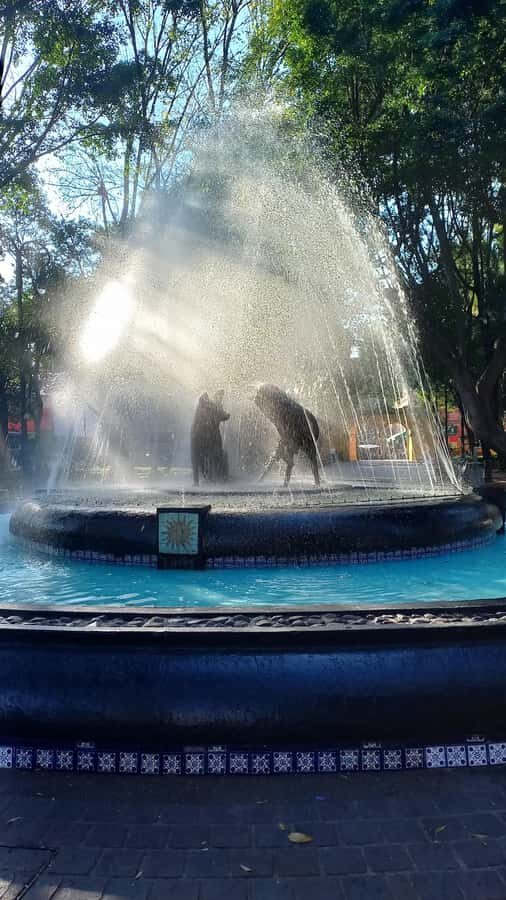
The tour ends at Mercado de Coyoacán. This is your last real exposure point to everyday life: the mix of food, stalls, and local commerce that keeps neighborhoods feeling like places, not museum sets.
The schedule also includes time for food market visit and arts & crafts market visit. That means you’re not just chasing souvenirs. You get to see the market as a system—how people buy, how vendors present items, and how the market supports both practical needs and cultural expression.
Even if you’re not planning to buy anything, the market stop is valuable because it gives you context. When you’re standing in those aisles, you start to understand why Coyoacán’s central squares and churches have stayed relevant. Markets reflect continuity—food, community routines, and the everyday social glue.
Why the guide’s approach matters so much here
The strongest praise you’ll see for this tour is the guide. Recent tour feedback highlights people like Martin for being super knowledgeable across history and modern city life, and Natalia for keeping the tour personal and attentive.
That matters because Coyoacán history isn’t just dates. It’s a story of how layers of time sit together: pre-Hispanic origins, the shift into colonial-era structures, and then the modern neighborhood you’re walking through today. If your guide connects those layers clearly, the streets feel like they make sense.
Here’s what you should look for during the tour:
- Clear cause-and-effect: why a plaza looks the way it does
- Local present-day context: what the neighborhood feels like now
- A route that keeps you moving: short stops, steady explanations, and time to look
This tour’s structure supports that style. You don’t get stuck in one place for too long, and you get multiple anchor points—church squares, main avenue, plazas, then market.
Practical pace, small group size, and what to pack
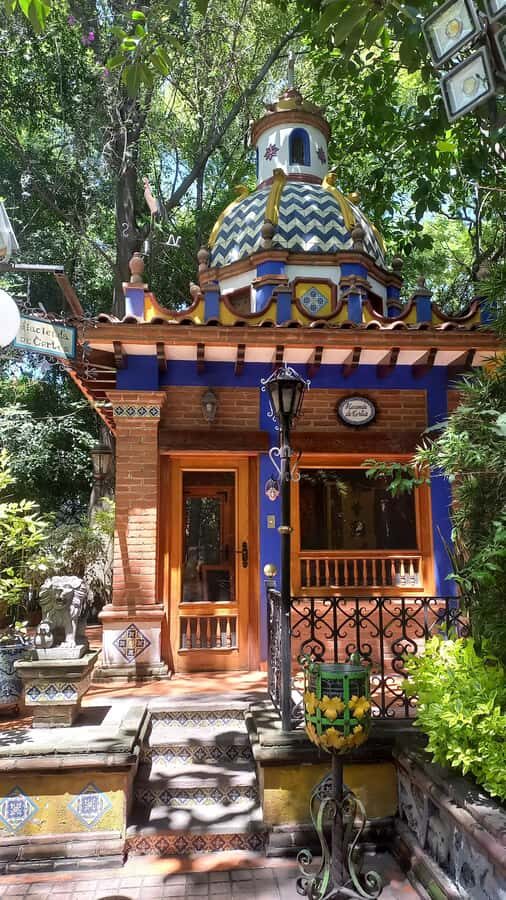
This is a small group tour limited to 10 participants, which is genuinely useful on tight sidewalks and around plazas where people can stack up. Smaller groups also make it easier to ask questions when you want more detail about what you’re seeing.
You’ll cover a route that includes walking segments between stops, including short on-foot stretches and sightseeing moments that last around 10–15 minutes each. That’s long enough to learn something, but short enough that you’re not dragging yourself through an all-day marathon.
Bring:
- Comfortable shoes
- Water
What to note:
- Alcohol and drugs are not allowed on the tour.
- The tour is offered in English and Spanish, with a live guide.
Also, there’s an aperitif moment scheduled in the itinerary. Since what’s served isn’t specified in the tour details you provided, it’s smart to treat it as a planned break for refreshments rather than expecting a full meal.
Who should book this Coyoacán history and life tour
This tour fits best if you like neighborhood travel that’s more than sightseeing photos.
You’ll especially enjoy it if you:
- Want context for what you’re seeing, not just a list of buildings
- Like walking and don’t mind narrow streets and short distances
- Enjoy both religious architecture (churches and convent spaces) and everyday local life (markets)
- Prefer small groups where the guide can tailor attention
If you only want the biggest-name sights and you dislike walking, you might find the pace and multiple stops less your style. But if you like feeling like you’re moving through a real community, it’s a strong match.
Should you book this tour
Yes—if your goal is to understand Coyoacán as a living neighborhood with layers of time, not just a pretty place to pass through.
The best reasons to book are straightforward: three church-and-square stops, access to church/former convent interiors and cultural centers, built-in churros, and a finish at Mercado de Coyoacán where you see daily life. The price is reasonable for what’s included, especially since the tour isn’t only exterior viewing.
FAQ
FAQ
How long is the Coyoacán history and life tour?
It lasts 2.5 hours.
Where do I meet the guide?
You meet by the bench in the park in front of the café at El Olvidado.
What’s included in the tour price?
The tour includes a 2.5-hour guided walk, entrance to the church and former convent, entrance to cultural centers, special Coyoacan churros, and a visit to the market.
Which churches and squares are part of the route?
You’ll visit Santa Catarina area squares and church, the Parroquia San Juan Bautista Coyocán, and the area around Plaza de la Conchita.
Is the tour wheelchair accessible?
Yes, it is listed as wheelchair accessible.
What should I bring, and what’s not allowed?
Bring comfortable shoes and water. Alcohol and drugs are not allowed.
If you want, tell me when you’re visiting Mexico City (month or general weather) and whether you prefer mornings or afternoons—I can suggest how to time this walk with other nearby Coyoacán stops.