REVIEW · MEXICO CITY
Walking Tour of the Historic Center in Mexico City
Book on Viator →Operated by Vibe Adventures · Bookable on Viator
Old Mexico City is right under your feet.
This walking tour threads together Aztec roots and colonial landmarks in one smooth loop, with a local guide helping you spot what most people miss. I like that it’s built around real street-level context, so the history feels tied to the blocks you’re standing on, and you’ll get plenty of chances to take photos as you go. One note to keep in mind: the pacing is still a walking tour, so you’ll want comfortable shoes and be ready for stops that include some standing and plaza time.
Two things I really like: you get a private local guide (not just a prerecorded spiel), and the route is designed as an easy orientation to downtown CDMX. The only potential drawback I’d flag is customization varies by option: small-group tours aren’t customizable, and one guest issue centered on not getting the walking style adjustment they hoped for, so if you have mobility limits, tell the operator up front and plan for more walking than you might expect.
In This Review
- Key highlights you’ll feel right away
- Walking into Mexico City’s layered past
- Stop 1: Museo del Templo Mayor and the Great Aztec Temple
- Stop 2: Catedral Metropolitana de la Ciudad de México
- Stop 3: Zócalo, Mexico City’s oldest public square energy
- Stop 4: House of Tiles and the Talavera facade
- Stop 5: Palacio Postal’s art-nouveau drama (and it still works)
- Stop 6: Palacio de Bellas Artes and its mural legacy
- What the best guides do (and why it matters)
- How long it takes, and what to wear
- Price and value: is $29 worth it?
- Who this tour suits best
- Should you book this historic center walk?
- FAQ
- How long is the walking tour?
- What is included in the tour price?
- Is the tour customizable?
- Where does the tour start and end?
- What language is the tour offered in?
- Do I need good weather for this experience?
Key highlights you’ll feel right away
- Aztec remains at Templo Mayor give you a tangible sense of pre-Hispanic Mexico City
- Catedral Metropolitana and Zócalo connect political power, religion, and public life across centuries
- Talavera-glazed House of Tiles mixes street drama with an art-filled interior pause
- Art Nouveau Postal Palace is a detour that pays off fast for photos and architectural detail
- Palacio de Bellas Artes closes the loop with major mural names you’ll recognize
Walking into Mexico City’s layered past
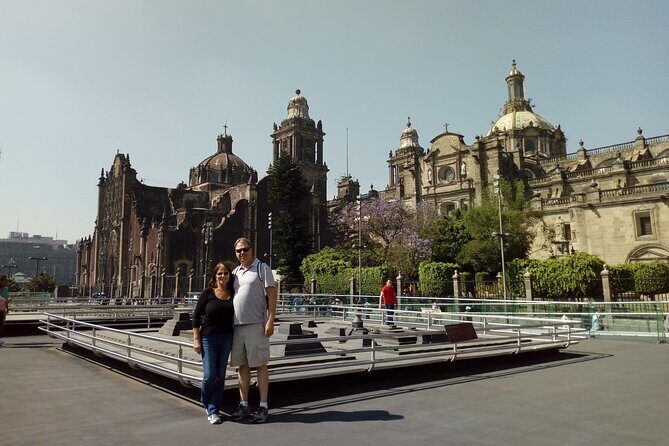
Mexico City’s historic center can feel like one big “photo stop” after another. This tour turns it into something more useful. Instead of hopping randomly from monument to monument, you follow a logical storyline: ancient ceremonial space, Spanish-era power, and then the modern city’s obsession with art and national identity.
You move through places that mark big eras, but you also learn how they relate. The guide helps you connect the dots between the Aztecs’ capital plan, the Spanish colonial rebuilding, and the way the city kept using the same core geography. That’s where the value is. You don’t just see famous buildings; you understand why they’re placed where they are.
For most people, the tour works because it’s short (about 3 hours) and concentrated. And at $29 per person, it’s priced like a “get your bearings fast” walk. If you’re on a first visit, that matters.
You can also read our reviews of more walking tours in Mexico City


Stop 1: Museo del Templo Mayor and the Great Aztec Temple
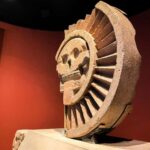
The tour opens at Museo del Templo Mayor, and it sets the tone in the best possible way. This is where you start seeing Mexico City not as a modern capital, but as a place built over something older. You’ll learn about the pre-Hispanic past while looking at remains tied to the Great Aztec Temple and nearby structures.
What makes this stop special is that the museum doesn’t feel like a distant classroom. It’s a direct jump into what made this area important in the first place: an urban center built with political and religious purpose. The guide’s explanations cover the Aztecs’ role in Central Mexico and touch on topics like their culture, religion, social organization, and daily life. You also get a sense of how the story shifts toward the early years of Spanish colonization around 1519.
Practical note: plan on about 40 minutes here. The museum time is enough to grasp the big picture and take photos, but it’s not so long that you’ll feel trapped.
Stop 2: Catedral Metropolitana de la Ciudad de México
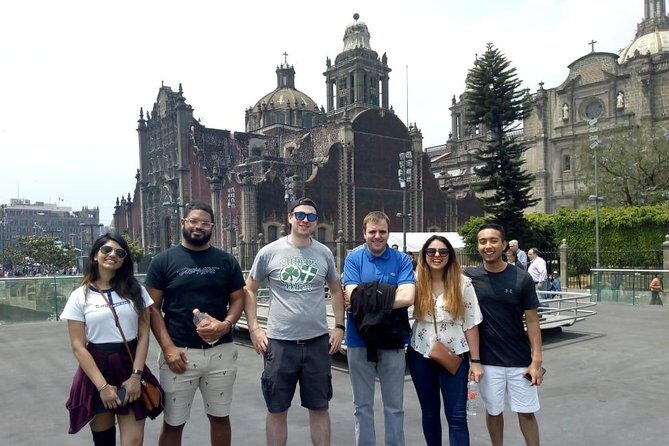
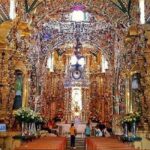
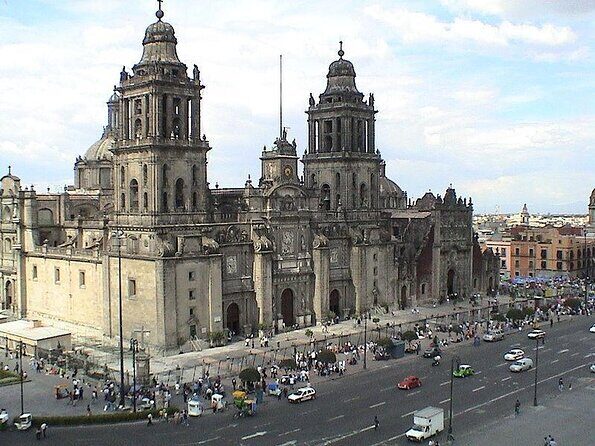
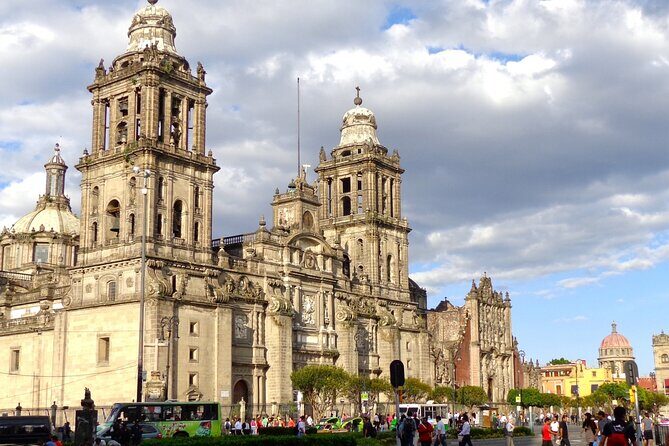
From Templo Mayor’s deep time, you pivot to the cathedral, and the contrast is striking. The Catedral Metropolitana is a centerpiece of the 16th-century colonial period, and the tour frames it as a living catalog of styles—layers added by successive builders over time.
This isn’t just sightseeing. The guide helps you understand why the cathedral is more than a single “pretty building.” It’s a landmark that reflects the changing face of power and artistic taste as the city evolved. If you care about architecture, you’ll appreciate the way different elements show up like historical footnotes you can see with your own eyes.
Expect about 30 minutes at this stop, and the good news is that admission is listed as free for this part of the program. It’s a clean, efficient stop that still feels meaningful.
Stop 3: Zócalo, Mexico City’s oldest public square energy
Next up is the Zócalo, the main square at the heart of the historic center. This is the part where you stop being a museum visitor and become a city-watcher.
The Zócalo has long served as a gathering place. You’ll hear how it connects back to Aztec times, then how it became the site for major modern events like ceremonies, festivals, and military parades. Around the square, you’ll spot other significant historic buildings that witnessed the city’s transformation.
What I like about this stop on a guided walk is that it helps you read the square as a system, not just a backdrop for selfies. When the guide points out relationships between buildings and how the space is used, the Zócalo suddenly makes sense as civic choreography.
Time here is about 40 minutes. If you’re the type who gets impatient in plazas, lean into this one for the perspective. It’s also one of your best opportunities for photos without needing to enter another building.
Stop 4: House of Tiles and the Talavera facade
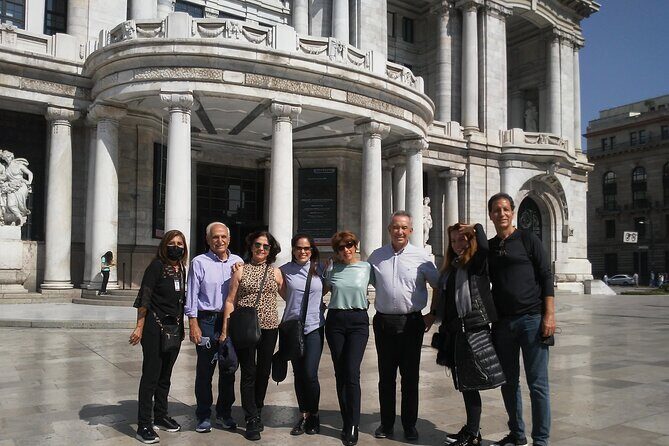
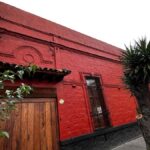
After the big open space, you move into a quieter-but-more-personal kind of beauty: the Casa de los Azulejos, often called the House of Tiles. The exterior is covered in colorful Talavera tiles that have been preserved over time, and the effect is immediate. Even before you step inside, you can feel why this is a favorite stop for photographers.
Inside, you’ll have a chance to see a mural by famed Mexican painter José Clemente Orozco. You’ll also see the glass-ceilinged atrium with stone pillars, murals, and a fountain. It’s a compact interior that still feels special because it blends decoration, art, and architecture into one stop.
The tour allocates about 20 minutes here, and admission is listed as free. That’s a big deal for value: you get a lot of “wow” per minute without paying extra.
One small consideration: if you’re trying to avoid crowds, go with the flow. This area is popular, so your photos may compete with other visitors unless you time your shots well.
You can also read our reviews of more city tours in Mexico City


Stop 5: Palacio Postal’s art-nouveau drama (and it still works)
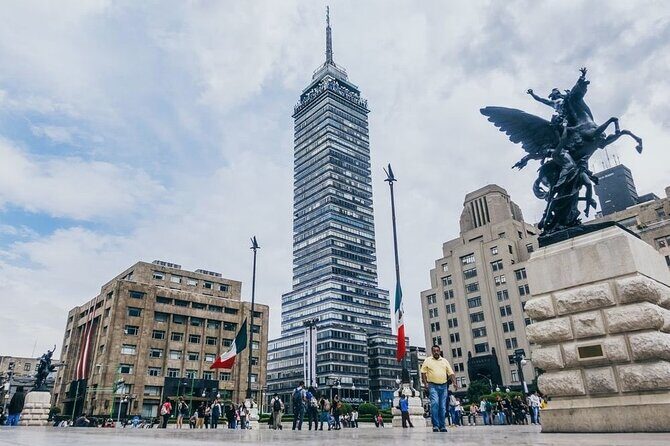
Now for a stop that people often pass without realizing it’s there. The Palacio Postal is a beautiful art-nouveau building with luxurious facade details, and inside you’ll notice lots of artwork and decorative craft.
The fun part of this stop is how the building refuses to be “just a post office museum.” It still functions as a working post office, and it also includes a museum space with historical objects and documents. That combination makes the building feel anchored in daily life, not frozen in time.
It’s another about 20 minutes stop, with admission listed as free. For architecture lovers, it’s a strong photo stop. For everyone else, it still gives you that satisfying sense of place that you only get when a historic building keeps doing something useful.
Stop 6: Palacio de Bellas Artes and its mural legacy
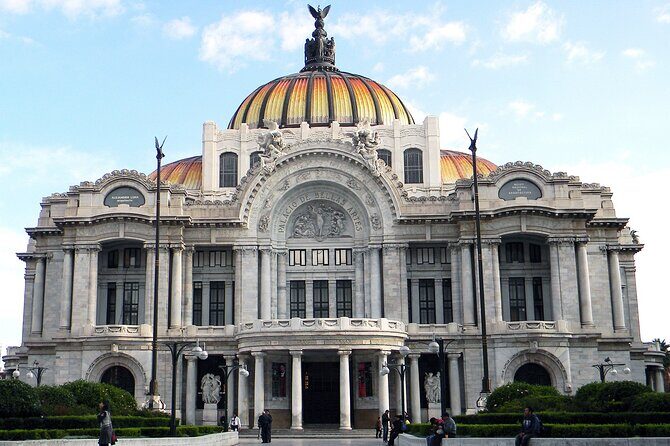
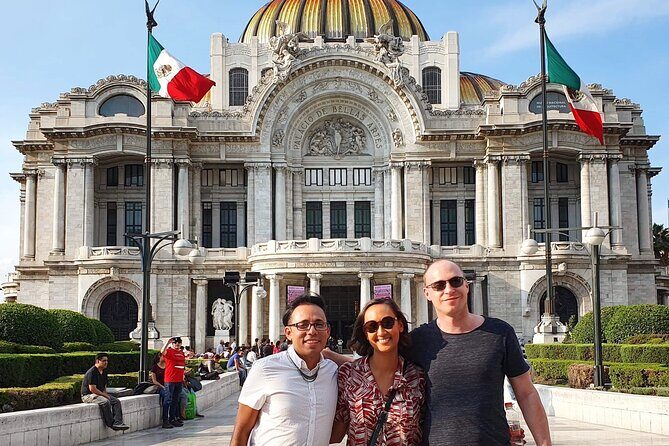
The walk finishes back near Palacio de Bellas Artes. This is the “closing argument” stop: it’s one of the most recognizable cultural landmarks in Mexico City, and the tour focuses on the theatre’s significance and the mural tradition associated with it.
You’ll appreciate the exterior and learn why it’s so important, including mural names like Diego Rivera, David Alfaro Siqueiros, and José Clemente Orozco. You’ll also hear about the kinds of events that take place here, from operas and recitals to lectures and temporary exhibitions.
Time here is about 20 minutes, but the itinerary notes admission is not included for this stop. In practice, it means you should treat this as a finish point where the guide helps you connect what you see to what you’ll likely want to explore more later.
Still, the mural legacy is worth the stop. One of the strongest praise points from guides on this route is how they handle the murals and connect art to the broader story of Mexico City.
What the best guides do (and why it matters)
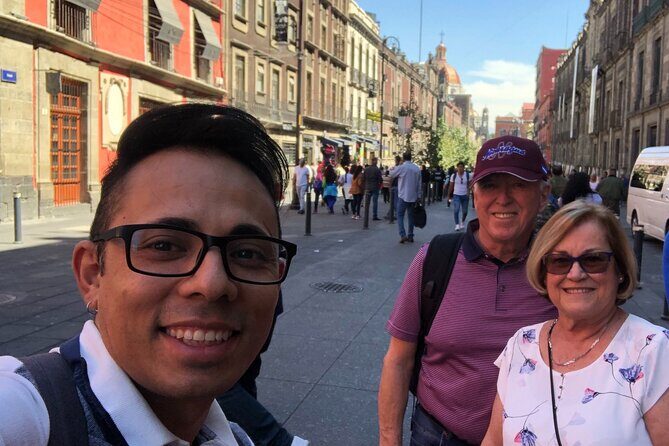
The difference between a good walking tour and a great one comes down to the guide’s rhythm and focus. This operator’s guides often get praised for depth and clarity, and you’ll feel that in how the walk is explained.
In particular, guides like Andrés and Francisco Cabral Vignola have been highlighted for bringing education and passion to the history around Palacio de Bellas Artes and downtown architecture. Eduardo and Ivan received strong marks for being accommodating and for getting through all the itinerary highlights without turning the day into a rushed stampede.
You’ll also notice something practical from those guide stories: flexibility. One guide case included handling rain by shifting the conversation and continuing in a nearby cafe. That’s not just nice. It’s how you keep the tour from falling apart when weather turns.
A real caution too: one guest reported that they wanted more walking or seating accommodation for a knee issue, and the guide did not adjust. So if you have any physical constraints, don’t wait until you’re already mid-walk. Tell the operator ahead of time so your expectations match the tour’s actual pace.
How long it takes, and what to wear
The advertised duration is about 3 hours. That’s a sweet spot for this kind of route: long enough to cover multiple eras, short enough that you’re not spending your whole day in one neighborhood.
The tour is listed as near public transportation, and most travelers can participate. What you bring matters more than you might think. I’d plan on comfortable shoes and clothes that handle walking in city weather. A hat/cap and sunscreen are smart, especially if the day is sunny. Also bring some cash and personal ID just in case you’re asked for it.
Price and value: is $29 worth it?
At $29 per person, this is priced like a smart first-day orientation, not a “museum-only” splurge. You’re paying for the guide’s local context and the routing that keeps you from wasting time figuring out what to look at.
And the cost stays reasonable because many stops list free admission (Templo Mayor, cathedral, Zócalo, House of Tiles, and Postal Palace). The one point that’s not included is the Palacio de Bellas Artes admission, so if you plan to enter there, you may need to budget extra.
So the value equation looks like this: you get a guided arc through major sites, with multiple free entry opportunities, and only one likely extra-ticket moment. If you’re the type who likes to understand what you’re seeing, the guide fee makes sense.
If you’re the type who only wants to stroll and take photos with zero historical talk, you might not get full value. This route rewards curiosity.
Who this tour suits best
I think this works best for:
- First-time visitors who want a clear downtown orientation
- People who like history that’s tied to real places, not just dates
- Art lovers who want to connect major mural names to the settings in the historic center
- Couples and small groups who prefer walking with a guide rather than sorting it out alone
It’s also a good option if you want photos. You’ll be stopping at places that are naturally photogenic: tiled facades, big plazas, ornate buildings, and the exterior-to-interior beauty of key sites.
If you have mobility concerns, be upfront. The program is doable for many people, but it’s still a walk with set time allocations at each stop.
Should you book this historic center walk?
Yes, with a few clear conditions in your head.
Book it if you want a guided thread connecting Aztec ruins, colonial power, civic life at the Zócalo, and the city’s mural culture. Book it if you enjoy learning from a local guide and want the day to feel organized instead of scattered.
Maybe skip or choose a different pacing option if you:
- Need frequent seated breaks or have a knee or mobility limitation you can’t manage on a walking schedule
- Only want exterior views and don’t care about guided explanations or art context
- Plan to spend lots of extra time inside Palacio de Bellas Artes, since admission there isn’t included in the tour plan
If you match the vibe, this is a strong first step into Mexico City’s historic core, and the price-to-time ratio is hard to beat.
FAQ
How long is the walking tour?
It runs for about 3 hours (approx.), based on the advertised standard duration.
What is included in the tour price?
The price includes the service of a private local guide. The stops mostly list free entry, except Palacio de Bellas Artes where admission is not included.
Is the tour customizable?
The small-group option is not customizable. The private tour option is described as customizable, with flexibility mainly around adjusting time at stops and adding small visits if they fit the default duration and route.
Where does the tour start and end?
It starts and finishes at Palacio de Bellas Artes, located at Av. Juárez S/N, Centro Histórico de la Ciudad de México, Cuauhtémoc, 06050 CDMX. For the small-group tour, the meeting point is listed as MUMEDI on Saturdays at 2:30 PM.
What language is the tour offered in?
The tour is offered in English. Language options also vary by tour type: small-group tours are listed as English and Spanish, while private tours are led by local bilingual guides (at least Spanish and English).
Do I need good weather for this experience?
Yes. The experience requires good weather. If it’s canceled due to poor weather, you’ll be offered a different date or a full refund.