REVIEW · MEXICO CITY
Walk around UNAM campus, a UNESCO World Heritage Site
Book on GetYourGuide →Operated by Joaquin Diez Canedo · Bookable on GetYourGuide
UNAM’s campus feels like a living museum. This 3-hour walk through a UNESCO World Heritage Site mixes world-famous mural art, bold mid-century architecture, and the volcanic, rocky ground it rises from. I especially like how the tour focuses on both the art on the walls and the campus logic behind the buildings.
Two highlights that really sell the experience: you’ll see major mural works tied to Diego Rivera and David Alfaro Siqueiros, and you’ll also get to know Juan O’Gorman’s Central Library—an essential piece of Mexico’s modernist story. The one consideration is practical: it’s a 4 km walk, rain or shine, and finding a toilet can be tricky.
In This Review
- Key takeaways before you go
- UNAM’s UNESCO campus: modernism built on volcanic rock
- Start at the Olympic Stadium: the easiest way to reach your meet point
- The mural part: Rivera and Siqueiros, with meaning you can actually use
- Juan O’Gorman’s Central Library: where architecture becomes a lesson
- The 1950s context: why UNAM’s campus design makes sense
- What a 3-hour walk actually covers on campus
- The guide makes it: Sebastián and the campus behind the buildings
- Price and value: $76 for a UNESCO campus walk
- Who should book, and who should skip this one
- Should you book? My decision guide
- FAQ
- How long is the UNAM campus tour?
- What does the tour cost?
- Where do we meet?
- How can I get there from Condesa or Roma?
- How do I get there by Metrobús?
- Is the tour wheelchair accessible?
- What happens if it rains?
- How far do we walk, and is a toilet easy to find?
- Is food included?
- What’s the cancellation and payment flexibility?
Key takeaways before you go
- Modernist UNAM: built in the 1950s, shaped by volcanic rock and mid-century ideas
- Big-name murals: Diego Rivera and David Alfaro Siqueiros are part of the tour focus
- Juan O’Gorman’s Central Library: a must-see for anyone into design and symbolism
- A UNESCO site with real campus life: you’re walking an active university, not a theme park
- Tour-led by Sebastián: a former UNAM student/lecturer style of guiding that connects art to today
- Plan for walking: 4 km over uneven terrain; water is provided, food is not
UNAM’s UNESCO campus: modernism built on volcanic rock
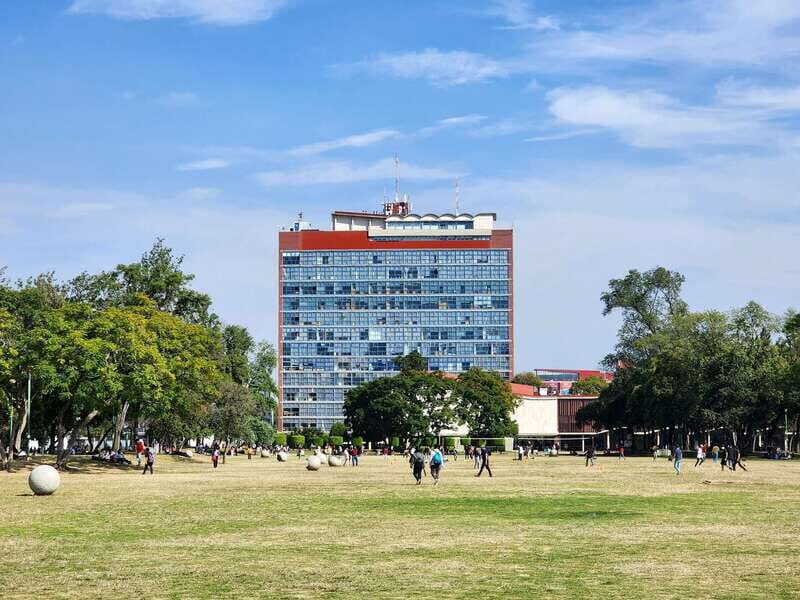
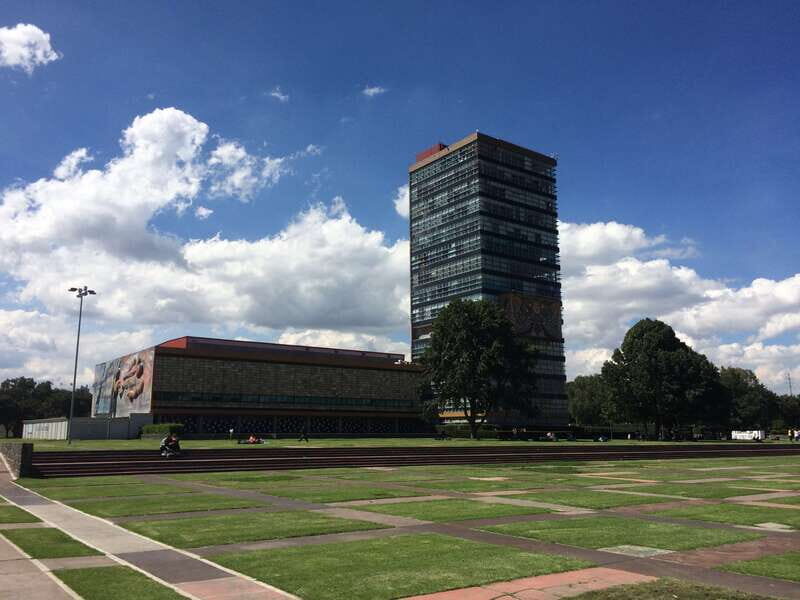
UNAM (Universidad Nacional Autónoma de México) isn’t just a pretty place to photograph. It’s a campus that shows you how Mexico in the mid-1900s thought about education, public art, and national identity—then built it into real spaces people actually use.
What makes it click is the setting. The buildings don’t sit on flat ground; they rise from a rocky, volcanic landscape. As you walk, you start to understand why the campus looks the way it does: paths, viewpoints, and building placement all respond to the terrain, not the other way around.
And then there are the murals. This is muralism with purpose. Instead of treating the art as decoration, UNAM treats it like a public classroom—where history, politics, and culture are explained in color.
You can also read our reviews of more walking tours in Mexico City


Start at the Olympic Stadium: the easiest way to reach your meet point
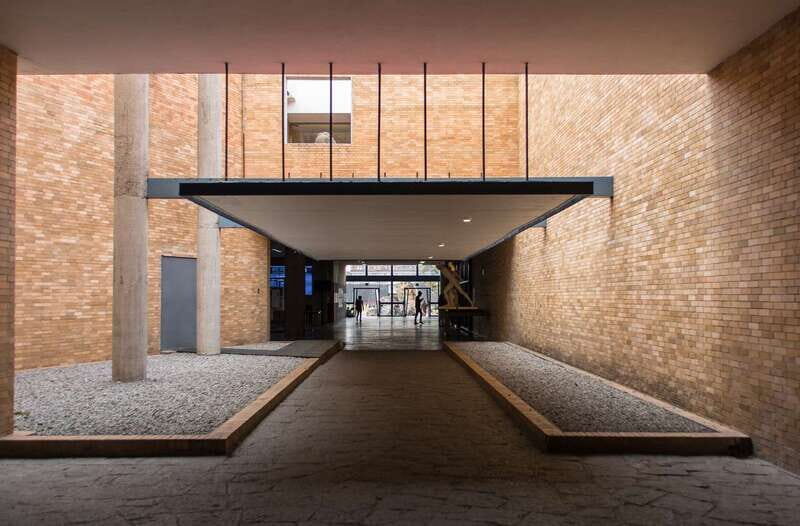
Your meeting point is in front of the Estadio Olímpico Universitario. It’s a good anchor point because it’s easy to recognize and it keeps the tour focused on the campus itself.
Getting there is straightforward:
- By Uber: about a 30-minute ride from Condesa or Roma
- By Metrobús (línea 1): exit at Dr. Gálvez Station, then walk south of Insurgentes Avenue for about 10 minutes
No matter how you arrive, I suggest you give yourself a few minutes buffer. Campuses work like tiny cities—people move fast, streets can be busy, and it’s nice not to start the tour rushed.
The mural part: Rivera and Siqueiros, with meaning you can actually use
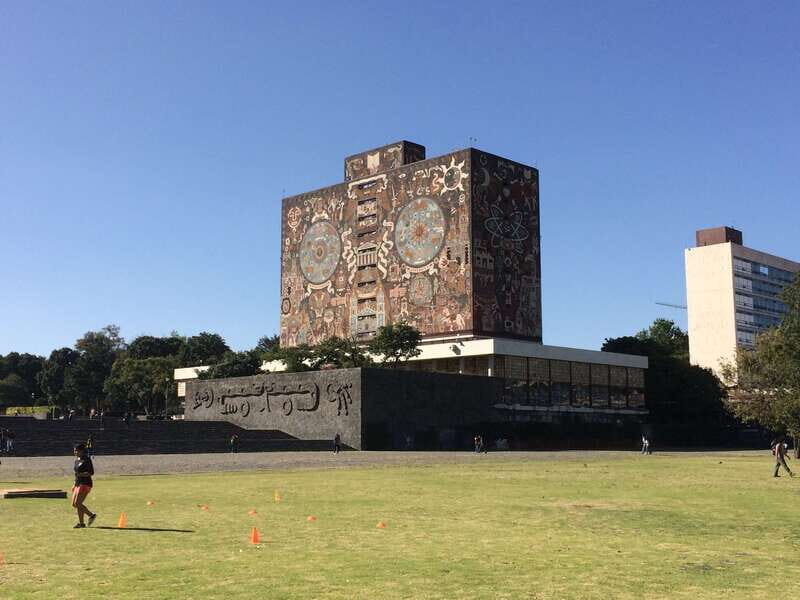
You’ll spend real time looking at Mexico City’s most famous mural art. The big names on this route include Diego Rivera and David Alfaro Siqueiros, and the guide uses the murals to explain more than just who painted what.
Here’s the practical reason I like this approach: it gives you a way to “read” the walls. After a quick orientation, you’re not just guessing at symbolism. You’re picking up on themes the artist used—public life, social struggles, modern Mexico, and how ideas spread through art.
Also, this tour doesn’t treat muralism as locked in the past. It connects the art to campus culture and student life, which makes the messages feel less like museum history and more like something still in motion. The tone stays explanatory, not preachy.
Small drawback to plan for: if you’re sensitive to walking while looking up and around, you may want comfortable shoes. You’ll be shifting between viewing angles and moving between stops.
Juan O’Gorman’s Central Library: where architecture becomes a lesson
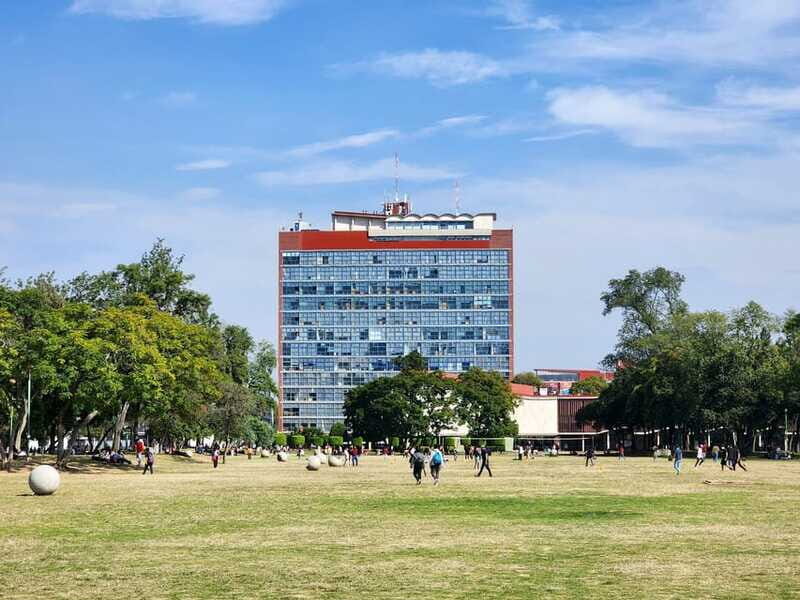
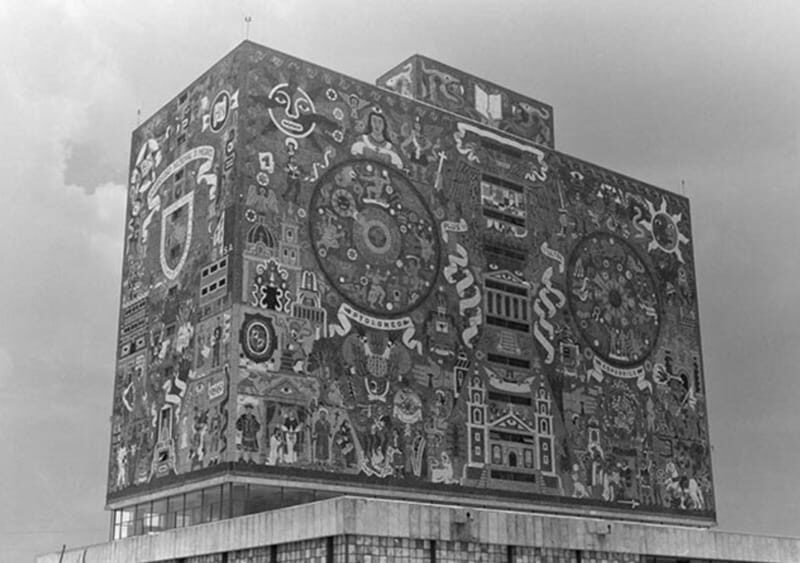
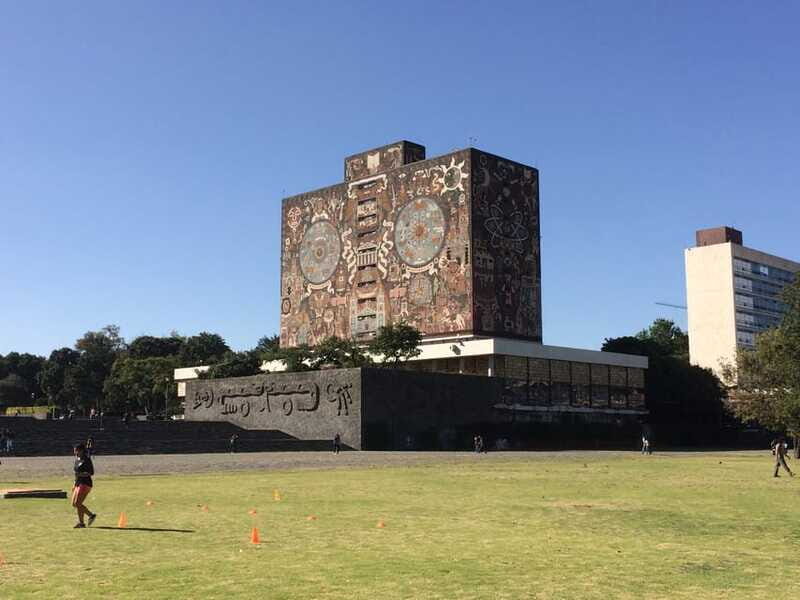
If you only care about one thing, make it the Central Library by Juan O’Gorman. This is one of the clearest ways to understand UNAM as a modernist statement: design choices aren’t separate from ideas—they’re part of the message.
O’Gorman’s approach is about structure, function, and symbolism working together. During the tour, you’ll learn how the campus plan ties into the broader concept of education in public view. You’ll also see how architecture can act like a map: once you understand the logic, the campus feels easier to navigate and more interesting to explore.
I also like that the guide doesn’t keep this purely architectural. The building becomes a gateway to larger themes—how Mexico balances tradition, politics, and modern design in shared public spaces.
The 1950s context: why UNAM’s campus design makes sense
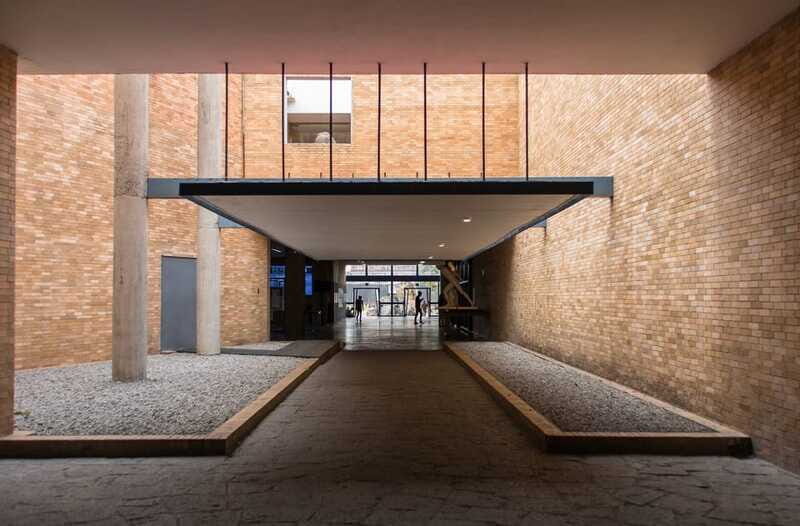
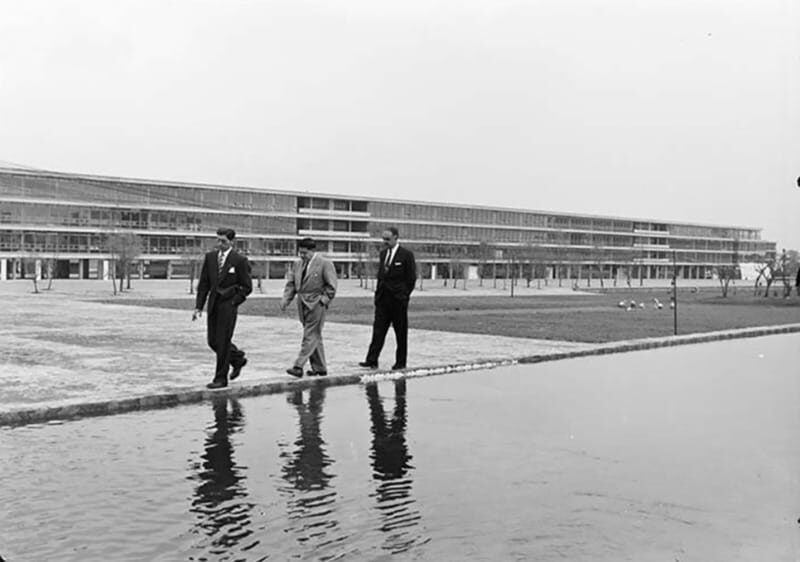
This campus was built in the 1950s, when Mexico and the United States were tied together in complicated ways. That timing matters, because modernist architecture wasn’t just an aesthetic choice—it was part of a broader conversation about progress, identity, and international influence.
During the tour, you’ll hear how that era helped shape what UNAM became: a university campus designed to show modern Mexico to the world while still centering Mexican voices in art and learning. It’s a good reminder that architecture is political, even when it looks clean and geometric.
The guide also pays attention to the rocky terrain and how it changes the campus experience. That detail is worth it. You start to notice how UNAM doesn’t follow a generic “campus blueprint.” It responds to the ground, and that makes the place feel specific and grounded.
You can also read our reviews of more historical tours in Mexico City




What a 3-hour walk actually covers on campus
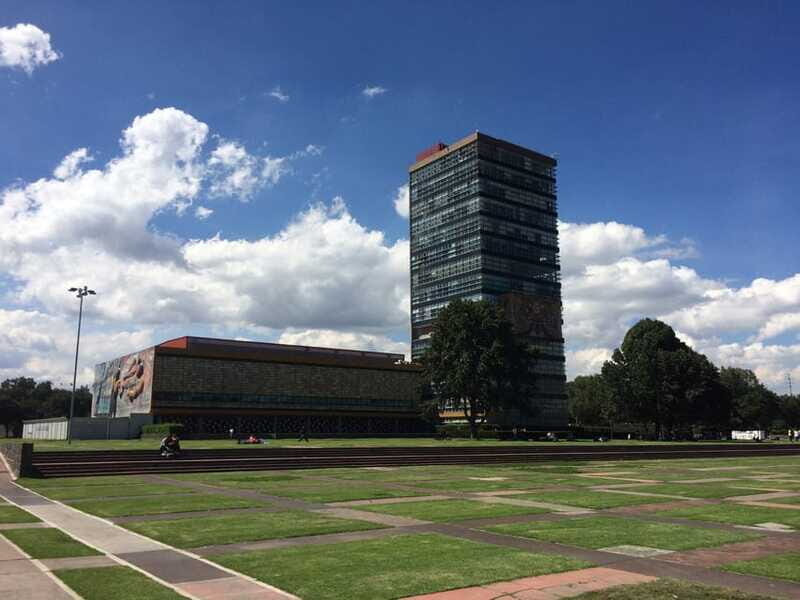
This is a 3-hour experience, usually offered in the morning and afternoon. It’s built around a loop through major points of interest—murals, modernist campus buildings, and signature sites tied to UNAM’s design story.
Here’s what to expect in a practical sense:
- You’ll walk about 4 km (2.5 miles) total
- You’ll be outside through most of the tour
- You’ll be moving between mural viewing and architectural stops
The terrain matters. The campus sits on uneven, volcanic rock, so expect uneven footing. It’s not an extreme hike, but it’s not a flat stroll either.
One more thing: it can be hard to find a toilet. That’s not a deal-breaker, but it is a “plan ahead” situation. Go before you meet and don’t assume a quick restroom stop will be easy.
The guide makes it: Sebastián and the campus behind the buildings
The strongest, most repeated praise is about the guide. Sebastián leads with a mix of architecture, history, and a grounded sense of what student life is like.
What I find especially useful is his focus on connections. Instead of listing facts about buildings and then moving on, he links campus spaces to the bigger picture—how social and political forces play out in university life.
In the tour experience, you’ll hear context that turns UNAM from an impressive set of structures into something more human:
- How different faculties feel distinct from each other
- How students move through campus spaces
- How socio-economic and political dynamics relate to education
Some tour moments also include details that broaden the context beyond murals alone. For instance, the guide may point out an auditorium associated with Okupa Che, giving you a glimpse into how contemporary student culture can live in the same broader campus ecosystem.
If you want the tour to feel most alive, choose a day that aligns with normal weekday routines. That way, you’re more likely to catch students moving between classes, workshops, and everyday campus life.
Price and value: $76 for a UNESCO campus walk
At $76 per person, this isn’t a bargain-basement activity. But it also isn’t priced like an expensive private museum tour.
Here’s the value math that makes sense:
- You’re getting a live guide with English/Spanish interpretation
- You’re spending 3 hours on a UNESCO World Heritage Site
- The tour’s focus isn’t generic sightseeing. It’s muralism + modern architecture, with history and symbolism woven in
- Water is included, which helps on a 4 km walk
If your goal is “see famous murals and move on,” you might find cheaper options. But if you want the campus to make sense—why these buildings look like they do, why muralism matters, and how it connects to Mexican life—this price starts to look fair.
Who should book, and who should skip this one
This tour fits best if you enjoy:
- architecture and design (especially modernist work)
- mural art with political and historical meaning
- structured walks that still leave time to look around
It’s also a good choice if you want a deeper intro to UNAM than you’d get from wandering alone.
A few key limitations matter:
- Pregnant women: not suitable
- Toilets may be hard to find, so plan ahead
- The terrain and 4 km walking distance mean comfortable shoes are a must
On the positive side, the tour is wheelchair accessible. Still, you should know the campus is on rocky ground, so it’s smart to consider your mobility needs and the day-to-day practicality of getting around outside.
Should you book? My decision guide
Book this tour if you want UNAM to feel like more than photos. You’ll get major mural art, modernist architecture, and explanations that connect the campus to Mexico’s larger cultural and political story. The walk is long enough to count, and the guide adds the kind of context that makes architecture and muralism click.
Skip it if you don’t want to walk 4 km outdoors, you need easy restroom access, or you’re uncomfortable with uneven rocky paths. Also, if your interests are purely quick sightseeing, you may prefer a shorter option.
If your schedule allows, pick a weekday and an English or Spanish time that matches your comfort level. Then wear good shoes, drink the included water, and let the campus do what it does best: teach you while you walk.
FAQ
How long is the UNAM campus tour?
The tour lasts 3 hours.
What does the tour cost?
The price is $76 per person.
Where do we meet?
Meet in front of the Estadio Olímpico Universitario.
How can I get there from Condesa or Roma?
You can take Uber for about 30 minutes from Condesa or Roma.
How do I get there by Metrobús?
Take Metrobús línea 1, exit at Dr. Gálvez Station, then walk 10 minutes south of Insurgentes Avenue.
Is the tour wheelchair accessible?
Yes, the tour is listed as wheelchair accessible.
What happens if it rains?
The tour runs rain or shine.
How far do we walk, and is a toilet easy to find?
The walk is about 4 km (2.5 miles). It may be hard to find a toilet.
Is food included?
No. Water is included, but food and drinks are not included, and there is no hotel pickup.
What’s the cancellation and payment flexibility?
You can cancel up to 24 hours in advance for a full refund, and there is a reserve now & pay later option.