REVIEW · OAXACA CITY
Traditional Oaxaca Cooking Class with Local Chef
Book on Viator →Operated by Taller Quiote Oaxacan Cooking Classes · Bookable on Viator
This traditional Oaxaca City cooking class is a practical way to learn what makes Oaxacan food taste like Oaxacan food. You’ll cook a three-part menu with a local chef, hear the origins and history behind the dishes, and work through ingredients step-by-step, not just watch.
Two things I especially like: the class is run in a friendly, organized setting (think bright courtyard vibes and clear prep), and you leave with a take-home recipe booklet so the skills don’t vanish the next day. One consideration: you’ll get a lot of food, so if you’re only popping in “for a snack,” plan to arrive hungry and pace yourself.
In This Review
- Key Highlights You’ll Care About
- Where You’ll Start: Santo Domingo’s Easy Old-Town Meeting Point
- Chef Oswaldo’s Style: Organized, Friendly, and Built for Real Learning
- The Menu You’ll Cook: Twins, Stewed Mole, and Chocolate Tamales
- Starter: Twins (Thick Omelet with Black Bean Paste and Fresh Cheese)
- Main: Stewed Mole with Rice and Handmade Tortillas
- Dessert: Oaxacan Chocolate Tamale
- What “Traditional” Means Here: Techniques and Origins You Can Explain
- How the 3.5 Hours Actually Feels: More Than Watching, Less Than Overload
- Vegetarian Requests and Dietary Restrictions: Ask Early, Expect Accommodation
- Price and Value: Why $83.63 Can Be a Good Deal
- Who Should Book This Cooking Class in Oaxaca City
- Should You Book This Oaxaca Cooking Class?
- FAQ
- How long is the Traditional Oaxaca Cooking Class?
- Where is the meeting point?
- What do you cook during the class?
- Is the class offered in English?
- Are vegetarian options available?
- Is it a private class?
Key Highlights You’ll Care About
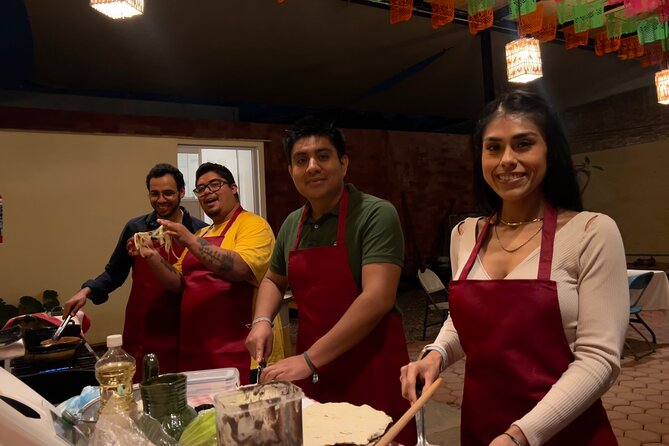
- Chef Oswaldo teaches with clarity, keeping the process hands-on and interactive
- A three-course Oaxacan menu built around real techniques like mole thickening and chocolate tamale dough
- Near Santo Domingo cathedral, easy to combine with other old-town walking plans
- Small-group feel that helps you get questions answered and actually cook
- Vegetarian options on request plus accommodation for dietary restrictions
Where You’ll Start: Santo Domingo’s Easy Old-Town Meeting Point
The class starts at Templo de Santo Domingo de Guzmán, right in Oaxaca’s historic center. That matters more than you might think. You’re not fighting cross-town logistics after a long day of walking, and you can line this up with sightseeing without losing half your evening to transit.
The address used for the meeting point is C. Macedonio Alcalá s/n, RUTA INDEPENDENCIA, Centro, 68000 Oaxaca de Juárez, Oax. Most people will recognize it by location first, not by street number. And since the activity ends back at the meeting point, you also get a clean finish to your day. No awkward “now what?” moment.
This is also offered in English, so you can focus on the cooking rather than playing translation roulette.
You can also read our reviews of more tours and experiences in Oaxaca City.



Chef Oswaldo’s Style: Organized, Friendly, and Built for Real Learning
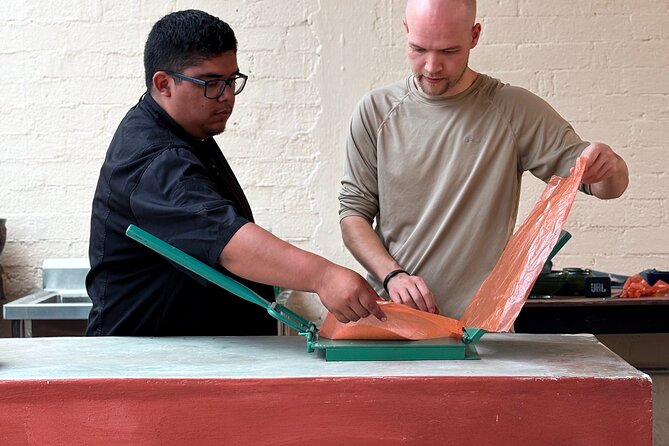
Chef Oswaldo is the heart of this experience, and the consistent theme from the reviews is how smoothly he runs the class. People praise his communication, his patience, and his ability to turn cultural explanations into something you can actually use while cooking.
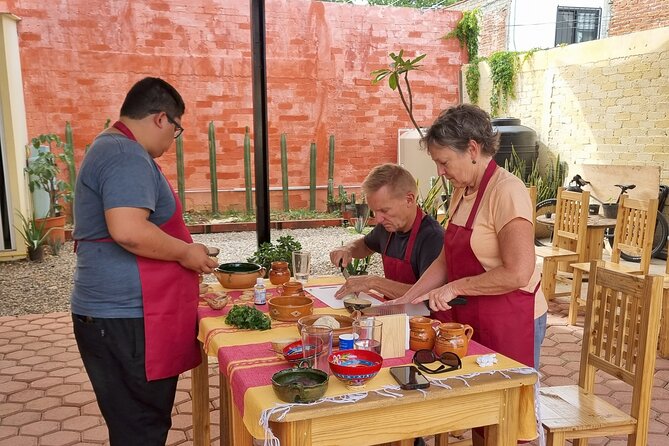
What you’ll feel in the room is structure. The ingredients and tools are prepared in advance, and you’re guided through each step so you’re not standing around guessing what comes next. Even when groups are small (like four), the vibe is still collaborative. When groups are bigger (like eight), it doesn’t feel chaotic, and you still get a real role in the process.
A practical bonus: the chef is mindful about dietary restrictions. If your group has specific needs, you’ll want to mention them clearly when you book or confirm, because the class is designed to handle real-world situations, not just one standard menu.
And yes, you’ll likely meet people who are serious about Oaxaca food. It’s one of those activities where conversations naturally turn into “wait, what’s in that” and “show me that step again.”
The Menu You’ll Cook: Twins, Stewed Mole, and Chocolate Tamales
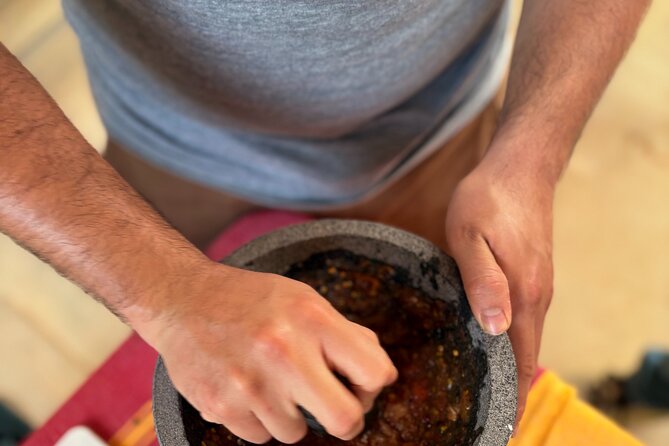
This is a three-course class, built around Oaxacan staples that are more than just flavors. They teach you technique.
Starter: Twins (Thick Omelet with Black Bean Paste and Fresh Cheese)
You’ll start with Twins, a thick omelet paired with black bean paste and fresh cheese. The learning here is about balancing richness and texture. Oaxacan black bean preparations often bring depth without needing heavy seasoning tricks. You also get to see how dairy and beans work together so the dish feels cohesive, not separate.
If you’ve only had omelets that are light and fluffy, this starter is a good reminder that Oaxacan cooking can be hearty without being heavy. It’s food you can picture eating in a family meal, not a fancy show plate.
Main: Stewed Mole with Rice and Handmade Tortillas
The main event is Stewed Mole—mole thickened with seeds, served with rice and handmade tortillas. This is where the class earns its name.
Mole is often misunderstood as one sauce with one method. Here, you learn the idea of mole as something built through ingredients and thickening—especially using seeds to help create body. And because it’s served with rice and tortillas, you understand mole in context: it’s meant to go with staples, not live alone.
You’ll also get hands-on with tortillas, which is a major takeaway for most people. Fresh tortillas change the whole flavor experience. Even if you’ve made tortillas at home before, doing it in this context helps you connect texture, thickness, and cooking technique to taste.



Dessert: Oaxacan Chocolate Tamale
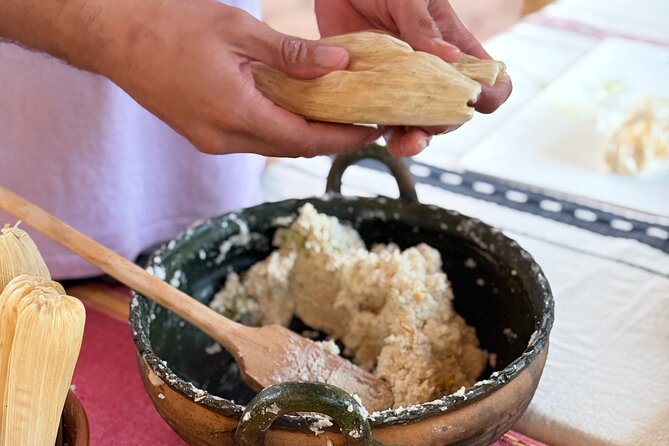
For dessert, you’ll make Oaxacan chocolate tamale, with tamale dough made with Oaxacan chocolate. The key learning is that chocolate in this style isn’t just sweet like a dessert bar. It brings a cocoa complexity that pairs naturally with masa (corn dough).
Tamales also give you a sense of how labor-intensive but worth-it food becomes. Rolling, shaping, and finishing tamales turns this from a quick snack into a meal that feels rooted in tradition.
What “Traditional” Means Here: Techniques and Origins You Can Explain
Part of the class is not only cooking, but also learning the history and origin of local dishes and ingredients. I like this approach because it changes how you remember the food.
Instead of tasting something and forgetting it later, you understand why it exists:
- Mole isn’t just a sauce; it’s tied to Oaxacan kitchen tradition and ingredient choices.
- Black bean paste shows how pantry staples become something special.
- Chocolate tamales teach you that chocolate can be food, not only dessert.
The reviews also highlight the mix of old technique and modern clarity in teaching. You’ll likely get explanations that help you translate what you’re doing at the stove into something you can repeat later.
And because you’re cooking in a courtyard-style venue, it feels less like a factory and more like a neighborhood workshop. The atmosphere is comfortable and bright, which helps you stay focused while your hands are busy.
How the 3.5 Hours Actually Feels: More Than Watching, Less Than Overload
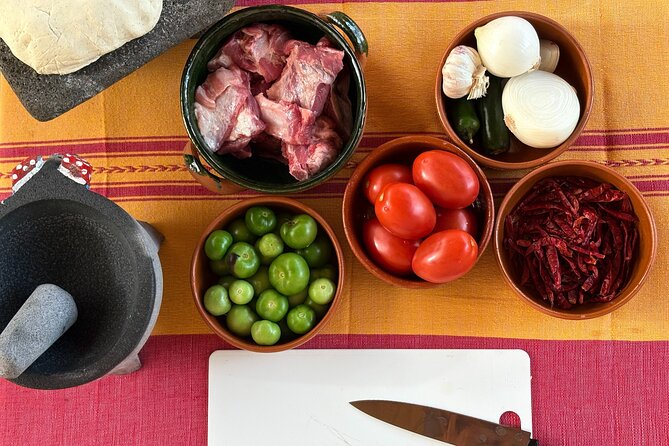
The duration is about 3 hours 30 minutes, and in that time you’ll do enough steps to genuinely feel productive. This isn’t a “press one button and taste” class. It’s a hands-on evening where you’ll contribute to the prep and cooking for each course.
You’ll also be offered seasonal water and drinks. That’s important in Oaxaca, where you’ll often walk before and after activities. Having water handled means you can just stay in the moment.
Food-wise, this class can add up fast. Multiple reviews describe it as a big, satisfying meal at the end—so treat it like your main meal plan for the day. If you’re trying to fit in restaurants afterward, you might end up skipping dessert or sharing dinner.
Finally, you’ll receive recipes in a booklet you can take home. Many people mention being grateful for that because it helps them recreate the dishes accurately rather than relying on memory and vibes.
Vegetarian Requests and Dietary Restrictions: Ask Early, Expect Accommodation
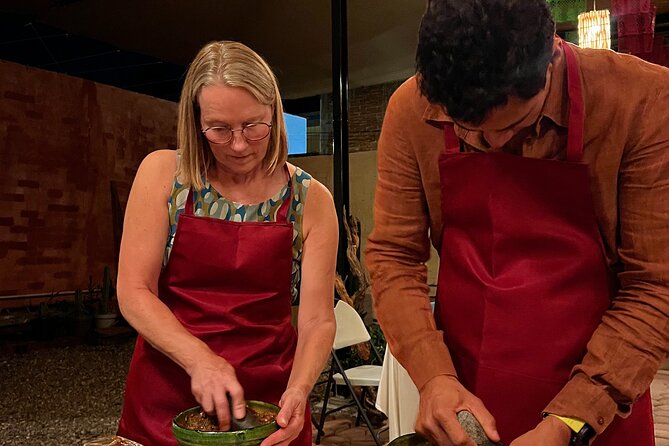
The class offers vegetarian menu options on request. That’s a big deal for an Oaxaca cooking class, because many dishes are naturally flexible, while others depend heavily on specific ingredients.
You’ll want to request your vegetarian needs (and any allergies) when booking so the team can plan the menu and prep. Reviews specifically mention that the chef is accommodating and mindful about dietary restrictions, so this is not an afterthought—tell them upfront and you’ll get a better experience.
If you’re traveling with family, this is also one of those rare activities that can satisfy picky eaters without turning the class into a bland version of itself. You get the Oaxacan flavor structure, not just substitutes.
Price and Value: Why $83.63 Can Be a Good Deal
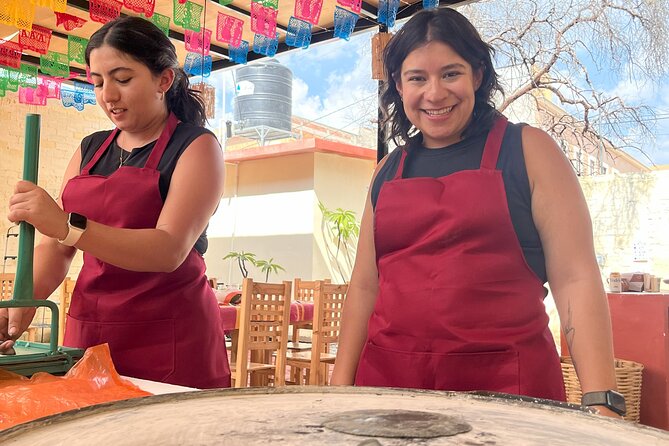
At $83.63 per person, this isn’t a bargain-basement cooking class. But it also isn’t priced like a quick demo. The value comes from several places at once:
- You cook multiple courses rather than sampling only.
- You get hands-on skill with mole and tortillas, plus tamales for dessert.
- The class includes seasonal water and drinks.
- You leave with a recipe booklet, which is practical for home cooking.
- It’s structured as only your group participates (private tour/activity), which usually improves the attention you get.
Add those together and it starts to make sense. If you compare this to paying for a restaurant meal plus a cooking workshop separately, the math is less painful. And if you’re the type who wants to bring Oaxaca home with you, the recipes and technique are the “souvenir” that keeps paying off.
One more value tip: this is an activity people book ahead. On average, it’s reserved about 16 days in advance, so if you’re traveling around busy weeks, don’t wait until the last minute.
Who Should Book This Cooking Class in Oaxaca City
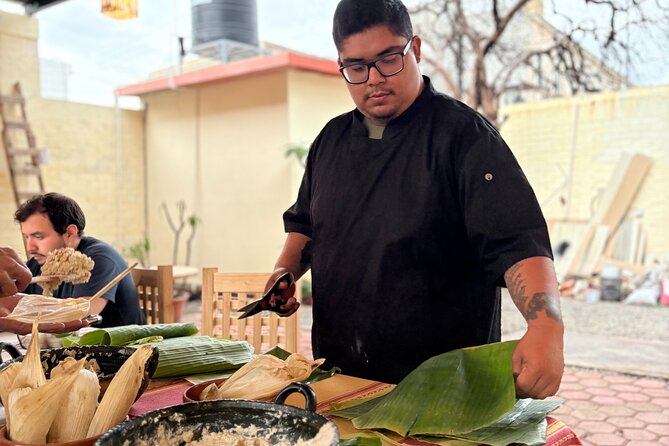
This is a strong match if you want:
- Hands-on cooking (not just tasting)
- A small, friendlier group experience with clear instruction
- To learn the “why” behind Oaxaca flavors, not only the “what”
- A meal plan that includes a real three-course dinner-style finish
It’s also a good pick for couples, solo travelers, and families because the teaching style is friendly and the venue setup helps everyone participate.
You might rethink it if you:
- Want a super-short activity (3.5 hours is a commitment)
- Don’t like cooking much and only want a food tour style
- Have extremely limited diet needs that weren’t clearly communicated during booking (in general, it’s better to ask early)
Should You Book This Oaxaca Cooking Class?
If you care about learning technique and not just collecting photos, I’d book it. Chef Oswaldo’s approach is exactly what you want from a traditional cooking class: organized steps, cultural context you can remember, and a take-home recipe booklet that turns the experience into something you can actually repeat.
Book it especially if mole and tamales are on your Oaxaca must-try list. And if your group includes vegetarian eaters or anyone with dietary restrictions, send your details ahead of time so the menu is set up well.
If your goal is a friendly, practical evening that ends with delicious food and real skills, this is the kind of Oaxaca experience that’s worth the money.
FAQ
How long is the Traditional Oaxaca Cooking Class?
It runs for about 3 hours 30 minutes.
Where is the meeting point?
You meet at Templo de Santo Domingo de Guzmán, C. Macedonio Alcalá s/n, RUTA INDEPENDENCIA, Centro, 68000 Oaxaca de Juárez, Oax., Mexico. The class ends back at the meeting point.
What do you cook during the class?
The sample three-course menu includes Twins (thick omelet with black bean paste and fresh cheese), Stewed Mole served with rice and handmade tortillas, and Oaxacan chocolate tamale.
Is the class offered in English?
Yes, it is offered in English.
Are vegetarian options available?
Yes. Vegetarian menu options are available on request.
Is it a private class?
Yes. It’s a private activity with only your group participating.