REVIEW · OAXACA CITY
Tour to Monte Alban, Arrazola and San Bartolo
Book on Viator →Operated by Syctravel.com · Bookable on Viator
Four stops, one Oaxaca story. This 8-hour day strings together big ideas and daily craft, starting at UNESCO Monte Albán and ending with living traditions in Arrazola and San Bartolo. I especially liked Eda’s high-energy Monte Albán explanations and the way black clay pottery in San Bartolo links you to tools and techniques that go way back.
One thing to keep in mind: it’s a full day, and food isn’t included, plus you’ll want to budget for Cuilapan de Guerrero’s admission (even though other stops handle their entry in different ways). Also, the tour needs good weather, so plan for schedule flexibility if conditions are bad.
In This Review
- Key highlights to pencil in
- From Zapotec power to today’s crafts: what this day really is
- Getting there smoothly: pickup, timing, and small-group comfort
- Stop 1: Monte Albán’s urban ruins and the Teotihuacán thread
- What to watch for
- Stop 2: Arrazola alebrijes and the Jiménez workshop museum
- The small practical tip
- Stop 3: San Bartolo Coyotepec’s black clay pottery tradition
- What I’d focus on with your camera
- Stop 4: Cuilapan de Guerrero and the ex-convent museum stop
- What you’ll likely appreciate most
- Lunch, breaks, and how to plan your energy
- Guide and driver effect: when the day feels safe and easy
- Price and value: why $73.61 can make sense
- Who this tour fits best
- Should you book this tour?
- FAQ
- How long is the tour?
- What time does the tour start?
- Is pickup available?
- What language is the tour offered in?
- What tickets are included?
- Is food or drinks included?
- Do I get a mobile ticket?
- What’s the group size limit?
- What happens if the weather is poor?
- Is the tour refundable if I cancel?
Key highlights to pencil in
- Monte Albán admission included right from the start, so you don’t waste time paying onsite
- Arrazola alebrijes with a visit to a museum-workshop connected to the Jiménez family
- San Bartolo black clay pottery—this town is famous for how many people make it
- Small group size with a max of 14 travelers, which helps the day feel less rushed
- Cuilapan de Guerrero’s ex-convent and museum as a strong final cultural hit before you head back
From Zapotec power to today’s crafts: what this day really is
This tour works because it moves between two kinds of Oaxaca culture that are usually separated on trips: the ancient big-city world of Monte Albán and the hands-on creativity you still see in nearby villages. You’ll spend the morning with Zapotec architecture and art. Then you’ll switch gears to objects made with wood, paper, and black clay—crafts that keep evolving while still honoring old knowledge.
I like that the flow isn’t just sightseeing. It’s a storyline: how power and identity shift across centuries, and how communities keep their own forms of expression alive. Even if you’re not a walking encyclopedia, the guide framing makes it easy to connect the dots.
You can also read our reviews of more tours and experiences in Oaxaca City.
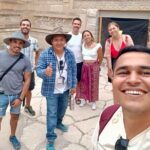
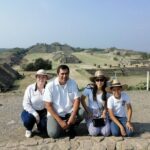
Getting there smoothly: pickup, timing, and small-group comfort
The day starts at 9:00 am. Pickup is offered from hotels that are on the list, and if yours isn’t, you can send your full address. You’re traveling in an air-conditioned vehicle, which matters in Oaxaca’s daytime heat.
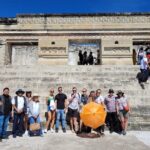
The group stays small—up to 14 people—so you can hear the guide and ask practical questions without feeling like you’re in a cattle line. You also get a mobile ticket, so you’re not scrambling for paper.
Stop 1: Monte Albán’s urban ruins and the Teotihuacán thread
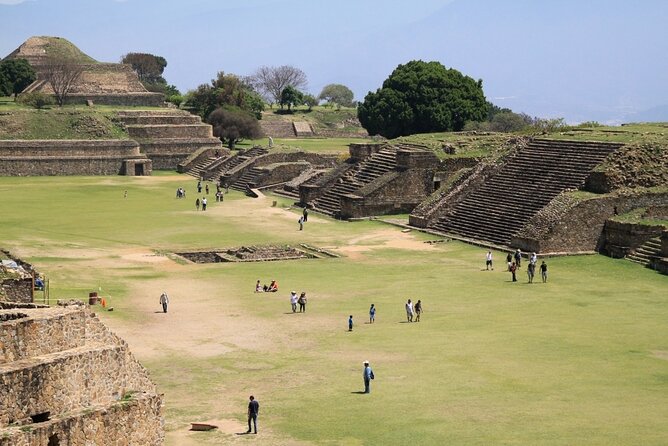
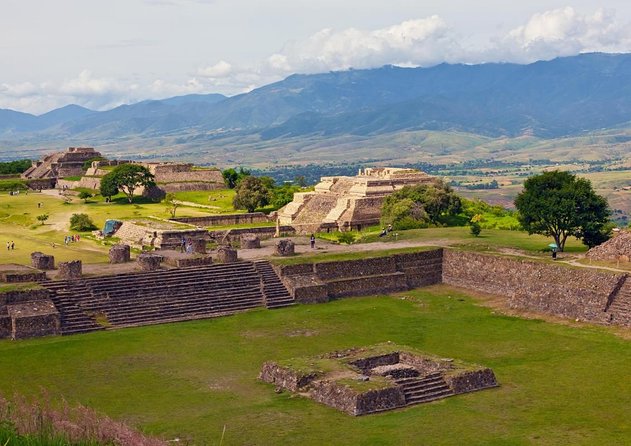
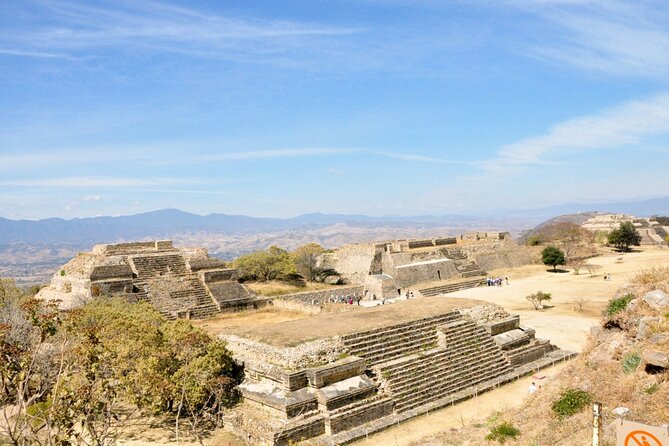
Monte Albán is the major archaeological site of Oaxaca and part of a UNESCO World Heritage Site listing. It’s the large urban center associated with Zapotec culture, and it gives you a strong sense of how planned and powerful this society was.
You’ll spend about 2 hours here, with admission included. It’s not just tall stones and views. The site also connects to wider Mesoamerican history: you can see Teotihuacán influence in architecture, ceramics, and mural painting. Later, that link changes, and the Zapotec political organization reaches a high point—while social inequality is part of the picture, not just the glory.
One detail worth paying attention to is the mention of famous Tomb 7, discovered by Alfonso Caso in 1932. Even if you don’t catch every technical term, that kind of specific discovery date helps you anchor the site in real scholarship, not vague legend.
What to watch for
Monte Albán sits in an open area. Bring sunscreen, wear shoes you can trust on uneven ground, and expect sun exposure. If you’re prone to heat stress, pace yourself during the climbs.
Stop 2: Arrazola alebrijes and the Jiménez workshop museum
From Monte Albán’s ancient scale, you jump to something you can hold in your mind fast: alebrijes. In Arrazola, you’re looking at a community known for these imaginative creatures, often built using wood carving techniques passed down through generations.
This stop runs about 1 hour, and the admission is free. A key name here is Manuel Jiménez, tied to the alebrijes for which the town is famous. You’ll also visit the Museum-Workshop of Angélica Jiménez, who connects the current work to the legacy of Don Manuel.
What makes Arrazola worth your time is that it’s not just a display. You get a sense of the craft chain: carving, shaping, painting, and the cultural idea that the creatures—jaguars, tigers, mermaids, cats, and nahuales—are more than decoration. They’re a way of telling stories with form and color.

The small practical tip
If you’re tempted to buy a piece, take a moment to compare sizes and finishing. That extra minute helps you avoid regret later, especially on a day where the next stops are more about looking than bargaining.
Stop 3: San Bartolo Coyotepec’s black clay pottery tradition
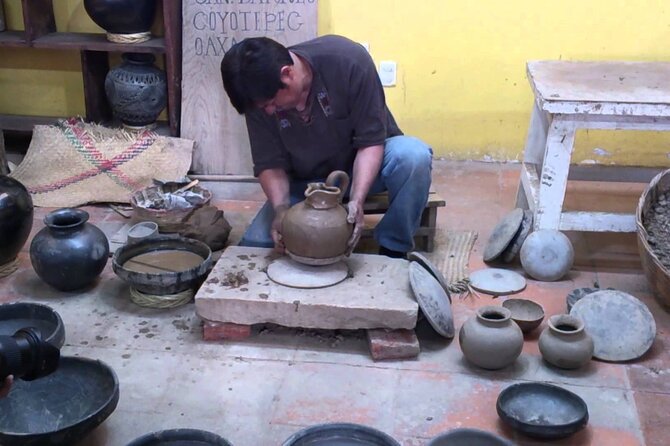
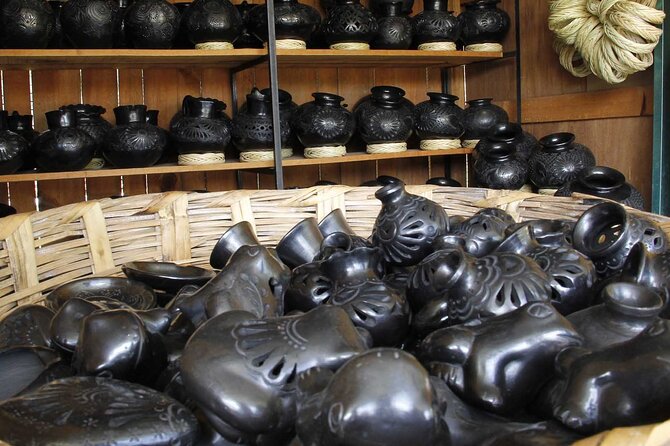
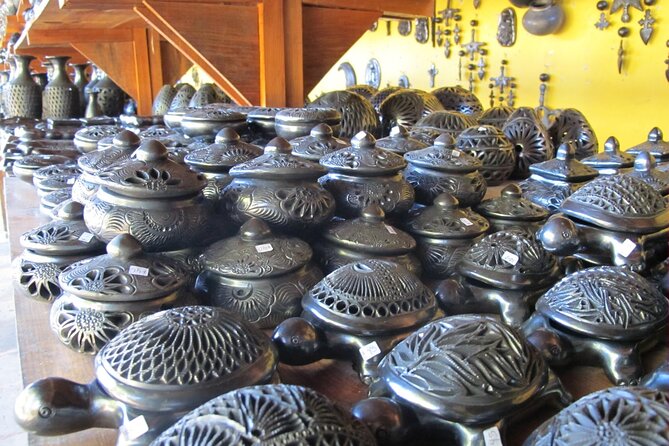
San Bartolo Coyotepec—formerly known as Zaapeche, or Place of jaguars—belongs to the Zapotec communities of the central valleys. The big feature here is black clay pottery, described as a pre-Hispanic occupation dating back a very long time.
This stop is also about 1 hour, with admission free. The town’s reputation comes from how many people dedicate themselves to making pottery. That matters because you’re not just meeting one standout artist—you’re seeing a tradition that shapes everyday life.
You’ll hear that the work includes utilitarian pieces as well as items made mainly for aesthetic purposes. Also, there’s a strong historical footprint beyond the clay: you’ll see references to a church dating from the sixteenth century and vestiges of buildings that were used as ceremonial centers or for local lords.
What I’d focus on with your camera
Don’t just photograph finished pots. Try to capture the steps and the tools if you can. Even when the day is brief, those details help you remember what technique looks like in real time.
Stop 4: Cuilapan de Guerrero and the ex-convent museum stop
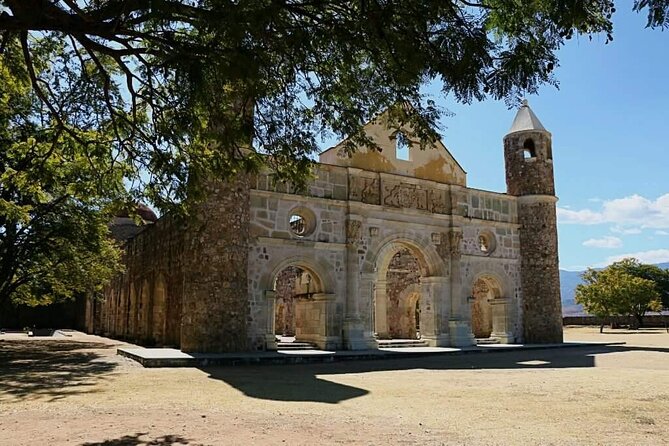
Cuilapan de Guerrero is the final culture stop, and it adds a different tone to the day. You’ll head to an area about 10 kilometers from Oaxaca City, in a community with a long layering of indigenous and Spanish-era influence.
This is where names carry clues. The place name comes from Nahuatl and references cocoyoles—the meaning is given as Cocoyoles Valley / Cocoyoles Place. The area is also tied to Vicente Guerrero, with the reference that he was shot there in 1831.
You’ll have about 1 hour for this stop at the Ex-Convent and Museum. The good part: the museum ticket isn’t listed as included, so you should expect to pay there. The interesting part: the convent story ties directly to evangelization. It was founded in 1551 near the work of Fray Domingo de Oguinaga, when a rudimentary temple and small aqueduct were built. Over time, Spanish permissions allowed the current convent to take shape, and the settlement grew with Mixtecs and Zapotecs.
What you’ll likely appreciate most
Cuilapan is a good last stop because it’s a bridge between eras. You can look at walls, rooms, and museum objects, then mentally slide back to the craft and pottery you saw earlier. The day stops feeling like separate errands and starts feeling like one connected story.
Lunch, breaks, and how to plan your energy
Food and drinks aren’t included. That’s not a deal-breaker, but it does change how you should plan your day. If you’re the type who gets shaky when the schedule runs long, I’d bring a snack for the road or at least plan to purchase something during a break.
One practical note: the day has multiple stops and a couple of them are outdoor. If your stomach is sensitive, it’s worth buying something simple and local rather than hunting for the most adventurous menu when you’re tired.
Guide and driver effect: when the day feels safe and easy

This tour tends to succeed or fail based on the guide’s pacing. In the best cases, you get a guide who can translate big ideas into plain language without turning the day into a lecture. I’ve seen how guides like Eda and Ere bring real enthusiasm—animated explanations, a sense of humor, and quick anecdotal connections that make Monte Albán and the crafts feel more alive.
A safe, smooth driver also matters on a long loop. There’s mention of Isaias as the driver, and that kind of steady handling can make the whole schedule feel calmer. When you don’t have to white-knuckle the van ride, you’re better able to enjoy each stop instead of arriving already drained.
Price and value: why $73.61 can make sense
The price is $73.61 per person for about 8 hours. That sounds simple, but the value depends on what’s already covered.
Here’s the basic math in plain terms:
- Transport is included (air-conditioned vehicle)
- All fees and taxes are included
- Traveler’s insurance is included
- Monte Albán admission is included
- Arrazola and San Bartolo Coyotepec admission are free
- Cuilapan de Guerrero’s admission is not included
So you’re paying for a guided, multi-stop route that saves you from juggling separate tickets and transit. If you were to piece it together yourself, you’d spend time on planning and likely end up paying for transport anyway. Also, small-group size helps you get more value from the guide time.
The one “cost you control” is food, plus Cuilapan’s entry. If you budget for those, the rest of the day feels like a straightforward deal for a full cultural hit.
Who this tour fits best
You’ll get the most out of this if you like a mix of:
- Ancient sites and how they connect to later cultural change
- Craft traditions you can actually see and learn about
- A guided day that removes the guesswork of driving and ticket timing
It’s also a good option if you want to stay based in Oaxaca City and still reach multiple nearby cultural communities without taking on logistics yourself.
If you hate long days or prefer ultra-slow travel, this may feel like a packed schedule. You’ll be moving through four meaningful stops in one go.
Should you book this tour?
If you want an efficient, well-rounded day that covers Monte Albán, Arrazola alebrijes, San Bartolo black clay pottery, and Cuilapan’s ex-convent museum, this is an easy yes. The main reason: the included parts remove friction, especially Monte Albán admission plus the free entry at two craft-focused stops.
I’d book it if you can handle sun, walking on uneven ground at the archaeological site, and you’re okay budgeting for lunch and Cuilapan’s museum entry. I’d skip it if you want a more relaxed pace or you’re traveling when weather is unreliable, since the tour requires good conditions.
FAQ
How long is the tour?
It runs for about 8 hours.
What time does the tour start?
The start time is 9:00 am.
Is pickup available?
Pickup is offered. If your hotel is not on the pick-up list, you should provide your full address.
What language is the tour offered in?
The tour is offered in English.
What tickets are included?
Monte Albán includes an admission ticket. Admission for Arrazola and San Bartolo Coyotepec is free. Cuilapan de Guerrero admission is not included.
Is food or drinks included?
No. Food and drinks are not included.
Do I get a mobile ticket?
Yes, you’ll receive a mobile ticket.
What’s the group size limit?
The maximum group size is 14 travelers.
What happens if the weather is poor?
This experience requires good weather. If it’s canceled due to poor weather, you’ll be offered a different date or a full refund.
Is the tour refundable if I cancel?
No. This experience is non-refundable and cannot be changed for any reason.