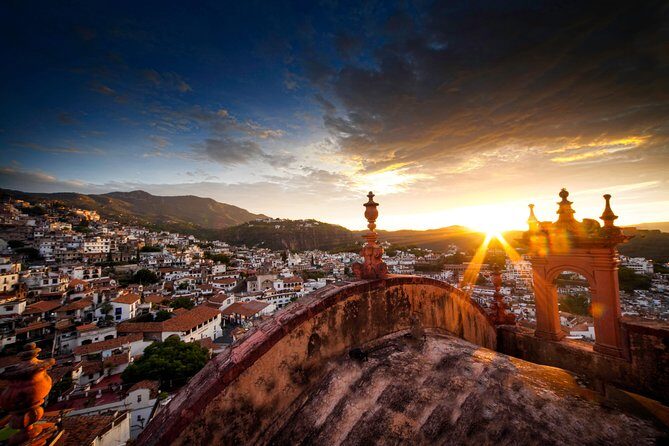
Puebla has an underground side. This private half-day tour pairs the best-known Historic Center sights with a ticketed visit to the Xanenetla secret tunnels—plus your guide’s live storytelling as you move through the city. I especially like the hotel pickup and drop-off, because it saves you time and hassle when you only have a few hours. One thing to keep in mind: the depth of history can vary by guide, and some stops (like the hilltop forts area) may feel more like a viewing moment than a full on-site explore depending on how your guide times it.
You’ll be on the move for about 4 hours starting at 10:00am, in a private vehicle with your own guide. The tour also includes key entries: the Palafoxian Library, the Chapel of the Rosary, and access to the Xanenetla tunnels, along with a small snack tasting (tortita de canta clara and camote) and bottled water. It’s a strong value if you want both the big highlights and the “only-in-Puebla” angle without stitching together tickets and directions on your own.
In This Review
- Key highlights at a glance
- A private half-day that mixes Puebla’s icons with the city’s secrets
- Palafoxian Library: a perfect warm-up for your Puebla story
- Puebla Cathedral and the Rosary Chapel: Renaissance meets high Baroque drama
- Sweet street strolls and art neighborhoods without the long detours
- Parián Market and the culture of local crafts
- Xanenetla tunnels: the main event under Puebla
- Forts of Loreto: views plus the Battle of Puebla reference
- Guides and real-world experience: what makes this tour feel personal
- Price and value: what you’re really paying for
- Tips to get the most from your 10:00am start
- Who this Puebla + Xanenetla tour is best for
- Should you book this tour?
- FAQ
- How long is the Puebla + Xanenetla tunnels private tour?
- What time does the tour start?
- Is pickup and drop-off included?
- What’s included in the tour price?
- Which admissions are included?
- Is food included?
- Is this a private tour?
- Do you get tickets on your phone?
- Are group discounts available?
- What is the cancellation policy?
Key highlights at a glance
- Xanenetla tunnels access with live commentary so you’re not just walking in the dark
- Puebla’s Historic Center landmarks in one tight loop, including the Cathedral and Rosary Chapel
- Stops are paced for a private group, with flexibility to follow your interests
- Hilltop forts views timed into the route for a classic Puebla perspective
- Snack tasting of tortita de canta clara and camote plus bottled water for the road
A private half-day that mixes Puebla’s icons with the city’s secrets
This tour works because it doesn’t treat Puebla like a single “see it, check it off” checklist. You get the obvious stars—Puebla Cathedral and the Rosary Chapel—and then you get the story underneath the surface: the Xanenetla tunnels, an underground labyrinth tied to the Xanenetla district.
The private format matters here. In a group tour, you often spend time waiting, rushing, or giving up questions. With a private guide and private transportation, you can slow down where you care and move briskly where you don’t. If you’re the type who likes hearing how different places connect—religious power, neighborhood life, and the city’s defense history—you’ll get more out of this than you would with a short self-guided pass.
Price-wise, it’s not the cheapest option in town, but it’s built for value. You’re paying for guide time, a private vehicle, hotel pickup/drop-off, and multiple admissions that would cost extra if you bought them yourself. You also get bottled water and a tasting snack, which keeps the afternoon from turning into a “where do we eat now?” scramble.
You can also read our reviews of more private tours in Central Mexico


Palafoxian Library: a perfect warm-up for your Puebla story
Your tour begins at the Biblioteca Palafoxiana, right in the Historic Center. It’s not just a pretty library stop. It was founded in 1646 by Bishop Juan de Palafox y Mendoza, and that early date is a big clue to how deep Puebla’s cultural institutions run.
Why this stop is a smart opener: it gives you context fast. Even if you’re not a hardcore history person, a place like this helps you understand why Puebla’s architecture and artwork feel so “earned.” Plus, admission is included, so you’re not wasting time later tracking down tickets.
Practical tip: If you care about architecture or old institutions, this is the moment to ask your guide what makes the library important beyond the date—how it reflects the city’s identity.
Puebla Cathedral and the Rosary Chapel: Renaissance meets high Baroque drama
Next up is the Puebla Cathedral, located in the Zócalo. Construction dates run from the 16th to the 17th centuries, and the cathedral is known for its imposing Renaissance and Baroque features. Entry here is free, which is nice because it lets you spend your money on the stops that are ticketed.
Then comes the Capilla del Rosario, inside the Templo de Santo Domingo. This chapel is one of Mexico’s major Baroque art highlights, built in the 17th century. If you’ve seen Baroque churches elsewhere, you’ll recognize the style: it’s meant to feel like you’re stepping into a visual sermon. This is the kind of stop where a good guide helps you “read” what you’re looking at instead of just taking in the wow-factor.
If you’re comparing options in Puebla, I’d think about this this way: the Cathedral is the city’s big monument, but the Rosary Chapel is where many people slow down because the artwork demands close attention. Admission is included for this chapel, so you get more for your tour price.
Sweet street strolls and art neighborhoods without the long detours
After the major churches, the tour pivots into Puebla’s everyday personality.
You’ll visit La Calle de los Dulces (officially Calle 6 Oriente), a street where Puebla’s sweet tradition is concentrated. This is a quick stop, but it’s an important tonal shift: you’re moving from monumental architecture to the kinds of local treats that keep a city’s culture tangible.
Then you’ll head to the Barrio del Artista. This neighborhood, founded in the 1940s, is known for workshops and galleries where local artists show work and create. It’s the kind of place where you can get a feel for today’s Puebla without turning it into a museum day. The stop is brief, but it’s designed to give you a quick snapshot of how art fits into daily life.
A short note on pacing: because this is a 4-hour tour, these neighborhood stops are meant to be impressions, not deep dives. If you want to shop or linger, you’ll get the best results by telling your guide up front that you’d like a little extra time here.
Parián Market and the culture of local crafts
The Mercado el Parián (Parián Market) is next, located in the Barrio de los Sapos. This is one of Puebla’s recognizable market scenes, and it’s a good place to see how craft and food culture show up in the same area.
The tour time here is short, so treat it as a sensory stop: look for regional goods, browse without pressure, and use your guide’s eyes if you’re trying to find something specific. The tour itself doesn’t promise a full meal here, and food and drinks are listed as not included—so don’t plan your lunch around the market visit.





Xanenetla tunnels: the main event under Puebla
Now for the reason many people book this tour: the Tuneles de Puebla (Xanenetla Tunnels).
These tunnels are described as one of Puebla’s best-kept secrets, an underground labyrinth filled with history and mystery. They were recently discovered and connect several strategic points in the city. Importantly, this isn’t just an outside-the-fence photo stop. You get access, and it’s ticketed/included.
This is also where your guide makes the biggest difference. One common theme in the feedback is that people loved seeing the tunnels and getting context, but some wanted more detail about the revolutionary history connected to the city. In other words: if tunnel history is what you care about most, ask early how the guide plans to frame it. You can also ask follow-up questions while you’re there, since the tour is private.
Practical advice for the tunnels: wear shoes you’re comfortable walking in, and keep your pace steady. Even if you’re not claustrophobic, underground spaces can feel cooler or dimmer than the street.
Forts of Loreto: views plus the Battle of Puebla reference
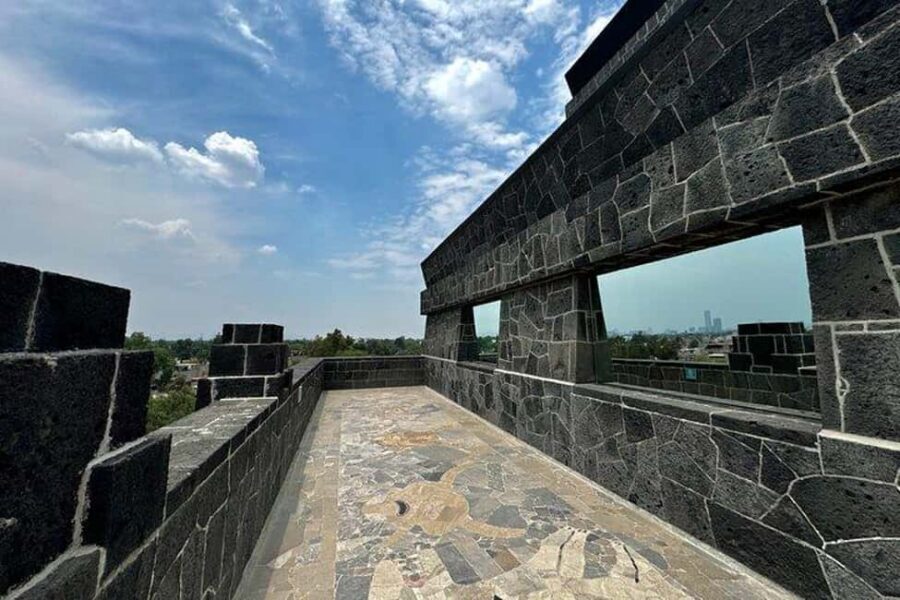
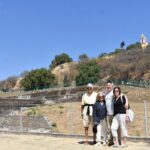
After the underground portion, the tour climbs toward the Fuerte de Loreto y Guadalupe on Cerro de Acueyametepec. This hilltop area is a key historical symbol for Puebla and Mexico, and it’s tied to the Battle of May 5, 1862.
You’re here for both the history and the viewpoint. The fort area is a classic Puebla perspective: you see the city from above, and it helps you understand why these spots mattered strategically. Entry for this stop is free.
One consideration: the timing on this portion can be a little flexible. Some visitors expected deeper museum-style time, but the tour may focus on the main look and then move on. If you want more than a pass-by view, tell your guide at the start that you’d like your hilltop time prioritized.
Guides and real-world experience: what makes this tour feel personal
The tour stands or falls on its guide, and the names that come up most include Olivia and Ernest, plus Susana in other guiding experiences. People praised guides for being on time, patient, and willing to answer questions. In one case, a guide was specifically recognized for giving detailed history and legends along the way.
That matches how this itinerary is designed. The stops themselves are strong, but the value is in the linking story—how a library founding connects to the city’s long institutional identity, how a Rosary chapel fits into Puebla’s cultural depth, and how tunnels and forts connect the street-level city to its strategic past.
My advice: when you meet your guide, ask what to focus on during the tunnel portion (history, architecture, or legends). If you do that, you’ll leave with the kind of understanding that turns a short tour into something you remember.
Price and value: what you’re really paying for
At $126.53 per person for about 4 hours, this tour isn’t budget-low—but it also isn’t “pay extra for nothing.” Here’s what the price is carrying:
Included value
- Private transportation plus hotel pickup and drop-off
- A private guide with live commentary
- Admissions/access included for the Palafoxian Library, Chapel of the Rosary, and Xanenetla tunnels
- Bottled water
- Snack tasting: tortita de canta clara and camote
Not included
- Food and drinks beyond the tasting
When this feels like a good deal: if you want multiple paid entries covered, plus a guide to make sense of the landmarks without you planning ticket timing. If you’re traveling as a couple or small group, the private vehicle and pickup can feel especially efficient.
When it might feel expensive: if you’re only interested in one or two sites (like just the tunnels) and you don’t care about the rest of the Historic Center loop.
Tips to get the most from your 10:00am start
A 10:00am departure is ideal in Puebla because you’re tackling the main sights earlier while the city is moving. It also gives you time later to wander on your own—maybe to browse longer in the sweet street shops or to return to a church you want to see again.
To make the tour work for your interests:
- Tell your guide what you want emphasized most: tunnels history, art/Baroque details, or the battle/fort angle.
- If you care about the hilltop forts stop, ask how much time is planned there.
- Wear comfortable walking shoes and be ready for mixed terrain (Historic Center streets, then an elevated fort viewpoint, plus a tunnel section).
Who this Puebla + Xanenetla tour is best for
This is a great fit if you:
- Want a short, guided route that hits the key Puebla highlights plus the Xanenetla tunnels
- Prefer private pacing over squeezing into a group schedule
- Like history when it’s explained live, in context, as you move
It’s less ideal if you:
- Want a long, museum-style visit at the forts complex
- Only care about one single attraction and don’t want the rest of the loop
Should you book this tour?
If you’re visiting Puebla for a half day and you want both the well-known landmarks and a real “only in this city” experience, I’d book it. The combination of ticketed tunnel access, multiple Historic Center icons, and a guide who can answer questions gives you more meaning per hour than most quick tours.
Just do one thing before you go: during your first minute with your guide, make your priorities clear—especially if you care about the deeper historical context in the tunnels or how much time you’ll get at the fort area. With that small step, this tour has the ingredients for a memorable Puebla day.
FAQ
How long is the Puebla + Xanenetla tunnels private tour?
It runs for about 4 hours.
What time does the tour start?
The start time is 10:00am.
Is pickup and drop-off included?
Yes, hotel pickup and drop-off are provided.
What’s included in the tour price?
Included are the tour host/guide, private transportation, bottled water, access to the Palafoxian Library, access to the Chapel of the Rosary, access to the Xanenetla Tunnels, and snacks that include a tasting of tortita de canta clara and camote.
Which admissions are included?
Admission tickets are included for the Palafoxian Library, the Chapel of the Rosary, and access to the Xanenetla Tunnels. The cathedral stop is listed as free, and the Forts of Loreto stop is listed as free.
Is food included?
Food and drinks are not included. Only the snack tasting is included.
Is this a private tour?
Yes. It’s private, meaning only your group participates.
Do you get tickets on your phone?
Yes, there is a mobile ticket.
Are group discounts available?
Group discounts are listed as available.
What is the cancellation policy?
Free cancellation is available. You can cancel up to 24 hours in advance for a full refund; within 24 hours, the amount paid is not refunded.