REVIEW · CENTRAL MEXICO
All-inclusive hot air balloon flight over Teotihuacan
Book on Viator →Bookable on Viator
Floating over Teotihuacan is hard to top. I love the way you can watch the balloons inflate up close, and I really like that landing comes with a toast and a flight certificate waiting for you. One fair caution: the exact direction and even how long you stay in the air depends on climatic conditions, so you’re trading a rigid schedule for sky time.
On the ground, the day mixes big-time sights with more local flavor. You get time in the archaeological zone plus a breakfast in a natural cave, and then an artisan stop where you learn about regional materials like maguey and obsidian. In my experience with the crew, Isaac and Kenia kept the tone friendly and practical, which matters when the day has multiple moving parts.
This is priced like an experience day, not just a ticket. You’re looking at about 6 to 8 hours for the full loop, with air-conditioned transport and a small group size (up to 20). Just know there’s a 100kg (220 lbs) weight limit—above that, there’s an extra fee in Mexican pesos.
In This Review
- Key highlights to know before you go
- Why Teotihuacan from the air feels different than on the ground
- Pick-up, meeting point, and what to do the night before
- Balloon prep: coffee, inflation viewing, and the landing toast
- The flight itself: 30–50 minutes of weather math
- Teotihuacan ruins: Quetzalcóatl, Sun and Moon pyramids, and free-time navigation
- Natural-cave breakfast: a meal with serious atmosphere
- Artisans, maguey and obsidian: learn, taste, then move on
- Basilica de Santa Maria de Guadalupe: the optional, traffic-dependent add-on
- Price and value: what $220.99 really buys
- Tips to make the day smoother (and better photos)
- Should you book this Teotihuacan balloon-and-ruins day?
- FAQ
- How long is the hot air balloon flight?
- What affects the flight direction and duration?
- Is round-trip transportation from Mexico City included?
- Are tickets for the Teotihuacan archaeological zone included?
- What is included for breakfast, and is there a vegetarian option?
- Is the Basilica de Santa Maria de Guadalupe included?
- Do you get tasting of regional drinks?
- Is there a weight limit?
- What happens if the flight can’t operate due to weather?
Key highlights to know before you go
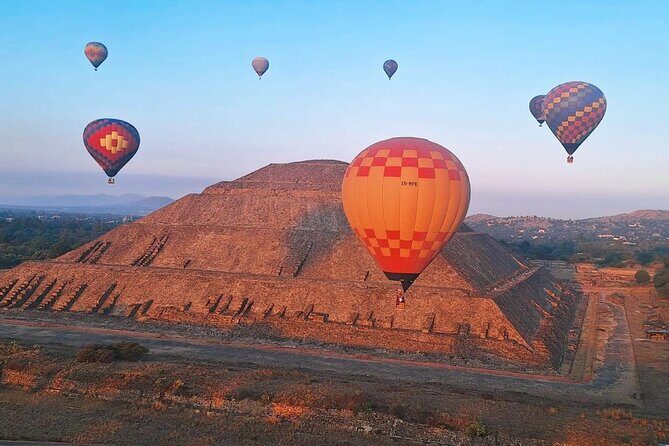
- Balloon inflation viewing before you launch: you see the balloons ready before you climb in.
- A real landing moment: you’ll toast with sparkling wine and receive a flight certificate.
- Ruins time is free-choice, not a guided tour: you get 1 to 2 hours to explore at your pace inside Teotihuacan.
- Breakfast happens in a natural cave: it’s part meal, part atmosphere.
- Artisan learning tied to materials: maguey and obsidian are explained, then you taste regional drinks.
- Optional Guadalupe, depending on energy and traffic: you may make it to the shrine near Tepeyac.
Why Teotihuacan from the air feels different than on the ground

Seeing Teotihuacan from street level is impressive. Seeing it from above is the kind of view that makes you stop talking for a second. The flight crosses the Teotihuacan Valley, and from the air the pyramids and surrounding geometry feel more like a designed map than just ruins.
I also like that the experience is built around a balloon day, not a long bus crawl with one quick stop. You get dedicated time for inflation, a concentrated flight window, and then a structured rhythm on the ground afterward. It’s a good match for you if you want something memorable without needing to plan every step yourself.
The other reason this works is the crew-led safety flow. Your launch is set up with balloon prep and a landing routine, so you spend less mental energy worrying and more time looking up. And yes—the views are exactly the point.
You can also read our reviews of more tours and experiences in Central Mexico.


Pick-up, meeting point, and what to do the night before
The day starts at 55850 San Martín de las Pirámides, State of Mexico. If you’re in Mexico City, you’ll typically use round-trip transportation from CDMX, and you’ll be sent driver and car details the night before via Viator or WhatsApp, including license plates.
That night-before message is more useful than it sounds. It reduces that morning stress of trying to guess which vehicle is yours, especially on a day that starts with balloon prep. It also helps if you’re traveling with a phone plan you want to test in advance.
There’s also a mobile ticket, so keep your phone charged. If your phone battery is always low, bring a small power bank. The tour notes this is near public transportation, which can be handy if you need a backup plan to reach the meeting area.
Balloon prep: coffee, inflation viewing, and the landing toast
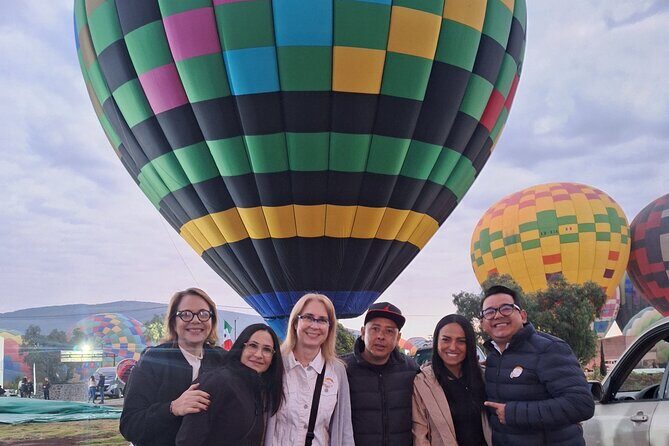
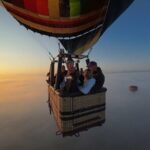
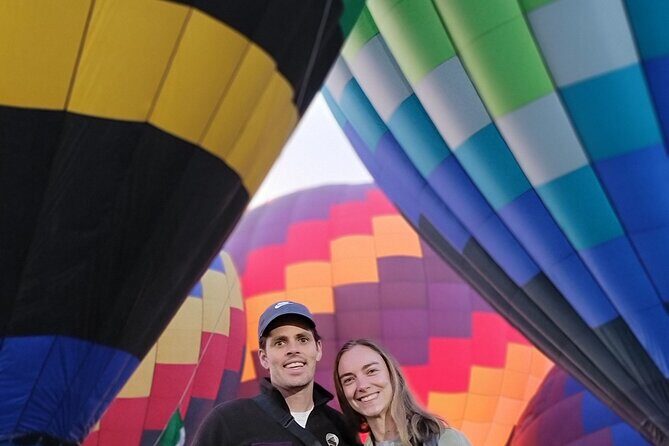
Your first stop is set up like a mini pre-flight lounge. You register with the team, and you can grab coffee or hot chocolate with a snack while you watch the balloons inflate. That inflation viewing is one of those small moments that makes the experience feel real before you even step in the basket.
Then comes the actual flight setup and launch. Once you land, you get a toast with sparkling wine and your flight certificate. These two pieces are worth paying attention to, because they turn the day into something you can remember beyond just photos.
This part of the schedule matters because balloon days have a different pace than normal sightseeing. If you arrive hungry and distracted, you’ll feel rushed. If you arrive ready to relax for a bit, the prep phase becomes part of the fun.
The flight itself: 30–50 minutes of weather math
The hot-air balloon flight lasts roughly 35 to 50 minutes (often described in the wider range of 30 to 50). The big detail is that the direction and duration depend entirely on the climatic conditions.
That variability is the trade-off with ballooning. You’re not going to get a spreadsheet-style guarantee for where you’ll go in the sky. But you are getting a flight over the Teotihuacan Valley, guided by what the day’s weather allows.
One practical tip: you’ll get the best experience if you don’t treat this as a clock-based activity. It’s better to be mentally flexible. If your trip has tight plans later in the day, plan extra buffer time so the balloon can do what it needs to do safely.
Teotihuacan ruins: Quetzalcóatl, Sun and Moon pyramids, and free-time navigation
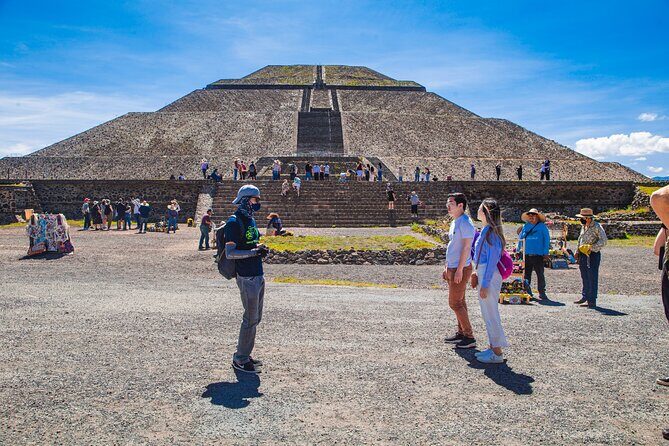
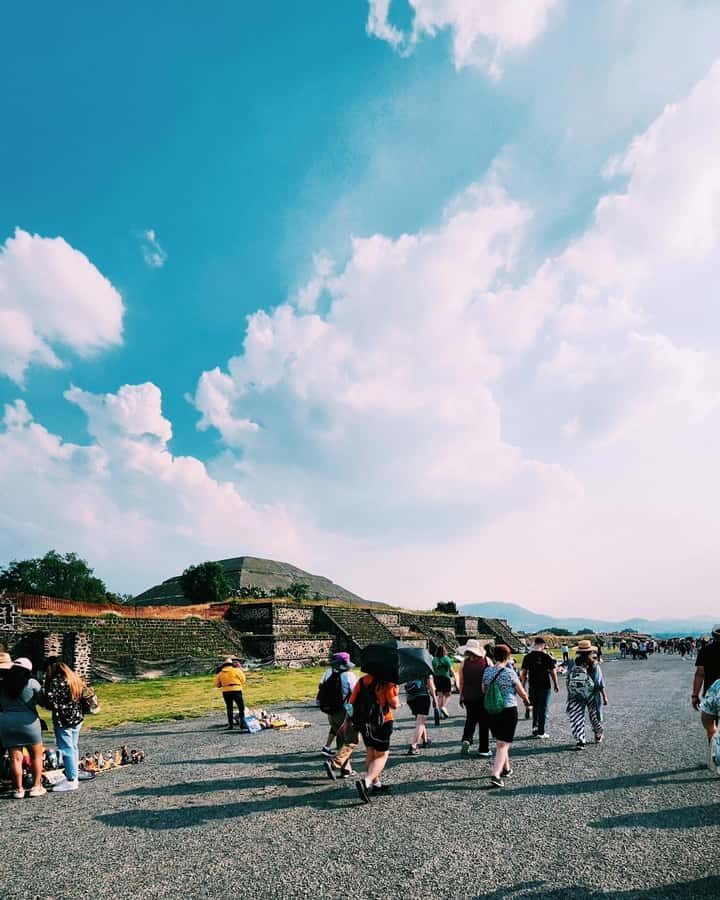
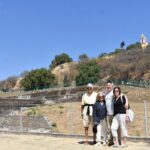
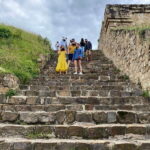
After breakfast and the artisan stops, you’ll return to the archaeological zone for your free walk. You’ll see major highlights like the temple of Quetzalcóatl and the pyramids of the Sun and the Moon, but the important difference is how the time works.
You’re given 1 to 2 hours of free tour time at your choice, not a full, guided march with narration. That’s great if you like wandering, taking photos, and moving at your own pace. It can feel confusing if you expect an all-in-one guided experience during the ruins portion, so adjust your expectations ahead of time.
If you want to make your time count, go in with a simple plan. Decide which structures matter most to you, then work outward. Wear comfortable shoes, because you’ll be walking on uneven ground.
Also, don’t underestimate how much you’ll want to stop for photos. Balloon or not, Teotihuacan gets your attention fast once you’re on the paths between the big forms.



Natural-cave breakfast: a meal with serious atmosphere
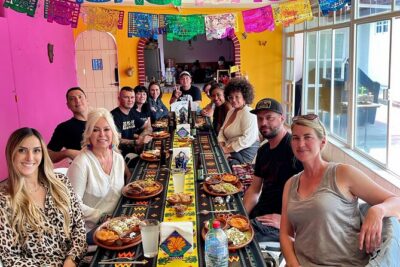
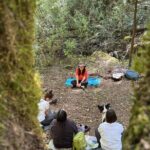
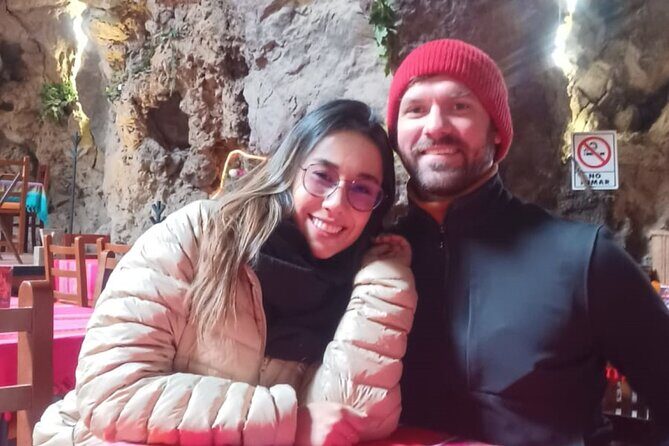
Midday fuel happens at Teotihuacan Municipality, and it’s served in one of the standout settings of the day: a natural cave. You’ll either get a breakfast in the cave or a buffet option, and there’s also an option for vegetarians.
This is more than food logistics. Breakfast in a cave changes your whole mood after ballooning and walking around. It gives you shelter, a slower pace, and a chance to settle your body before the rest of the program.
If you’re sensitive to temperature shifts, note that caves can feel cooler than you expect. Dress in layers so you don’t freeze during the meal and then overheat when you step back outside.
Artisans, maguey and obsidian: learn, taste, then move on

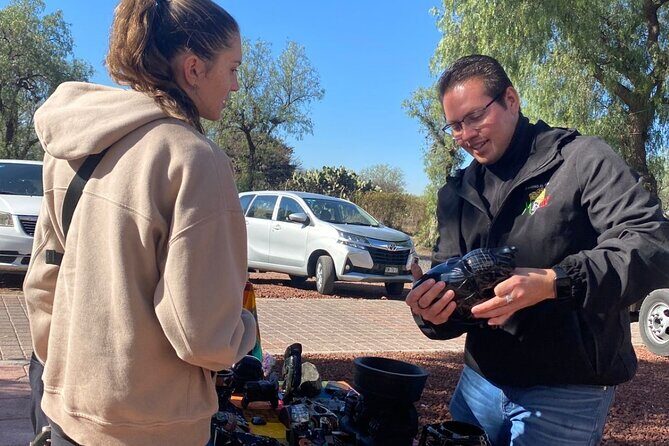
One of the better parts of the ground itinerary is the artisan-house visit focused on local materials. You’ll learn about maguey, a key plant in the region, and obsidian, a mineral that mattered to pre-Hispanic cultures and still shows up today in crafts.
There’s a specific, practical detail here: the crafts include pieces connected to the main replicas from Mexico City’s Museum of Anthropology and History. That gives the artisan stop a little more weight than a generic souvenir stop, because you’re learning why these materials matter and how they’re used.
Then you finish with tastings of pulque, tequila, mezcal, and other regional drinks. This is a good moment to slow down and ask questions, since you’re not just buying things—you’re connecting what you see to what you’re tasting.
If you don’t drink alcohol, you can still enjoy the learning and the tasting experience in a low-key way. Just take it at your pace and don’t feel pressured.
Basilica de Santa Maria de Guadalupe: the optional, traffic-dependent add-on

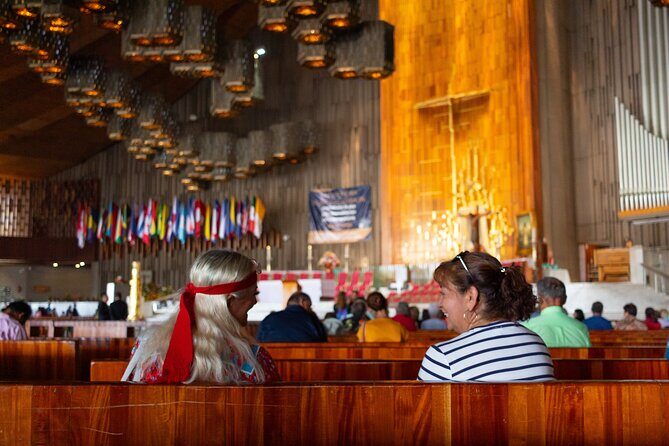
Later, the itinerary includes an express visit to the Basilica de Santa Maria de Guadalupe, tied to the Virgin of Guadalupe devotion. It’s optional and depends on energy and traffic, and it’s described as a short stop.
If traffic is too heavy, the plan may change and you could be dropped off at the Angel of Independence instead of returning exactly to the original meeting point. That’s not something to panic about, but it’s smart to remember when you make your onward plans.
This portion is quick, so it’s best if you treat it as a bonus. If your main goal is ballooning plus Teotihuacan, you’ll still get that even if Guadalupe ends up skipped.
Price and value: what $220.99 really buys
At $220.99 per person, this isn’t a bargain. But it’s also not just a balloon ride. You’re bundling in:
- Safe balloon flight lasting around 35 to 50 minutes
- Round transportation from CDMX
- Air-conditioned vehicle
- Breakfast in a cave (or buffet), with vegetarian option
- Teotihuacan archaeological zone ticket with 2 hours of free tour
- Toast and flight certificate
- Optional Guadalupe stop
That combination is where the value lands. Ballooning is weather-dependent, and getting it organized with transport and timed access to major sights is the expensive part. If you’d tried to arrange the flight, then separately buy ruins tickets and figure out meal timing, the day would likely cost you more in effort and money.
The extra costs to note: there’s a weight overage fee if you’re above 100kg (220 lbs), and there’s an added charge for pickup outside the CDMX radius specified for the tour.
So the question becomes: do you want an all-in day that avoids planning work? If yes, the price starts looking fair.
Tips to make the day smoother (and better photos)
A balloon day rewards preparation. Here are a few things I’d do to get the most out of it:
- Bring layers for the cave and for walking at the ruins. Temperatures can shift.
- Use closed-toe, grippy shoes for Teotihuacan paths.
- Charge your phone before you go. You’ll rely on the mobile ticket and on the day’s info.
- Keep sunglasses handy. Even with clouds, the light around the pyramids can be bright.
- If you want a truly guided ruins experience, plan to read up a bit before you arrive, since your time inside Teotihuacan is free to explore.
- If you’re sensitive to shopping detours, know there may be a craft-shop-style stop as part of the program flow. In practice, it tends to move at a workable pace and doesn’t have to consume your whole focus.
The best “pro move” is to treat the balloon day like a sequence, not separate activities. When you accept the day’s rhythm, you’ll enjoy each part more.
Should you book this Teotihuacan balloon-and-ruins day?
I’d book this if you want a high-impact experience with minimal planning: balloon time with a landing ritual, plus ruins access, plus a cave breakfast and a structured local learning segment. The value is strongest when you like the idea of a small group day (up to 20) and you’re okay with weather affecting the flight direction.
Skip it (or consider alternatives) if you’re the type who needs a strict, narrated ruins itinerary. The archaeological zone time is free-choice, so you won’t get a tightly guided walkthrough as part of that block. Also, make sure you’re comfortable with the fact that weather can change flight details and that Guadalupe is only included if timing allows.
If you’re flexible and you want sky views that feel like a once-in-a-trip memory, this is a solid pick.
FAQ
How long is the hot air balloon flight?
The flight time is about 35 to 50 minutes, with the experience described as lasting roughly 30 to 50 minutes depending on conditions.
What affects the flight direction and duration?
Climatic conditions affect both the direction and how long the flight lasts.
Is round-trip transportation from Mexico City included?
Yes. The tour includes round transportation service from CDMX.
Are tickets for the Teotihuacan archaeological zone included?
Yes. The archaeological zone ticket is included, with 2 hours of free tour time.
What is included for breakfast, and is there a vegetarian option?
Breakfast is included, served in a natural cave or as a buffet. There is also a vegetarian option.
Is the Basilica de Santa Maria de Guadalupe included?
It’s optional. The visit happens only if you still have energy and if traffic allows.
Do you get tasting of regional drinks?
Yes. The itinerary includes a tasting of pulque, tequila, mezcal, and drinks made in the region.
Is there a weight limit?
Yes. If your weight exceeds 100kg (220 lbs), there is an extra cost of MX$500.
What happens if the flight can’t operate due to weather?
If the experience is canceled due to poor weather, you’ll be offered a different date or a full refund.