UNAM can feel like a city-within-a-city, and this tour makes it readable fast. You’ll walk from Juan O’Gorman’s central library through major mural stops tied to Mexico’s revolutionary art, then finish with the Olympic story at Estadio Olímpico Universitario. The big draw is that you’re seeing public art and iconic campus spaces without paying separate admission.
What I like most is the focus. The stops are tight (about 20 minutes, then 1 hour, then 30 minutes) so you don’t get dragged around for an entire day. I also really value the guide element: it’s a bilingual tour, and in the best moments the guide style is like story time—one guide named Fernando was praised for connecting mural art to university development and major events like 1968.
One thing to consider: it’s a walking tour for roughly two hours, so if you need lots of slow, quiet breaks or you want to linger in buildings, you may feel a bit rushed at the set stop times.
In This Review
- Key Highlights You’ll Actually Feel
- A Walking Tour That Turns UNAM Into a Story
- Stop 1: Rectoría Area and UNAM’s Central Library (Juan O’Gorman)
- Stop 2: UNAM Murals with Siqueiros, Chávez, Eppens, and More
- Stop 3: Estadio Olímpico Universitario and the 1968 Thread
- Price and Value: What You’re Paying For at $53.46
- Timing, Group Size, and Getting Your Day Right
- What a Great Guide Adds (And Why It Shows Here)
- Who This UNAM Murals Walk Is Best For
- Should You Book This Tour?
- FAQ
- How long is the guided walking tour of UNAM murals and the Revolution?
- Is the tour offered in English?
- Where does the tour start and end?
- How big is the group?
- Is admission included for the stops?
- Can I cancel for a full refund?
Key Highlights You’ll Actually Feel
- UNAM’s Central Library by Juan O’Gorman: a major architectural stop with free admission
- A mural lineup tied to revolution-era artists: Siqueiros, Chávez, Eppens, and more
- A 1968 Olympic Games angle: the Estadio Olímpico Universitario adds context beyond art
- Small group size (max 15): easier conversation, fewer bottlenecks at stops
- Bilingual guidance in English: helps if you want clarity without losing local nuance
A Walking Tour That Turns UNAM Into a Story
Mexico City has plenty of museum-heavy days. This one is different because it treats UNAM like the scene of the story—architecture, public murals, and sports heritage all linked together. You’re not just looking at art panels; you’re learning how the university setting helped shape (and display) ideas in paint and stone.
The format is simple and practical. You start at Rectoría de la UNAMescolar in C.U., Coyoacán, then you move through three main stops, finishing back at the meeting point. With a mobile ticket and a duration of about 2 hours, it’s a good use of half a day.
And the value is real: the stops list free admission. That matters in Mexico City, where the total cost of entry can climb quickly. Here, you’re paying mostly for the guide and the organized walk.
You can also read our reviews of more walking tours in Mexico City
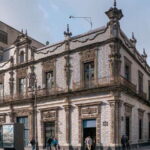

Stop 1: Rectoría Area and UNAM’s Central Library (Juan O’Gorman)
Your first stop is the UNAM Biblioteca central, and it’s hard to miss why. This isn’t a generic library exterior moment—it’s the architectural work by artist Juan O’Gorman. The tour gives you about 20 minutes here, which is enough time to understand what you’re looking at without turning it into a long detour.
Why this stop matters: O’Gorman’s reputation sits at the intersection of architecture and visual language. When you see the library through the lens of revolutionary-era cultural identity, the building stops being just a campus landmark. It becomes part of the argument for education as public life—something people can walk by, talk about, and connect to larger national themes.
Practical tip: use the first stop to get your orientation. Even if you’re not an architectural expert, you’ll thank yourself later when the murals feel more “placed” in the university context rather than dropped on the path.
If you prefer your guides to go slow on the first stop, this is also where you can ask questions early. A good flow here sets the tone for the rest of the walk.
Stop 2: UNAM Murals with Siqueiros, Chávez, Eppens, and More
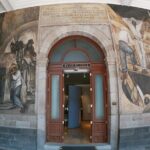
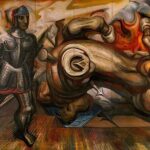
The heart of the tour is the mural segment. You’ll spend about 1 hour looking at the murals at UNAM, including works by Siqueiros, Chávez, Eppens, and more. This is where the walking tour earns its name: murals at UNAM aren’t background decoration. They’re public statements.
Here’s what I find useful as a visitor: the tour doesn’t treat the murals like separate “cool artworks you pass by.” It connects them to ideas—politics, identity, and the university’s role in shaping cultural narratives. The best guidance turns art into understandable motivation. You start seeing patterns: symbols, themes, and how different artists express similar concerns in different styles.
You also get a nice pace. One hour is long enough to notice details and still short enough to stay energized. If you’ve ever felt museum fatigue, this is a smart alternative: you’re outdoors (or semi-outdoors depending on the exact campus areas), you can look up, and you’re moving between viewpoint angles without fighting crowds.
Possible drawback at this stop: murals invite lingering, and you only have one hour. If you’re the type who wants to zoom in on every figure for 40 minutes per panel, you may wish the tour allowed more time here. Still, you’ll walk away with a clear “map” of what you saw and why it matters.
Stop 3: Estadio Olímpico Universitario and the 1968 Thread
The final stop is Estadio Olímpico Universitario, where you’ll talk about the 1968 Olympic Games and how it connects to Diego Rivera’s mural. This is a smart closer because it widens the frame. Art and politics don’t live in separate rooms. Sport and public spectacle do not either.
You get about 30 minutes here, which is a good length for making connections without burning your whole afternoon. The tour’s value at this point is the “why you should care” angle. The 1968 Olympics are well-known as an event, but linking that context back to mural art helps you see how major moments get absorbed into cultural memory.
Also, this stop can be a breather. After mural time, the stadium setting gives you a different kind of viewing. You’ll often find you can step back, take in space, and let the story click rather than only focusing on close-up artistic details.
If you like tours that give context, this is the one I’d choose. You’ll leave with the sense that you didn’t just watch history—you understood how it was communicated.
Price and Value: What You’re Paying For at $53.46
At $53.46 per person, this tour sits in the “mid” range for guided experiences in Mexico City. The reason it can feel like good value is the structure: two hours, small group size (max 15), and free admission at the listed stops.
So you’re not paying for entry fees. You’re paying for:
- a bilingual guide who can explain what you’re seeing
- a guided route that gets you to the right UNAM spaces
- a stop-by-stop story that ties architecture, mural art, and the 1968 Olympics into one arc
The “booked 20 days in advance on average” detail tells me something else: this isn’t a tour people only try at the last minute. If you want a time slot with fewer hassles, it’s smart to plan ahead.
One more practical note: tips aren’t included. That’s normal for tours like this, but it means you should factor in a little extra if you think the guide really clicks with you.
You can also read our reviews of more guided tours in Mexico City


Timing, Group Size, and Getting Your Day Right
The walk is set for about 2 hours total, with fixed stop durations:
- Stop 1: 20 minutes
- Stop 2: 1 hour
- Stop 3: 30 minutes
That schedule matters because it keeps the experience focused. If you have a packed day and you’re trying to avoid wasted time, this format helps. It also means you can pair the tour with another UNAM-area plan before or after.
You’ll also be in a small group. With a maximum of 15 travelers, it’s usually easier to hear explanations and ask follow-up questions—especially during mural viewing, where one person stepping forward can change the view for everyone.
Language is another practical benefit: the tour is offered in English, and it’s bilingual. If you like having clear explanations but also want local flavor, this setup can be a strong fit.
Finally, the meeting point is easy enough to plan around. You start at Rectoría de la UNAMEscolar, C.U., Coyoacán, 04510 Ciudad de México, CDMX, and you finish back at the meeting point. That round-trip convenience helps if you’re relying on public transport.
What a Great Guide Adds (And Why It Shows Here)
A walking tour like this lives or dies on the explanation. With murals, the visuals do a lot—but context does the rest. You can look at paint all day and still miss the connection to the university, the political themes, and the 1968 thread.
That’s where the guide’s role matters. One praised guide, Fernando, was highlighted for telling the university-related story around the murals and construction, plus how the 1968 events fit into the broader picture. That kind of linking is exactly what turns “art viewing” into an experience you can actually recall later.
If you’re the type who likes to ask questions, this tour’s group size helps. You shouldn’t feel like you’re shouting across a crowd to be heard.
Who This UNAM Murals Walk Is Best For
This tour is a strong match if you:
- want high-impact cultural stops without a long museum day
- enjoy art that connects to politics and public identity
- like guided structure so you don’t have to figure out the “why” on your own
- want a smaller-group experience that still covers the main UNAM anchors
It’s also a good option for visitors who already plan to explore Mexico City neighborhoods and want one focused, campus-centered day segment.
If you’re a die-hard art specialist who wants deep time with each mural at multiple angles, you might find the stop durations short. But if your goal is to understand the big picture and come away with meaningful context, this is very workable.
Should You Book This Tour?
I’d book it if you want a clear, story-driven walk through UNAM that combines architecture, revolution-era mural art, and the 1968 Olympic context—all in about two hours. The free admission at each stop and the small group size help the value feel earned, not padded.
I’d skip it only if you strongly dislike walking schedules or you know you need lots of extra time to read every mural panel in detail. In that case, you might prefer a longer, self-paced UNAM plan.
FAQ
How long is the guided walking tour of UNAM murals and the Revolution?
The tour lasts about 2 hours.
Is the tour offered in English?
Yes. The tour is offered in English, and it includes a bilingual guide.
Where does the tour start and end?
It starts at Rectoría de la UNAMEscolar, C.U., Coyoacán, 04510 Ciudad de México, CDMX, Mexico, and it ends back at the meeting point.
How big is the group?
The tour has a maximum of 15 travelers.
Is admission included for the stops?
Admission is listed as free at the UNAM Biblioteca central, the murals, and Estadio Olímpico Universitario.
Can I cancel for a full refund?
Yes. You can cancel up to 24 hours in advance for a full refund.