REVIEW · SAN MIGUEL DE ALLENDE
Trip from San Miguel to the Sacred Frescoes of Atotonilco – 1PM
Book on Viator →Operated by Travel to San Miguel · Bookable on Viator
Frescoes, faith, and independence clues. This is a focused 1PM afternoon trip that pairs a church visit tied to Mexico’s fight for independence with a close look at the sacred wall paintings at Atotonilco, with an English guide to connect the dots. I love how the guide uses art and architecture to explain what you’re seeing, instead of leaving you with just pretty pictures.
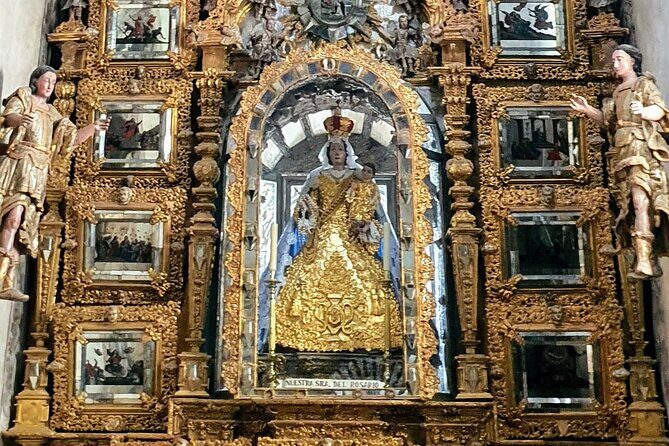
Two things I really like: first, the stop at the Santuario de Jesus Nazareno is guided through the most important parts of the nave, including side chapels like the Chapel of Our Lady of the Rosary and Our Lady of Loreto. Second, the pacing feels built for real understanding—along the way you also get context about the region and the new neighborhoods you pass through, so the day feels more grounded than a simple drive-and-stand. I also appreciate the small group limit of up to 8 travelers, which keeps questions from getting lost.
One consideration: you’re on a set route for about 1.5 to 2 hours, and the church visit is respectful in tone (including removing hats or caps). If you prefer lots of unscripted wandering or long photo stops, you may wish you had a bit more time on your own.
In This Review
- Key highlights to know before you go
- An afternoon route that turns the ride into part of the story
- Price and value: what $38.90 buys you (and why it’s not just a ride)
- Where to meet in San Miguel: Banco BBVA and pickup near San Francisco
- Stop 1: Santuario de Jesus Nazareno and the Hidalgo moment you’ll actually remember
- Inside the nave: six sections, specific chapels, and respectful rules
- Tempera paintings from entrance to altar: how to look without getting lost
- The drive-and-talk context: why the scenery and neighborhoods matter
- Sacred Frescoes of Atotonilco: why this stop is worth structuring your afternoon
- The guide quality is the real multiplier (and yes, names matter)
- Meals, water, and what to plan for on your end
- Who this tour suits best
- Logistics that keep things smooth
- So, should you book the 1PM San Miguel to Atotonilco tour?
- FAQ
- What time does the tour start?
- How long does the experience take?
- Where do I meet for the tour?
- Is pickup available?
- Is the tour guide available in English?
- What’s included in the price?
- Are meals included?
- What is the group size limit?
- Can I cancel for free?
Key highlights to know before you go
- 1PM start, 1.5–2 hour focus: just enough time for two meaningful moments without turning into an all-day outing
- San Miguel pickup near the main square: easier meeting logistics than you might expect
- Santuario de Jesus Nazareno + Hidalgo connection: you’ll hear why Father Miguel Hidalgo matters here
- Six sections of the nave and named chapels: you won’t just “walk in and look around”
- Tempera paintings inside the church: the guide points out what you’re seeing from entrance to altar
- Small group size (max 8): better Q&A, less crowding
An afternoon route that turns the ride into part of the story
This tour runs in the afternoon window, starting at 1:00 PM and operating Monday through Sunday (shown as 1:00 PM–3:00 PM). It’s the kind of timing that fits well if your mornings are busy—maybe you’ve been roaming San Miguel’s streets, doing markets, or just sleeping in like a professional tourist.
What makes this experience feel like more than sightseeing is that the drive isn’t treated as dead time. You’ll travel from San Miguel toward the sanctuary area and, en route, your guide shares background on the local area, surrounding communities, and the newer neighborhoods you pass through. That short “in-between” talk helps you place what you’ll later see in a bigger story.
Also, it’s private transportation in an official vehicle with tourist plates, valid insurance, and a certified tourist guide driver (with visible credentials). In practice, that usually means less fuss: you’re not juggling unknown pickup points across a big bus and hoping your stop is next. Plus, you’ll get bottled water in the vehicle.
You can also read our reviews of more tours and experiences in San Miguel de Allende.

Price and value: what $38.90 buys you (and why it’s not just a ride)
At $38.90 per person, this isn’t a huge splurge, but it’s also not the cheapest option. The value comes from the mix of things that normally cost extra if you do them separately: transportation with a guide driver, an English-speaking guide, and an admission ticket tied to the church visit.
You’re also getting time structure. The tour is designed to last about 1 hour 30 minutes to 2 hours, so you’re paying for a guided visit rather than an open-ended “good luck” situation. For many people, that’s the sweet spot—especially if your main goal is to understand why a place matters, not just to check it off.
One more practical detail: there’s a mobile ticket, so you’re not hunting for paper confirmations right before departure. And the tour ends back at the meeting point, so you’re not stuck coordinating your own return after you’ve had your cultural moment.
Where to meet in San Miguel: Banco BBVA and pickup near San Francisco
The start point is simple: Banco BBVAJuárez 11, Zona Centro, San Miguel de Allende. This is a useful anchor because it’s in the center, and you’re likely already somewhere nearby if you’re staying within the Zona Centro rhythm.
Pickup is also described clearly. If you’re using the pickup option, it notes that San Francisco temple is about one block from the main square. So even if you don’t want to walk far, you have a nearby landmark to aim for.
Since the tour returns to the starting point, you can plan your afternoon around it. If you’re trying to catch dinner later, the timing is usually manageable: you’re back after roughly the 1.5–2 hour window.
Stop 1: Santuario de Jesus Nazareno and the Hidalgo moment you’ll actually remember
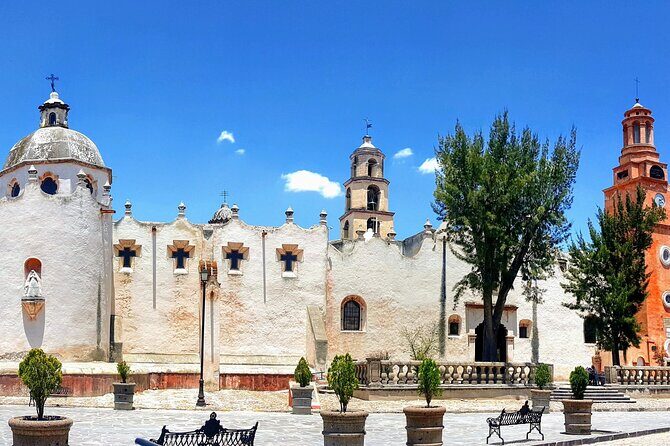
The first stop is the Santuario de Jesus Nazareno. The transfer from San Miguel takes about 20 minutes, which keeps you from feeling like you’ve spent your whole outing in transit. That short ride is also when the guide sets the stage: what you’ll see has meaning, and you’ll get that meaning before you walk in.
When you arrive, you’ll notice an image featuring Father Miguel Hidalgo holding a picture of the Virgin of Guadalupe. This is the independence thread your guide will connect for you, explaining that this is where Hidalgo took a significant step in the fight for independence in 1810.
This part matters because it changes the way you look at the building. Without the explanation, you might treat the church as beautiful religious architecture. With the explanation, it becomes a place where national history, local devotion, and religious symbolism overlap.
Inside the nave: six sections, specific chapels, and respectful rules
Once you enter, you’ll follow the sanctuary’s etiquette—remove hats or caps and move through the church with respectful quiet. It’s a small thing, but it sets the tone fast.
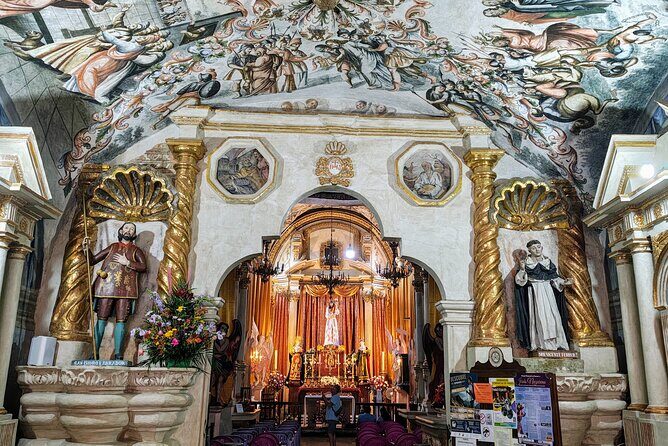
Inside, you’ll explore the nave through six sections, not just a quick lap around the main floor. Your guide will point out named chapels you might miss if you were on your own, including:
- the Chapel of Our Lady of the Rosary
- Our Lady of Loreto
- the Chapels of Calvary and the Holy Sepulchre
That “named stop” approach is what makes this tour feel like a guided lesson. You’re not only looking at a church—you’re learning how the space is organized and what devotional focus exists in different areas.

Tempera paintings from entrance to altar: how to look without getting lost
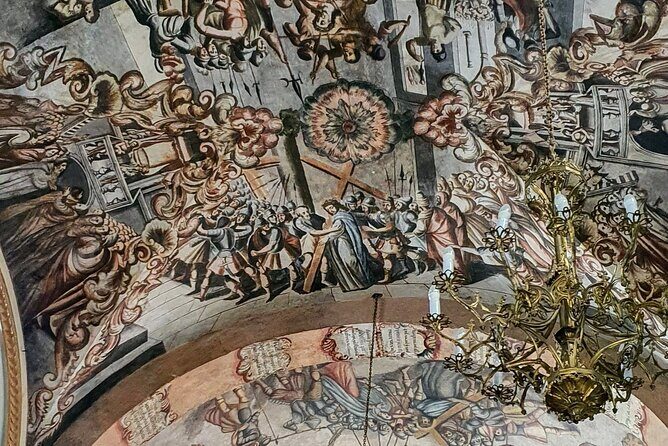
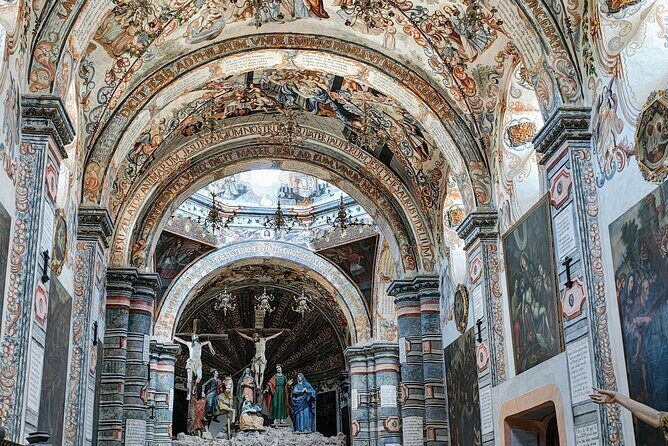
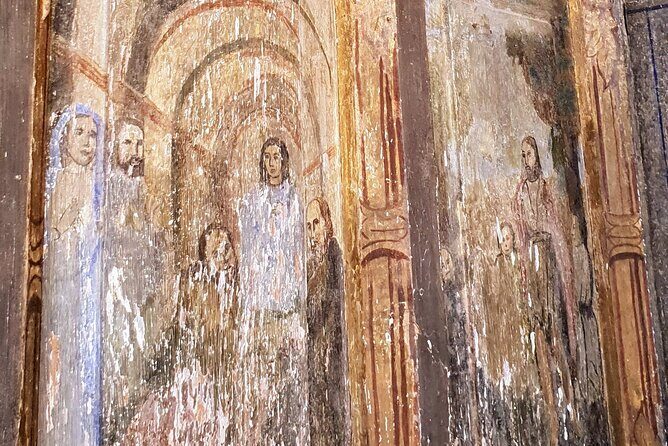
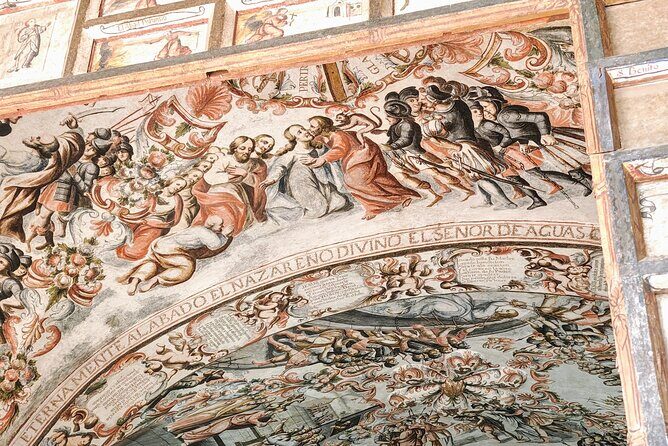
One of the standout features described for this visit is the tempera paintings that decorate the walls, running from the entrance to the altar. Tempera has a particular look—often slightly matte compared to glossy modern paint—and it’s designed to last.
Here’s what the guide adds that’s genuinely useful: you’ll learn where to focus your attention while walking through. Instead of staring at everything and absorbing nothing, you’ll be nudged toward the specific painted scenes and how they relate to the chapels you’ve just heard about.
If you enjoy art history and architecture, this is the kind of place where a guide pays off. A church like this rewards patience, and your guide helps you pace that patience so it doesn’t turn into boredom.
The drive-and-talk context: why the scenery and neighborhoods matter
Between San Miguel and the sanctuary, you’ll pass new neighborhoods and surrounding communities. Your guide uses those visible changes to talk about regional development and history.
This is the underrated part of many tours. We often rush from “old town” to “historic site,” forgetting that today’s Mexico is shaping itself in real time along the route. Even a short mention of how areas grow makes the visit feel less like a museum stop and more like you’re traveling through living communities.
If you’re curious about how San Miguel connects outward—socially and geographically—this background helps.
Sacred Frescoes of Atotonilco: why this stop is worth structuring your afternoon
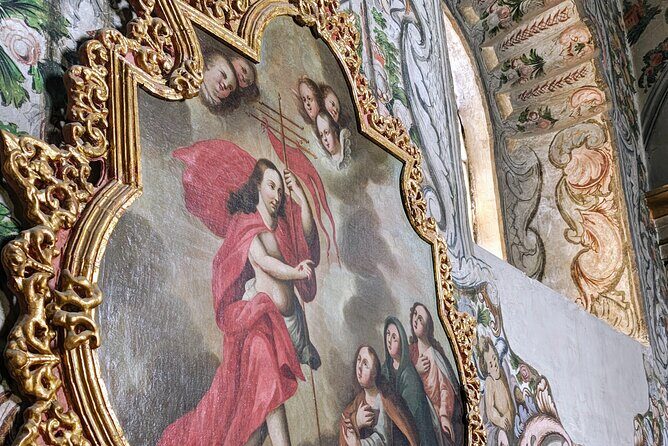
The overall tour is built around the Sacred Frescoes of Atotonilco, and the reason that name lands with art and history lovers is straightforward: it’s not just one painting. It’s a whole visual program on sacred walls, designed to communicate through imagery.
Even without getting lost in technical art terms, you’ll get what to look for. This tour’s rhythm sets you up for it: you start with the independence-linked sanctuary and its chapel layout, then you move into a fresco-focused experience where the guide’s explanations help you read the message and symbolism behind the scenes.
In other words, the tour doesn’t treat Atotonilco as a random photo spot. It frames the frescoes as a designed environment—meant to be encountered in sequence, not glanced at like a postcard.
The guide quality is the real multiplier (and yes, names matter)
This kind of experience rises or falls on the guide. Here, the emphasis on English-speaking guidance is backed up by strong feedback about friendliness and depth.
The reviews mention guides such as Maria and Marimar, and the repeated praise is consistent: the guide is on time, approachable, and quick to answer questions about Mexico’s history and the church’s background. That matters because these sites are packed with meaning, and the difference between seeing and understanding is often a good conversation.
One review also highlights a guide being very attentive and helpful in practical ways—like going beyond expectations to support the day (for example, help related to lunch and smooth pickup/drop-off). That kind of care is rare, and it’s a nice reminder that good guiding is part logistics, part storytelling, part human kindness.
Meals, water, and what to plan for on your end
Meals are not included. That means you’ll want to think about what you’ll do before or after the tour to avoid ending up hungry and improvising.
Good news: you’ll have bottled water provided in the vehicle. That’s a simple comfort on an afternoon outing, especially if you’ve already been walking around town.
Who this tour suits best
This is a great fit for:
- People who like religious art and architecture and want someone to guide their eye
- History buffs who enjoy Mexico’s independence-era stories—especially the 1810 Hidalgo connection
- Anyone who wants an afternoon activity that’s structured, not stressful
- Travelers who prefer small groups and easier conversation
Most travelers can participate, which is reassuring if you’re not sure whether a church visit will be too much. Just keep in mind the tone inside is respectful, and you’ll want to follow the hat/cap rule.
Logistics that keep things smooth
A few practical notes that can save you annoyance:
- It’s a small group (max 8), which usually means less waiting and fewer bottlenecks inside
- You’ll get private transportation in an official vehicle with valid insurance and credentialed driver
- The tour is scheduled in the 1:00 PM to 3:00 PM window
- You’ll return to the same meeting point, so your afternoon plan stays simple
- You can use a mobile ticket, so no paper scramble
So, should you book the 1PM San Miguel to Atotonilco tour?
Yes, if your idea of a great tour is a guided visit where you understand what you’re looking at. The price is fair for what’s bundled—transport, English guidance, admission coverage for the church visit portion, and a route that connects independence history with chapel art and fresco atmosphere.
Skip it only if you strongly prefer independent wandering with lots of time on your own. This is built to be a guided experience with a set time window, including specific church areas and explanation-driven pacing.
If you want an afternoon that feels meaningful—art plus story plus good guidance—this is the kind of tour you’ll be glad you booked.
FAQ
What time does the tour start?
The tour operates in the afternoon window, starting at 1:00 PM.
How long does the experience take?
Plan for about 1 hour 30 minutes to 2 hours.
Where do I meet for the tour?
The meeting point is Banco BBVAJuárez 11, Zona Centro, San Miguel de Allende, Gto., Mexico.
Is pickup available?
Yes. Pickup is offered, and it notes that the San Francisco temple is 1 block from the main square.
Is the tour guide available in English?
Yes. The experience is offered with an English guide.
What’s included in the price?
Included items are private transportation in an official tourist vehicle, Guía Inglesa, and bottled water in the vehicle. The tour also includes an admission ticket for the visit.
Are meals included?
No. Meals are not included, and purchases are at your own expense.
What is the group size limit?
The tour has a maximum of 8 travelers.
Can I cancel for free?
Yes. You can cancel for a full refund if you cancel at least 24 hours before the experience’s start time.