REVIEW · PUEBLA CITY
Flavors of Puebla: a culinary journey through history
Book on Viator →Bookable on Viator
Puebla tastes like history in your hands. Flavors of Puebla strings together short visits to major landmarks and mixes them with snacks so you learn while you eat. I especially like how Alejandra connects the food to the places you’re standing in, and the tight, easy pace for a 2–3 hour walk.
One thing to keep in mind: the stops are brief (think 5–15 minutes), so you’ll be doing “see, taste, move” rather than lingering. With that said, it’s a smart setup for first-timers in Puebla’s Centro Histórico, where getting your bearings fast matters.
This is a small-group tour (maximum 10 travelers) in English, starting at Catedral de Puebla and ending near Árbol de la Vida. You’ll get a mobile ticket, and it’s set up so you can hop in easily if you’re comfortable walking a bit.
In This Review
- Key highlights at a glance
- Why this Puebla culinary tour feels different
- Where the tour starts and how the 2–3 hour route works
- Stop 1: Puebla Cathedral and the big-picture history
- Stop 2: Capilla del Rosario and Santo Domingo’s baroque story
- Where the Street of Candles fits into the walk
- Stop 3: Biblioteca Palafoxiana and old documents you can actually picture
- Stop 4: Mercado el Parián for artisan gifts and local flavor
- Stop 5: La Calle de los Dulces and what you’ll taste
- Pace, comfort, and keeping your day smooth
- Value: what’s included and what you should budget for
- Who this Puebla food walk suits best
- Should you book Flavors of Puebla?
- FAQ
- How long is the Flavors of Puebla tour?
- Where does the tour start?
- Where does the tour end?
- What time does it start?
- Is the tour offered in English?
- What’s included in the tour price?
- What is not included?
- How large is the group?
- Can I cancel for a full refund?
- Are service animals allowed?
Key highlights at a glance
- A snack-and-sight route built for learning fast in just 2–3 hours
- Alejandra’s storytelling style ties art, religion, and local eating habits together
- Capilla del Rosario and Santo Domingo bring major baroque details into the walk
- Biblioteca Palafoxiana offers a rare look at old documents in a landmark library
- Mercado el Parián and La Calle de los Dulces keep the focus on local flavors and crafts
Why this Puebla culinary tour feels different
Most food tours in big cities end up as a list: eat here, eat there. This one has a clearer point of view. You’re not just sampling sweets and snacks—you’re walking through Puebla’s cultural layers and seeing how that history shows up in everyday life.
I also like that the experience doesn’t treat food as an afterthought. The route moves from major religious spaces to a historic library, then into markets and sweets streets. That order makes sense because Puebla’s food culture grew in the same communities that built these institutions.
And yes, it’s fun to taste while you’re looking at real architecture. The timing is short, but the stops are chosen so you leave with names you can actually remember later: Puebla Cathedral, Capilla del Rosario, Templo de Santo Domingo, Biblioteca Palafoxiana, Mercado el Parián, and Calle de los Dulces.
You can also read our reviews of more tours and experiences in Puebla City.
Where the tour starts and how the 2–3 hour route works
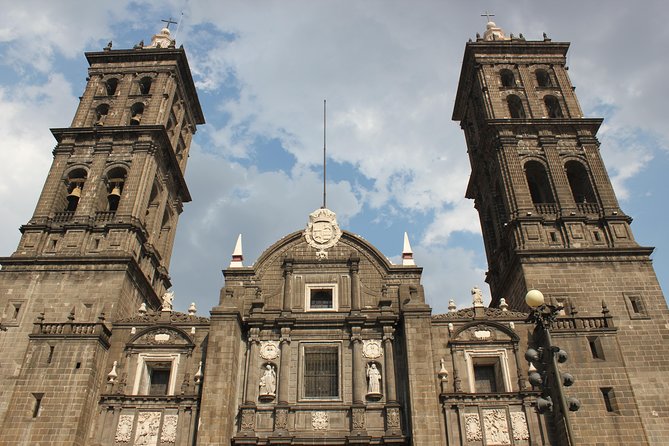
The tour runs about 2 to 3 hours, starting at 10:00 am. You’ll meet at Catedral de Puebla (C. 16 de Septiembre s/n, Centro histórico de Puebla) and finish at Árbol de la Vida (Av. Don Juan de Palafox y. Mendoza 12_2, Centro histórico).
There’s no private transportation included, so plan on moving on foot through the historic center. The tour is offered in English, and your ticket is mobile, which makes day-of check-in easier.
Group size is capped at 10 travelers, which matters more than you’d think. Smaller groups mean less time waiting at each stop and more chances to ask simple questions without a long line of people behind you.
Stop 1: Puebla Cathedral and the big-picture history
Your first stop is Puebla Cathedral, with about 10 minutes to learn the story of the space. This is a smart warm-up. Before you get into chapels, libraries, and markets, you get a baseline for what the city’s major religious buildings represented and why they mattered to everyday community life.
In practical terms, that first stop also helps you start orienting yourself in Puebla. You see the cathedral, you hear the key historical thread, and then you’re ready for the more specific baroque art ahead. If you’re the type who needs context before you snack, this opener will feel like the right kind of pacing.
Tip for you: if your attention span is short in museums and churches, focus on two things here—symbolic details and who would have used the space. That way the next stops connect instead of feeling random.
Stop 2: Capilla del Rosario and Santo Domingo’s baroque story
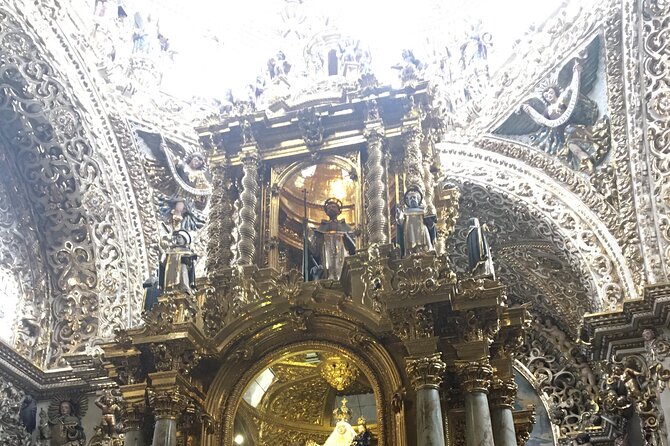
Next up are Capilla del Rosario and Templo de Santo Domingo, with about 15 minutes total. This is where the tour turns artistic: you’ll hear about baroque art and the dominicos’ history in Puebla.
Capilla del Rosario is famous for its intense visual style, and even when you only have a limited amount of time, you can still pick up the big ideas: baroque wasn’t meant to be quiet or distant. It was meant to communicate power, devotion, and identity through detail.
Then Templo de Santo Domingo adds the human layer. Dominicans weren’t just builders; they were part of the social and spiritual machinery of the city. When a guide ties that background to what you see in the chapel, you’re not just looking at art—you’re learning why people cared enough to craft it so carefully.
If you’re hoping for a slow, gallery-style visit, this isn’t that. But if you want the essentials—what to notice and how it connects to local culture—it fits perfectly.
Where the Street of Candles fits into the walk
The highlights include the Street of Candles, and that’s the kind of place you’ll appreciate more as you’re moving through the historic center. Candles belong to religious practice, but they also link to local customs and small daily rituals.
On a route like this, the Street of Candles works as a bridge. You go from grand architecture (cathedral and chapels) into street-level Puebla, where the city’s traditions feel more immediate. Even if you only get a brief look, it helps the tour feel like a living neighborhood instead of a checklist.
Practical note: streets in Centro Histórico can be uneven. Keep an eye on your footing so you can spend your mental energy on the sights and the tasting.




Stop 3: Biblioteca Palafoxiana and old documents you can actually picture
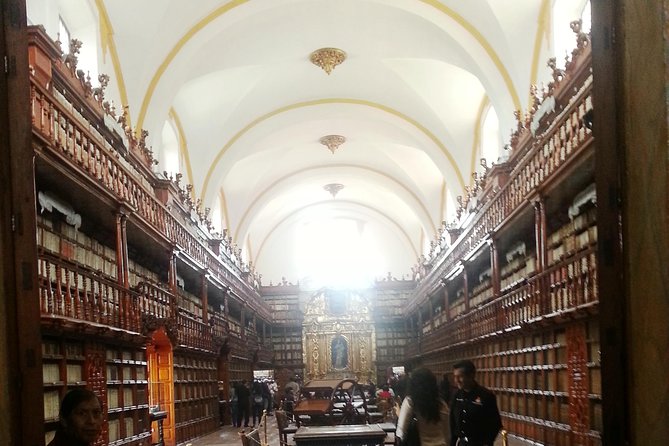
You’ll spend about 10 minutes at Biblioteca Palafoxiana, described as the first public library in America with ancient documents. This stop is short, but it carries a lot of meaning for how Puebla formed its public culture.
Here’s why I like this inclusion for a food tour: libraries change how communities share ideas. Food traditions don’t only survive through recipes; they survive through people writing things down, teaching, trading, and remembering. A library stop quietly expands the story from what was eaten to how knowledge moved.
Also, it breaks up the religious-heavy rhythm of the first half of the tour. After churches and baroque detail, you get a different kind of awe—paper, ink, and the weight of preserved history.
When you visit, I’d suggest you focus on the idea of “public access” to knowledge. It’s an easy concept to remember, and it makes the whole tour feel more connected by the time you reach the market.
Stop 4: Mercado el Parián for artisan gifts and local flavor
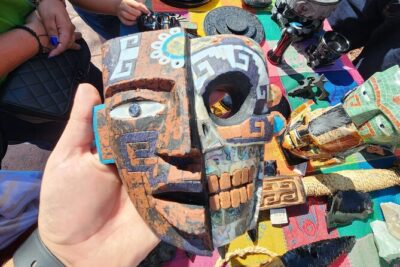
Next is Mercado el Parian (spelled as listed as Mercado el Parian), with about 5 minutes for local crafts. This is more of a quick pulse check than a long market browse, but that’s the point.
In a food-focused route, markets can swallow time. A short stop here gives you the local texture without letting you lose the day to wandering. You’ll see artisan items and get a sense of what people are making and selling in the historic center.
If you want to buy something later, this stop helps you spot what’s Puebla-specific. Look for patterns, materials, and craft styles that feel connected to the city’s identity rather than generic souvenirs.
Don’t expect deep negotiations or a long snack sampling window at this exact stop. It’s quick, but it keeps the route moving toward the sweets section.
Stop 5: La Calle de los Dulces and what you’ll taste
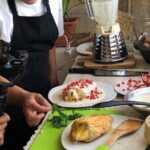
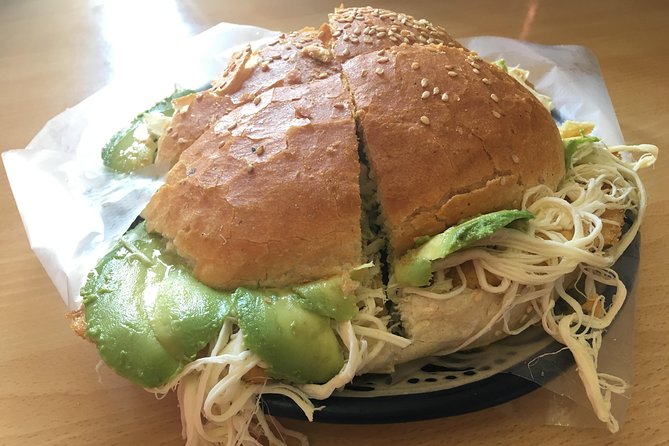
Then comes La Calle de los Dulces, where you’ll taste typical Puebla sweets. You’ll get about 10 minutes here, and admission tickets are included across the listed stops, so you can focus on sampling instead of paperwork.
This is the payoff section. By now you’ve seen big religious spaces and a historic library, and the tour brings that cultural thread back to the simplest thing Puebla is known for in everyday life: sweets.
Because it’s a tasting, I recommend you pace yourself. Start with smaller bites so you can enjoy variety, not just max out sugar quickly. And if you have a sweet tooth, this part will feel like your personal victory lap.
If you’re not a sweets-first person, don’t worry. The tour is built so the tasting isn’t the only moment that matters. The guide’s explanations make the flavors feel tied to place, not just dessert.
Pace, comfort, and keeping your day smooth
This is a walking tour in Puebla City’s historic center, designed for about 2–3 hours total. Most stops are intentionally short, from 5 minutes at Mercado el Parian to 15 minutes at Capilla del Rosario and Santo Domingo.
That means you should plan your expectations accordingly. You’re getting curated highlights, not a slow, unhurried day of deep reading in each building. If you like being guided to the right details, this pace is a plus.
Comfort tips that actually help:
- Wear shoes you trust on cobblestones.
- Bring a bottle of water if you tend to get thirsty while walking (the tour includes snacks, but water isn’t listed).
- Keep your phone ready for maps, especially if you arrive a few minutes early.
Value: what’s included and what you should budget for
The tour includes snacks. It also lists admission tickets included for the major stops in the itinerary, including Puebla Cathedral, Capilla del Rosario / Santo Domingo, Biblioteca Palafoxiana, and Mercado el Parian.
That’s a real value driver. Without having to pay separate entry fees for the key sights, you can stay focused on the experience rather than doing math mid-walk. It’s also why the tour holds up as a “half-day option” rather than a long, expensive museum day.
What’s not included: private transportation. Since you’re walking, you’re essentially buying a guided route and the tasting portion, not a car ride that drops you at each door.
If you’re trying to budget overall, plan for only what you personally choose to buy at markets or along the way. The tour itself covers the core tastings and entry to the planned sights.
Who this Puebla food walk suits best
This tour fits best if you:
- Want major Puebla landmarks covered in a short window
- Like history explained through food and daily culture, not through long lectures
- Prefer a small group with time for questions
- Enjoy tasting local treats at Calle de los Dulces rather than just looking
It also works well for first-time visitors to Puebla City who want a confident overview. You’ll leave with multiple famous names plus a sense of how churches, libraries, and markets connect in daily life.
If you’re the kind of traveler who needs lots of free time to wander independently, you may want to plan extra time after the tour, since the stops are brief by design.
Should you book Flavors of Puebla?
I’d book this if you want a practical Puebla experience that mixes the “wow” factor of landmarks with the joy of eating. The strongest part is the way the storytelling links the sights to local food culture, especially with Alejandra’s style of explaining things in a clear, connected way.
It’s also a good match for a half-day plan. You get several major stops in 2–3 hours, plus snacks and a real sweet moment on La Calle de los Dulces. Just go in knowing the timing is tight, so wear good shoes and accept that this is curated highlights, not a leisurely day.
If you want a long market day or deep, slow museum time, you may prefer a different format. But if you want your first Puebla walk to feel meaningful and tasty, this one makes it easy.
FAQ
How long is the Flavors of Puebla tour?
It lasts about 2 to 3 hours.
Where does the tour start?
It starts at Catedral de Puebla, C. 16 de Septiembre s/n, Centro histórico de Puebla, 72000.
Where does the tour end?
It ends at Árbol de la Vida, Av. Don Juan de Palafox y. Mendoza 12_2, Centro histórico de Puebla, 72000.
What time does it start?
The start time is 10:00 am.
Is the tour offered in English?
Yes, it’s offered in English.
What’s included in the tour price?
Snacks are included, and admission tickets are included for the listed stops.
What is not included?
Private transportation is not included.
How large is the group?
The tour has a maximum of 10 travelers.
Can I cancel for a full refund?
Yes, free cancellation is available. You must cancel at least 24 hours before the experience’s start time for a full refund.
Are service animals allowed?
Yes, service animals are allowed.