REVIEW · MEXICO CITY
CableCar Experience: Off the Beaten Path Mexico City Walking Tour
Book on Viator →Operated by Aibuker Trips · Bookable on Viator
Ride above CDMX, then eat where it happens.
This tour is a smart way to see Iztapalapa without treating it like a checklist. You start in the Centro area, take the Metro locals rely on, visit a local museum tied to a huge Holy Week tradition, and then float on the Cablebús above streets most visitors never see.
Two big things I like: you get real city life in motion, not just static sights, and you end with food plus pulque at a local bar. One thing to consider: you’re on public transit for a while, including a longer stretch that can feel crowded if you’re sensitive to rush-hour vibes.
You’ll be with a small group (max 9), it’s in English, and you start at 9:00 am. Plan on about 4 to 5 hours, with a pace that mixes walking, transit, and stops that actually explain what you’re seeing.
In This Review
- Key highlights worth your time
- Getting off the Centro treadmill in Iztapalapa
- Starting at Bellas Artes and using the Metro on purpose
- Alameda Central: a short start that sets the frame
- The Metro stretch into Iztapalapa: learn while you move
- Museum of Cultures by Iztapalapa Passion: Holy Week with community roots
- Constitución de 1917 to the sky: riding Cablebús Line 2
- Mercado Desarrollo Urbano Quetzalcóatl: tacos with local logic
- Pulquería La Hermosa Hortensia: the pulque finale
- Price, timing, and who this tour really fits
- Should you book this Iztapalapa Cablebús walking tour?
- FAQ
- How long is the tour, and what time does it start?
- Where does the tour start?
- Is the tour in English?
- What’s included in the price?
- Do I get to ride the Cablebús?
- Is pulque included for everyone?
- Are there vegetarian or vegan options?
- How big is the group?
- What happens if the weather is bad?
Key highlights worth your time
- Metro as the main character: you learn how mobility shapes daily life, not just how to swipe a ticket.
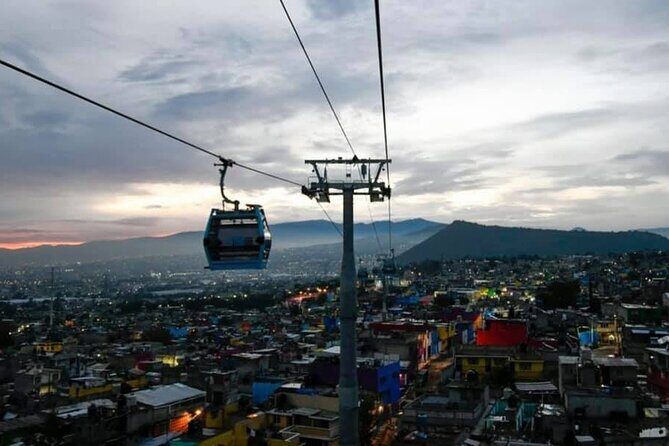
- Cablebús views that feel local: panoramic valley angles plus street art you’d never spot from street level.
- A community-led Holy Week tradition: the museum stop connects the area to one of the largest performances of its kind.
- Market taco stop: you get a classic local snack with time to taste, not just take photos.
- Pulquería finale: a pre-Hispanic drink served in a real neighborhood setting, with options for under 18.
Getting off the Centro treadmill in Iztapalapa

Most Mexico City sightseeing starts and ends in the same few neighborhoods. This tour is built to break that rhythm. The focus is Iztapalapa, a district with deep roots that still shows up in daily habits, community projects, and public spaces.
The pitch is not just “go somewhere else.” It’s: understand the place by using its actual systems. You’re not only walking through one small zone. You’re traveling across the city in a way that mirrors how people commute, shop, and go about their day.
That matters because Mexico City reads differently from inside it. From above, the scale is jaw-dropping. From street level, the details get human: murals, small local projects, and the street-food logic that locals follow without thinking.
And you’ll spend less time chasing famous landmarks and more time building a mental map of how the city works. That’s the value here.
You can also read our reviews of more walking tours in Mexico City


Starting at Bellas Artes and using the Metro on purpose
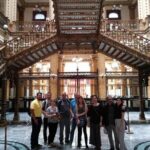
The meeting point is at the Museo del Palacio de Bellas Artes on Av. Juárez (near Eje Central Lázaro Cárdenas) in Centro. The start time is 9:00 am, which is helpful because you beat the worst heat and you’re more likely to find transit less chaotic.
Right away, you’ll switch from sightseeing mode into transit mode. You head toward Alameda Central, then you take the Metro as your backbone for reaching Iztapalapa. This is not random. The tour frames the Metro as part of the city’s daily engine, not just transportation.
If you’ve never ridden the Metro in Mexico City, this can be a confidence builder. If you already know the Metro, this becomes a guided way to notice the rhythm: where people move, how crowds cluster around stations, and how that flow connects neighborhoods.
One practical note: the tour runs about 4 to 5 hours, and a big chunk is transit. If you dislike being packed into trains, you’ll want to think of this as a culture-and-mobility tour first, and a “walk only” tour second.
Alameda Central: a short start that sets the frame
The stop at Alameda Central is quick—about 20 minutes—and that’s exactly right for this kind of day. You’re in the Centro area near the Palacio de Bellas Artes, then you transition toward the suburbs.
Even in a short window, this stop helps you understand the overall structure of the day: you begin downtown, then you work your way outward into Iztapalapa. It’s easier to appreciate what you’ll see later when you understand where the tour is steering you.
Admission here is listed as free, so it’s not a “pay extra to enter” moment. It’s more like a starting lesson. It also makes a good warm-up if your legs are still waking up.
The Metro stretch into Iztapalapa: learn while you move
This is the heart of the experience: about 2 hours 10 minutes on the Metro across Mexico City and into Iztapalapa. That’s a long time, and it’s also why the tour feels like more than a couple of highlights stitched together.
The tour’s theme during this section is mobility—how transport shapes everyday life in one of the world’s biggest cities. You’ll get explanations during the ride, which changes how you experience the commute. Instead of feeling like dead time, it becomes part of the story.
Here’s what to watch for: you’re traveling through very real neighborhood textures. Station life, street layouts around exits, and the mix of people moving with purpose. This is where you start noticing the difference between a tourist bubble and the city’s actual rhythm.
If you’re traveling with anyone who gets cranky with crowds, agree on a plan. Bring water, wear shoes you can stand in, and treat it like a city day, not a museum day. The benefit is you’ll reach Iztapalapa already understanding the route and why it matters.
Museum of Cultures by Iztapalapa Passion: Holy Week with community roots
Next comes a local museum stop: Museum of Cultures by Iztapalapa Passion, about 45 minutes, admission free. This is where the tour gives context for what you’re seeing in the district.
The big cultural anchor is a community-led Holy Week performance, described as an epic tradition and one of the largest of its kind in the world. The point of the museum visit isn’t to drop a random exhibit into the schedule. It connects the area’s identity to something lived, organized, and carried through by local effort.
Even if you’re not traveling at Holy Week, you still get the why behind the tradition. That matters because Iztapalapa isn’t just “a place with Cablebús views.” It has an active civic and cultural life.
This stop is also a nice pace reset. You move from transit into a contained space, so your body gets a breather. And it helps balance the day so it doesn’t become only movement and eating.
You can also read our reviews of more city tours in Mexico City

Constitución de 1917 to the sky: riding Cablebús Line 2
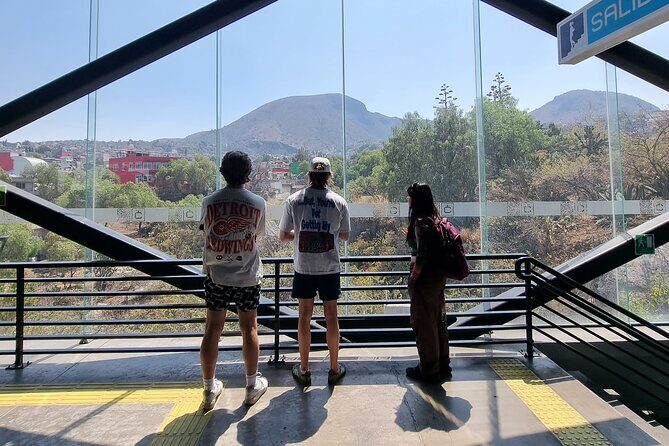
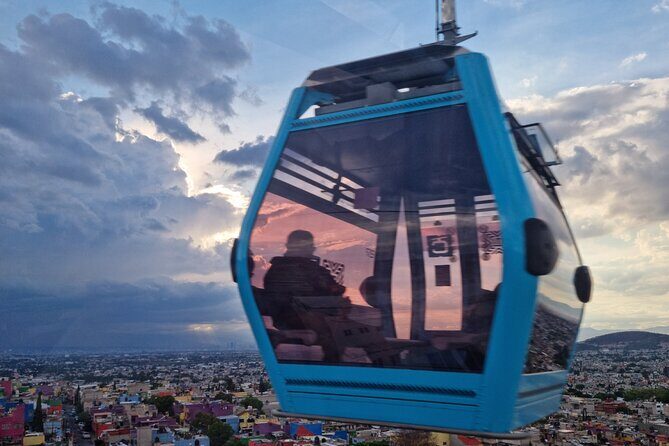
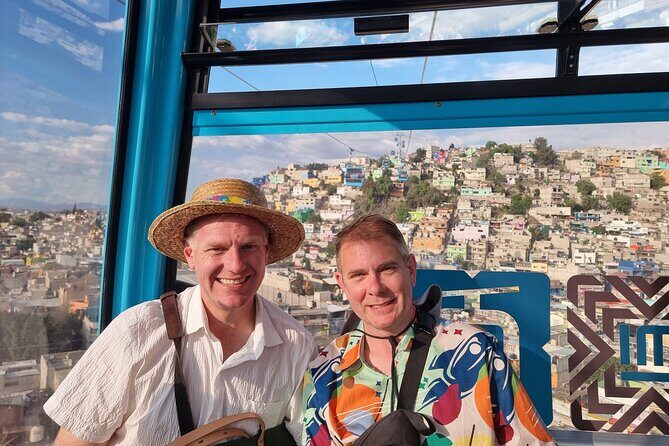
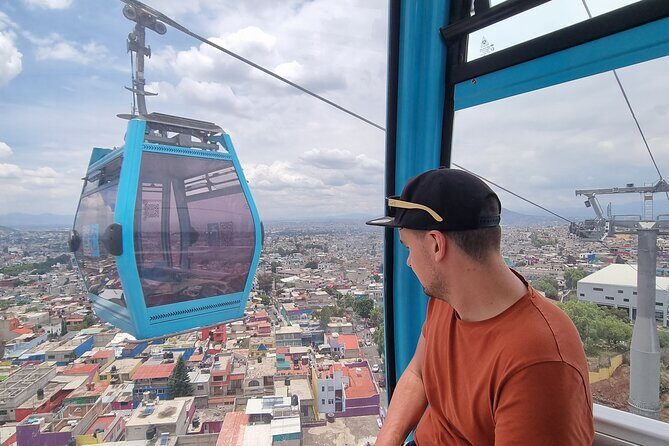
Then comes the main event. From Constitución de 1917 – Línea 2 del Cablebús, you’ll ride the cable car for about 45 minutes with admission included.
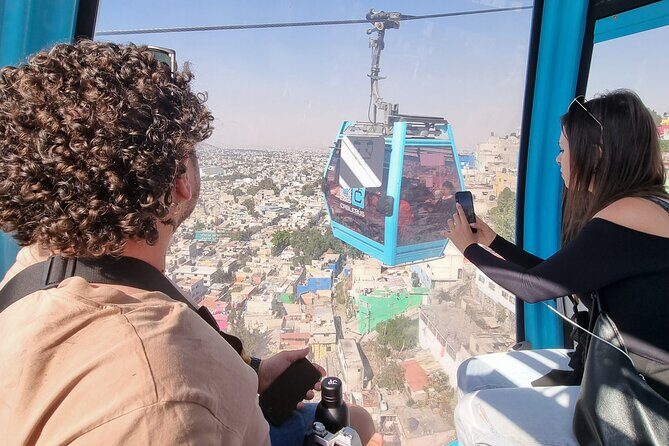
This is the segment that gives you that from-above perspective you can’t fake. The tour promises panoramic valley views, and the best part is the sense of scale. You’re seeing the city as a connected system, not isolated attractions.
From the Cablebús, you also get front-row access to colorful street art. It’s the kind of detail you’d miss from street level unless you already know where to look. Overhead, murals and community-made designs read like a map of local identity.
A fun surprise some visitors love: the sightlines can include unexpected public spaces, including libraries housed in repurposed aircraft. You may not catch everything, but the idea is the same—you’re looking at creativity and community infrastructure from a new angle.
One consideration: the Cablebús ride is time-limited. If you’re only hunting for the view, you might feel the segment is short. If you want the full story—transit, context, street art, and neighborhoods—this is the payoff moment.
Mercado Desarrollo Urbano Quetzalcóatl: tacos with local logic
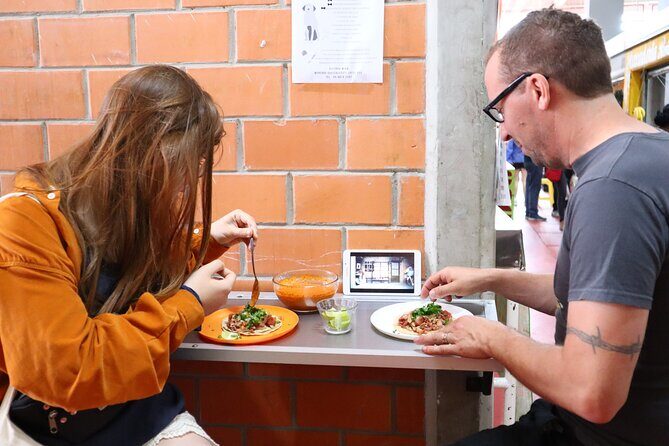
After the ride, you head to Mercado Desarrollo Urbano Quetzalcoatl for a 30-minute market stop. Admission is included as part of the experience, and the point is straightforward: eat a classic taco spot locals swear by.
This isn’t a sit-down restaurant meal with menus in your face. It’s market food, which often means better odds of getting something simple and done well. The tour gives you time to order, eat, and reset before the final leg of the day.
If you have dietary needs, there’s a heads-up already built in. The tour includes snacks and notes that vegetarian or vegan options can be provided if you let the operator know ahead of time. That’s the kind of detail that saves time when you’re hungry.
Market stops can vary by day, but you can expect the vibe to be local and practical. Bring cash if you like, but the tour includes what it includes—your main job is to show up hungry and curious.
Pulquería La Hermosa Hortensia: the pulque finale
To close things out, you’ll visit Pulquería La Hermosa Hortensia for about 30 minutes. This is where the tour introduces pulque as the pre-Hispanic drink of gods, and it’s served as part of the experience.
Here’s the important practical rule: pulque is only served to travelers over 18, and under 18 gets non-alcoholic drinks. That’s not just a formality. It affects what you’ll actually taste, so don’t assume everyone in your group will drink the same thing.
Some people love the mix of flavors they encounter, including versions flavored with peppermint. If you’re up for trying something unusual, this is one of the most memorable parts of the day because it’s both local and personal—one sip can turn into a story.
And yes, it’s a bar setting, but it’s also a cultural moment. You’re not just drinking. You’re finishing the tour with a drink that ties to the longer history of the region.
You’ll then return to the meeting point area, keeping the day from turning into a long one-way shuffle.
Price, timing, and who this tour really fits
The price is $50.81 per person, for 4 to 5 hours in a small group (max 9), in English, with mobile ticket support. It’s not the cheapest way to move around Iztapalapa, and it’s not trying to be.
For value, look at what’s included. You get transport tickets, the Cablebús ride (the main paid add-on), and food/drink stops including Mexican snacks and pulque. Several elements are listed as free, like the Alameda Central start and the museum admission.
When you add it up, you’re paying for more than rides. You’re paying for a guided structure that makes the Metro and Cablebús feel like more than transit. The tour also gives you context for what you’re seeing in Iztapalapa, so you leave with a clearer sense of how the city functions.
The main drawback is time and transit. The long Metro stretch can be tiring, and there’s mention of rush-hour crowding in at least one case. If your ideal day is short walks and quick museum entrances, you might find the transit-heavy rhythm a mismatch.
Who should book? I’d say you’ll enjoy this most if you:
- like city systems and how people actually get around (Metro + Cablebús)
- want food that’s simple and local, not just trendy
- enjoy cultural context tied to real community traditions
- are comfortable with a longer day that mixes walking, trains, and viewpoints
Who might skip? If you only want the cable car view and you hate being in crowds for extended periods, you can plan a simpler DIY ride. But if you want the full Iztapalapa story, this package makes that easier.
Should you book this Iztapalapa Cablebús walking tour?
Yes—if your goal is to see Mexico City as a living city, not a postcard. The combination of Metro travel, a local museum stop tied to Holy Week tradition, a Cablebús ride with real views, plus market food and a pulque finale is a strong use of half a day.
Book it especially if you’re the kind of person who enjoys figuring out neighborhoods by moving through them. The small group size also helps keep it personal without turning it into a chaotic stampede.
Skip it if you’re sensitive to longer transit time or crowded trains, and you’d rather do a quick ride and spend your energy elsewhere. In that case, you’ll probably feel the Cablebús segment is only part of a longer day.
If you’re deciding between “just the view” and “the whole working-city experience,” this tour leans hard toward the second one—and that’s exactly why people rate it so highly.
FAQ
How long is the tour, and what time does it start?
It runs about 4 to 5 hours and starts at 9:00 am.
Where does the tour start?
It starts at Museo del Palacio de Bellas Artes, Av. Juárez s/n esq, Eje Central Lázaro Cárdenas Col, Colonia Centro, Centro, Cuauhtémoc, 06050 Ciudad de México.
Is the tour in English?
Yes, it’s offered in English.
What’s included in the price?
The tour includes transport tickets, the Cablebús ride, Mexican snacks, and alcoholic beverages (pulque) for those over 18. Admission ticket items listed as free are part of the itinerary, and the Cablebús segment is included.
Do I get to ride the Cablebús?
Yes. You’ll ride the Cablebús Line 2 at Constitución de 1917 for about 45 minutes, and it’s included.
Is pulque included for everyone?
Pulque is served only to people over 18. If someone is under 18, the tour provides other non-alcoholic drinks.
Are there vegetarian or vegan options?
Yes. Vegetarian or vegan options for snacks can be provided if you tell the operator about your diet.
How big is the group?
The maximum group size is 9 travelers.
What happens if the weather is bad?
This experience requires good weather. If it’s canceled due to poor weather, you’ll be offered a different date or a full refund.