REVIEW · OAXACA CITY
Bicycle Tour through Oaxaca learning about its Urban Art and History
Book on Viator →Bookable on Viator
Street art in Oaxaca makes a lot more sense on a bike. This 2-hour guided ride links murals, old neighborhoods, and key historic stops with lots of photo breaks. I like that it’s built around Oaxaca City’s street art scene in Jalatlaco and Xochimilco, then ties that art to architecture and local celebrations.
My favorite part is the mix of urban art plus history, led by English-speaking guide Daniel, who keeps things friendly and focused. The other big win: you get a real sense of the city layout fast, without wrestling buses or walking uphill. One thing to keep in mind is the road mix—cobblestones and city traffic can feel a bit intense, and setup time can take a chunk of the scheduled window.
In This Review
- Key Highlights You’ll Care About
- Urban Art in Oaxaca City by Bicycle: What This Tour Feels Like
- Where You Start at Bike & Roadtrips Oaxaca and How the Ride Works
- Stop 1: Oaxaca City Streets, Murals, and Breaks for Photos
- Stop 2: Templo de San Matías Jalatlaco and Neighborhood Day-of-the-Dead Energy
- Stop 3: Los Arquitos de Xochimilco and the San Felipe Aqueduct Story
- Stop 4: Cerro del Fortín Viewpoint and the Benito Juárez Passing Moment
- Stop 5: Santo Domingo de Guzmán Complex and New Spain Baroque Details
- Pace, Safety, and Why the Guide Matters on Cobblestones
- What You Actually Learn: Art, Architecture, and City Planning Links
- Price Value Check: Why $34.65 Feels Fair
- Who This Tour Suits Best (and Who Should Skip It)
- Should You Book This Oaxaca City Street Art Bike Tour?
- FAQ
- FAQ
- How long is the bicycle tour through Oaxaca City?
- What’s the price per person?
- Is the tour offered in English?
- What’s included in the tour price?
- What is the meeting point address?
- Are any entry tickets required for the listed stops?
- Do I need to bring bottled water?
- What happens if weather is poor?
- What’s the group size limit?
Key Highlights You’ll Care About
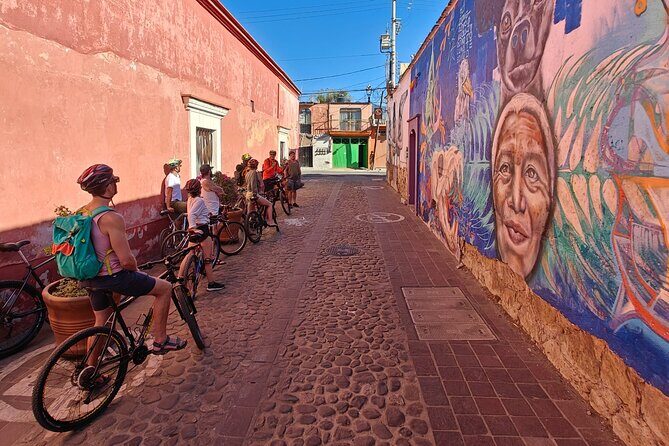
- Old-neighborhood street art walking-at-bike-speed in Jalatlaco and Xochimilco, made for photos
- Templo de San Matías Jalatlaco and its Day of the Dead style murals and local neighborhood energy
- Los Arquitos de Xochimilco: colonial arches tied to the San Felipe aqueduct story
- Cerro del Fortín viewpoint time when the group’s legs and energy allow it
- Santo Domingo de Guzmán complex with baroque New Spain architecture and cultural center stops
- Small group of up to 8 plus technical assistance and helmet use
Urban Art in Oaxaca City by Bicycle: What This Tour Feels Like
This is an Oaxaca City street art bike tour designed for people who want more than a quick highlight loop. You’ll ride through the older parts of town, stop often, and look closely at murals, façades, and neighborhood details that you’d probably miss if you only popped into museums.
I especially like the way the stops are spaced for understanding. You’re not just pointing at painted walls. Each area connects to something deeper—planned neighborhood layout, church history, and how Oaxaca’s traditions show up in public art.
It also feels like a smart value play. At $34.65 per person for a guided ride that includes a bicycle, helmet, and assistance, you’re paying for local expertise and the time-saving route planning. Just remember one practical detail: bottled water isn’t included, so plan to grab some beforehand.
You can also read our reviews of more historical tours in Oaxaca City

Where You Start at Bike & Roadtrips Oaxaca and How the Ride Works
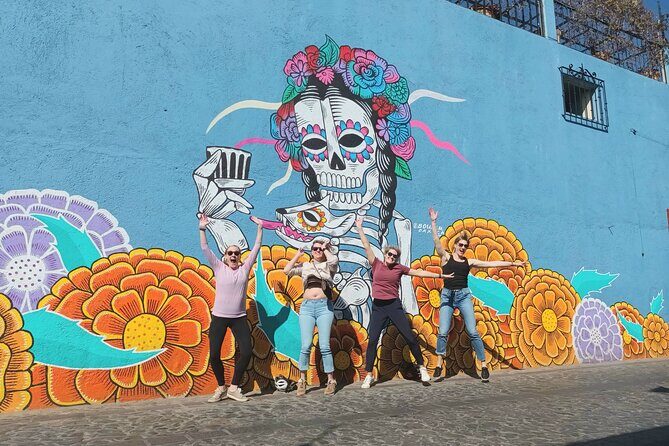
You’ll meet at Bike & Roadtrips Oaxaca, on C. de Mariano Abasolo 315, Ruta Independencia, Centro (near public transportation). The tour ends back at the same meeting point, so you don’t have to figure out your way home with wet shoes and sunburnt calves.
Bikes are provided in multiple sizes—S, M, L, and XL—and you’ll get a helmet. There’s also technical assistance, which matters when you’re rolling over rough streets and cobblestones where a bad tire moment can turn into a mood-killer.
A quick heads-up from real-world experience: the planned duration is about 2 hours, but bike setup can take time. One review noted about 25 minutes getting bikes sorted, which means you may get closer to an hour and a half of actual guided riding and stopping on-route.
Stop 1: Oaxaca City Streets, Murals, and Breaks for Photos
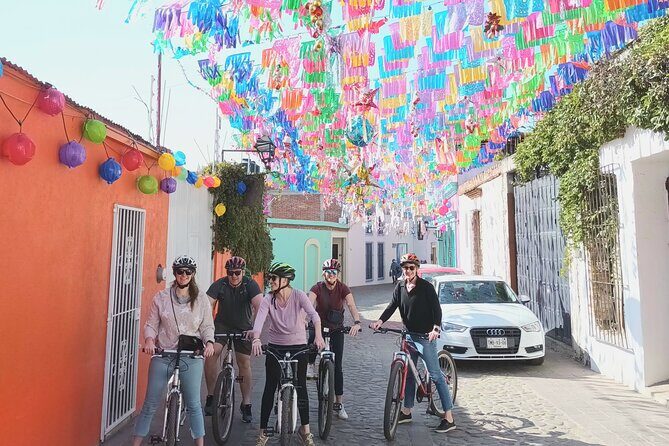
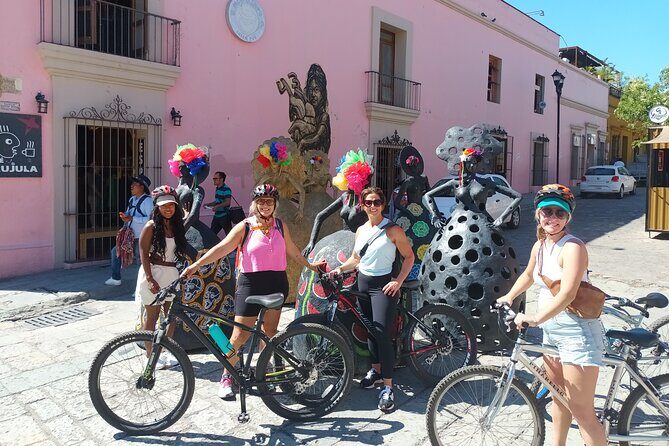
The tour begins with a ride through the most representative places of Oaxaca City by bicycle, focused on picturesque streets and street art. The guiding idea is simple: you’ll see murals where they live, not behind a ticket gate.
This part is built around multiple breaks to observe art and take photos. That’s not fluff. In Oaxaca, a mural can be a whole page of meaning—symbols, colors, and references that reward slower looking. On bike, you get the momentum of travel, plus the pause you need to actually notice what you’re seeing.
What I’d watch for: cobblestones and narrow turns. Even if the route is manageable, your comfort depends on the street surface and traffic pace. If you’re sensitive to that, tell your guide early and take their lead on how to ride through tighter spots.
Stop 2: Templo de San Matías Jalatlaco and Neighborhood Day-of-the-Dead Energy
Next up is Templo de San Matías Jalatlaco, in the Jalatlaco neighborhood. This area is known for colorful murals linked to Day of the Dead festivities, plus traditional comparsas (neighborhood performance traditions). The result is a place where art, faith, and community identity overlap.
You’ll spend about 20 minutes here, with free admission. This stop works best when you’re not treating it like a quick photo wall. Look at how the murals frame the architecture and how the church location sits inside the neighborhood fabric.
One practical note: expect that you’ll spend some of the time outside and in the nearby streets, since the vibe is about neighborhood context as much as the building itself. If you like understanding why a place looks the way it looks, you’ll get more out of this stop.
Stop 3: Los Arquitos de Xochimilco and the San Felipe Aqueduct Story
Then the tour shifts to Xochimilco, one of the oldest neighborhoods in the city, founded in 1486 by Xochimilca–Aztec warriors. What you’re really chasing here is older layers of Oaxaca history showing up in streets and buildings, not just in textbooks.
You’ll see Los Arquitos de Xochimilco, the colorful streets and old houses, and those colonial arches connected to the San Felipe aqueduct from the mid-eighteenth century. It’s a standout stop because it’s architectural proof of how water, city planning, and daily life were linked.
You get about 20 minutes for this area, and admission is also free. The best approach is to slow down and focus on details—arches, materials, and how the structures line up with the street. The guide’s job here is to connect the physical features to the historical purpose.
Why this matters for you: when you understand why something was built, the mural-to-street-art experience feels less random and more like one ongoing city conversation.

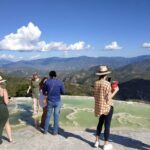
Stop 4: Cerro del Fortín Viewpoint and the Benito Juárez Passing Moment
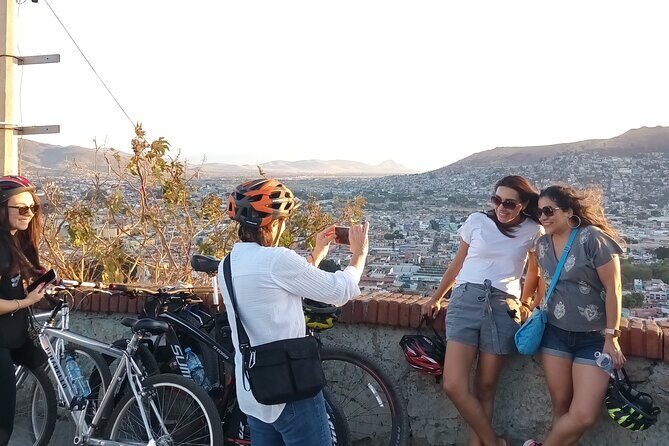
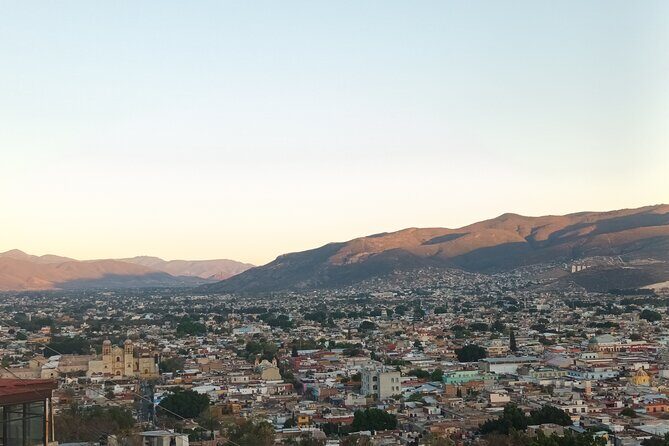
Depending on the group’s physical condition, the tour may include a stop at Cerro del Fortín, near the center of Oaxaca City. You’ll aim for panoramic city views that are great for photos, and the timing can be perfect for softer light when conditions allow.
This portion is about 30 minutes, and it’s free. Even if you don’t go all the way for the full climb, you’ll still likely get the point: Oaxaca City’s layout is easier to understand from above.
Along the way, the route passes by two notable sights: the Oaxaca crafts house and the home of Benito Juárez García, a major emblematic figure and former president of Mexico. These moments are quick, but they’re useful context. Oaxaca’s art scene isn’t separate from its political and cultural identity.
Drawback to plan around: if your legs are tired, this is the stop most likely to change based on group energy. Listen to your guide and don’t force it. The whole tour is designed around stopping and looking, not speed.
Stop 5: Santo Domingo de Guzmán Complex and New Spain Baroque Details
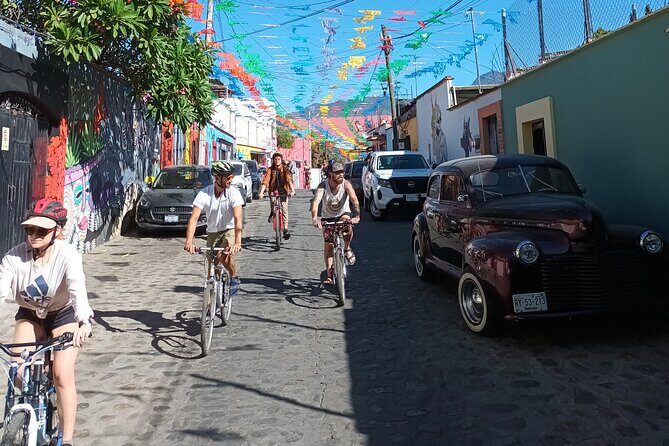
The final major stop is Templo de Santo Domingo de Guzmán, one of the most beautiful churches in Latin America, according to the tour description. Today, it functions as a cultural complex, and that’s why this ending stop can feel like a reward rather than just another checkpoint.
You’ll explore the Ex-convent and the Museum of the Cultures of Oaxaca, plus the Ethnobotanical Garden, the Burgoa Library, and the Public Newspaper Archive. The complex has had many uses since construction began in 1570, which helps connect what you saw in street art earlier to longer building history.
The architecture is New Spain baroque, and the site is recognized as Cultural Heritage of Humanity (as stated in the tour info). There’s also a fun possibility: with luck, you might see a street calenda or wedding-style celebration, since the party scene here can spill into the streets.
You’ll spend about 20 minutes, with free admission. If you’re the kind of person who reads stonework and church façades like a text, you’ll enjoy this stop. If you prefer murals over architecture, still give it a few minutes. The baroque details help explain why Oaxaca’s art feels so theatrical in both public squares and painted walls.
Pace, Safety, and Why the Guide Matters on Cobblestones
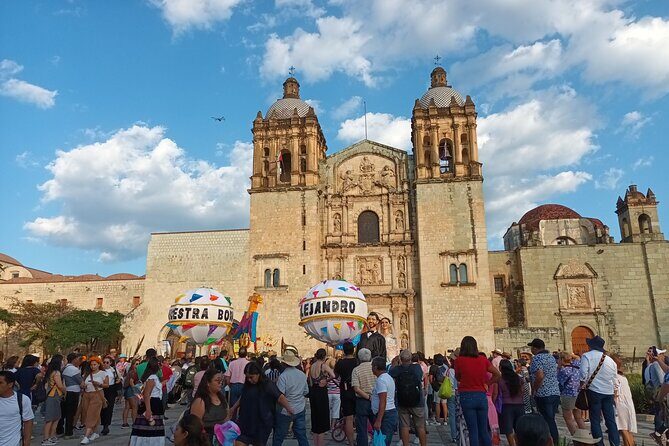
This tour is short, but it’s not always smooth-sailing. Oaxaca City’s cobblestones can be a little unforgiving, and the route goes through real city streets where cars and bikes share space.
That said, the most consistent theme from real experiences is that guide Daniel makes people feel safe and relaxed. Reviews highlight that his English is excellent and that he stays attentive to the group. That’s a big deal on a ride like this, where confidence can change how much you enjoy the art stops.
Daniel also brings more than just route knowledge. People mention that he explains both the street art and the city history behind it, and he’s friendly in a way that makes you feel like you’re being shown around, not herded through.
One more plus: a few reviews specifically praised the bike quality and safety equipment (helmets, supportive setup). If you show up ready to ride and follow the guide’s instructions, the experience is typically very manageable.
What You Actually Learn: Art, Architecture, and City Planning Links
The tour’s real education isn’t in lectures. It’s in connections.
You’ll learn how murals relate to local traditions like Day of the Dead, and how that shows up on church-adjacent streets and neighborhood walls. You’ll see pre-colonial and colonial layers in Xochimilco, including how the aqueduct-era arches still shape what you see today.
Then you’ll cap it with Santo Domingo de Guzmán, where baroque architecture and cultural institutions show another side of Oaxaca’s identity. In a little over two hours, you get a starting framework for the whole city.
If you book this early in your trip, it can help you navigate the rest of Oaxaca City with better instincts. You’ll start recognizing neighborhoods, street patterns, and which kinds of art are likely to be found where.
Price Value Check: Why $34.65 Feels Fair
At $34.65, you’re getting more than a bicycle rental. The tour includes a local guide, helmet, bicycle use, and technical assistance. You’re also paying for a planned route that hits multiple neighborhoods with free stops instead of you piecing it together yourself.
For comparison, bike rentals alone can be pricey in many cities once you factor in time, and self-guided walking can burn daylight without giving you context. Here, your money goes toward interpretation—what the murals reference, why the buildings look the way they do, and how the neighborhoods fit together.
The only easy value-trap would be showing up without planning for water, since bottled water isn’t included. That’s not a dealbreaker; just don’t assume it’ll appear during the ride.
Who This Tour Suits Best (and Who Should Skip It)
This is a great match if you:
- want an efficient introduction to Oaxaca City urban art in Jalatlaco and Xochimilco
- like biking that includes stops for photos and explanations
- want a guided route for a first visit, especially if you’re not sure where to go
It’s not ideal if you:
- strongly dislike cobblestones or the idea of riding in active city traffic
- need a very slow, mostly flat route (Cerro del Fortín can vary by group energy)
- want a long museum-style visit (this is short stop-and-see timing)
If you’re flexible and you’re okay following the guide’s safety pace, it’s one of the more fun and practical ways to see Oaxaca City’s visual storytelling.
Should You Book This Oaxaca City Street Art Bike Tour?
I’d book it if you want a short, high-impact introduction to Oaxaca City that blends murals and history without wasting time. The small group size and the fact that Daniel guides in excellent English are real advantages, and the ride-to-stop structure makes it easier to actually notice art details instead of rushing past them.
I’d skip it or at least reconsider if cobblestones and traffic make you anxious. You’ll still have a good tour if you’re cautious and follow instructions, but this isn’t a “relax on smooth paths” experience.
If you’re arriving in Oaxaca City with just one afternoon to orient yourself, this is the kind of booking that can pay off for days afterward.
FAQ
FAQ
How long is the bicycle tour through Oaxaca City?
It runs for about 2 hours (approx.).
What’s the price per person?
The price is $34.65 per person.
Is the tour offered in English?
Yes, it’s offered in English.
What’s included in the tour price?
You get bicycle use, a helmet, a local guide, and technical assistance.
What is the meeting point address?
You start at Bike & Roadtrips Oaxaca, C. de Mariano Abasolo 315, Ruta Independencia, Centro, 68000 Oaxaca de Juárez, Oax., Mexico.
Are any entry tickets required for the listed stops?
The stops listed include free admission tickets.
Do I need to bring bottled water?
Bottled water is not included, so you’ll want to bring or buy water.
What happens if weather is poor?
This experience requires good weather. If it’s canceled due to poor weather, you’ll be offered a different date or a full refund.
What’s the group size limit?
The tour/activity has a maximum of 8 travelers.