REVIEW · MEXICO CITY
2-Day Guadalupe Shrine, Teotihuacan Pyramids and Xochimilco
Book on Viator →Operated by Mexitours · Bookable on Viator
Pyramids and boats in two packed days. What makes this trip work is the small-group size (max 15) and the fact that you’re hitting three UNESCO World Heritage Sites with guided context instead of just snapping photos and guessing. I also love the all-inclusive transportation and the included admissions, because it cuts down on planning stress. The one thing to think about is the tour is a shared bilingual format, so the English delivery can vary depending on how many English vs Spanish speakers are on your bus/van.
Day 1 pairs two big “why people care” stops: the spiritual pull of the Basilica de Santa Maria de Guadalupe and the mind-bending scale of Teotihuacan. Day 2 mixes panoramic city sights with colonial Coyoacán and a ride through the Xochimilco canals by Aztec boat—exactly the kind of combo that’s hard to pull off smoothly on your own in two days.
If you’re sensitive to timing or want perfectly fluent English the whole day, this might not feel like your best fit in a shared setup. On the positive side, the guide commentary is a main selling point here, and when it lands well, it makes these sites click.
In This Review
- Key highlights worth your attention
- Small-group comfort, shared language, and what to expect
- Day 1: Square of the Three Cultures to Guadalupe and Teotihuacan
- UNESCO-scale pyramids without the scramble
- Back in Mexico City: making time for the Basilica de Guadalupe
- Day 2: Ciudad Universitaria panoramas and what those “city sights” add up to
- Coyoacán and Saint John the Baptist: colonial flavor with a calm pace
- Xochimilco by Aztec boat: the world heritage experience with real crowds
- How much value you get for $94 over two days
- Who this tour suits best (and who should adjust)
- Should you book the 2-Day Guadalupe, Teotihuacan and Xochimilco tour?
- FAQ
- What is the price of the tour?
- How long is the tour?
- What time does the tour start and when does it end?
- How many people are in the group?
- Is this tour offered only in English?
- Are admission tickets included?
- Where are the hotel pickup areas?
- When does the Xochimilco part run?
- Do I need a printed ticket?
Key highlights worth your attention
- Max 15 people means less time waiting and more time hearing the guide
- Roundtrip hotel transport from Polanco, Zona Rosa, Centro, and Reforma keeps you off the metro hassle
- UNESCO trifecta: Teotihuacan, Ciudad Universitaria (UNAM), and Xochimilco
- Admission tickets included for the stops listed in the tour
- Bilingual guided commentary on a shared service, not a private language setup
- Day 1 obsidian/arts stop adds something tactile beyond monuments
Small-group comfort, shared language, and what to expect
This tour is built around comfort and convenience. You start at 9:00 am and you’re back at the meeting point later—return time can shift with traffic and group size. That matters because Mexico City traffic is real. The good news is that your transport is included, so you’re not stuck juggling rides plus tickets plus lines.
The group limit—up to 15 travelers—is one of the best things here. Small groups tend to mean quicker boarding, easier communication, and fewer chances to feel lost when you’re moving between sites.
Now for the practical reality: this is a shared bilingual tour. The company’s stated approach is that you’ll have commentary in both English and Spanish depending on the group mix. In other words, you might spend more time hearing one language than the other, especially if you’re grouped with more Spanish speakers. If you can handle some back-and-forth between languages, it’s fine. If you need consistently fluent English at all times, I’d ask upfront whether there’s an option that is more language-focused (the provider notes there are shared and private tour types).
You can also read our reviews of more tours and experiences in Mexico City


Day 1: Square of the Three Cultures to Guadalupe and Teotihuacan
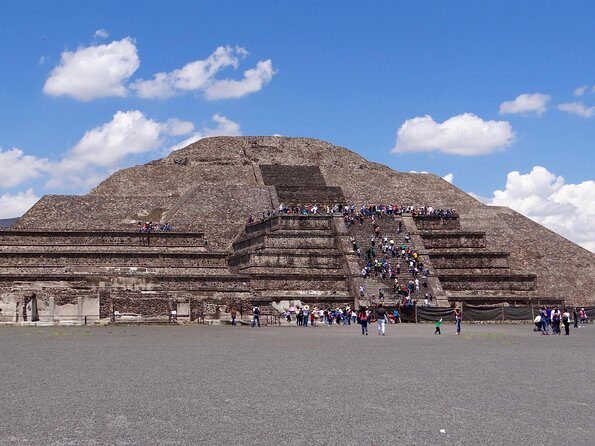
Day 1 is a strong one because it starts with a place where you can visually feel layers of Mexico. You begin near the Plaza de las Tres Culturas, where Mexico City’s past and present sit close together. It’s a great warm-up. Before you hit the pyramids, you’re already primed to notice how different eras coexist.
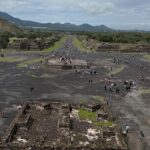
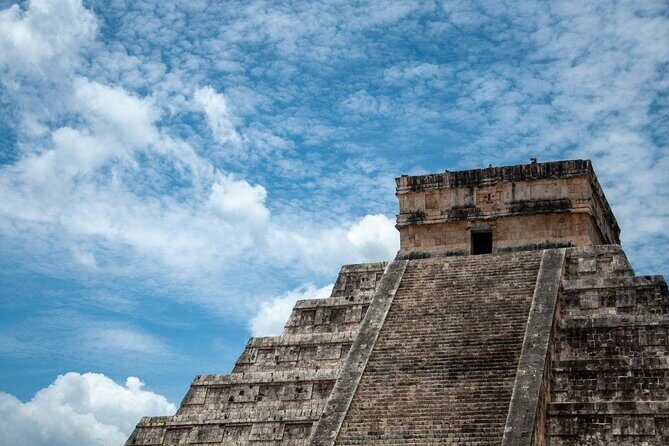
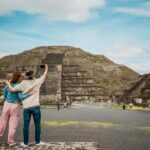
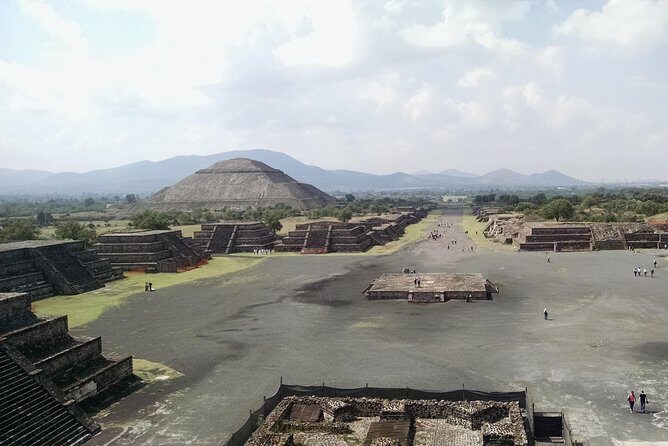
Then you move into Teotihuacan. The itinerary sets you up for a proper circuit: you’re not just walking past the obvious shapes. You’re meant to see the Pyramids of the Sun and the Moon, the Temple of Quetzalpapalotl, the Citadel, and the Avenue of the Dead.
One detail I like is the inclusion of an arts & crafts center on the way. This is where the tour can add value that’s hard to recreate if you go solo. You’re getting more than monuments; you’re getting hands-on context for what people still make and value today. One guide-led stop described in a prior experience is an obsidian-focused workshop/factory stop, where you can see and compare quality—useful if you’ve ever wondered why some obsidian looks sharper or more colorful than what you see later in regular markets.
UNESCO-scale pyramids without the scramble
Here’s the benefit of a guided plan: Teotihuacan is huge, and it can get confusing fast if you’re relying on guesswork. With a guide, you get structure for what you’re seeing. That’s the difference between visiting Teotihuacan and actually understanding it enough to appreciate the layout.
The stops listed in the tour line up with the core features people want to recognize:
- Sun and Moon Pyramids for the big first impression
- Quetzalpapalotl for a more specific temple name and design
- Citadel so you understand the ceremonial complex isn’t random
- Avenue of the Dead to connect the whole site into one walking story
You’ll also be moving between viewpoints, so keep your expectations realistic. This is not a slow museum stroll. It’s walking, heat, sun, and stairs in spots, so bring the usual survival kit: water, sun protection, and shoes you trust.
Back in Mexico City: making time for the Basilica de Guadalupe
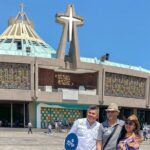
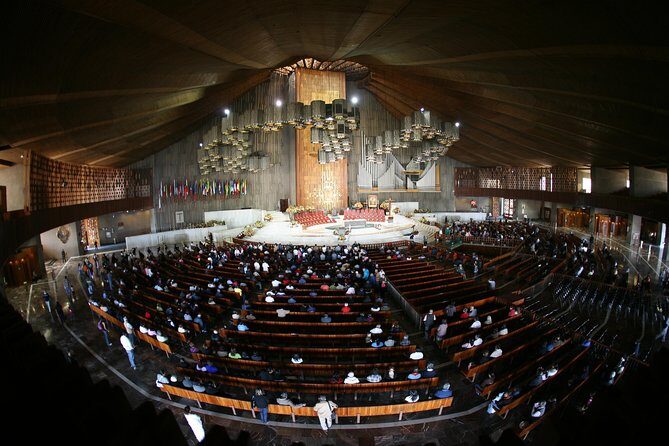
After Teotihuacan, the day pivots to something completely different: the Basilica of Our Lady of Guadalupe. This is a big reason people come to Mexico City, and the timing works well. Seeing Teotihuacan first gives you a sense of deep time. Then Guadalupe brings the experience into living faith and modern devotion.
You’re not just passing by a church facade here. The tour makes a specific stop for the basilica, with admission included. If you want a moment where the setting is still emotional and not just architectural, this stop is one of the strongest reasons to do the combo.
Practical note: even when a site is emotionally meaningful, you still need to plan for crowds. You’ll want a little patience inside and around entrances.
Day 2: Ciudad Universitaria panoramas and what those “city sights” add up to
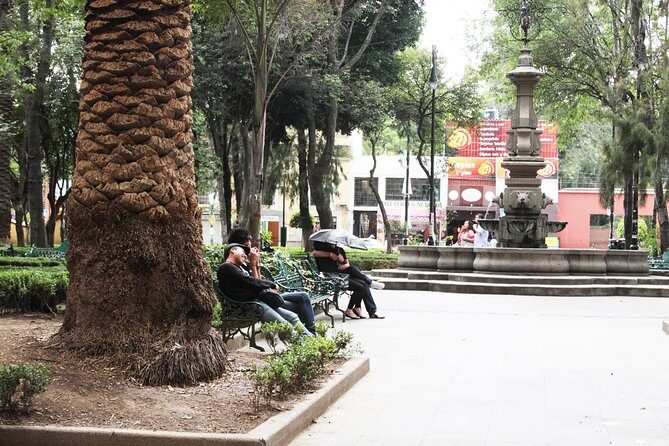
Day 2 starts with a panoramic tour. The big theme is seeing Mexico City through landmarks that often get ignored if you only chase museums. The itinerary lists:
- World Trade Center
- Siqueiros Cultural Polyforum
- Mexico Bullring
- Theater of the Insurgentes
- Olympic Stadium
- University City (Ciudad Universitaria)
- Lava gardens of San Ángel
That’s a lot of names, so here’s how to make sense of it: you’re building a mental map of the city’s scale and design. This helps later when you’re traveling on your own, because you recognize streets and districts instead of staring at random buildings.
Ciudad Universitaria is also a UNESCO site, so it’s more than a scenic bus ride. In practice, this is where you’re set up to connect art and modern architecture. In a prior experience, a stop included the Frida Kahlo Museum area near this zone, and the person described that tickets/reservations can be required because it’s popular and timed entry is expected. The key takeaway for you is simple: if the day includes the Frida Kahlo Museum stop, plan around ticket timing so you’re not stuck outside waiting.
Also, you might not get off the vehicle for every “point of interest.” One experience described a quick view from the bus/van with limited or no getting out at certain stadium-level stops. That doesn’t mean the tour is bad—it means your time is being managed for other stops that need real walking time.



Coyoacán and Saint John the Baptist: colonial flavor with a calm pace
After the university-area panoramas, you head toward Coyoacán and the colonial district. The itinerary points to XVI century mansions and the church of Saint John The Baptist (where admission is included in the tour setup).
Coyoacán is one of those districts where the pace makes the difference. You’re not just doing checklists. You’re stepping into a place where architecture, plazas, and church interiors give you a different texture than the modern city sights.
And if you’re the type who likes to wander with purpose, this is one of the better segments to slow down a bit. Look for shaded spots, take your photos, then let yourself drift through the area instead of treating it like a timed sprint.
Xochimilco by Aztec boat: the world heritage experience with real crowds
Then comes the part people either love or find frustrating: Xochimilco.
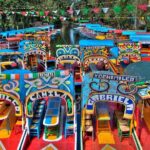
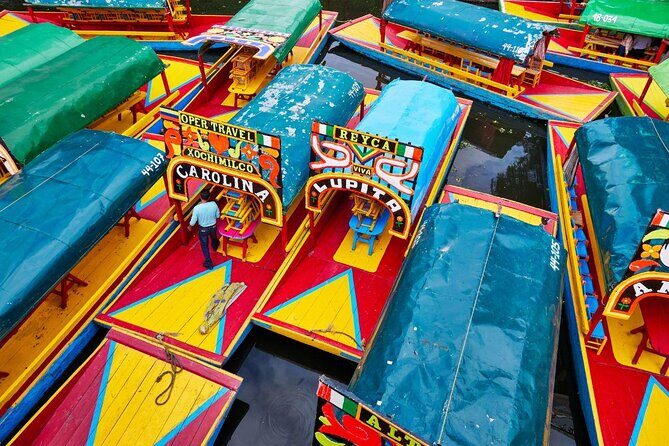
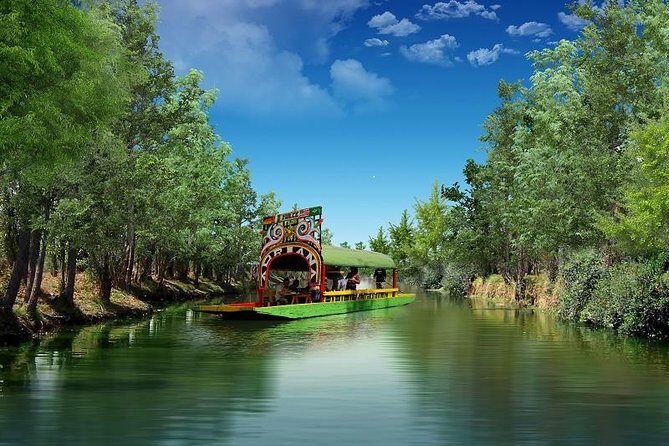
The tour takes you to the canals for a ride on an Aztec boat. This is a UNESCO World Heritage Site, and it’s meant to feel like a living cultural scene. The itinerary schedules Xochimilco in two possible ways depending on the day:
- Wednesday at 14:00
- Sunday morning at 09:00
So when you plan your trip dates, you’re not just choosing a calendar slot. You’re choosing the time of day and likely the crowd level. One negative experience described it as extremely packed, with heavy boat traffic and a long wait to get moving. That tracks with how Xochimilco works on busy days: you’re in a canal system shared by lots of boats at once.
Here’s what I’d tell you to do to make the ride feel worth it:
- Go in expecting slow, crowded canal time, not a fast scenic cruise
- Plan to be outside for stretches, so bring water and sun protection
- If food is offered by vendors, treat it as optional rather than automatic
Also, the boat ride is encouraged to be interactive in the usual tourist way—music, vendors, and lots happening around you. If you’re hoping for a quiet, contemplative canal experience, pick your day carefully and manage expectations.
How much value you get for $94 over two days
At $94 per person for about two days, the value comes from what’s bundled.
You’re not just paying for a guide’s narration. You’re getting:
- Roundtrip transportation from select hotel zones (Polanco, Zona Rosa, Centro, Reforma)
- Admission tickets included for the listed stops
- A guided route that strings together major UNESCO sites
If you priced this out on your own—tickets plus entry fees plus transport plus the time you’d spend researching—you’d likely feel the savings. The other big value piece is time efficiency. Two days is tight. This tour turns those two days into a workable sequence: Teotihuacan and Guadalupe on Day 1, then UNESCO university area plus Coyoacán plus Xochimilco on Day 2.
Where the value can drop is language fit. If you end up with more Spanish than English for most of the day, you may feel like you paid for the experience but not for the interpretation you wanted. In shared bilingual tours, that risk is real. The good part is that the tour is designed for small group size, so it’s not a giant bus where you lose everything.
Who this tour suits best (and who should adjust)
This is a great match if you:
- Want UNESCO sites in a tight schedule without juggling logistics
- Like guided context so you can understand what you’re seeing at Teotihuacan and Ciudad Universitaria
- Prefer not to plan hotel pickup routes across Mexico City
This is less ideal if you:
- Need consistently fluent English at all times and get irritated when the group language balance shifts
- Want long, freeform walking time in every location (this route moves with a schedule)
- Are very sensitive to crowding at Xochimilco, especially on busy days
Should you book the 2-Day Guadalupe, Teotihuacan and Xochimilco tour?
Yes, if you’re excited by the big-picture combo: Guadalupe + Teotihuacan + UNESCO university + Xochimilco with included transport and admissions. I like that the plan is structured and that the group stays small.
Before you book, do one quick mental check: shared bilingual tours are great when your expectations match how they run. If your top priority is English-only interpretation, consider asking about a more language-focused option (the provider indicates private tours exist). If you’re flexible and you’re there for the sites, not perfection in translation, this itinerary is a strong way to see a lot without wasting your two days.
FAQ
What is the price of the tour?
The price is $94.00 per person.
How long is the tour?
It’s listed as approximately 2 days.
What time does the tour start and when does it end?
The start time is 9:00 am, and it ends back at the meeting point. Return time can vary due to traffic situations or the number of people.
How many people are in the group?
The tour has a maximum of 15 travelers.
Is this tour offered only in English?
It’s offered in English, but it’s also described as a shared service with bilingual guidance, depending on the number of participants of each language.
Are admission tickets included?
Yes. Admission tickets are included for the Basilica de Guadalupe and Teotihuacan on Day 1, and for Ciudad Universitaria, Coyoacan, and the Xochimilco canal portion on Day 2.
Where are the hotel pickup areas?
Pickup is from hotels located in Polanco, Zona Rosa, Centro, and Reforma.
When does the Xochimilco part run?
Xochimilco is listed as operated on Wednesday at 14:00, and on Sunday morning at 09:00.
Do I need a printed ticket?
The tour uses a mobile ticket.