REVIEW · MEXICO CITY
Tour history of Muralism in Mexico
Book on Viator →Operated by Educando con Cultura · Bookable on Viator
Few art walks are this focused.
This muralism tour in Mexico City is built like a clear story: colonial roots, then the rise of the big-name mural movement, and finally the public-art legacy you can still see today. I like that it gives specific mural context tied to real locations, and I also like the packed but manageable 3.5-hour pace that keeps you from losing the plot. The one thing to consider is that you’ll be walking and standing for long stretches, so it helps if you’re comfortable with a short, concentrated sightseeing sprint.
You’ll start in the Historic Center at Antiguo Colegio de San Ildefonso, a place that feels like it has been carrying culture around for centuries. The stops include museums and mural sites with admission tickets included, so you spend more time looking and less time figuring out entry lines. Best part: the tour runs in English, and it’s capped at a small-to-medium size (up to 35 people), which usually makes questions and pacing easier.
Logistically, it’s straightforward: you get a mobile ticket, you’ll receive confirmation at booking time, and the tour finishes at Palacio de Bellas Artes. If you hate last-minute schedule changes, plan for a day where you can stay flexible—this experience has a minimum number of travelers, and it can be canceled if that minimum isn’t met.
In This Review
- Key highlights you’ll care about
- Mexico City muralism, in one practical storyline
- Antiguo Colegio de San Ildefonso: where the mural legends start
- Why this first stop is such a good move
- A small consideration
- Abelardo L. Rodríguez Murals: public art where daily life happens
- What to do with what you see
- One practical caution
- Diego Rivera murals at the Secretaría de Educación Pública
- Why this location makes the movement click
- Timing note
- Finishing at Palacio de Bellas Artes: closing the art-story loop
- Price and timing: is $59.57 worth 3.5 hours?
- Who this muralism tour suits best
- A realistic heads-up before you go
- Should you book? My practical take
- FAQ
- FAQ
- How long is the Muralism in Mexico experience?
- What’s the price per person?
- Is the tour offered in English?
- Are admission tickets included?
- Where does the tour start and end?
- What’s the maximum group size?
- Can I bring a service animal?
- Is free cancellation available?
Key highlights you’ll care about
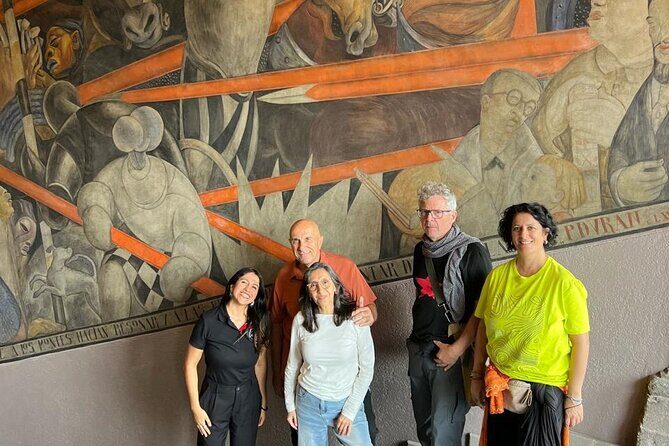
- San Ildefonso: a Jesuit school turned mural museum, with works by Rivera, Orozco, and Siqueiros
- Greenwood sisters: early women painters discussed in the Abelardo L. Rodríguez mural setting
- Diego Rivera focus: you’ll connect the mural project story to what you see in public spaces
- English-language guide: built for clarity, not just poster-board facts
- End at Palacio de Bellas Artes: you finish in one of Mexico City’s most cinematic art settings
- Tickets included: entries are part of the price, so you’re not doing math mid-trip
Mexico City muralism, in one practical storyline
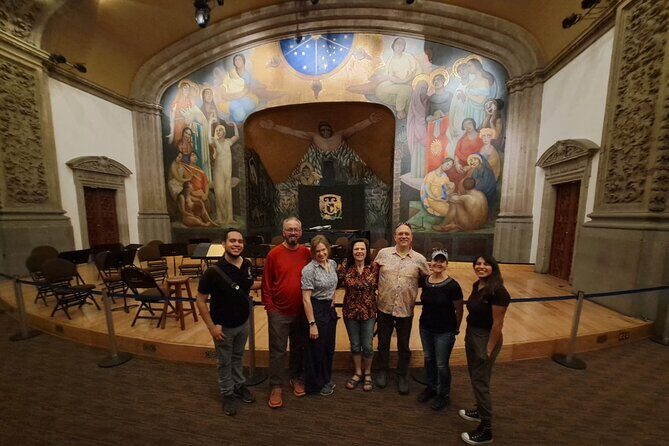
Muralism in Mexico isn’t just art on walls. It’s art designed for the public—big ideas made visible, meant to educate, argue, and celebrate identity. That’s why a tour like this works: it links the murals to the places and institutions that helped muralism grow into a national voice.
You’ll get a guided thread that explains where the mural movement came from and how it shaped public culture. Instead of treating famous names like trivia, the tour’s structure nudges you to understand the project behind the paint—who made it, why it mattered, and how it turned art into everyday presence.
At a price of $59.57 per person for about 3 hours 30 minutes, the real value is that entries are included. In Mexico City, museum admission and timed entry can add up fast, so bundling those costs into one set price is smart—especially when the pacing is tight and focused.
You can also read our reviews of more historical tours in Mexico City
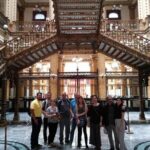

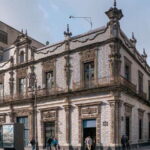
Antiguo Colegio de San Ildefonso: where the mural legends start
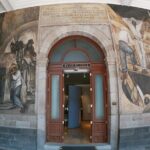
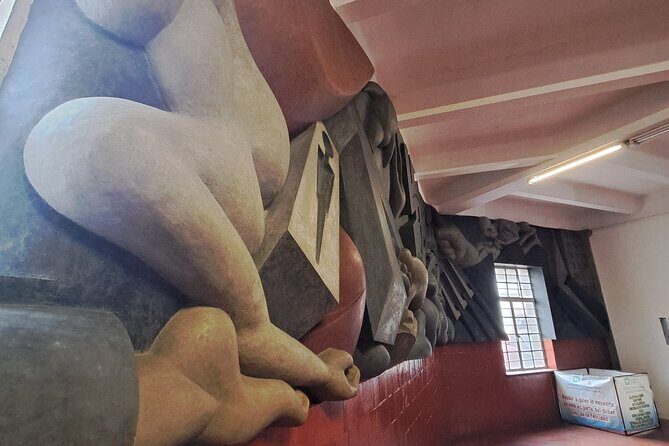
Your first stop is Antiguo Colegio de San Ildefonso, a major cultural site in the Historic Center. It began as a Jesuit school in the 16th century, and today it operates as a museum and temporary exhibition space. That origin matters: you’re not just stepping into an art building, you’re walking into a layered history where old institutional power meets modern public expression.
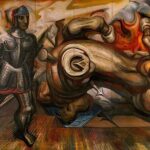
What you’ll want to watch for here is the way the mural tradition anchors itself in this venue. The collections include major mural-era names such as Diego Rivera, José Clemente Orozco, and David Alfaro Siqueiros. Even if you only know one of those names, this stop helps you understand muralism as a movement with multiple voices, not a single-style brand.
Why this first stop is such a good move
Starting at San Ildefonso is efficient because it sets your visual vocabulary fast. By the time you move on, you’re not just hunting for pretty images—you’re looking for themes, political intent, and artistic scale. It also keeps the pacing logical: museum context first, then the streets and institutions where muralism lives in public view.
A small consideration
This is the Historic Center. That means you might feel the usual city rhythm—crowds, foot traffic, and the reality that you’re doing culture in a place that’s also full of everyday life. Go in with comfortable shoes and a mental pace of look, listen, then move.
Abelardo L. Rodríguez Murals: public art where daily life happens
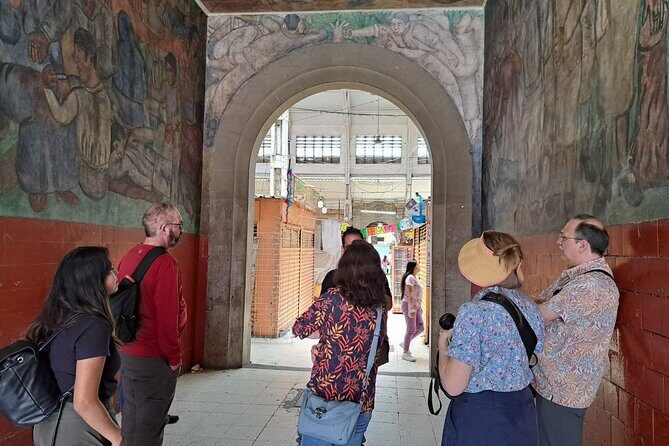
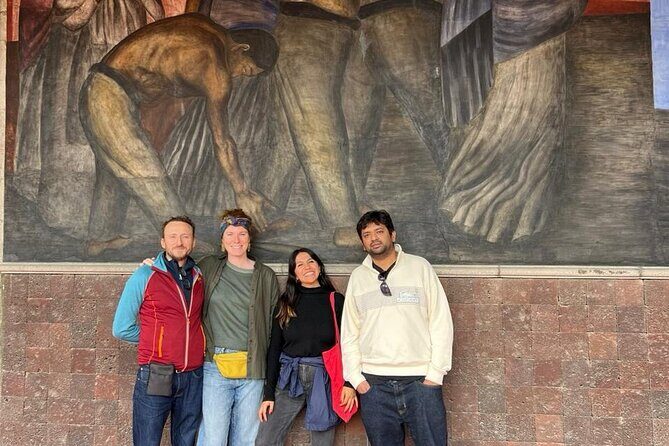
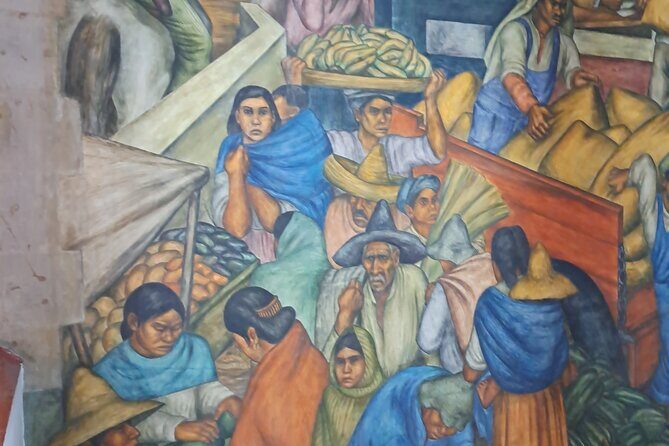
Next, you head to the Abelardo L. Rodríguez Murals. Here, the tour shifts from museum space to something closer to lived-in Mexico. The setting is described as a market environment, so you get more than art facts—you get the feeling of how murals sit inside morning routines.
This stop is also where the tour brings in names that deserve attention. You’ll learn about a pictorial project involving many artists, including the Greenwood sisters, described as the first women to paint in Mexico. That kind of detail is exactly what makes muralism feel more human: it reminds you that major art movements don’t happen only through male “genius myth” stories. Women artists and collaborative projects played roles in shaping what became public art history.



What to do with what you see
When murals are part of an everyday market area, you’ll want to slow down and look for the narrative logic. Ask yourself: what is the mural trying to communicate to people who pass by it quickly? In a market setting, you notice how symbolism has to work even when you’re not standing with a ticket booklet in your hand.
One practical caution
Because this part is more market-like, you may face more distractions than at a museum stop. That’s not a problem—just plan to give the guide your full attention for the mural explanation, then let the surrounding atmosphere fill in the rest.
Diego Rivera murals at the Secretaría de Educación Pública
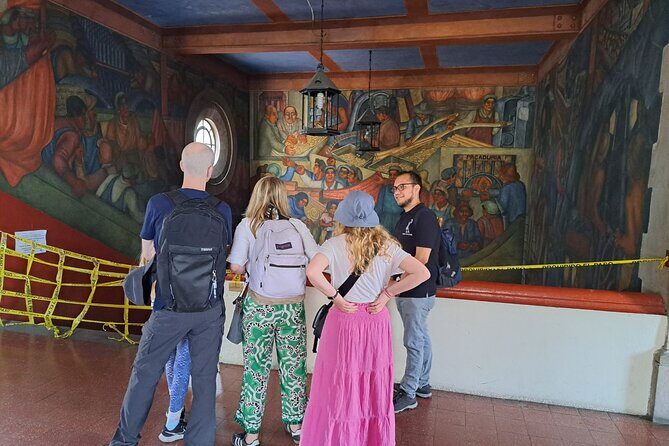
The centerpiece of the tour’s mural story is the Murales de Diego Rivera en la Secretaria de Educacion Publica. This is where you’ll see how muralism became an institutional public program, not just an art-world experiment.
The experience frames this location as the museum of muralism, focusing on the history of the great project and showing you much of Diego Rivera’s mural work. If Rivera is your entry point, this stop is your payoff: you get the why behind the scale and placement, and you connect the artist’s ideas to the broader mural project rather than treating the images as a stand-alone photo stop.
Why this location makes the movement click
Muralism gained power when it moved from galleries into spaces that people would actually use and see. The Secretaría de Educación Pública setting helps explain that logic. You’re looking at art that was meant to be read by the public, not protected from the public.
As you move through, pay attention to the overall design choices. The tour’s approach is to explain the history of the project alongside what you’re seeing, so your time feels directed. Instead of guessing at meaning, you get a guided path through it.
Timing note
At about 45 minutes for this segment, you’ll have enough time to understand what you’re looking at without it turning into a long museum slog. That matters on a tour like this because the day is cumulative—you’re building the mural story stop by stop.
Finishing at Palacio de Bellas Artes: closing the art-story loop
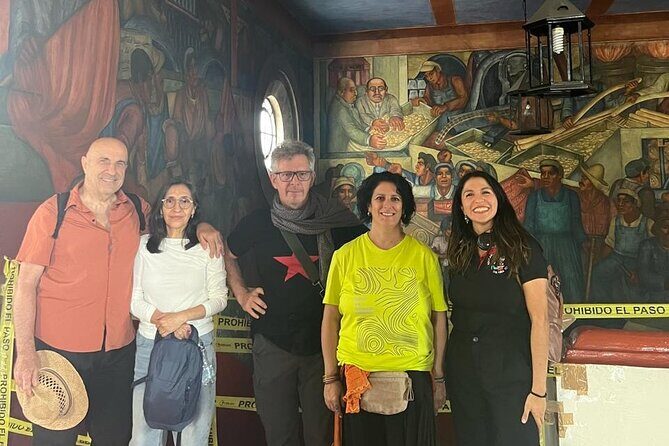
The tour ends at Palacio de Bellas Artes, with a finish that includes the Fine Arts murals. This is a big visual capstone. Even if you’ve only seen photos, you’ll recognize the building once you get close—this is Mexico City’s classic “art finale” location.
Why it works as a finish: you end on a site that signals how deeply murals and public art belong in the city’s cultural identity. After three earlier stops that connect muralism to institutions, markets, and political-public storytelling, finishing at Bellas Artes helps you see the continuity—muralism isn’t stuck in one corner of history.
Price and timing: is $59.57 worth 3.5 hours?
Here’s the value math that matters for real travel decisions.
- You pay $59.57 per person
- You get about 3 hours 30 minutes of guided time
- You have entries included at each stop
For Mexico City, that combination is usually a win. A lot of city tours cost more once you add museum admissions, and a lot of “free-ish” tours cost more in your own time because you’re constantly lining up or paying separately. This one keeps you inside the story and includes the entry pieces that would otherwise slow you down.
Also, it’s practical that it’s booked about 26 days in advance on average. That doesn’t mean you must book early, but it’s a hint: the schedule is popular enough that waiting until the last minute can be a risk on busy dates.
Group size is up to 35 travelers, which is big enough to feel lively but not so huge that you’ll lose the guide’s attention constantly. Add in the fact that the tour runs in English, and it’s a solid option for visitors who want a clear explanation without language barriers.
Who this muralism tour suits best
This tour is a great match if you:
- Want a guided, place-based explanation of muralism instead of random mural photos
- Know a few mural names (like Diego Rivera) and want context for the whole movement
- Prefer a structured route through the Historic Center that ends at another major landmark
It’s also a good choice for first-time Mexico City visitors. You’ll cover key cultural stops without feeling like you’re trying to DIY a complicated museum day.
A realistic heads-up before you go
This is concentrated sightseeing. You’ll be moving between culturally dense sites, and you’ll get more from it if you:
- Wear comfortable shoes
- Keep your phone charged (mobile ticket helps)
- Treat it like a guided story, not a museum scavenger hunt
If you’re extremely sensitive to standing time or crowded indoor spaces, plan to take it slow during transitions and ask questions when the guide pauses rather than trying to catch up later.
Should you book? My practical take
Book it if you want a tight, coherent muralism lesson tied to actual locations—especially if you care about why the murals exist, not just what they look like.
Don’t book it if you prefer ultra-slow museum wandering with no schedule and minimal guide talk. This experience is designed for momentum and storytelling, so it won’t feel like a freeform art day.
If you’re deciding between DIY and a guide: in this case, a guide is the value engine. The murals are famous, but the meaning and the institutional connections don’t always jump out instantly. This tour is built to make those connections understandable fast.
FAQ
FAQ
How long is the Muralism in Mexico experience?
It lasts about 3 hours 30 minutes.
What’s the price per person?
The price is $59.57 per person.
Is the tour offered in English?
Yes, it is offered in English.
Are admission tickets included?
Yes. Entries are included at the stops.
Where does the tour start and end?
It starts at Antiguo Colegio de San Ildefonso on Justo Sierra 16 in Mexico City and ends at Palacio de Bellas Artes on Av. Juarez S/N in the Historic Center area.
What’s the maximum group size?
The tour has a maximum of 35 travelers.
Can I bring a service animal?
Yes, service animals are allowed.
Is free cancellation available?
Free cancellation is available up to 24 hours in advance for a full refund.
If you tell me your travel dates and what you already know about Rivera/Orozco/Siqueiros, I can help you judge whether this pace fits your style.