REVIEW · MEXICO CITY
Teotihuacan: The myth of the gods + secret murals (New route)
Book on Viator →Operated by Kactus Free Walking Tour · Bookable on Viator
Teotihuacán feels like a myth you can walk through. This tour ties the big pyramid story to later Aztec memories, then adds the fun science-of-belief angle with a look at theories about a link to Egypt. I especially love how early you’re at the Piramide de la Luna for calm photos, and I also really enjoyed the practical, hands-on pigment workshop where you learn how murals got their colors. One thing to plan for: you’ll be walking and you will climb the Moon pyramid area, so it’s best if you’re comfortable with a moderate amount of physical effort.
You get a smooth start from the meeting point near Frontón México at 8:15 am, and you stay on schedule thanks to round-trip private transportation plus entry fees that are handled for you. The group is capped at 19, and it’s offered in English, so you can actually hear the stories without straining.
If you want a day trip that mixes landmarks with explanations you’ll remember, this fits well. It also helps that the route includes a quieter museum-like experience and time for shopping stops such as obsidian and silver workshops, so you can leave with souvenirs that feel tied to the place.
In This Review
- Key Things I’d Put at the Top
- Morning Start From Frontón México: Why the Timing Matters
- Piramide de la Luna: Early, Calm, and Actually Worth Climbing
- Pyramid of the Sun and the Avenue of the Dead Walk
- Palacio de Zacuala: The Murals You Don’t Want to Miss
- Citadel and Quetzalcoatl Myths: Where the City’s Story Gets Tighter
- Color Pigments Workshop: Cochineal and Plant Dyes That Make the Art Click
- Obsidian and Silver Workshops: Souvenirs With a Story Behind Them
- Guides and Storytelling: What You Gain Beyond Facts
- Price and Value: What’s Included Changes the Math
- Who Should Book This Teotihuacán Tour?
- Should You Book? My Honest Take
- FAQ
- What time does the tour start?
- How long is the Teotihuacán tour?
- Is lunch included?
- What language is the tour offered in?
- What’s included in the price?
- Is there a group size limit?
- Is cancellation free?
Key Things I’d Put at the Top
- Early arrival at Piramide de la Luna for easier photos and less crowd pressure
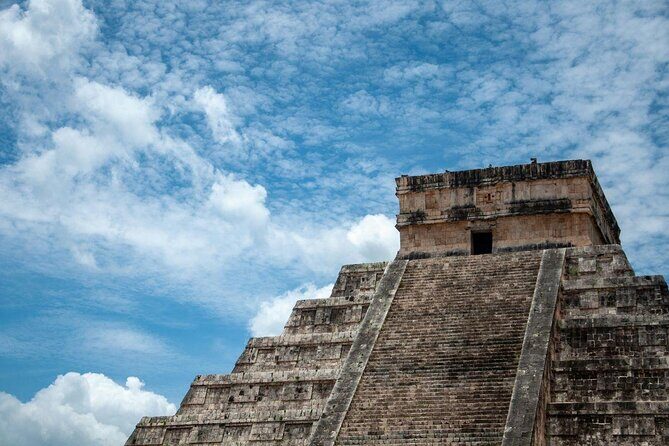
- Avenue of the Dead to the 65-meter Pyramid of the Sun, with the major context you’ll want
- Palacio de Zacuala murals and a look at how people lived and practiced religion
- Citadel and Quetzalcoatl at one of the best-preserved areas, plus the city’s myths
- Cochineal and plant pigment workshop (grana cochinilla) for a memorable takeaway
- Obsidian and silver workshops for gifts that connect to the craft side of the day
Morning Start From Frontón México: Why the Timing Matters
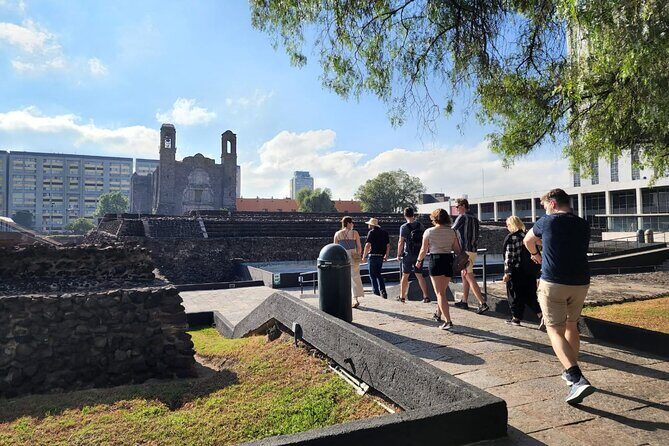
Starting at 8:15 am from Frontón México (Av. de la República 17, Tabacalera) is a quiet little detail that makes a big difference. Teotihuacán is popular, and the difference between arriving early and arriving later is the difference between enjoying the place and constantly dodging people for photos.
You’re picked up and returned to the same meeting point. That matters if you’d rather not coordinate Mexico City transit plus rural-day-trip logistics. It also keeps you from losing time figuring out where to go next, since the day moves site-to-site.
The tour runs about 6 hours, which is a practical length for Teotihuacán. It’s long enough to see the major monuments, plus the “myth” storytelling parts, without turning into an all-day slog. You’ll be on your feet a decent amount, but the stop durations are built in so you’re not stuck looking at stone for hours with no narrative or breaks.
You can also read our reviews of more tours and experiences in Mexico City.


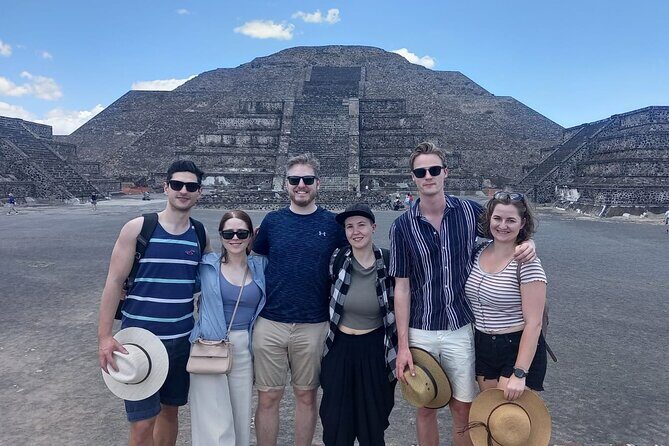
Piramide de la Luna: Early, Calm, and Actually Worth Climbing
The day begins at Piramide de la Luna. The key advantage here is the timing: at this hour the area is described as not crowded, which is exactly what you want for pictures and for hearing explanations clearly.
You’ll spend about 45 minutes at this first stop, including climbing. This is the spot where you first get a feel for scale and layout. Teotihuacán can seem abstract from street level, but when you climb even part of the pyramid area, the city’s geometry starts to click. Your guide’s stories land better too, because you’re standing where the myths are being discussed.
Practical note: wear shoes you’re comfortable climbing in. The tour doesn’t promise a gentle walk-only day. It’s not a casual stroll. But if you pace yourself, this stop is one of the best ways to “enter” the site instead of just looking at it.
Pyramid of the Sun and the Avenue of the Dead Walk
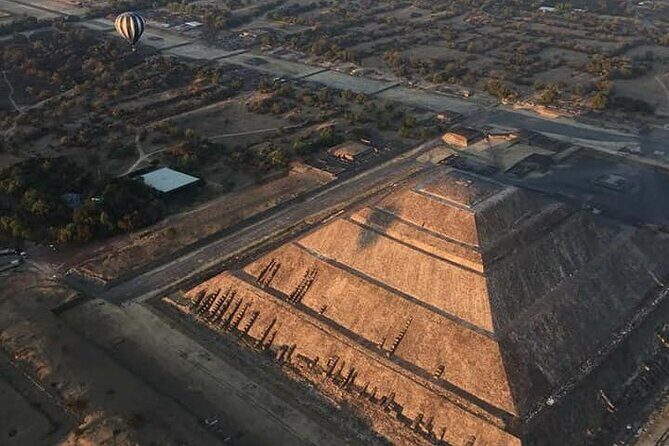
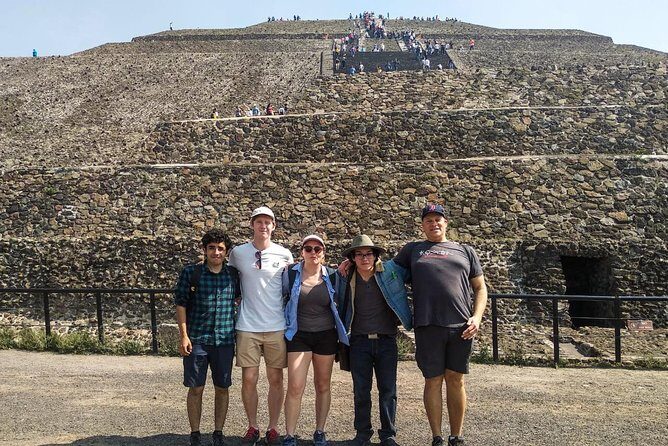
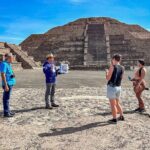
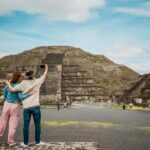
After the Moon, you move on to Piramide del Sol. You’ll walk along the Avenue of the Dead until you reach the main Sun Pyramid, one of the signature structures at Teotihuacán. It rises 65 meters high, so even if you’re not a monument-spotter type, it’s hard not to pause and look up.
This stop is also about 45 minutes, with admission included. The value here is the combination of the physical approach and the explanation. Walking the central avenue gives you the street-canyon feeling that makes the city layout readable, then the Sun Pyramid becomes the payoff.
A balanced way to think about it: Teotihuacán is full of big stone forms, but the most interesting moments are when a guide connects those forms to religion, power, and belief. The tour specifically frames the site with stories linked to the Aztecs, even though Teotihuacán predates them. That’s useful context for understanding why later people remembered and reinterpreted these structures as sacred.
Also, the tour includes a look at a proposed connection to Egypt. Treat this as myth-and-parallel storytelling—what you’re hearing is about belief systems and interpretations, not just plain archaeology. If you like your history with a little human curiosity and cultural comparison, this angle makes the day more fun rather than more confusing.
Palacio de Zacuala: The Murals You Don’t Want to Miss
Next comes a stop that’s framed as a “little-known” part of Teotihuacán: Palacio de Zacuala. You’ll have about 45 minutes here, with admission included.
This is where the tour shifts from giant landmarks to everyday life and visible art. You’ll learn how people lived and how they understood religion, then you’ll see impressive murals. The “secret murals” theme isn’t just marketing fluff; it’s about getting away from only the most famous exterior views and seeing painted narratives in a more focused setting.
For me, this is the stop that turns Teotihuacán from impressive rocks into a place with human meaning. Murals are the “voice” of the culture you can still read through images. Even without being an expert, you can recognize that the colors and scenes were meant to communicate status, ritual ideas, and stories.
Potential drawback: murals and indoor/exhibit-like areas can feel more time-sensitive than outdoor photo spots. If you’re the type who likes to wander with zero structure, you’ll still enjoy it, but you may want to keep pace with the group so you don’t miss what the guide points out.
Citadel and Quetzalcoatl Myths: Where the City’s Story Gets Tighter
Then you move to the Citadel, including the Temple of Quetzalcoatl. This is one of the best-preserved areas on the route, and it comes with about 1 hour there.
Admission is included, and your guide explains the myths that shaped the city. This is the section built for the “myth of the gods” theme. Quetzalcoatl sits at the center of a lot of Mesoamerican religious storytelling, and Teotihuacán’s take on sacred symbolism is exactly the kind of topic where explanations help you see the structure as more than decoration.
I like this stop because it’s also a mental reset. You go from Sun Pyramid awe (big scale) to mural storytelling (human scale) and then to the Citadel (ritual scale). It’s a clean rhythm that keeps your brain engaged.
Tip for enjoying it: take a few minutes to walk slowly around the area, even if the group moves on schedule. The “best preserved” description matters because it’s easier to spot details than it is in areas that have eroded more.



Color Pigments Workshop: Cochineal and Plant Dyes That Make the Art Click
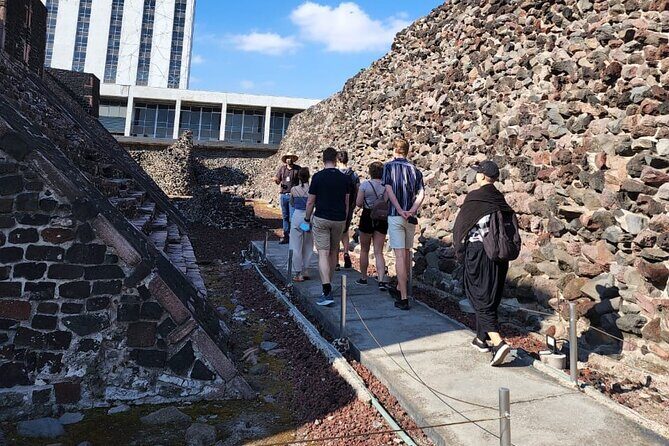
One of the most practical parts of the day is the pigments workshop. You’ll get a local artisan explanation of how natives obtained the colors used in murals, focusing on cochineal (grana cochinilla) and plant pigments.
This stop is about 30 minutes with admission included. It’s a short window, but it gives you something most monument tours forget: the production side. Learning that reds can come from cochineal and that plants can feed other tones makes the mural colors feel less like magic and more like craft.
Why this is valuable for you: once you understand pigment sources, you start noticing the murals differently during the day. Instead of only tracking figures and shapes, you can think about how materials and labor supported the final artwork.
If you enjoy hands-on learning or you’re a “buy a souvenir that makes sense” person, this part is also a confidence boost. You’ll understand what you’re seeing when you later connect art, dye, and culture.
Obsidian and Silver Workshops: Souvenirs With a Story Behind Them
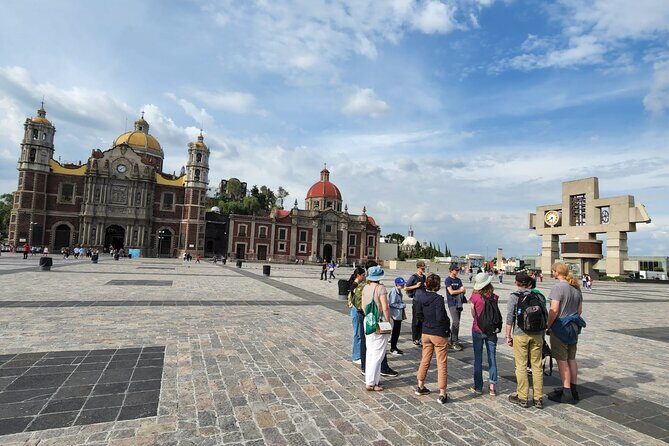
The tour highlights include time for obsidian and silver workshops for unique souvenirs. Even when the main focus of Teotihuacán is archaeology, these craft stops help you connect the ancient story to living regional skills.
From a value perspective, workshop time works better than random shopping. You’re getting at least a bit of context for why a piece exists and what materials or techniques are involved. That matters because Teotihuacán day trips can turn into a “see monuments, get pushed into souvenir lines” experience. Here, the craft angle is presented as part of the tour flow.
I’d recommend keeping a small shopping budget ready. You don’t want to realize you love something only to find you’ve already spent all your cash elsewhere. Prices aren’t listed here, so just plan to negotiate politely and compare if you have time.
Guides and Storytelling: What You Gain Beyond Facts
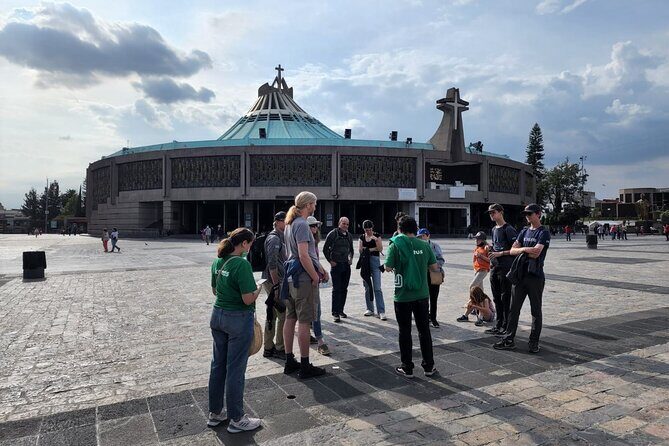
The best part of this kind of day trip is often the guide’s voice. In past groups, names like Jose, Ricardo, and Dani have been mentioned as delivering lively historical introductions across ceremonial and commercial topics tied to Mexica and Teotihuacano perspectives, mixing history, mythology, and street-level context.
You also benefit from explanations that connect threads: Teotihuacán’s role in the broader Mesoamerican world, the remembered connection to the Aztecs, and the more speculative comparisons like the Egypt link. Even if some theories are debated, the point for you is how the guide frames meaning and storytelling for a visitor who wants a coherent narrative.
A small reassurance from the reviews: sometimes pickup can be messy in big cities. If there’s any confusion at the start, responsive staff behavior has been noted. Still, it’s smart to arrive early at the meeting point so you’re visible and ready.
Price and Value: What’s Included Changes the Math
Since the tour includes round-trip private transportation, Teotihuacán entrance fees, and the pigment workshop, you’re not paying separately for the core access pieces. That matters because Teotihuacán day costs can balloon once you add admission, transit, and “oh, one more ticket” moments.
You also get a structured, timed route that includes both major monuments and the extra mural-focused stop at Palacio de Zacuala. Add in the craft-oriented stops for obsidian and silver souvenirs, and you end with a day that feels more complete than a simple “pyramids only” visit.
About lunch: lunch is not included. The day does provide guidance that there are convenience stores near the meeting point, so it’s wise to buy something you can carry. This helps you avoid spending time hunting for food once you’re out at the site.
Also plan a tip budget. Tips aren’t included, and this is one of those days where a guide can genuinely shape your experience.
Who Should Book This Teotihuacán Tour?
Book this if you want:
- A guided, story-led Teotihuacán day trip rather than a self-guided checklist
- Early access so you can enjoy Piramide de la Luna with fewer crowds
- A mix of monuments + murals + materials (cochineal and plant pigments)
- Time for obsidian and silver workshops for souvenirs with context
- An English-speaking format with a group size capped at 19
It may not be the best fit if you hate walking, or if climbing sounds like a hard no. There’s also a moderate physical fitness level requirement, so if you’re unsure, choose your comfort level carefully.
Should You Book? My Honest Take
Yes, I’d book this if you want a well-paced Teotihuacán experience that doesn’t treat history like a lecture. The early Moon Pyramid start, the mural stop at Palacio de Zacuala, and the pigment workshop add up to more than just pyramid photos.
I’d skip it only if you’re looking for a very slow day with zero climbing, or if you strongly dislike craft-market stops. If you can handle a modest walking and one climb, this route gives you a lot of meaning for the time.
FAQ
What time does the tour start?
The tour starts at 8:15 am. It ends back at the meeting point.
How long is the Teotihuacán tour?
The duration is approximately 6 hours.
Is lunch included?
No. Lunch is not included, but there are convenience stores near the meeting point where you can buy food to take during the tour.
What language is the tour offered in?
The tour is offered in English.
What’s included in the price?
It includes round-trip private transportation, the Teotihuacán entrance fee, and the grana cochinilla and plant pigments workshop. It also includes transport and entry tickets.
Is there a group size limit?
Yes. The maximum group size is 19 travelers.
Is cancellation free?
Yes, you can cancel for a full refund up to 24 hours in advance.
If you tell me what month you’re going and what you care about most—photos, legends, or souvenirs—I can help you decide if the “myth + murals” focus matches your style.