REVIEW · SAN MIGUEL DE ALLENDE
San Miguel: Cañada de la Virgen Archaeological Site Tour
Book on GetYourGuide →Operated by Coyote Canyon Adventures · Bookable on GetYourGuide
Canyon ruins and dinner made with local care. This half-day tour from San Miguel de Allende brings you to Cañada de la Virgen, a mesa-top archaeological site perched over canyons, where you’ll walk through four patio/pyramid complexes and learn what daily life may have looked like between 540 and 1050 A.D. The second act is just as good: a ranch-style meal prepared by local women, with fresh tortillas al comal and cheese made on site.
Two things I really like are the specialized, bilingual guiding (the kind that helps the stones make sense) and the fact that lunch feels connected to the community, not like a generic restaurant stop. One thing to consider: the walk adds up to about 3 kilometers total, and the tour isn’t recommended if you have limited mobility.
In This Review
- Key highlights you’ll actually feel
- Cañada de la Virgen: A mesa-top world in the canyon
- From San Miguel: pickup, timing, and what 5 hours really means
- Entering the ruins: four complexes, a causeway, and a pond
- The four patio/pyramid complexes
- The artificial pond
- The ceremonial causeway
- A note about climbing
- The canyon setting: why geology and biology show up on your walk
- The ranch lunch nearby: fresh tortillas, on-site cheese, and real food
- Price and value: is $112 worth it?
- Who should book this tour (and who should skip it)
- Should you book San Miguel: Cañada de la Virgen?
- FAQ
- How long is the San Miguel to Cañada de la Virgen tour?
- Where do you meet in San Miguel de Allende?
- What’s included in the price?
- Is drinking water included?
- How much walking is involved?
- Are backpacks allowed?
- What languages is the tour guide?
Key highlights you’ll actually feel
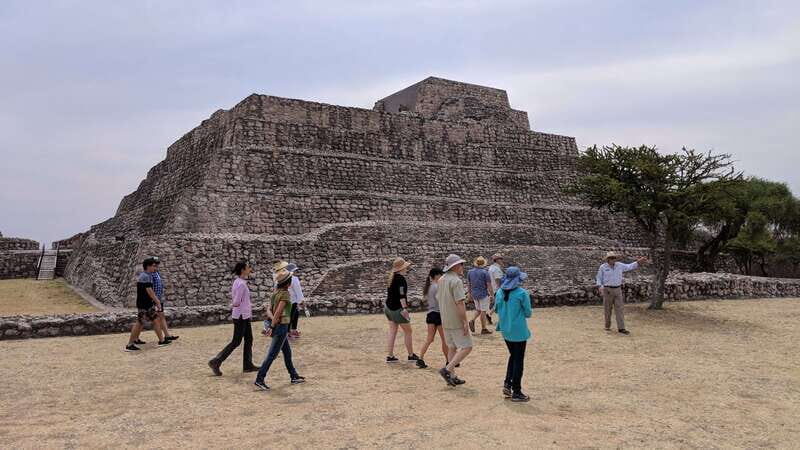
- A mesa archaeology site 25 km west of San Miguel with canyon views all around
- Four patio/pyramid complexes, plus an artificial pond and ceremonial causeway
- A focused 2-hour walk that covers the key areas (about 3 km total)
- Bilingual live guide in English and Spanish who explains the Otomi and Bajío connections
- Ranch lunch nearby (about 10 minutes away) made with fresh, on-site ingredients
Cañada de la Virgen: A mesa-top world in the canyon
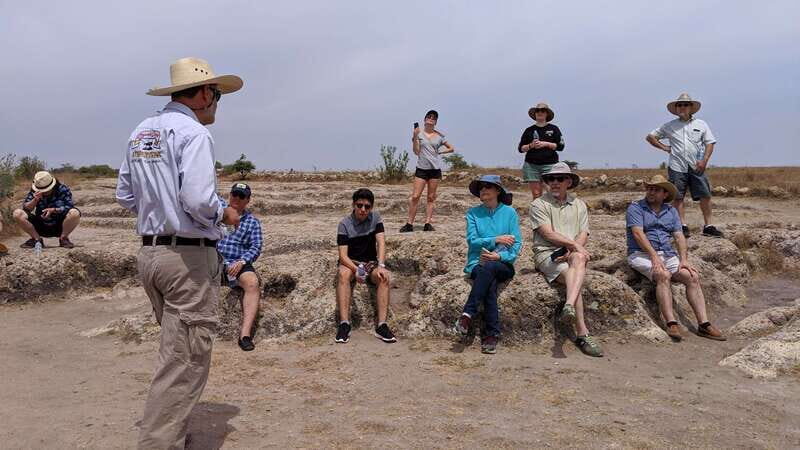
Cañada de la Virgen archaeological site sits about 25 kilometers west of San Miguel de Allende. The site is built on a small mesa, surrounded by canyon walls, which matters because the setting gives you context. You’re not just viewing ruins—you’re seeing how a community could live, work, and move across elevated ground with natural defenses and dramatic sightlines.
Archaeology nerds and casual history fans both get something here. You’ll see the core layout made of four patio/pyramid complexes. You’ll also learn that the site includes an ancient, artificial pond and a ceremonial causeway spread across about 16 hectares. Those details are more than trivia. They help you understand that this wasn’t a random scatter of stones. It was planned space, with movement, water, gathering areas, and architecture meant to communicate status and meaning.
You’ll also get cultural context beyond architecture. The guiding is described as highly specialized, with stories that connect the Otomi people and other cultures of the Bajío region to broader Mesoamerican traditions. That gives you a clearer picture of how to read the site instead of treating it like a postcard.
You can also read our reviews of more tours and experiences in San Miguel De Allende.


From San Miguel: pickup, timing, and what 5 hours really means
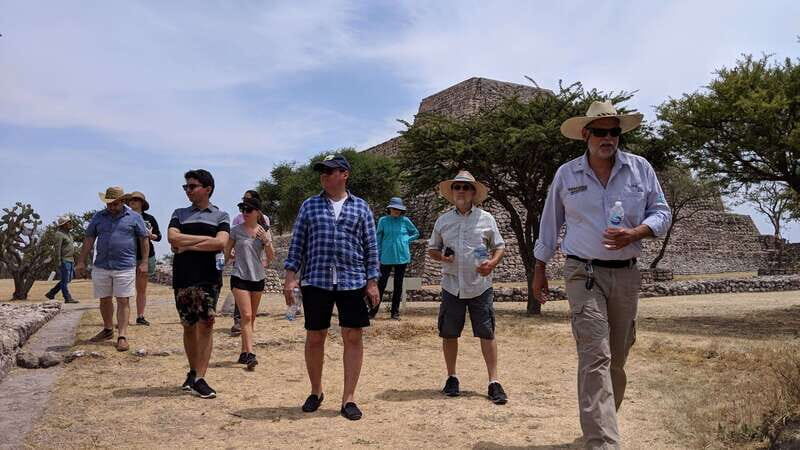
This is a half-day outing that totals about 5 hours, usually offered in the morning. Transportation to and from San Miguel de Allende is included, so you’re not stuck figuring out rural roads or parking.
The meeting point is easy to miss if you’re rushed: it’s only about a 10-minute walk from the main town square in San Miguel. That small detail matters because San Miguel can be busy and winding, and you don’t want to start the day stressed.
The group experience is part of the appeal. Several reviews highlight the guide quality and even mention small-group or private-feeling tours. That tends to improve your odds of asking questions, keeping up on the walk, and getting explanations that match your pace.
One more practical note: drinking water is not included, even though the day is only half. Bring a bottle. And since the site is exposed, bring your sun gear too—sunglasses and a hat are not optional in the real world.
Entering the ruins: four complexes, a causeway, and a pond
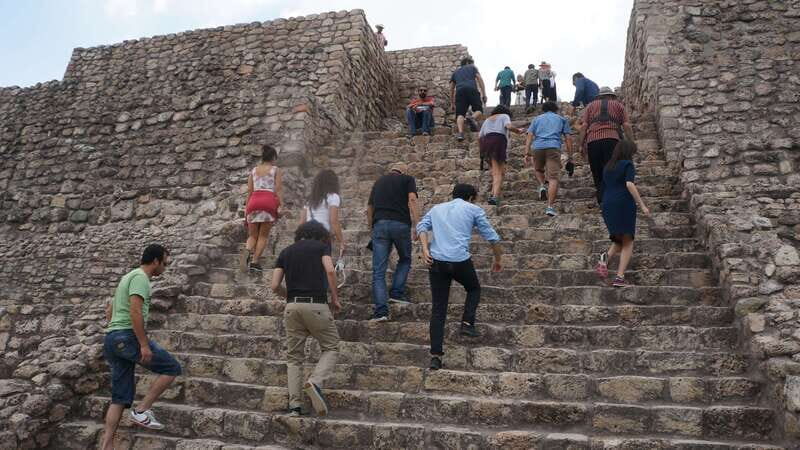
Once you arrive at the site, the tour focuses on the key areas. The walking portion is described as about 2 hours, covering roughly 3 kilometers total. The route is enough walking to feel like an outing, but not so long that you’re disappearing into the countryside for the rest of the day.
Here’s what makes the archaeological walk meaningful:
The four patio/pyramid complexes
You’ll visit and interpret multiple complexes instead of doing one quick loop. In practice, that means your guide can connect the buildings to each other—how patios relate to structures, how movement through the area likely worked, and why certain architectural choices show up more than once.
The artificial pond
A pond in an archaeological site always grabs attention, because it hints at planning and water management. You’ll hear how this feature fits the overall purpose of the place. Even if you’re not a history buff, the pond is a concrete anchor you can point to when your brain starts wandering.



The ceremonial causeway
The ceremonial causeway covered across the site is the “how people got where they needed to be” part of the story. Causeways often signal controlled routes, processions, or deliberate pathways linking important features. Having that explained helps you see the layout with more purpose.
A note about climbing
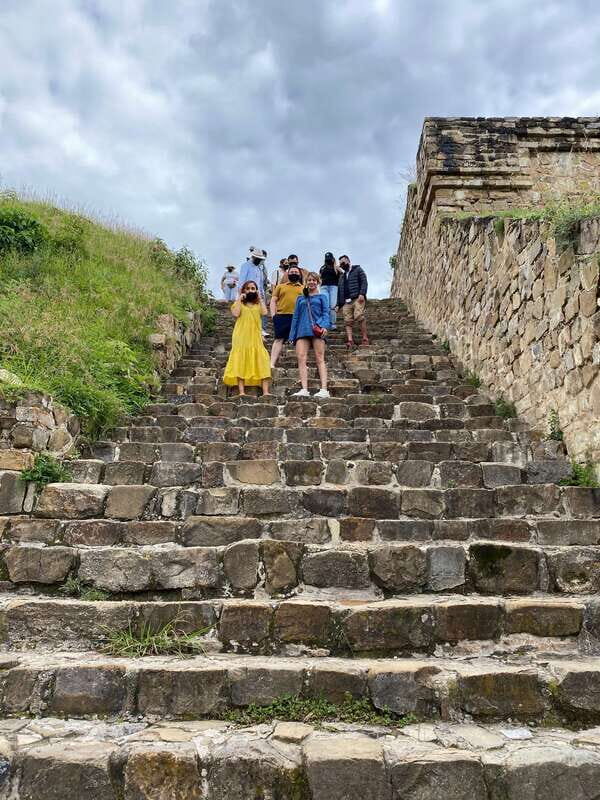
One review mentions that climbing to the top of the pyramid is no longer allowed. So if you’re picturing scrambling to a high viewpoint, adjust expectations. You’ll still be able to see the grounds and the structure, but you may not get that top-of-the-stair photo.
The canyon setting: why geology and biology show up on your walk
This tour isn’t only about “what” the ruins are. It’s also about “where” they sit, and that’s why canyon views and natural features are part of the story.
One review from a geologist specifically called out the volcanic strata in the canyon and enjoyed how the guide explained the terrain. Another noted that the guide pointed out things connected to biology and geology, then took the time to explain why those details matter.
Even without being a science person, you’ll probably appreciate the approach. When your guide ties visible layers or plant life to the environment around the mesa, the site stops being flat and starts feeling like a lived-in place inside a real ecosystem.
I also like that this makes the walk more than exercise. You’re not only moving to see stones—you’re moving to understand a setting that shaped how people chose where to build.
The ranch lunch nearby: fresh tortillas, on-site cheese, and real food
After the archaeological portion, you head to a small village about 10 minutes away for lunch at a neighboring ranch. This is one of the tour’s strongest points because it’s described as ranch-style food prepared by ladies of the community.
You’ll eat a menu that includes:
- Fresh ranch style cheese prepared on site daily
- Fresh tortillas cooked al comal
- Rice and beans
- Fresh salsas and guacamole
- Quesadillas
- Nopales (cactus)
- Salad, potato patties, and fresh fruit
That list reads like a lot, and that’s the point. This isn’t a token plate. It’s built to feel like you’re sharing a meal from the area, with ingredients that show up often in local cooking.
One useful detail: the tour can accommodate food allergies, based on review feedback. So if you have allergies, tell the operator ahead of time and be clear about what to avoid.
Also, no drinking water is mentioned as included, so plan to bring what you need for the walk. Once you sit down to eat, you’ll likely be grateful you did.
Price and value: is $112 worth it?
At $112 per person for a 5-hour, half-day experience, the value depends on what you want.
If your priority is a self-guided history wander, you may feel it’s pricey. But if you want an interpretive guide who connects architecture to culture (Otomi and Bajío connections) and who explains the canyon environment as you walk, the cost starts to make sense.
A big part of the value equation here is what’s included:
- Transportation to and from San Miguel
- Entry fee for the archaeological site
- Guided tour of the complex
- Travel insurance
- Lunch at a neighboring ranch
And based on reviews, one of the strongest value signals is the guiding itself. Multiple reviews call out guides with excellent rapport and strong English, including one who was described as exceptionally knowledgeable and another who was praised for biology and geology explanations. That kind of communication can be the difference between seeing ruins and actually understanding them.
Lunch is the other value driver. If you’ve ever had a tour lunch that feels like you’re eating because time passed, this doesn’t sound like that. The meal is described as ranch-style, prepared with ingredients made on site daily, including tortillas al comal and fresh cheese.
Who should book this tour (and who should skip it)
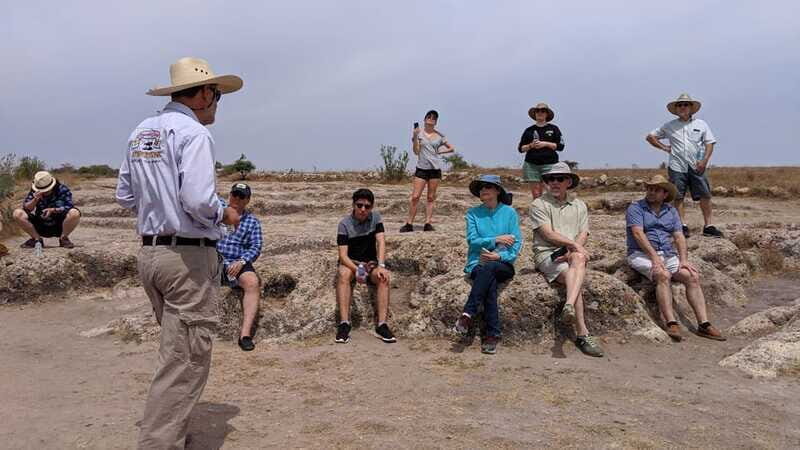
This tour is a great match if you:
- Enjoy archaeology with a guide who explains what you’re looking at
- Want the canyon setting, not just a museum-style stop
- Prefer authentic meals tied to local families and ingredients
- Can handle a walk of about 3 km total and want a morning outing
You should think twice if you:
- Have limited mobility (the tour isn’t recommended, because you need to walk about 3 km total)
- Carry a backpack (large bags aren’t allowed in the archaeological site; small purses/camera bags and water are allowed)
- Forget sun protection and water (water isn’t included, and the site is exposed)
Also, if you’re the type who wants to explore at a slow, meandering pace with frequent stops to sit and stare, this one may feel structured. It’s designed to cover the important areas in a limited timeframe.
Should you book San Miguel: Cañada de la Virgen?
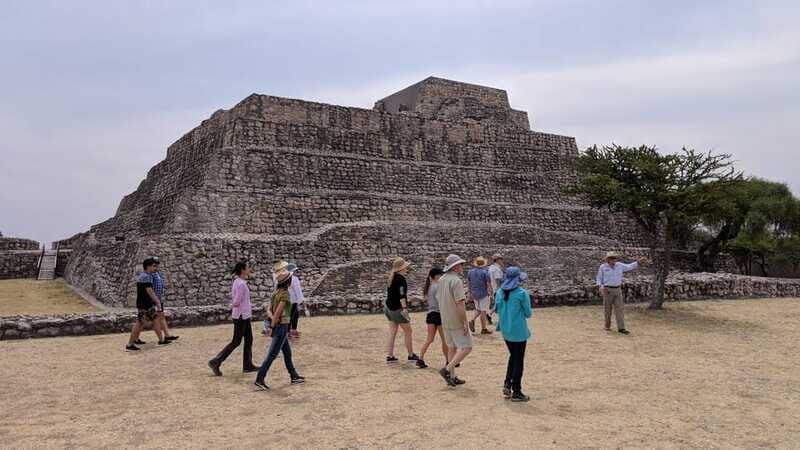
I’d book it if you want one morning that combines ruins with context and a lunch that feels like you ate with locals. The repeated praise for guides—especially for strong English, rapport, and science-style explanations—suggests you’ll leave with more than pictures. You’ll leave with a mental map of how the complexes, pond, and causeway fit together.
I’d skip it if walking 3 km total over the site is a deal-breaker, or if you’re hoping for a lot of downtime. The experience is built around movement and interpretation.
If you do book, come prepared: comfortable shoes, hat, sunscreen, and your own water. And if you have dietary restrictions, plan to communicate them in advance so lunch can be adjusted.
FAQ
How long is the San Miguel to Cañada de la Virgen tour?
The tour takes about 5 hours total, usually available in the morning. The walking portion at the archaeological site is about 2 hours.
Where do you meet in San Miguel de Allende?
The meeting point is about a 10-minute walk from the main town square in San Miguel de Allende.
What’s included in the price?
Transportation to and from San Miguel, entry fee for the archaeological site, a guided tour, travel insurance, and lunch at a neighboring ranch are included.
Is drinking water included?
No. Drinking water is not included, so you should bring your own.
How much walking is involved?
You need to walk about 3 kilometers (around 2 miles) total during the archaeological site portion.
Are backpacks allowed?
Large bags and backpacks are not allowed into the archaeological site. Larger bags can be left in the tour vehicle or with site staff at the visitor’s center. Small camera bags or purses are allowed, along with cameras and water.
What languages is the tour guide?
The live tour guide is available in English and Spanish.