REVIEW · SAN MIGUEL DE ALLENDE
Recorrido Histórico a Pie: Descubre y Explora San Miguel (ES/EN)
Book on Viator →Operated by Travel to San Miguel · Bookable on Viator
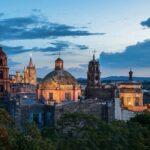
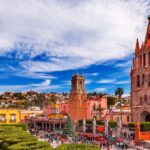
San Miguel de Allende clicks on foot. This 2-hour historic walking tour keeps things moving with a local guide and a tight set of major landmarks plus quieter corners you’d likely miss alone.
I especially like the balance between church architecture and the people behind the names—Ignacio Allende, colonial-era power, and the convent life that shaped the town. I also like how the route isn’t only about the obvious views; you get practical, “walkable” stops like the Chorro and Lavaderos area and a real sense of how locals use public spaces.
One consideration: the pace is history-heavy, and a couple of stops depend on opening hours or daily schedules (including monastic ones). If you want lots of free roaming with minimal talking, you may feel it’s a bit packed.
In This Review
- Key takeaways before you go
- Entering San Miguel’s past, one stop at a time
- Price and value: why $32 feels fair
- Meeting at Parroquia de San Miguel Arcángel and staying on schedule
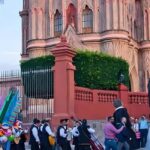
- Stop 1: Parroquia de San Miguel Arcángel—colors, foundations, and the big story
- Stop 2: Ignacio Allende House—what you can learn from what you can’t enter
- Stop 3: Casa del Mayorazgo de Canal—how power lived in everyday form
- Stop 4: Bellas Artes and the Siqueiros mural—art history with street-level context
- Stop 5: Convento de la Inmaculada Concepción—architecture meets monastic reality
- Stop 6: A top hotel’s art-and-workshop stop—ceramics, tiles, and a view
- Stop 7: The bathroom and fruit-infused water pause—small, smart comfort
- Stop 8: Parque Benito Juárez—where the city plays, shops, and celebrates
- Stop 9: El Chorro, Lavaderos, Casa de la Cultura, and old haciendas
- Stop 10: San Francisco de Asís—ending with another congregation and another architectural style
- Guides: what makes this tour feel personal
- What to bring and how to pace yourself
- Who this walking tour is best for (and who should pass)
- Should you book this historical walking tour in San Miguel?
- FAQ
- How long is the San Miguel historical walking tour?
- Is the tour offered in English?
- What’s the group size?
- Where does the tour start?
- Are entrance fees included for the stops?
- Does the tour include a break or refreshments?
- What if a church or convent is closed?
- What happens if weather is bad?
- How does cancellation work?
Key takeaways before you go
- Max 10 travelers means more back-and-forth and fewer people blocking photos.
- English-language format keeps the narration accessible for most visitors.
- Free admission tickets for included stops help you control costs.
- Art and history in the same route, including a David Alfaro Siqueiros mural stop.
- A practical comfort break with a bathroom pause and fruit-infused water.
- Guides like Marimar, Luis, and Miramar stand out for making the facts feel personal and easy to follow.
Entering San Miguel’s past, one stop at a time
If this is your first trip to San Miguel de Allende, this is a smart starter tour. In a short walk, you get a timeline-like sense of how the city grew: colonial foundations, independence-era connections, and the way religious communities and civic life shaped neighborhoods. It’s not a museum experience. It’s story time outdoors, with buildings as the book.
Also, the group size helps. With a maximum of 10 people, your guide can slow down for questions and keep you oriented as you turn from street to street. That matters in San Miguel, where it’s easy to get wowed and forget where everything fits.
You can also read our reviews of more tours and experiences in San Miguel de Allende.

Price and value: why $32 feels fair
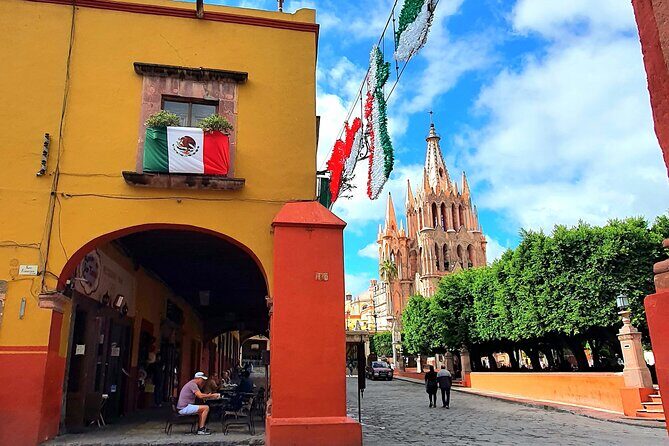
At $32 per person for about 2 hours, this tour is priced like a solid intro—especially because it includes free admission tickets for the listed stops. You’re not paying extra for church visits and similar entry points that can add up on your own.
What you’re really buying is time and context. Instead of collecting facts from plaques (which is hit-or-miss), you get a guide’s explanation of why a place matters—architecture, name origins, and the social role of these buildings. That’s value, because it helps you enjoy the rest of your days in San Miguel with better “why am I standing here” instincts.
Meeting at Parroquia de San Miguel Arcángel and staying on schedule
You start and end at Parroquia de San Miguel Arcángel, in the Centro area. The address given is Principal S/N, Zona Centro, Centro, 37700 San Miguel de Allende, Gto., Mexico.
Because the stops are time-boxed, showing up a few minutes early makes the experience smoother. This is especially helpful if you’re not used to the pedestrian flow around the main centro streets. The tour is designed to run as one route that loops back to where it starts, so you won’t be left wandering at the end.
If you’re the type who likes to take photos slowly, keep your expectations realistic: you’ll get photo moments, but it’s not an open-ended crawl.
Stop 1: Parroquia de San Miguel Arcángel—colors, foundations, and the big story
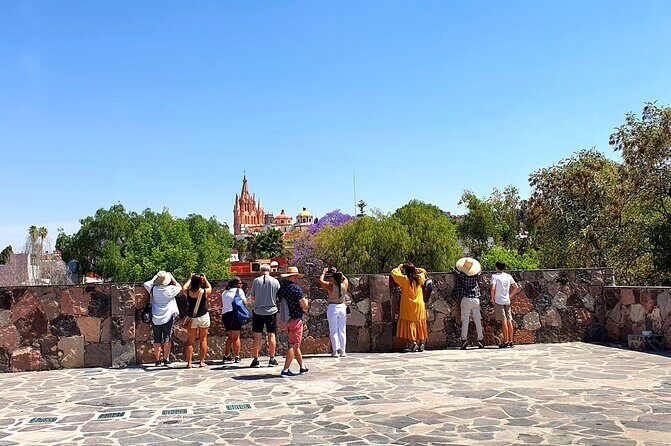
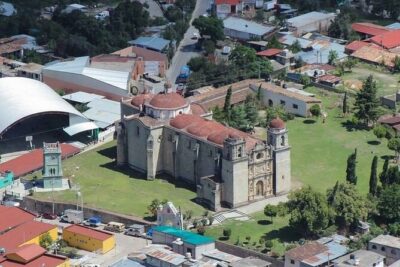
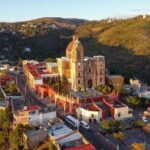
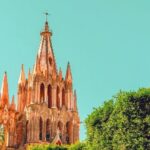
The walk begins at Parroquia de San Miguel Arcángel, with a strong framing of what San Miguel became and why. You’ll start with visuals—images and videos used to explain the city’s old-to-new evolution, the role of the city in the 1500s, and how the churches connect to the town’s identity.
This opening stop is where your guide sets the tone: the architecture isn’t just pretty facades. It’s linked to history, religious foundations, and the cultural shifts that shaped the city. The time here is about 20 minutes, and that’s a short window—so it can feel like a fast lecture. If you prefer slow strolling over listening, just plan to treat this as the “orientation chapter.”
Stop 2: Ignacio Allende House—what you can learn from what you can’t enter
Next comes Casa de Ignacio Allende, but here the focus is practical: the visit is exterior only. The reasoning is straightforward—its historical value and limited time in the schedule.
In the time you have, you’ll connect the site to Mexican independence. Your guide will explain who Ignacio Allende was and how the city’s name and early story tie into that period. Even if you can’t step inside, the exterior stop works because it gives context before you go deeper into other buildings.
If you’re expecting an indoor museum vibe, adjust your mindset: this is a “place as evidence” kind of stop.


Stop 3: Casa del Mayorazgo de Canal—how power lived in everyday form
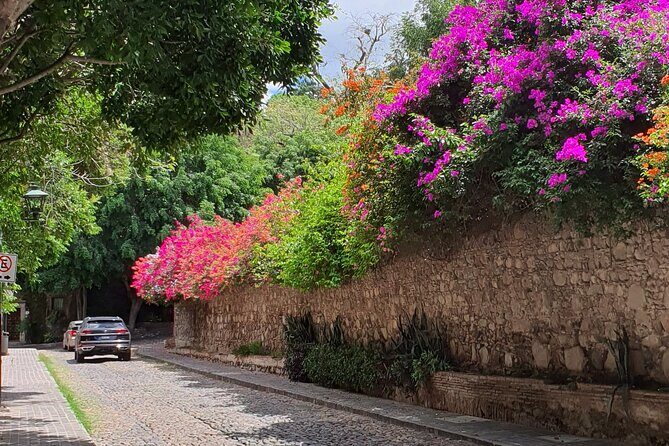
After that, you visit Casa del Mayorazgo de Canal, one of the key houses from the 18th century. You’ll learn how noble and influential families managed life in San Miguel—specifically, how owning a smaller “presence” in the city could function for the elite.
The tour time is about 10 minutes, and you’ll visit the first floor. One important practical note: this house can be closed on Mondays, and access can depend on the day and time. If you’re traveling on a Monday and this is your favorite stop on paper, you might want a little flexibility in expectations.
Stop 4: Bellas Artes and the Siqueiros mural—art history with street-level context
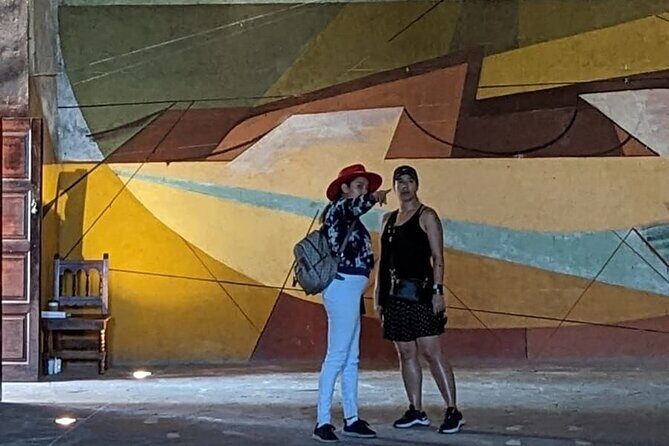
Then comes Bellas Artes, described as the old cloister of the Convento de la Inmaculada Concepción, built in 1755. The building later became an art school in the 1920s, which sets up a neat theme for the entire tour: religion, education, and cultural production all in the same walls.
You’ll also see a mural by David Alfaro Siqueiros as part of the art school story. Even if you’re not an art scholar, this stop helps you see San Miguel as more than churches and viewpoints. It’s a place where art education and local identity have mattered for a long time.
Time here is about 20 minutes, which is enough to get the main idea without feeling like you’re rushing through a gallery.
Stop 5: Convento de la Inmaculada Concepción—architecture meets monastic reality
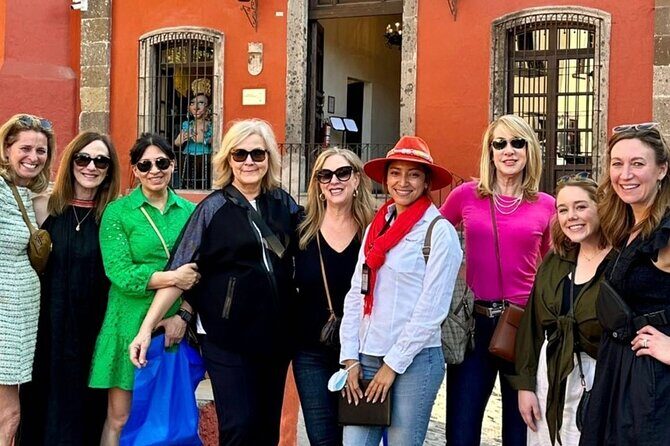
Next, you’ll look at Convento de la Inmaculada Concepción, again with a schedule reality check. Depending on the day and hours, and whether it’s open, the visit may happen. The tour notes that the nuns can sometimes close the convent without prior notice due to private services.
What you’ll aim to learn here is the convent’s architecture and the foundation of the congregation. Because you’re outdoors and time is limited, the goal isn’t to get lost in details. It’s to understand the role the congregation played and how the convent ties into the wider city story.
If the convent is closed, don’t treat it like a failure. With tours like this, the “why” is still the value—the tour helps you interpret what you see even if you can’t go inside that day.
Stop 6: A top hotel’s art-and-workshop stop—ceramics, tiles, and a view
One of the route stops takes you to one of the city’s top hotels, where you’ll see artisans work making ceramics and tiles. You’ll also get time in an old-convent-style area with a patio, plus a historical hacienda feel and a panoramic view.
This is a clever move in the itinerary. After churches and old houses, the hotel workshop stop gives you a living link to crafts—something San Miguel still does well. And the viewpoint helps you reset your brain.
Time is about 10 minutes, so it’s not a full workshop experience. But it is enough to recognize the craft tradition and understand why this city’s art scene has such roots.
Stop 7: The bathroom and fruit-infused water pause—small, smart comfort
You’ll then get a short break for bathroom time and a tasting of fruit-infused water before continuing.
It sounds minor, but it matters on a walk tour that keeps moving. Water helps you stay comfortable during sun and shade shifts, and a scheduled bathroom pause prevents that end-of-tour scramble that can ruin momentum.
Stop 8: Parque Benito Juárez—where the city plays, shops, and celebrates
After the break, you head to Parque Benito Juárez. This part of San Miguel is about public life. Depending on the date, you might spot local artists, craft markets, festivals, weddings, parades, live music, flower festivities, and even small food and drink moments like chocolate or beer.
Even if you don’t catch an event, the park still tells you how people gather here. You’ll see why this space isn’t only for tourists—it’s where San Miguel happens on a normal day, too.
Time is about 10 minutes, so your guide likely points out what to notice quickly rather than trying to do a full cultural lecture.
Stop 9: El Chorro, Lavaderos, Casa de la Cultura, and old haciendas
Next you visit the Chorro and the Lavaderos, plus Casa de la Cultura and older haciendas in the area. The timing again is about 10 minutes, and while you’ll be moving, the explanation is the point: your guide will explain why these places still matter to sanmiguelenses today.
This is one of the stops that tends to add emotional weight. It’s not just “look at the pretty buildings.” You’re learning how water-related areas and cultural institutions connect to daily life and community memory.
If you like a tour that helps you understand the “lived in” side of a destination, this is the section that can give you that.
Stop 10: San Francisco de Asís—ending with another congregation and another architectural style
The tour finishes at the church of San Francisco de Asís. Here, you explore the congregation’s importance in San Miguel, the foundation story, and the temple’s architecture.
This final stop works like a closing argument. You begin at one major church and end at another, so you get to compare how different religious communities left their mark on the town. With about 10 minutes, it’s compact, but the ending helps tie together what you learned earlier about institutions, architecture, and identity.
Guides: what makes this tour feel personal
A major strength of this experience is the quality of the guides. Multiple guides have strong mentions—Marimar is frequently described as friendly, passionate, and information-rich. Luis also shows up in feedback as attentive and highly skilled, and one note specifically mentioned his ability to speak Spanish, English, and French. Another guide, Miramar, also gets credit for in-depth knowledge.
More than facts, what you’re after is delivery. When a guide uses short videos and images (and answers questions cleanly), the city becomes easier to understand. That’s why the guide choice really matters on this kind of tour.
One caution based on a real-world hiccup: if operations shift and your group gets combined with another guide, you can end up with a slightly different set of recommendations than you expected. For peace of mind, keep an eye on any day-of messages and confirm you’re meeting at the right starting point.
What to bring and how to pace yourself
This is a walk. You’ll be in the Centro area, so wear shoes you trust. Sun exposure can change quickly around church courtyards and open plazas, so bring sunscreen and a light layer if you get cool in the shade.
Also, think about your energy level. The tour is 2 hours, and the density of storytelling is high. If you’re planning a big dinner after, it helps to arrive with a clear head and not schedule another long activity right before.
And if you’re someone who loves asking questions, this group size gives you a better shot at a real conversation rather than quick one-liners.
Who this walking tour is best for (and who should pass)
Book this if you:
- Want a first-time orientation that makes the rest of your trip easier.
- Like history that’s attached to buildings, names, and visual clues.
- Enjoy meeting local guides who can point out what matters fast.
You might choose a different option if you:
- Prefer minimal talking and more free time with less structured narration.
- Are very sensitive to schedule changes, since some stops depend on hours and access.
- Want a long, slow photography walk. This is more of a guided story sprint than a wandering day.
Should you book this historical walking tour in San Miguel?
I’d say yes if you want value and clarity early in your stay. For $32 and about 2 hours, you get a tight route through key sites, plus craft and public-life stops that make San Miguel feel like a real town, not a postcard.
My decision rule is simple:
- If you like stories that connect churches, people, and city life, this tour is an easy win.
- If you only want quiet sightseeing, you may find the historical narration heavy.
If you book, bring comfortable shoes, show up on time, and give the guide your full attention for the first stretch at Parroquia de San Miguel Arcángel. After that, the rest of the walk tends to click.
FAQ
How long is the San Miguel historical walking tour?
It’s approximately 2 hours.
Is the tour offered in English?
Yes, the tour is offered in English.
What’s the group size?
The tour has a maximum of 10 travelers.
Where does the tour start?
It starts at Parroquia de San Miguel Arcángel (Principal S/N, Zona Centro, Centro, 37700 San Miguel de Allende, Gto., Mexico), and it ends back at the meeting point.
Are entrance fees included for the stops?
The listed stops each indicate admission ticket free, so you’re not paying separate admission fees for the included sites on this tour.
Does the tour include a break or refreshments?
Yes. There’s a pause for the bathroom and a fruit-infused water tasting before continuing.
What if a church or convent is closed?
Some visits depend on opening hours. For example, the convent may close without prior notice, so your guide adapts based on what’s accessible that day.
What happens if weather is bad?
This experience requires good weather. If canceled due to poor weather, you’ll be offered a different date or a full refund.
How does cancellation work?
You can cancel for a full refund up to 24 hours in advance. If you cancel within 24 hours of the start time, the amount paid isn’t refunded.