REVIEW · MEXICO CITY
Muralist Art Semi Private Walking Tour in Mexico City Downtown
Book on Viator →Operated by Mexico a Pie Walking Tours · Bookable on Viator
Murals in Mexico City hit different. This downtown route pulls you into the city’s loudest public art and explains why it matters, not just what you’re looking at. I especially love the small-group feel (max 8) and the guided interpretation that turns paint and politics into something you can actually follow.
What I like most, though, is the lineup: you see major works by Diego Rivera, José Clemente Orozco, and David Siqueiros, plus supporting muralists tied to the Mexican muralist story. One possible drawback: this is a standing-heavy walk across central sites, so plan for comfort and patience if you prefer a slower pace.
In This Review
- Key things that make this mural walk worth it
- Mexico City’s murals: where art turns into public debate
- Price and value: what you’re really paying for
- Getting your bearings in Downtown Centro
- Stop 0: The Ministry of Education murals and the Rivera thread
- Stop 1: Antiguo Colegio de San Ildefonso and the muralist “crib” feeling
- Stop 2: Palacio de Bellas Artes and its wall-to-wall mural power
- The guide factor: why your hour is worth more with context
- What the 3.5-hour format feels like on the ground
- Who should book this tour (and who might want a different option)
- A smarter way to get more out of the murals
- Should you book Muralist Art in Downtown Mexico City?
- FAQ
- How long is the muralist walking tour?
- How many people are in the group?
- Is the tour offered in English?
- What stops are included?
- Are entrance tickets included?
- What is not included in the price?
- Where do you meet, and where does the tour end?
- Are service animals allowed?
- Can I cancel for a full refund?
Key things that make this mural walk worth it
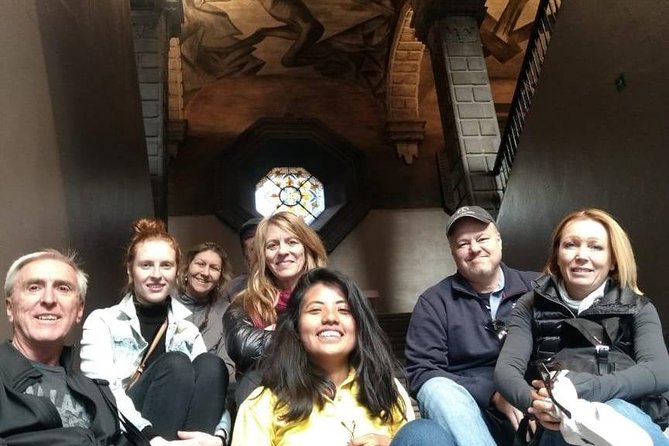
- Max 8 people keeps the conversation real, not canned.
- Three strong stops (Ministry building, San Ildefonso, Palacio de Bellas Artes) means you get variety, not repetition.
- Admission tickets included saves time and avoids ticket-hunting mid-walk.
- Guide-led context helps you connect the murals to Mexican social and political history.
- English tour with certified bilingual guide so you won’t lose the meaning.
Mexico City’s murals: where art turns into public debate
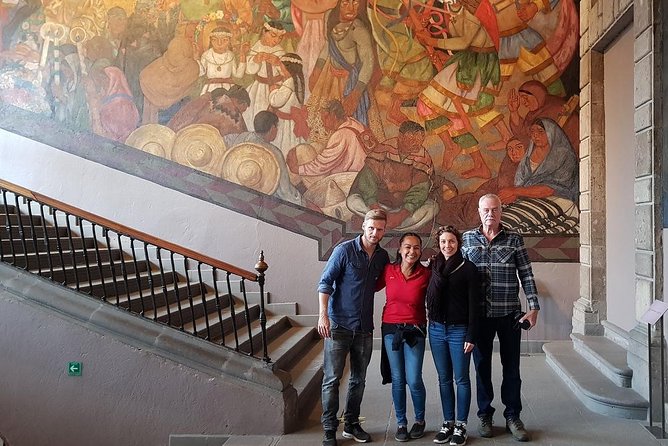
If you’ve ever wondered why Mexico City feels so intense and so expressive at street level, murals are one big answer. These weren’t painted for private rooms. They were made for crowds, for conversations, and for arguments about identity, power, labor, and the future.
The best part of this tour is that it doesn’t treat murals like museum wallpaper. You’ll be guided through what each mural is doing—style choices, symbols, and the historical moment pressing down on the paint. That’s why the experience works even if you’re not a “museum person.” You’re learning how to read images.
And because it’s a semi-private setup (maximum of 8), you get room to ask questions and actually talk back to the art. That’s a big deal when the subject matter can be emotional, political, or both.
You can also read our reviews of more tours and experiences in Mexico City.


Price and value: what you’re really paying for
At $58.12 per person for about 3 hours 30 minutes, the price is less about the walking and more about what’s bundled in.
You’re paying for:
- A certified bilingual guide who explains the murals on the spot
- Entrance tickets to the museums included on the route
- A tour designed to help you spot works you might otherwise miss if you’re moving through the area on your own
If you’ve ever tried to piece together mural sites independently, you know the friction: you hunt down buildings, figure out which rooms matter, and still miss the “why.” This tour trims that effort and keeps you on a route that makes the timeline and the artists feel connected instead of random.
One note: tips for the guide are not included (optional), so if you feel the guide earned it, budget for that like you would for any guided experience.
Getting your bearings in Downtown Centro
The meeting point is in Centro Histórico, starting at Portal de Escribanos, Santo Domingo (Cuauhtémoc). The end is inside the mural museum area of Palacio de Bellas Artes.
Why that matters: you’ll start right where it’s easy to tie this into a day of sightseeing, then you finish in a major landmark that’s already on many people’s itineraries. Also, because the tour is near public transportation, you can build your day without stressing over a private car or complicated pickups.
This is one of those tours where good shoes beat good intentions. You’ll be on your feet a lot, and most people are happiest when they treat it like a walk with museum time baked in—not a quick photo stop.
Stop 0: The Ministry of Education murals and the Rivera thread
The tour begins with a first mural-rich stop at the building of the Ministry of Education. You’ll see murals associated with Diego Rivera and other important mural artists.
Even if you’ve only seen photos online, seeing these works in the real space helps. Murals were designed for specific architecture, specific heights, and specific viewing distances. The building context changes how you read the composition—what feels central, what becomes a background chorus, and what symbols you notice only after you slow down.
This opening stop is also a smart warm-up. It sets up the Rivera influence you’ll keep encountering later, so the rest of the day doesn’t feel like three separate art dates—it feels like one story unfolding.
Stop 1: Antiguo Colegio de San Ildefonso and the muralist “crib” feeling
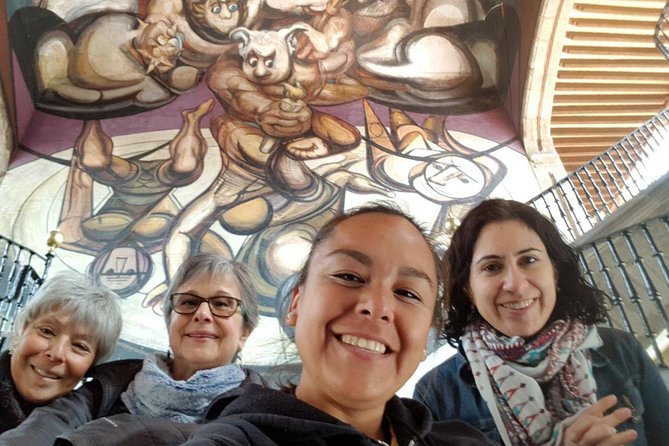
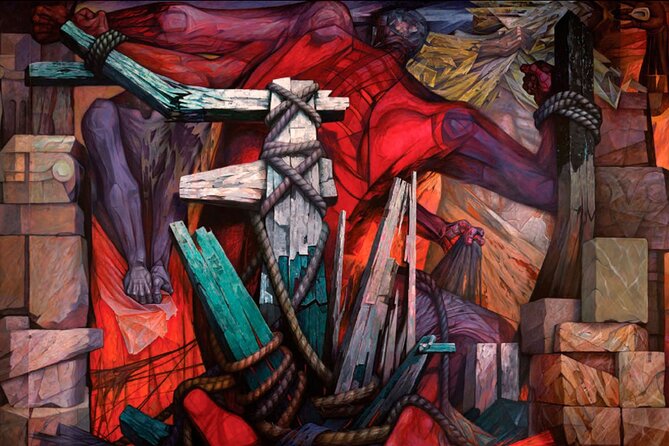
Next you head to Antiguo Colegio de San Ildefonso, often described as a foundation point for the Mexican muralist movement. The big draw here is the concentration of major names.
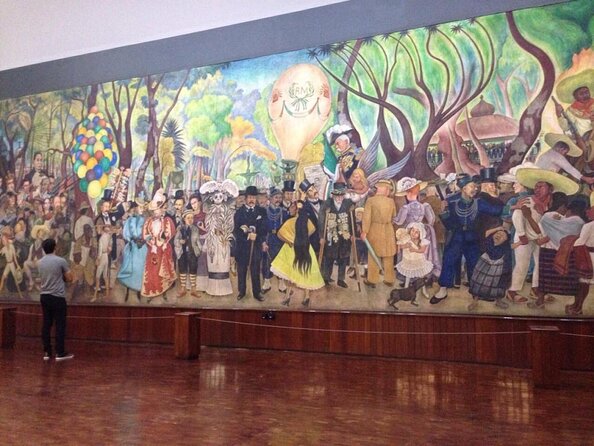
You’ll spend about 1 hour and see murals tied to José Clemente Orozco, Diego Rivera, and Jean Charlot (and the larger muralist circle around them). This is the kind of place where the walls feel like a classroom—even if you’re just walking through.
What I like about this stop is how it teaches you to look beyond famous signatures. When you understand the themes and the visual language, you start noticing things like:
- recurring social symbols
- how the artists place workers, students, and power structures in the frame
- how style choices signal ideology, not just aesthetics
If you want a “how to read murals” moment, this is where you get it.





Stop 2: Palacio de Bellas Artes and its wall-to-wall mural power
Then you land at Palacio de Bellas Artes, one of Mexico City’s most emblematic art buildings. Here, you’re not just seeing one mural. You’ll visit 17 different murals by artists across different years, all inside the same iconic structure.
That’s the key idea: one building, many mural “eras.” The place becomes like a timeline you can walk through, where you compare how different artists responded to the country and to the people shaping history.
You’ll spend about 1 hour at this stop, and entrance is included. The end point is inside the mural museum area of the palace, so you’re finishing somewhere that feels like a natural climax instead of a rushed drop-off.
For people who love both art and architecture, this is a standout. The building itself does a lot of the work, and the murals feel framed by the grandeur instead of competing with it.
The guide factor: why your hour is worth more with context
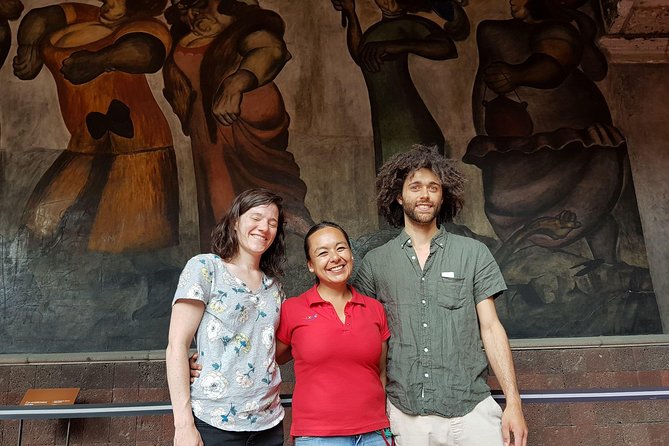
The murals are impressive on their own, but what turns this into a highlight is the guide’s interpretation. The same themes show up again and again in the feedback: clear historical framing, strong answers to questions, and a calm pace that doesn’t shove you through.
Emiliano (sometimes written as Emilio in comments) is the name that comes up repeatedly. People consistently mention how he connects:
- specific murals to broader social and political issues
- the artists’ lives and motivations to what you’re seeing on the walls
- the symbolism to meaning you can actually take away
One practical advantage of a good guide in this format: you learn how to notice details without needing to be an art historian. You’re shown what to look for, then you’re encouraged to see it again on your own while the group moves on.
What the 3.5-hour format feels like on the ground
The tour runs about 3 hours 30 minutes. That’s a sweet spot for a mural circuit because it gives you enough time in each site to absorb meaning, not just snap photos and move.
Still, treat it like a walking + standing day. You’ll be out long enough that comfort matters. If you’re the type who gets impatient when you can’t see everything instantly, this might feel slower than you expect, but most people come out wanting to re-see the works once they understand them.
Also, note the pacing is flexible. Some guides adjust the flow based on what the group responds to. That’s part of why the tour works for solo visitors, couples, and families—everyone gets pulled into the explanations, not stuck watching from the sidelines.
Who should book this tour (and who might want a different option)
This is a great fit if:
- you like art with context, not just art objects
- you want a first serious encounter with the muralists of the early 20th century
- you want your Downtown time to mean something beyond checking boxes
- you enjoy history that shows up in everyday public spaces
It may be less ideal if:
- you only want quick stops and photos
- you don’t like standing and walking for a few hours
- you prefer art experiences without political or social discussion
A smarter way to get more out of the murals
When you’re inside these spaces, your goal shouldn’t be to memorize everything. Your goal is to learn how to read.
Here’s how to make the most of the guide’s explanations:
- Ask about one mural you find most striking, even if you can’t fully explain why yet.
- Watch for how the guide points to symbols and composition choices. After a couple murals, you’ll start spotting them faster on your own.
- Keep an eye on the artist shifts. Rivera, Orozco, and Siqueiros each bring different emotional energy and political emphasis, and the tour helps you compare that.
And yes—wear comfortable shoes. It’s not optional if you want to enjoy the art instead of counting minutes.
Should you book Muralist Art in Downtown Mexico City?
Book it if you want the easiest path to understanding why Mexico City murals are famous for more than their size. The route is focused, the group stays small, and the guide interpretation is the difference between seeing paint and understanding a public argument in progress.
Skip it (or switch to a lighter option) if you hate standing/walking or you want purely superficial sightseeing. The tour is meant to teach you how to look, including the political and social connections that make these works land.
FAQ
How long is the muralist walking tour?
It’s about 3 hours 30 minutes, approximately.
How many people are in the group?
The tour has a maximum of 8 travelers.
Is the tour offered in English?
Yes, it’s offered in English.
What stops are included?
You’ll visit the Ministry of Education building with mural works, then Antiguo Colegio de San Ildefonso, and finally Palacio de Bellas Artes (including the murals inside).
Are entrance tickets included?
Yes. Entrance tickets to all museums visited during the tour are included.
What is not included in the price?
Tips or gratuities for the guide are not included. Transportation to the meeting point is also not included.
Where do you meet, and where does the tour end?
You start at Portal de Escribanos, Santo Domingo, Centro Histórico de la Ciudad de México. The tour ends inside the Mural Museum of Palacio de Bellas Artes.
Are service animals allowed?
Yes, service animals are allowed.
Can I cancel for a full refund?
Free cancellation is available. You can cancel up to 24 hours in advance of the experience start time for a full refund.