REVIEW · OAXACA CITY
Monte Alban Chesillo and handicrafts alebrijes and black mud
Book on Viator →Operated by TONALLI TOURS OAXACA · Bookable on Viator
Four stops, one smart route, and lots of real Oaxaca craft. This private day tour links quesillo cheese, Monte Albán archaeology, and two powerhouse handicraft traditions, so you get more than photo stops.
I especially like how the day starts with food you can see made—curds, rolling, and fresh tasting—then turns into guided history with wide valley views. I also love that the crafts aren’t presented as generic souvenirs: you learn the local names and meanings behind the figures in copal wood, then you watch black mud pottery go from clay prep to that metallic shine.
The one caution is simple: it is an 8–9 hour day with outdoor walking at Monte Albán, so plan for sun, comfort shoes, and good weather.
In This Review
- Key Highlights to Know Before You Go
- How This Tour Fits Together (and Why It Works)
- Stop 1: Reyes Etla and Oaxaca Quesillo You Can Watch Being Made
- Stop 2: Monte Albán Archaeology and Valley Views With a Real Guide
- Stop 3: San Antonio Arrazola Copal Wood Tones and Nahuales
- Stop 4: San Bartolo Coyotepec Black Mud Pottery and Quartz Burnishing
- Price and What Makes It Good Value
- Pickup, Timing, and How to Plan Your Day
- Guides on the Ground: Clear Explanations and Attentive Service
- Who Should Book This (and Who Might Skip It)
- Should You Book This Tour?
- FAQ
- How long is the tour?
- What’s included in the price?
- Is pickup included?
- Is this a private tour?
- What language is the tour offered in?
- What will I do at the craft stops?
- What if the weather is bad?
Key Highlights to Know Before You Go
- Quesillo at Reyes Etla: watch the artisanal brewing and strip-rolling process, then taste it with freshly made memelitas
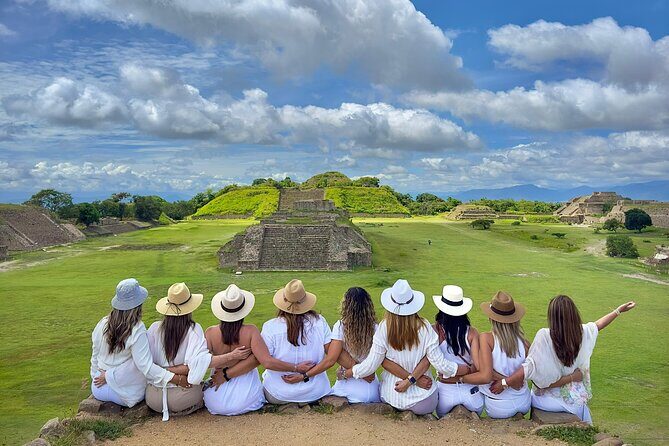
- Monte Albán with a guide: guided walk through squares and structures plus panoramic Oaxaca Valley photo views
- San Antonio Arrazola tones and nahuales: learn the Zapotec meaning of protective animals and mystical beings in copal wood
- San Bartolo Coyotepec black mud: see mud preparation, modeling, drying, and firing, then learn the quartz burnishing technique
- Private, pickup-in-Oaxaca convenience: direct hotel/Airbnb pickup in Oaxaca de Juárez main areas and an air-conditioned ride
- Guides praised for clear explanations: names you’ll hear include Ricardo and César Medina, both noted for being attentive and organized
How This Tour Fits Together (and Why It Works)
This is the kind of Oaxaca day I like for first-timers and returners alike: you start with a hands-on culinary tradition, move to one of Mexico’s most important Indigenous archaeological sites, and then finish with two of the region’s most recognizable crafts. The route makes sense because each stop builds on the last—food, then place, then belief turned into art.
You also get private transportation and direct pickup, which matters more than people think in Oaxaca City. With pickup from your hotel or Airbnb (or a nearby landmark if your street is tight), you spend less time figuring out where to meet and more time actually doing the activities.
It runs about 8–9 hours starting at 8:00 am, and it includes breakfast plus bottled water and soda/pop. Entrance fees are handled, so you’re not juggling tickets while trying to enjoy the day.
One more practical note: this experience requires good weather. Monte Albán is outdoors, and the rest of the day is easier when the day is dry and comfortable.
You can also read our reviews of more tours and experiences in Oaxaca City.
Stop 1: Reyes Etla and Oaxaca Quesillo You Can Watch Being Made

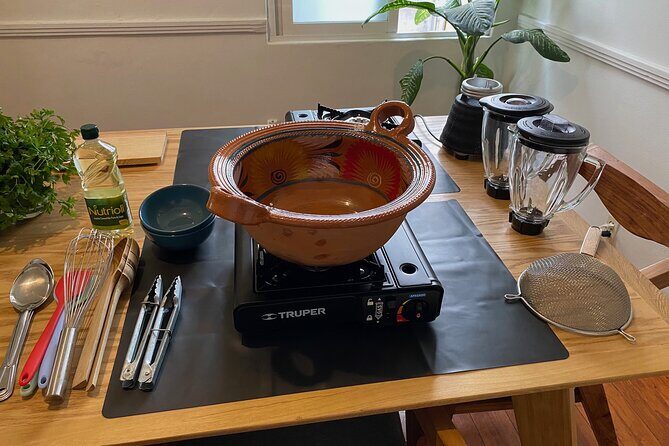
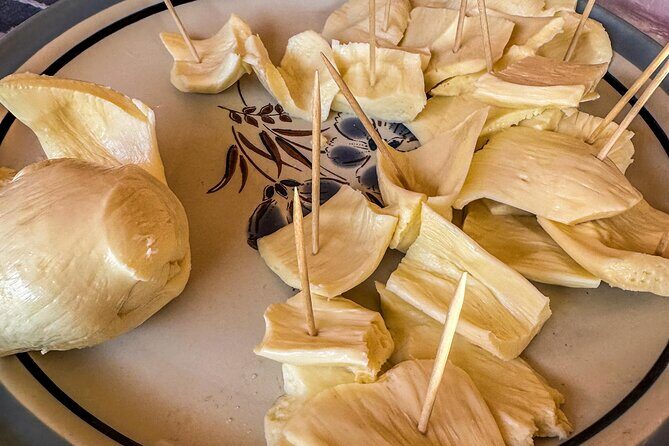
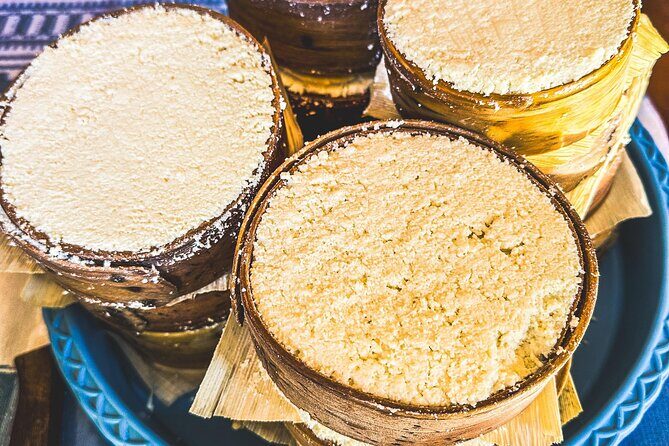
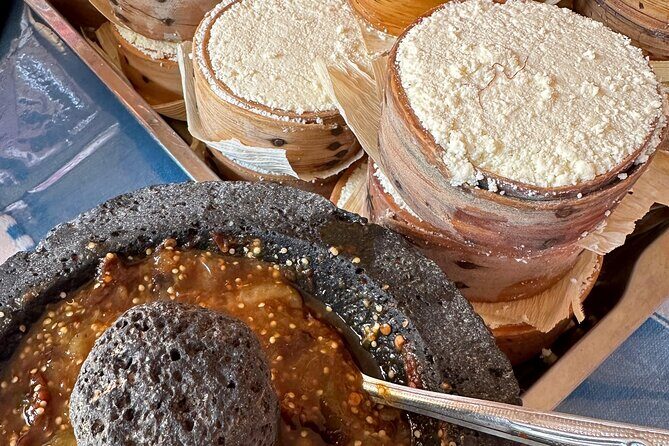
The day begins at Reyes Etla, at the home of a local cook where you meet one of Oaxaca’s best-kept cheese secrets: quesillo, the cheese known elsewhere as Oaxaca cheese.
This stop is not just tasting. You’ll see the cheesemaking process up close—from the curds to the signature strip-rolling that gives quesillo its look. If you’ve only ever bought cheese wrapped and ready to eat, it’s a real wake-up call to watch how much technique goes into something that looks simple on a plate.
Then comes the part you’ll remember: tasting fresh cheese with traditional memelitas. These are thick corn tortillas that are soft with a slightly browned finish—made using local ingredients and served fresh. The combination is a classic Oaxaca move: salty, stretchy cheese paired with hearty corn that feels filling without getting heavy.
Why this stop is valuable: Oaxaca cuisine is regional and specific, and quesillo is one of those foods that people talk about when they talk about identity. Seeing the process at a family setting helps you connect the cheese to the people who keep the tradition going.
What to consider: this portion runs about 1 hour 20 minutes, so if you’re arriving hungry, you’re good. If you’re sensitive to early mornings, start hydrating the night before so the cheese-and-corn combo hits you pleasantly, not like a shock to the system.
Stop 2: Monte Albán Archaeology and Valley Views With a Real Guide
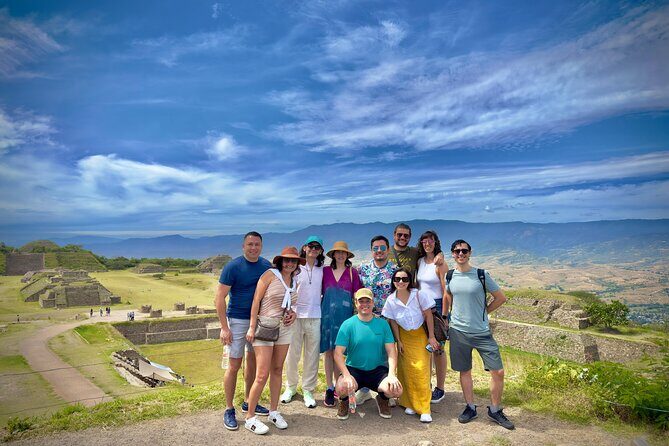
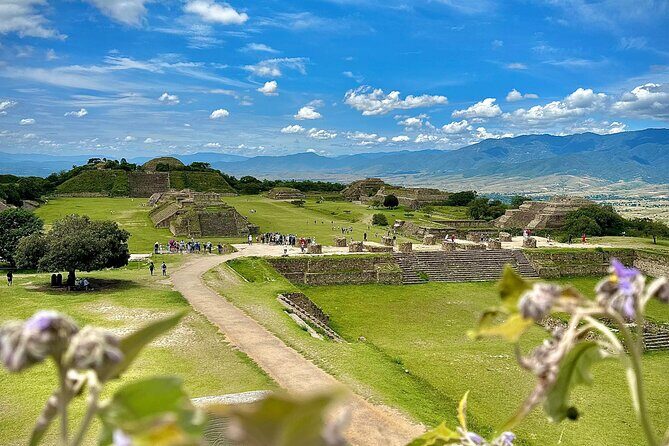
After breakfast, you head to the Zona Arqueológica de Monte Albán, the ancient Zapotec city that dominates the Oaxaca Valley. This is where the day shifts from food and craft into history you can walk through.
Your guided tour takes you through broad squares and archaeological structures while you learn how the inhabitants lived and what their ceremonial practices looked like. The guide also explains how Monte Albán influenced the broader region—useful context if you’re trying to understand Oaxaca beyond one town or one site.
The best part for many people is timing and perspective. Monte Albán is high and open, so the views come with the walk. You’ll get panoramic looks across the valley, great for photos, but also good for understanding why the Zapotec chose this place.
Why it’s worth doing with a guide: Monte Albán is big. Without help, it can feel like scattered ruins. With a guide, the structures and open spaces start to connect into an actual story—social life, ceremony, and power centered in one location.
What to consider: Monte Albán involves outdoor walking and enough movement that the tour asks for a moderate physical fitness level. Bring comfortable shoes and plan for sun. Good weather really helps, since the day is timed tightly.
Stop 3: San Antonio Arrazola Copal Wood Tones and Nahuales
Next up is San Antonio Arrazola, a town at the foot of Monte Albán known for woodworking figures made from copal. Many people associate these with the broader alebrije tradition, but here the meaning and terminology are specifically Oaxaca.
You’ll learn that these figures are called tones and nahuales. In Zapotec tradition, tones are protective animals linked to the day of a person’s birth. Nahuals are mystical beings that connect the human world with animal and spiritual forces.
During the visit, you can watch the craft process up close and hear directly from the creators about the symbolism behind designs. If you want to bring home something real, you can purchase in the family workshop.
Why this stop feels authentic: you’re not just looking at art; you’re learning how meaning turns into color, shape, and pattern. It’s a practical lesson in how belief becomes visual language—something you’ll notice later when you see similar figures in markets across Oaxaca.
What to consider: this stop is about 1 hour, so it’s focused. If you’re the type who likes long shopping sessions, you may want to browse quickly here, then do any extra comparison later the same day (or on another day in Oaxaca City).
Stop 4: San Bartolo Coyotepec Black Mud Pottery and Quartz Burnishing
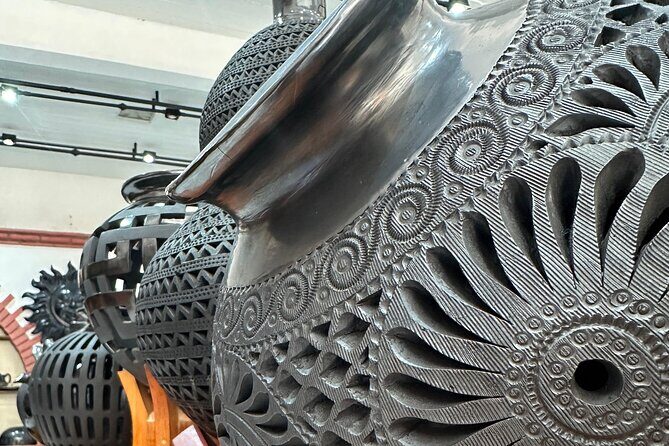
To wrap up, you head to San Bartolo Coyotepec, famous around the world for its black mud pottery. This is one of the most distinctive craft traditions in Oaxaca, and the process is what makes it so interesting.
You’ll see the full workflow: how the clay soil is prepared, how pieces are modeled, how they naturally dry, and how they’re cooked/fired in traditional ovens. What grabs attention is the finishing method.
Instead of relying on paint or enamel, artisans use a quartz stone burnishing technique. The result is that characteristic metallic shine on the finished pottery, coming from careful polishing rather than surface coating. Even if you’re not an art person, it’s satisfying to watch because it’s clearly a skill built through repetition.
You’ll also learn what black mud is used for: utilitarian objects, decorative pieces, and figures that reflect the local worldview. This matters because it explains why the craft stays practical. It’s not only about display; it belongs to everyday life and beliefs.
The purchasing opportunity is straightforward: you can buy directly in the workshop, which is usually the best path if you want authenticity and fair pricing.
What to consider: this stop is about 1 hour, so the time is enough for process watching and shopping, but not enough for an all-day pottery session. If you want a lot of time to compare pieces, plan to move with intention and ask the craftsperson key questions quickly.

Price and What Makes It Good Value

The tour price is $328.38 per group (up to 3 people) for about 8–9 hours. That sounds like a lot until you look at what’s inside the cost.
You get:
- Breakfast
- Bottled water and soda/pop
- Air-conditioned vehicle and private transportation
- Parking fees
- Entrance fees
- Pickup from your hotel/Airbnb area in Oaxaca de Juárez
You do not have meals beyond breakfast included, so lunch is on you. Still, the included breakfast helps you avoid wasting time searching for food once the day starts.
Why this can be good value: if you were to piece together transport, entry tickets, and a guided explanation for Monte Albán, the costs add up fast. The private setup also saves time in a city where street access can be tricky. And because this is a group of up to three, you’re paying for a day designed around your pace rather than a crowded bus schedule.
Is it worth it? If you want the full package—food + archaeology + meaningful crafts—this price can feel fair. If you only care about one or two stops, then you might compare against doing those separately.
Pickup, Timing, and How to Plan Your Day
Start time is 8:00 am, and pickup is offered directly from your location in the main areas of Oaxaca de Juárez. If you’re in the Historic Center and vehicle access is limited, they coordinate pickup at a nearby secure landmark.
That pickup detail is more than convenience. It helps you avoid a common vacation problem: spending your best daylight figuring out where to stand and who to wait for.
Once you’re loaded up in the air-conditioned vehicle, you’re on a steady schedule across all four stops. The day includes short transition periods, but it stays organized enough that you get full experiences without feeling rushed at every second.
My planning tip: treat this as an active day. Wear comfortable shoes for Monte Albán. Add a hat or sunscreen for the outdoor sections. Bring a light layer for comfort in the morning and evenings, since Oaxaca mornings can feel cooler before the sun climbs.
Water and soda/pop are provided, which helps. Still, if you run warm easily, plan to drink regularly so you don’t end up cutting your viewing short.
Guides on the Ground: Clear Explanations and Attentive Service
The tour is offered in English, and the guides are praised for making the stops understandable—not just reciting facts. Names that come up include Ricardo and César Medina. People also describe service that combines driving and guiding smoothly, which is helpful when you’re trying to keep a relaxed pace.
From what you can expect in tone and style, the emphasis is on clarity: explaining the significance of Monte Albán, walking you through craft symbolism in Arrazola, and showing you what’s happening in the black mud process in Coyotepec. That’s the difference between seeing an attraction and understanding it.
There’s also a comfort factor. One of the stronger signals from past experiences is that the team can handle families and requests with patience—so if you’re traveling with a baby or you need a slower moment, it sounds like the day can adapt rather than shut down.
Who Should Book This (and Who Might Skip It)
This tour fits best if you:
- Want a single-day introduction to Oaxaca City plus the valley
- Like a mix of food + history + crafts rather than only museums
- Enjoy learning meanings behind art (tones/nahuales) and not just buying items
It may be less ideal if you:
- Want lots of free time to wander without structure
- Dislike walking outdoors, since Monte Albán is part of the main experience
- Are traveling on a day when weather is uncertain, given the good-weather requirement
If your ideal Oaxaca day is calm and slow with long lunches and minimal driving, you might prefer a shorter or more local-focused tour. But if you want your time to count, this route is well built.
Should You Book This Tour?
Yes, I’d book it if you want a well-paced Oaxaca sampler that goes beyond surface-level sightseeing. The standout value for me is the combination of real-process experiences: watching quesillo being made, seeing black mud finished by quartz burnishing, and hearing how copal wood tones and nahuales connect to Zapotec worldview.
Skip it only if your priorities are narrow, like you only care about ruins or only care about shopping. Otherwise, this day gives you four strong Oaxaca chapters without wasting time.
FAQ
How long is the tour?
It runs about 8 to 9 hours total, starting at 8:00 am.
What’s included in the price?
The tour includes breakfast, bottled water, soda/pop, an air-conditioned vehicle, private transportation, parking fees, and entrance fees.
Is pickup included?
Yes. They offer direct pickup from hotels, Airbnbs, or your indicated address in the main areas of Oaxaca de Juárez.
Is this a private tour?
Yes. It’s private, so only your group participates.
What language is the tour offered in?
The tour is offered in English.
What will I do at the craft stops?
At San Antonio Arrazola you’ll see the creation of copal wood tones/nahuales and learn the symbolism. At San Bartolo Coyotepec you’ll see black mud pottery techniques, including polishing/burnishing with a quartz stone.
What if the weather is bad?
This experience requires good weather. If it’s canceled due to poor weather, you’ll be offered a different date or a full refund.