Some days in Oaxaca feel like snapshots from different centuries.
This full-day outing strings together Monte Albán’s UNESCO-sized Zapotec ruins with artisan towns known for alebrijes and black pottery. You’ll move from temple plazas to workshops and colonial-era churches, all with a guide who keeps the stories tied to what you’re actually seeing.
I especially like that the day gives you enough time for Monte Albán itself (about 2.5 hours), not just a quick stop. I also like the mix of hands-on local art moments, with alebrijes in Arrazola and barro negro pottery in San Bartolo Coyotepec.
One thing to consider: this is a walking-and-steps day. The main site includes steep climbs and wide staircases, and the later workshop stops can feel shop-heavy if you’re mainly there for archaeology.
In This Review
- Key highlights you will feel
- Monte Albán: the UNESCO site where Zapotec power shows up in stone
- What to look for at the Grand Plaza and South Platform
- Arrazola alebrijes: copal wood folk art and mythical creatures
- Cuilapam de Guerrero convent: the open chapel and colonial conversion goals
- San Bartolo Coyotepec: black pottery you can recognize in any Oaxaca market
- Lunch and pacing: a long day with good breathing space
- Price and value: what $37.55 really buys you
- Guide quality and language: bilingual, but not always equal
- Practical tips so your knees and your photos survive
- Should you book this Monte Albán and artisan day trip?
- FAQ
- FAQ
- How long is this tour?
- What time does pickup start?
- Is the tour offered in English?
- Are entrance tickets included for Monte Albán and Cuilapam?
- Is lunch included?
- How physically demanding is the day?
- What group size should I expect?
Key highlights you will feel
- Monte Albán’s I-shaped ball court and carved stone features like Los Danzantes
- South Platform stairs and big views over Oaxaca and the valley
- Arrazola alebrijes made from copal wood, with time to stroll and shop
- Cuilapam’s capilla abierta (open chapel) tied to early colonial conversion efforts
- San Bartolo Coyotepec barro negro and a pottery process/market visit
- Small group size (max 18) with an English/Spanish bilingual guide
Monte Albán: the UNESCO site where Zapotec power shows up in stone
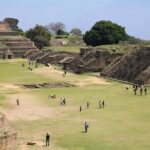
Monte Albán is the reason most people book a day trip from Oaxaca City. It sits up on a mountaintop, and even before you start reading the stones, you get the sense of purpose: this was a political and ceremonial center. You’ll spend about 2.5 hours exploring, which is the right amount to see the big layout without feeling rushed.
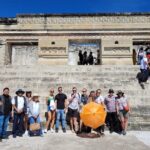
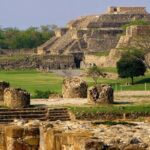
A guide helps you connect the dots at the Grand Plaza, the broad flattened area where ceremonies would have played out. One of the most memorable features is Los Danzantes, a set of rock carvings often described through the figures carved across stone. You’ll also get a look at structures like pyramids, temples, altars, and the I-shaped ball court dating to around 100 BC. That shape matters because ball games weren’t just sports here. They were tied to ritual and social order.
Monte Albán also includes tombs. The excavations brought up evidence of paintings and stone carvings, which helps you understand that this place wasn’t only about outdoor monuments. It was also about how people marked status and memory after death.
Practical tip: if stairs and sun are hard for you, plan to slow down early. The South Platform has a wide staircase and great views, but it’s the kind of climb you earn. I’d bring a hat and water, and wear shoes you’re happy to trust on uneven stone.
You can also read our reviews of more tours and experiences in Oaxaca City.
What to look for at the Grand Plaza and South Platform
If you’re trying to get value from your time, focus on flow. Monte Albán’s layout works best when you move with intention: start with the wide open areas so you understand the site’s “stage,” then go toward the platforms and the higher points.
The Grand Plaza is your orientation zone. It’s where your brain starts mapping how the ceremonial platforms relate to one another. From there, the guide’s stories make the carved details easier to spot, including ceremonial platforms and figurative stonework.
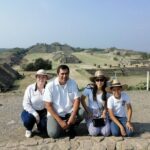
Then comes the payoff: the climb toward the South Platform. That wide staircase gives you a steady route upward, and once you’re up, the views over Oaxaca and the valley land like a final page in a history book. Even if you don’t love heights, the vista helps you understand why Monte Albán was built where it was.
One more thing: there are tombs, but the site is more than a single attraction. With your time on the clock, I’d prioritize the main ceremonial layout, then treat tomb zones as bonus texture rather than a checklist.
Arrazola alebrijes: copal wood folk art and mythical creatures
Next up is San Antonio Arrazola, a calmer town at the base of Monte Albán. You’ll have about 45 minutes here, which is short, but it’s enough to get a feel for why alebrijes matter in Oaxaca culture. The woodcarvings are often described through fantastic zoology—mythical animals and monsters—made with a playful, imaginative energy.
Alebrijes here are known as woodcarvings carved from copal tree wood. That detail is worth remembering because it explains the craftsmanship you’re seeing in front of you. You’re not just buying a souvenir. You’re looking at a material tradition, turned into form through skill that families keep passing on.
In that short window, the best approach is simple: stroll first, then shop with a plan. If you want to compare styles, you’ll need a few minutes of walking. If you already know what you want, move quickly and use your last minutes to double-check sizes and prices.
A realistic downside: any workshop stop can tip into shopping time. If you’re very strict about staying focused only on archaeology, Arrazola might feel like a detour. But if you enjoy seeing how art becomes identity, this stop is genuinely part of the day’s story.
Cuilapam de Guerrero convent: the open chapel and colonial conversion goals
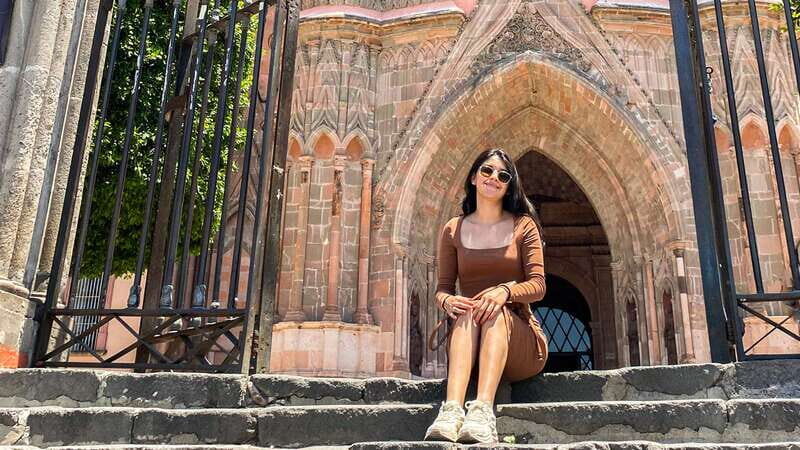
Cuilapam de Guerrero brings the day into the 1500s. The stop centers on a 16th-century Dominican convent, including a capilla abierta—an open chapel—and an unfinished basilica. If you like colonial history, this is one of the most interesting contrasts to Monte Albán. You’re shifting from Zapotec ceremonial space to missionary-era architecture designed to serve large crowds.
The open chapel concept is key. Your guide will point out that the design encouraged conversion efforts aimed at reaching larger numbers of Indigenous people. In other words, architecture here wasn’t only about worship. It was also a tool for communication and change.
You’ll have about 1 hour at this stop. Keep in mind there’s an extra admission cost if you visit the museum portion. The info on the day says it can be $70 pesos per person.
Is this stop always everyone’s favorite? Not necessarily. If you’re burned out by churches, you might wish the day gave you more time at Monte Albán and less at side stops. But if you want the full Oaxaca “before-and-after” arc, the convent ties the cultural timeline together in a way the craft stops don’t.
San Bartolo Coyotepec: black pottery you can recognize in any Oaxaca market
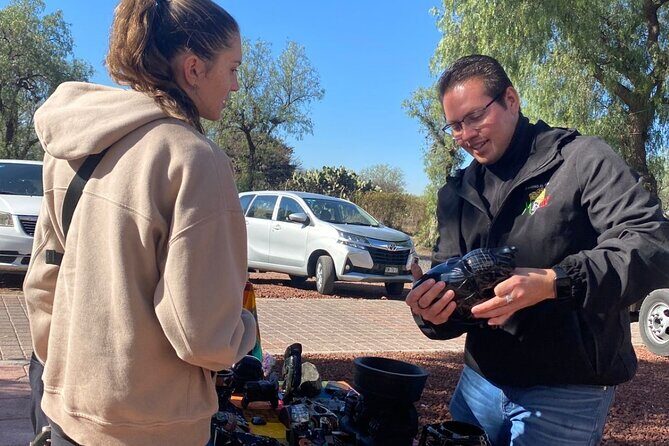
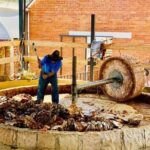
San Bartolo Coyotepec is where your eyes learn a new kind of detail. The town is famous for barro negro, black pottery made locally for a very long time—traced back to pre-Columbian ceramic traditions. You’ll spend about 45 minutes here, including time around the San Bartolo Coyotepec Church, the Oaxaca State Museum of Popular Art (MEAPO), and a craft market.
What makes this stop practical is the way pottery is explained and shown. You’ll learn about the process of making barro negro, then you’ll see the results in objects around the town’s market. If you’ve ever seen black ceramics in Oaxaca, this is where you figure out why they look the way they do.
This is also a good place to buy with confidence. The market tends to be full of family-made pieces, and your time here is long enough to compare sizes and finishes. You’re not forced into a “buy now” rush—at least that’s the usual vibe on this day.
If you’re worried about time, prioritize the demonstration first, then the market. That way, purchases feel like decisions instead of impulse buys.

Lunch and pacing: a long day with good breathing space
Your day starts at 8:30 am with pickup from a central spot in Oaxaca City (Quinta Real 5 de Mayo, on Ruta Independencia near the Centro). You’ll ride in an air-conditioned vehicle, and the group size is capped at 18 travelers, which helps keep transitions manageable.
Total duration is about 8 hours. In real terms, that means you’ll likely end up getting dinner later than you planned, especially if you’re also trying to fit in other activities around Oaxaca City. The itinerary includes a buffet-style lunch stop, and it’s on your own expense. The day info points to a buffet around $200 MX plus drinks, while other recent examples place lunch closer to the 300 pesos range with at least a beverage.
The lunch stop is useful, because Monte Albán can beat you up. Steps at the site add up, and the sun can feel intense. Then you get food, sit down, and reset before the art-and-church portion of the day.
One timing note to keep in your head: some people end up eating around the early afternoon. If you’re the kind of traveler with a hard dinner reservation, plan buffers.
Price and value: what $37.55 really buys you
At $37.55 per person, this tour is priced like a culture sampler—one guide-led day that hits multiple highlights. You get hotel pickup/drop-off from Oaxaca, a bilingual English- and Spanish-speaking guide, travel insurance, and an air-conditioned vehicle. That alone can be the value if you’d otherwise pay for separate local transport and guide time.
The tradeoff is that admissions aren’t fully included. The Monte Albán ticket is not included, and the convent (Cuilapam) can have an extra cost (listed as $70 pesos per person if you visit the museum portion). Lunch is also not included, and that’s a realistic extra budget line.
So is it still a good deal? In my book, yes—if you want the full package: UNESCO ruins plus two artisan-focused towns plus a colonial architecture stop. If you mainly care about Monte Albán and would rather spend time elsewhere, the extra workshop and craft stops can feel like money spent on things you’d skip.
A simple way to judge this: treat the base price as transportation + guide time, then budget separately for entrances and lunch. That keeps you from getting surprised mid-day.
Guide quality and language: bilingual, but not always equal
This tour is offered with a professional English- and Spanish-speaking guide, and it’s a big part of why the day works. The guide helps you connect what you’re seeing at Monte Albán—ball court, carvings, tombs—with the larger Zapotec story.
From the examples tied to this experience, guides can be strong enough to go deep. Names like Antonio and Gabriel show up for clear English communication and archaeology-focused explanations, and Emanuel is mentioned in connection with detailed site knowledge. Daniel and Silvia also come up with a similar theme: history and site context mixed into the walk.
Still, a practical caution: when a group is bilingual, the ratio of English to Spanish can vary depending on who asks questions and how the guide structures explanations. If English clarity is a must for you, ask where you can focus your questions during the Monte Albán portion. Even a short conversation in the moment can help you catch up on details you care about.
Practical tips so your knees and your photos survive
I’d pack like you’re visiting a hot, step-heavy site plus two market areas.
- Bring sunscreen and a hat. The climb at Monte Albán is the kind where sun catches you even if you think you’re moving carefully.
- Wear good shoes. People mention that the steps aren’t a joke, especially with the South Platform area.
- Bring water. You’ll want it during the Monte Albán climb and again as the day heats up.
- Expect walking. It’s not only the archaeology steps; you’ll also walk town streets at Arrazola and through market areas at Coyotepec.
- Bring some cash or be ready to pay in pesos for entrances and lunch extras.
One more tip: if you’re photographing, start early at Monte Albán. Then move slower through the artisan areas, when you’ll likely want to inspect craftsmanship up close rather than race through “photo stops.”
Should you book this Monte Albán and artisan day trip?
Book it if you’re a first-time visitor to Oaxaca City and want a single day that covers the big story: Zapotec ceremonial power, colonial-era mission architecture, and Oaxaca’s living crafts. The combination makes sense, and the day length is long enough to feel like you learned something real without turning into a full-on marathon.
Skip or reconsider if Monte Albán is your only priority and you dislike workshop-shopping style stops. Some travelers prefer more time at the archaeology and less time on craft and church add-ons. If that sounds like you, you might want a more focused plan centered strictly on Monte Albán and viewpoints.
If you do book, go in with the right mindset: this is a full sightseeing day with steps, sun, and short workshop windows. You’ll get the best value when you treat the art towns as part of Oaxaca’s ongoing cultural identity, not as filler.
FAQ
FAQ
How long is this tour?
It runs about 8 hours, with roughly 2.5 hours at Monte Albán plus shorter visits at Arrazola, Cuilapam, and San Bartolo Coyotepec.
What time does pickup start?
Pickup starts at 8:30 am from the meeting point in Oaxaca City (Quinta Real 5 de Mayo, 300 Ruta Independencia, Centro).
Is the tour offered in English?
Yes. It’s offered with a bilingual guide and specifically notes English as an available language.
Are entrance tickets included for Monte Albán and Cuilapam?
No. Monte Albán admission is not included, and Cuilapam Convent can require an extra ticket (listed as $70 pesos per person for the museum).
Is lunch included?
Lunch is not included. The day includes a buffet stop for your own expense (examples mention around $200 MX plus drinks, and other recent examples closer to 300 pesos with beverages).
How physically demanding is the day?
It’s moderate, but Monte Albán has stairs and uphill climbing. Wear comfortable, supportive shoes and plan for sun exposure.
What group size should I expect?
The tour lists a maximum of 18 travelers.