REVIEW · MEXICO CITY
Mexico City: City Highlights Cable Car Ride w/ Taco & Tour
Book on GetYourGuide →Operated by Warriorgastrotours · Bookable on GetYourGuide
Mexico City can feel repetitive fast, so this tour gives you a different route. You get the Cablebús cable car view above Iztapalapa, but the real hook is how you travel there like a local, using public transit with real context about how the city works. Along the way you also hit art-heavy neighborhoods and stops that most visitors never bother to plan for.
What I like most is that the trip mixes smart transit sightseeing with daily-life details: a major mural/history stop, a market for a huge taco (vegetarian option included), and a fun finish with pulque. One thing to consider: it moves at a fast pace with considerable walking and lots of stairs inside the metro and subway systems.
In This Review
- Key highlights you’ll actually feel
- Why Iztapalapa Makes This Mexico City Cable Car Tour Worth Your Time
- Getting Oriented at Churrería El Moro (and Why the Meeting Point Helps)
- The Subway Segment: The Real Lesson Is How the System Feels
- The Mural and History Stop in Iztapalapa: Art With Context
- Cablebús Over Iztapalapa: The Panoramic View You’ll Remember
- The Market Taco Break: Food That Feels Like a Local Shortcut
- The Airplane Turned Cultural Venue: The Utopia Library Stop
- Returning by Metro and Finishing With Pulque
- Price and Value: What $69 Gets You in Real Terms
- Pace and Practical Tips: Stairs, Shoes, and Staying Comfortable
- Who This Tour Suits Best (and Who Should Skip It)
- Guides, Humor, and the Art of Actually Learning a City
- Should You Book This Mexico City Cable Car and Taco Tour?
Key highlights you’ll actually feel
- Ride the world’s largest cable car with panoramic views over the city and rooftops marked by street art
- Go beyond downtown sightseeing into Iztapalapa areas that many locals don’t even see often
- Eat a taco that’s treated like the main event, with a vegetarian option
- Visit an airplane converted into a cultural venue, known in the tour info as a library space (Utopia is mentioned by reviewers)
- Try pulque at the end, including a natural taste and a flavored one
- Small group of up to 9 means your English-speaking guide can keep things personal and interactive
Why Iztapalapa Makes This Mexico City Cable Car Tour Worth Your Time
If you only do Mexico City’s postcard stops, you miss the way people actually live and move. This experience centers on Iztapalapa, a district tied to daily life for millions, with history that runs back to Aztec roots. You’re not just looking at the city from a distance. You learn how it connects—through transit, murals, markets, and community spaces.
I also like that the focus isn’t only on the big wow moment (the cable car). The tour is built like a story: how you get there, what you pass, what you learn, then the view overhead. That’s why it feels more like a day with a smart friend than a checklist of sights.
And the tone matters. The tour description emphasizes a guide who knows CDMX well and keeps things entertaining with funny quizzes. Reviews back that up with comments about humor, personality, and the sense that you’re learning while still having fun.
You can also read our reviews of more city tours in Mexico City

Getting Oriented at Churrería El Moro (and Why the Meeting Point Helps)

You meet outside Churrería El Moro. That’s useful because it gives you an easy, central reference point to find your group without needing complicated directions. On top of that, you’ll get a text so you can spot your guide’s outfit.
From there, you’re headed into the transit network right away. That’s a good sign for your comfort: it means you’re not wasting the first hour standing around while everyone figures out where to go. Instead, you get into the flow of the city—subway toward the suburbs, then metro for the return.
The Subway Segment: The Real Lesson Is How the System Feels
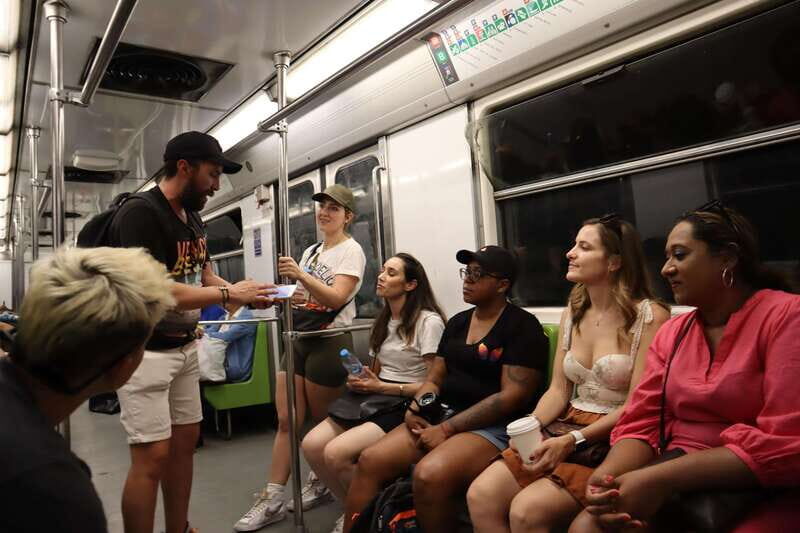
The first leg takes you from downtown by subway toward the suburbs. This is where the experience earns its name as a transit-focused day.
You’ll talk about the challenge of transportation in the largest city in North America and get context for what you’re seeing. Even if you don’t become a transit expert by the end, you’ll start noticing the patterns: how lines connect neighborhoods, how crowds move, and why local routes matter more than tourist shortcuts.
This part is also a practical skill builder. Once you understand the logic of how people get around, other areas of Mexico City start making more sense—even on days you travel without a guide.
The Mural and History Stop in Iztapalapa: Art With Context
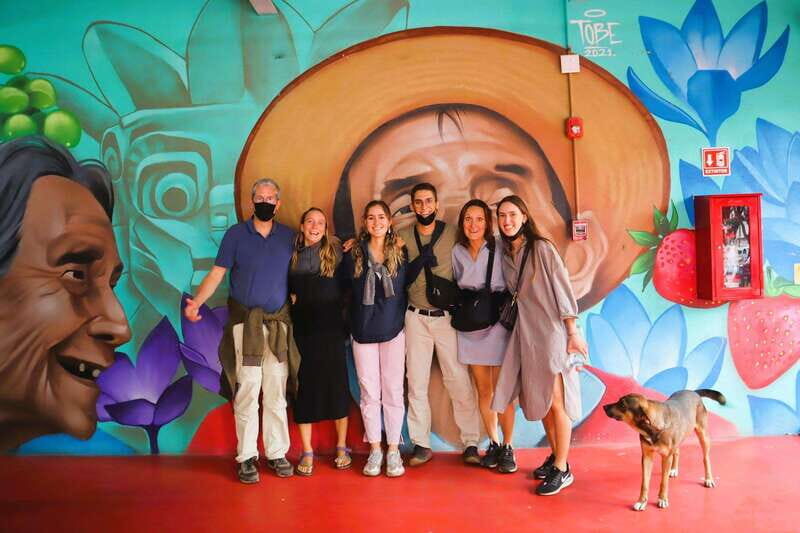
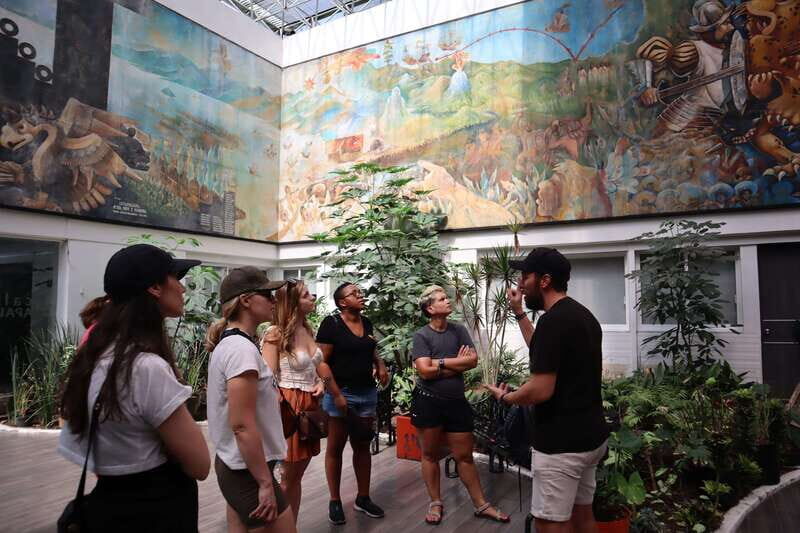
After getting into Iztapalapa, you visit a local building where you can appreciate a mural and learn the neighborhood’s history. This isn’t art explained like a museum label. It’s framed as part of the district’s story and community identity.
The tour also includes information about Iztapalapa’s largest open community theater event in the world. The value here is that you learn something specific tied to local life, not just general facts about Mexico City. When you later see murals and cultural spaces, you’re more likely to read them as part of a living place, not as decorations for photos.
One more thing: this stop sets up the next big moments. You’re seeing how history and art show up on real streets and real buildings. Then the cable car ride lets you look back at all of it from above.
Cablebús Over Iztapalapa: The Panoramic View You’ll Remember

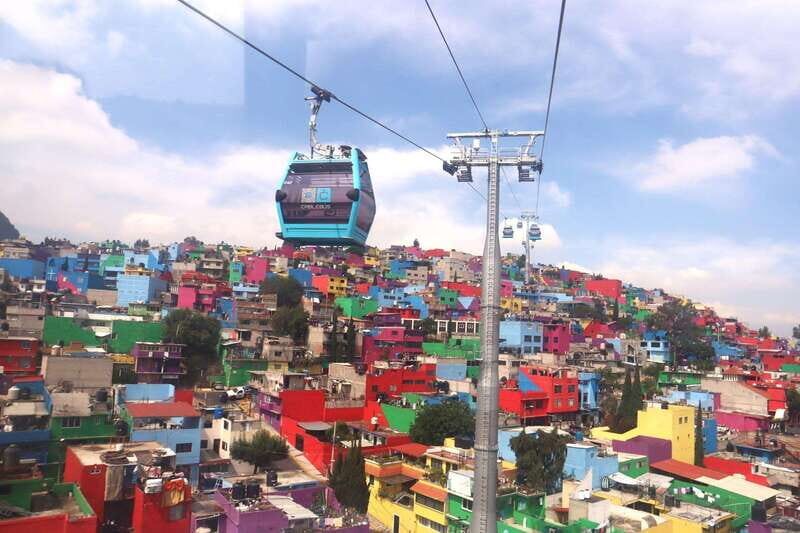
Now for the headline: you’ll fly like birds on the world’s largest cable car. The tour info promises panoramic views over the city, with colorful street art visible from above.
This ride is one of those travel moments that changes your understanding of a place. From the ground, you can feel the density and daily movement. From up in the air, you see how neighborhoods stack, how streets connect, and where art appears across rooftops.
Based on reviews, the cable car views are often described as a highlight, especially for the way you can spot murals spread across buildings. That rooftop art detail is exactly why a cable car is more than just a ride—it becomes a moving viewpoint.




The Market Taco Break: Food That Feels Like a Local Shortcut
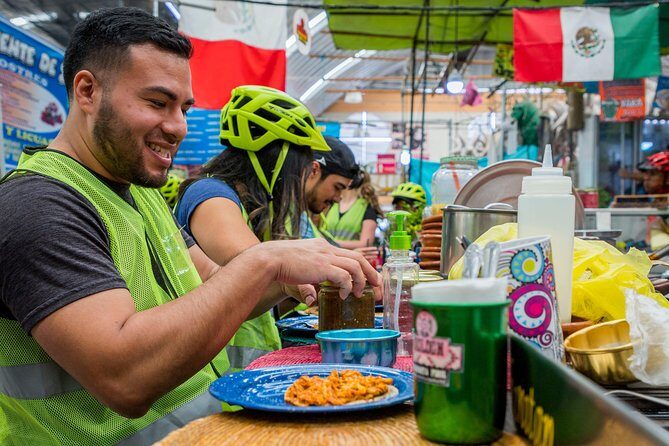
Between the cable car segment and the cultural stop, you’ll visit a local market for what the tour describes as the best taco of your life. Whether or not you agree with the superlative, the point is clear: you’re not doing a random snack. You’re planning around food that locals actually seek out.
You’ll get a huge traditional taco, and there’s a vegetarian option. That’s a big practical win. It means you can focus on the experience without worrying about whether the tour can handle your preferences.
I like that the taco is positioned in the middle of the day, so it fuels the walking and stairs without feeling like you ate and then rushed out. It also anchors the tour in everyday culture rather than only architectural or scenic stops.
The Airplane Turned Cultural Venue: The Utopia Library Stop
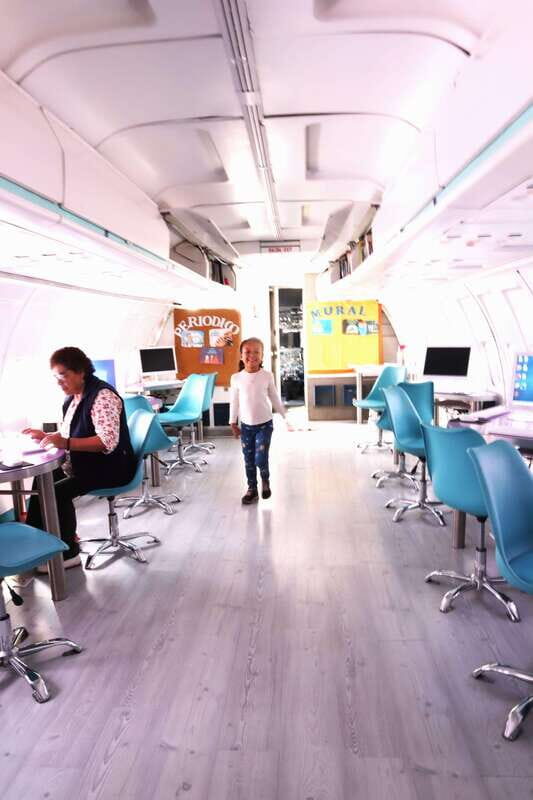
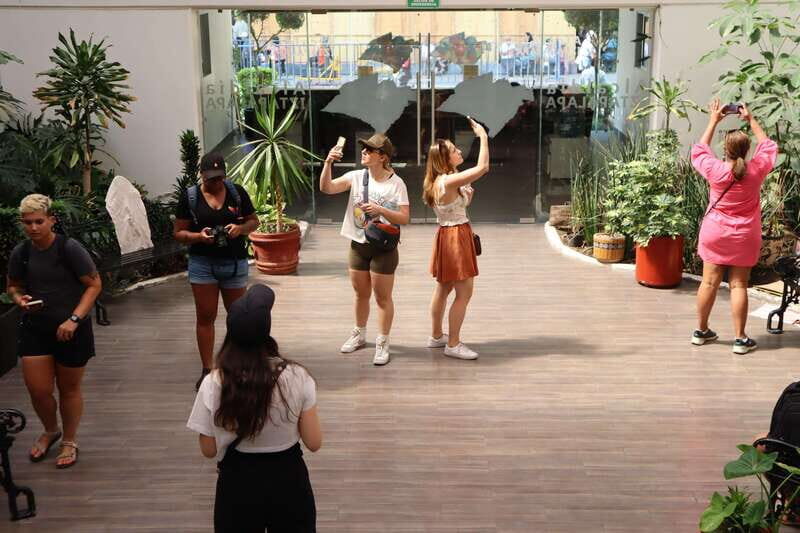
Here’s the kind of detail that makes you smile when you’re planning your day: you’ll visit an airplane adapted into a public library or cultural venue. Reviewers mention the airplane as Utopia, and the tour is clearly designed around that oddball, memorable idea.
Why it works: it breaks the pattern. Too many city tours march you through the same categories—church, square, viewpoint. This one swaps in something unusual that still connects to community and culture. You get a story-driven stop that’s both visually striking and different enough that it sticks in your mind long after you leave.
If you love quirky local creativity, this is the “how did they think of this?” moment you’ll appreciate.
Returning by Metro and Finishing With Pulque
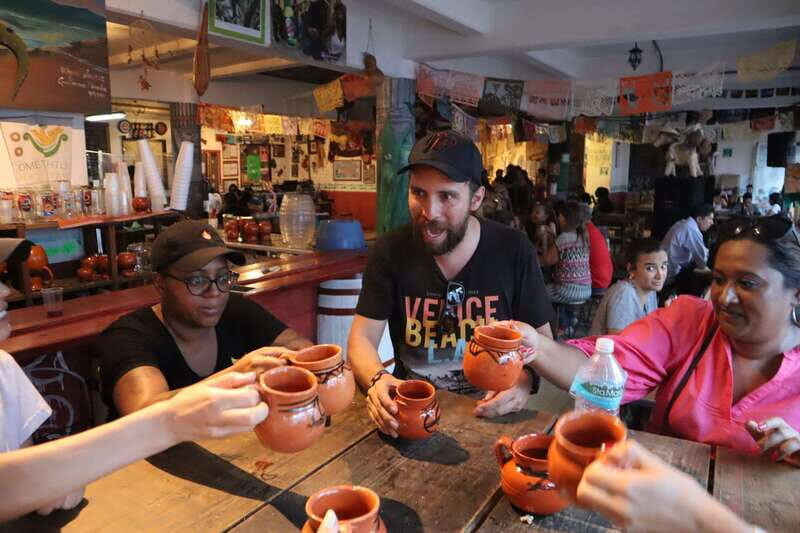
After the airplane and market stop, you come back by metro and finish in downtown at a local bar. The finale is a pulque tasting, including both natural and flavored pulque.
Pulque is a pre-Hispanic drink, and that matters here because it’s not treated like a gimmick. The tour frames it as part of Mexican tradition, which helps you try it with a little context instead of just handing you a glass and hoping for the best.
This ending also has a social rhythm: you’ve walked, learned, ridden transit, eaten, and then you slow down. It’s a smart way to end a day that otherwise could feel like nonstop motion.
Price and Value: What $69 Gets You in Real Terms
At $69 per person for about 4.5 hours, you’re paying for more than a cable car ride. Here’s what’s included in the tour price:
- All public transport tickets
- Guide and walking tour
- A huge traditional taco (vegetarian option)
- Pulque tasting (natural and flavor)
- Planning help: explanations, doubt resolution, and city recommendations
When you stack that up, the cable car becomes one piece of a bigger value package: transit access, food, and a guide who ties everything together. If you’ve ever tried to copy a similar day on your own, you know how hard it is to get the timing right, figure out where murals and local markets fit, and still leave room for a relaxed experience.
Also, the tour is a small group (limited to 9). That’s not just comfort—it affects attention. A guide can keep your group together and still explain what you’re seeing without the usual “everyone look at this, quick photo, next stop” rhythm.
Pace and Practical Tips: Stairs, Shoes, and Staying Comfortable
This is a day with real walking and stairs inside the metro and subway systems. The tour is described as a bit fast paced, so don’t plan to treat it like an easy stroll.
To enjoy it, bring:
- Comfortable shoes
- Sunscreen
- Water
- Comfortable clothes
Two extra practical notes: bottle of water isn’t included, and there are coins needed to use the restroom. That’s worth keeping in mind so you’re not scrambling.
Also, the experience is in English with a live guide, so you’ll want to be ready to follow along and participate in the quiz-style moments. If you prefer quiet, self-guided sightseeing, this might feel too active.
Who This Tour Suits Best (and Who Should Skip It)
This experience is designed for people who want more than famous monuments. It’s ideal if you:
- Want to see real daily life in a working neighborhood like Iztapalapa
- Like street art and want to understand it in context
- Enjoy public transport as part of the travel story
- Eat street food and want a guided market taco stop
- Want an off-the-beaten-path day without going fully DIY
But it’s not suitable for:
- Wheelchair users
- People over 80 (and the info lists higher-age restrictions beyond that)
- Children under 10 (and also notes children under 11)
- Pets
- Bikes
- Unaccompanied minors
- Bare feet
If you’re planning with kids, the tour notes that kids can join, but it also suggests a private tour as the best choice. That’s a useful signal that the pace and content include enough history and movement that parents may prefer a tailored format.
Guides, Humor, and the Art of Actually Learning a City
A lot of tours claim to be educational. This one tries to make learning feel like part of the day.
The reviews repeatedly mention guides such as Fernando and Elizabeth, with praise for how much context they provided and how they kept the vibe friendly and funny. People also highlight the guide’s personality and willingness to answer questions, plus the art focus along the route.
If you want a day where someone points out why a mural is there, what a neighborhood is about, and how transit shapes the city, the guide is the engine. Small group size helps that engine run smoothly.
Should You Book This Mexico City Cable Car and Taco Tour?
Yes, if you want a Mexico City day that feels like living in the city for a few hours. Booking makes sense when your priorities include public transit, street art views from above, a real market taco stop, and a finale with pulque.
I’d skip it if you need a slow-moving, minimal-stairs outing or you’re sensitive to walking inside crowded transit areas. Also, if you’re only after the most famous landmarks and nothing else, you might find this day too focused on daily life and neighborhood culture rather than classic sightseeing.
If you’re curious about how CDMX works and you like getting off the usual path, this is the kind of tour that can change what the city means to you.