REVIEW · MEXICO CITY
Historical downtown Mexico City & Teotihuacan Pyramids Mezcal tasting
Book on Viator →Operated by Encuentro T · Bookable on Viator
Mexico City has a way of pulling you in fast. This 9-hour day pairs the power-and-prayer vibe of the historic center with a guided visit to the Teotihuacan pyramids, plus an included mezcal or tequila tasting that keeps the afternoon memorable. I like how it mixes big iconic sights with real context on what you’re looking at—then ends with those pyramid views that still feel unreal.
Two things I really like: the guided approach through downtown stops like the Zócalo and the National Palace, and the fact that entrance fees are handled so you spend less time managing tickets and more time seeing. One drawback to keep in mind: you can’t go to the top of the Sun and Moon pyramids, and lunch quality depends on whether you choose the option that includes it.
In This Review
- Key points that make this day work
- A classic CDMX + Teotihuacan day, planned for real time
- Price and value: what your $83 actually buys
- Hotel pickup, group size, and how long the day really feels
- Palacio de Bellas Artes to the Reforma view: starting with big-city culture
- Zócalo, National Palace, Templo Mayor, and Cathedral: seeing power in layers
- Zócalo (Plaza de la Constitución)
- Palacio Nacional
- Museo del Templo Mayor (Great Temple area)
- Catedral Metropolitana
- Plaza de las Tres Culturas: the wow stop that connects three eras
- Teotihuacan: Sun and Moon pyramids without the climb
- The mezcal or tequila tasting: a small stop with a big payoff
- Lunch and comfort: plan for variation
- What the best guides do for you on this route
- Who should book this tour?
- Should you book this CDMX + Teotihuacan day trip?
Key points that make this day work
- Historic center highlights packed in a logical route, including Zócalo, Metropolitan Cathedral, and major photo stops.
- Teotihuacan with a guide on-site, covering the layout between the Calzada de los Muertos and the big temples.
- Mezcal or tequila tasting included, with the exact spirit possibly varying by operation.
- Small group size (max 16), which usually means less waiting and easier questions.
- You stay moving by air-conditioned minivan, with hotel pickup and drop-off at selected locations.
A classic CDMX + Teotihuacan day, planned for real time
If your Mexico City trip has limited days, this kind of combo is a practical choice. You’re doing two different flavors of “Mexico” in one go: the living present of Mexico City’s historic core, then the ancient scale of Teotihuacan. That mix is what makes the day feel complete instead of like two random sightseeing blocks.
The structure also helps your brain. Downtown stops mostly involve short walks and focused viewpoints—think squares, cathedrals, and government landmarks. Teotihuacan shifts to open-air exploration, with guided orientation so you understand where the Pyramid of the Sun and Pyramid of the Moon fit into the whole complex.
One more thing: this is designed to be a group day with pickup and drop-off at select hotels. That matters because Teotihuacan is far enough away that getting there efficiently is half the battle.
You can also read our reviews of more food & drink experiences in Mexico City



Price and value: what your $83 actually buys
At $83 per person for an ~9-hour tour, the big value is that the day isn’t just “transport + a list of stops.” You also get entrance fees included and a mezcal or tequila tasting. That’s a real savings in Mexico City sightseeing days, where you can otherwise lose time and money tracking tickets.
Still, read the fine print mindset. The tour data also notes an additional archaeological-site tax for foreigners (listed as $96 MXN) and locals (listed as $58 MXN). Even if many entrances are covered, that specific tax can change the effective cost for some people—so it’s smart to budget a little extra and keep a few bills on hand.
Finally, food. Lunch is included only if you select that option, and the tour data says food and drinks are not included if the lunch option isn’t chosen. One of the reviews you’ll see people talk about is lunch quality, so I’d treat lunch as conditional and plan accordingly.
Hotel pickup, group size, and how long the day really feels
This tour runs for about 9 hours, with transfer times that shift with traffic. Expect more variability than a timed museum visit. Mexico City traffic can be intense, and Teotihuacan sits outside the city center—so the day’s rhythm depends on when you start.
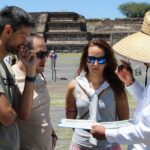
The group cap is 16 travelers, which is comfortably small. In practice, that usually means you spend less time clustered in a big group and more time hearing your guide clearly at each stop. Several guides from past departures—like Rosalina, Ursula, Hugo, Marco, Alan, and Daniel—were praised for friendly, organized delivery and for answering questions without rushing.
One reality check: the day includes both walking time and moving between areas. If you’re the type who gets tired easily, bring a little stamina strategy: water, comfortable shoes, and a mindset of short stop-and-go.
Palacio de Bellas Artes to the Reforma view: starting with big-city culture
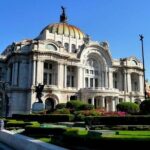
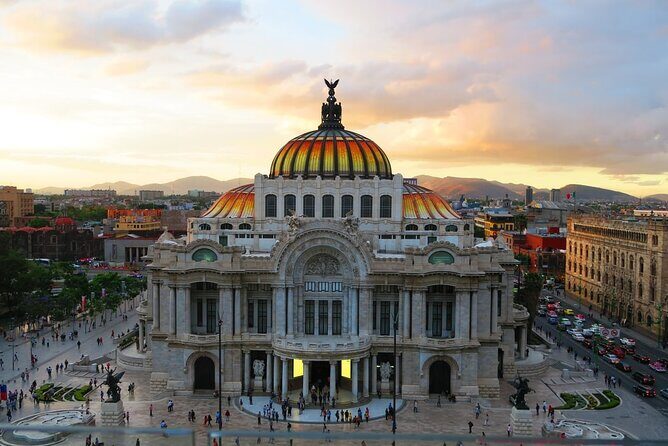
The day starts with a stop at Palacio de Bellas Artes, one of Mexico City’s most important cultural buildings. Even if you don’t go inside, it’s a strong visual opening. You’re stepping into the historic center’s “symbol mode,” where architecture and national identity are tightly linked.
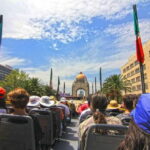
Next comes a major identity corridor: Paseo de la Reforma, Mexico City’s emblematic avenue. You typically get a scenic pass and quick context, not a long walk. It’s useful, though, because it gives you a sense of how the city’s planning evolved—especially when compared to the older Tenochtitlán-era core you’ll see later.
If you’re short on time, these photo-and-context stops are efficient. If you prefer deep museum time, you might wish you had more hours at Bellas Artes itself, but that’s not what this day is designed to be.
Zócalo, National Palace, Templo Mayor, and Cathedral: seeing power in layers
This is where the historic center clicks. The route is built around major sites that each tell a different part of Mexico City’s story, and the pace keeps you from getting lost in theory.
You can also read our reviews of more city tours in Mexico City
Zócalo (Plaza de la Constitución)
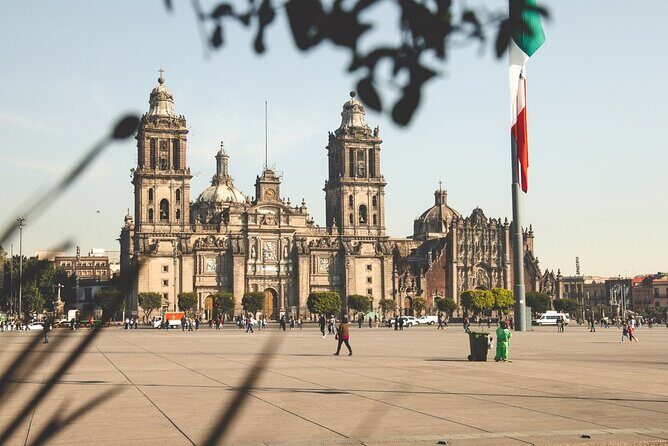
You’ll spend about 45 minutes here, and it’s not just a pretty plaza. The Zócalo is the heart of the historic center—before the Spanish conquest it was the central square of Tenochtitlán. That continuity of importance is what makes it more than a landmark selfie spot.
You’ll also see why it anchors so much political and religious life over the centuries. It’s easy to walk away feeling oriented, like you’ve finally “gotten the map” in your head.
Admission is noted as free, so you can simply focus on observation and your guide’s explanations.
Palacio Nacional
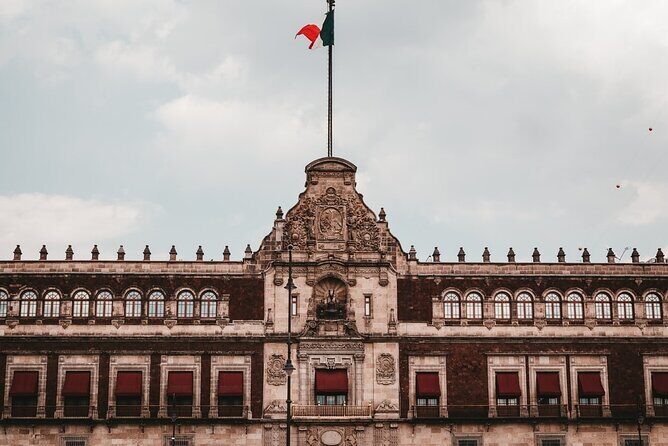
Right near the Zócalo, you get a panoramic look and about 15 minutes. This is the seat of the Federal Executive Power of Mexico, built on a large historical footprint (the data lists 40,000 m²). Even a short view helps you understand how modern power literally sits near ancient ground.
One practical consideration: the tour data says admission for this stop is not included. In many cases, that means you’re seeing the exterior/panoramic view rather than going inside.
Museo del Templo Mayor (Great Temple area)
This stop takes about 15 minutes. The key idea is that the Templo Mayor site includes multiple constructions and spaces, once enclosed as the physical area where the Great Temple functioned, connected to major roads through its doors.
In other words, you’re not just looking at ruins—you’re learning how the urban design of pre-Hispanic life related to ceremony and movement. The admission is not included, which again suggests a view-focused stop with guided context.
Catedral Metropolitana
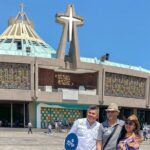
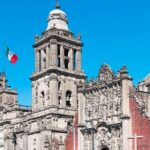
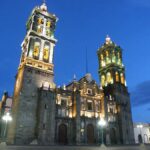
You get around 30 minutes at Metropolitan Cathedral. This one is listed as free admission. It’s the seat of the First Archdiocese of Mexico, and the cathedral’s scale makes it hard to ignore even if you only have half an hour.
I like this stop late in the downtown sequence because by then, you’ve already seen how the city’s “center” shifted roles—square, temple complex, palace authority, and religious power.
Plaza de las Tres Culturas: the wow stop that connects three eras
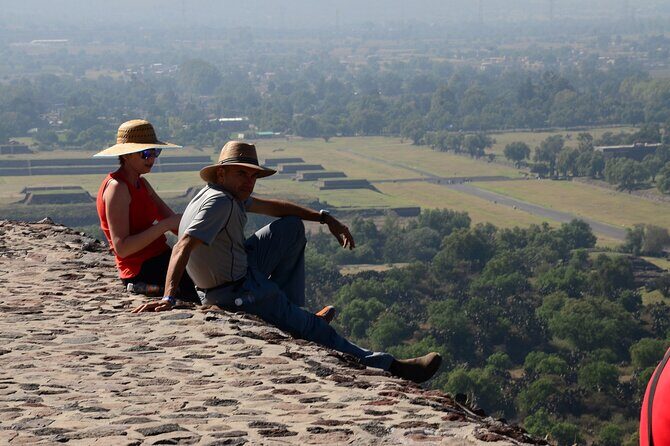
Then you move to Plaza de las Tres Culturas, named for the three different historical ensembles around the square. This stop is especially good if you like seeing history as something that overlaps instead of things that “end and start over.”
Here’s what the tour data connects visually:
- Pre-Hispanic era: linked to the pyramids and ruins of the Tlatelolco people
- Spanish conquest: represented by Catholic religious buildings in the area
- Modern Mexico: represented by later structures, including a building noted in the data as having been the seat of International Relations until 2005
And it also references major 1960s student revolts that changed Mexican society.
Even if you don’t linger long (about 20 minutes), this is one of those stops that makes the rest of the day easier to understand. It bridges the worldview between downtown Mexico City and Teotihuacan—so Teotihuacan doesn’t feel like a random day trip.
Teotihuacan: Sun and Moon pyramids without the climb
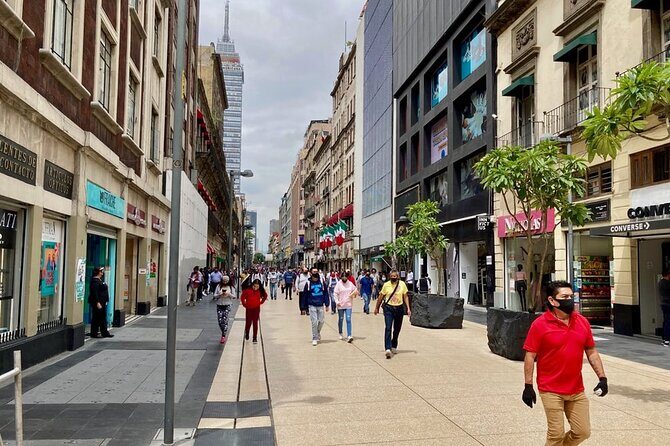
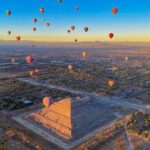
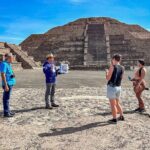
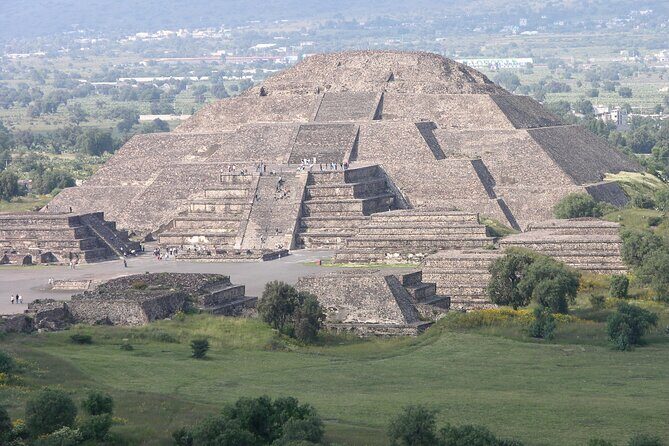
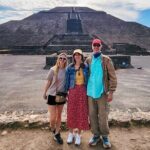
Teotihuacan is the headline, and it tends to be the part people remember most. You’ll spend about 2 hours at Zona Arqueológica de Teotihuacan, with entrance fees included per the tour data.
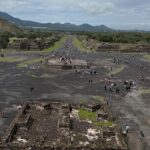
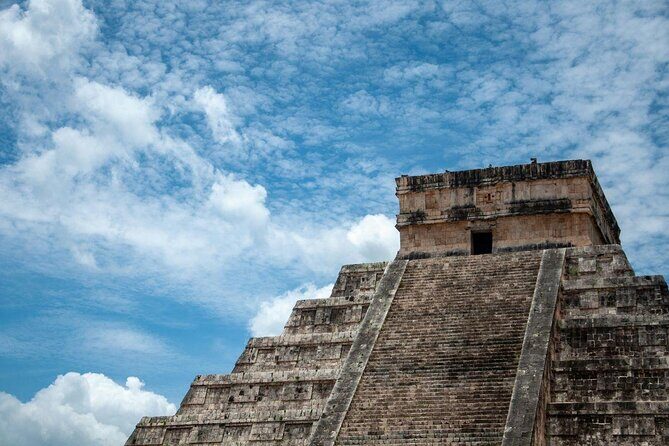
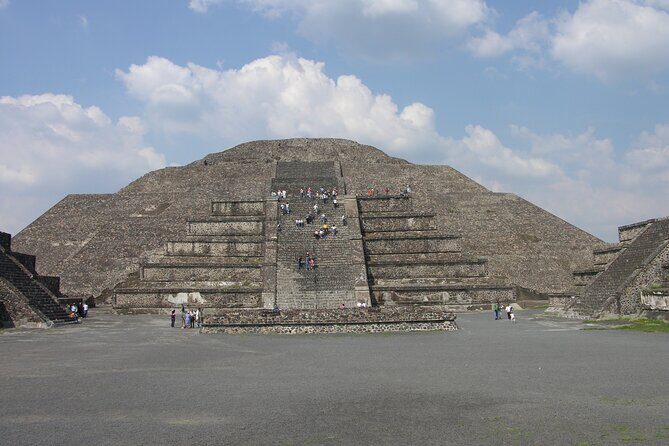
The route goes across Calzada de los Muertos, which connects major points of the complex, including the Temple of Quetzalcóatl, the Pyramid of the Moon, and the Pyramid of the Sun. The pyramids’ top views are specifically mentioned as available from the last two, but there’s also a clear limitation in the tour data: it’s not allowed to go to the top of the pyramids.
That matters because it changes expectations. You still get the big panorama concept and the scale, but you’re not scrambling to the very top the way older photos online might suggest.
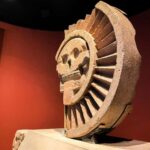
Inside the complex, there’s also time tied to the Museum of Culture of Teotihuacán. The tour data notes that objects like pottery and bones are exhibited there. This is a good counterweight to the open-air walking: if you want context for what you see outside, the museum helps connect objects to the bigger story.
A couple of practical notes:
- This is an all-weather operation, and the tour data says to dress appropriately.
- The day is timed to keep momentum, so you won’t get hours of wandering without guidance.
The mezcal or tequila tasting: a small stop with a big payoff
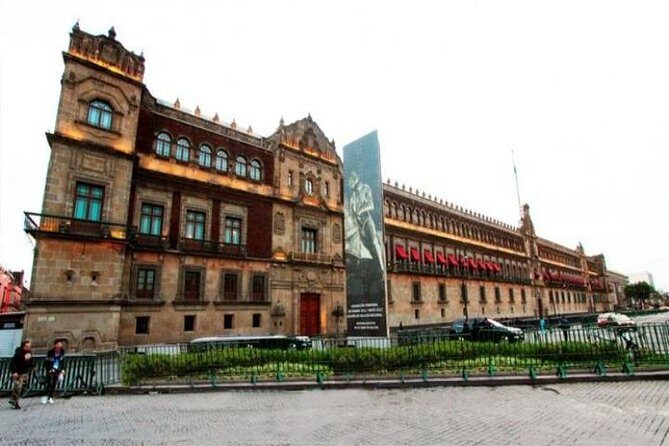
The tasting is included, and the spirit could be mezcal or tequila depending on the day’s operation (the tour data phrases it as mezcal or tequila tasting). That flexibility is worth knowing ahead of time.
One review noted the tasting felt more like a single tequila shot than a full mezcal experience. I’d treat this tasting as a fun cultural add-on rather than a craft-focused, long-form tasting class. You’ll likely get enough to feel the theme and keep the day from turning into a parade of ruins and walking.
If alcohol isn’t your thing, you can still enjoy Teotihuacan and the city stops without relying on the tasting. But if you’re specifically chasing mezcal, you may want to double-check at booking whether mezcal is actually the option available on your departure.
Lunch and comfort: plan for variation
Lunch is listed as included only if you choose the lunch option. The tour data also says food and drinks aren’t included otherwise.
In at least one feedback note, the lunch experience sounded disappointing, and the suggestion was to ask for different service instead of assuming a buffet-style meal. I can’t control the restaurant choice, but I can help you protect your day:
- If you’re picky about meals, consider not betting the whole day on the included lunch option.
- Bring a snack plan if you tend to get hungry during long sightseeing.
- If you’re sensitive to heavy meals in the middle of travel, keep it lighter.
Comfort also includes transport style. One feedback note criticized a driver’s speed and risky driving, and the person reported feeling sick after getting back to their hotel. That’s not something you should ignore. If you’re prone to motion sickness, it’s smart to come prepared (and sit where you feel most stable in the minivan).
What the best guides do for you on this route
The downtown-to-Teotihuacan flow can feel like a lot of information. This is where the guide quality becomes the difference between a good day and a “I learned something and loved it” day.
In the feedback data, guides like Rosalina, Ursula, Hugo, Marco, Alan, and Daniel are praised for being friendly, organized, and able to explain history at each stop without turning it into a lecture. A big plus is how they handle questions during short segments—so you don’t just absorb facts while looking at a wall.
If you want the day to feel meaningful, pick the mindset of active looking:
- Ask one question per stop.
- Use the guide’s explanation to identify what to watch for next.
- When you reach Teotihuacan, listen for how the complex layout connects the pyramids to the main avenue (Calzada de los Muertos).
Who should book this tour?
This tour is a strong fit if you want:
- A full day that covers Mexico City’s historic center plus Teotihuacan without planning details
- Guided explanation at multiple sites, not just “arrive and wander”
- Included entrance fees and a mezcal or tequila tasting
It’s also good if you prefer a small group and dislike spending vacation time buying tickets back-to-back.
You might reconsider if:
- You specifically want to climb the pyramids (this tour doesn’t allow access to the top)
- You’re expecting a long, detailed food program (lunch depends on the option you choose)
- You’re extremely motion-sensitive and don’t like fast driving during transfers (a note in the feedback mentions a rough experience)
Should you book this CDMX + Teotihuacan day trip?
Yes—if you want a packed, guided “big hits” day with entrance fees included and a tasting as a bonus. The historic center stops help you understand what you’re seeing, and Teotihuacan delivers the scale everyone comes for, even with the no-top-pyramid rule.
I’d book it if you’re flexible about lunch and you’re comfortable with a full schedule. If mezcal is your top priority, ask what spirit is actually served on your departure. And if you get motion sick, come prepared.
If you do those small planning steps, you’ll end the day with that rare combo: you saw the modern city’s center and you stood close enough to ancient scale to feel the difference instantly.