REVIEW · MEXICO CITY
Historical Center of the CDMX on foot
Book on Viator →Operated by Corazon Historico · Bookable on Viator
Four hours of Mexico City history, on foot. This guided stroll is interesting because it links the city’s biggest civic landmarks to the streets you’ll actually walk later, so you get a map in your head fast. I like that it’s built around free, walkable icons and a steady on-foot route that keeps things efficient.
Two things I really appreciate: first, the focus on the Historic Center’s most important zones without feeling rushed, and second, the way guides like Leonardo and Alejandro are praised for staying organized and keeping the conversation moving from topic to topic. One consideration: Palacio de Bellas Artes is a ticket add-on, and the activity works best in good weather.
In This Review
- Key highlights before you go
- The Historic Center on foot: fast orientation that still feels human
- Zócalo, the biggest square you’ll stand in early
- Palacio Nacional and the Cathedral zone: where power and faith share the same streets
- Tacuba Street to Manuel Tolsá Square: street-level Mexico City charm
- Palacio de Bellas Artes: Art Nouveau outside, Art Deco inside
- Timing, pace, and the little choices that make it better
- Value check: what’s covered, what isn’t, and how to budget calmly
- Pick-up and meeting point: getting started without stress
- Should you book this CDMX Historical Center walk?
- FAQ
- Is this tour private?
- How long is the walk?
- Do I need tickets for Palacio de Bellas Artes?
- Are the other stops free?
- Does the tour include bottled water?
- Is pickup available?
- What if the weather is bad?
Key highlights before you go
- Plaza de la Constitución (El Zócalo): the political heart and a top place to get your bearings
- Free major landmarks: the core sights are admission-free, so your budget stays calmer
- A Cathedral-to-government-street vibe: you see how power and religion share the same blocks
- Centro Histórico street texture: Tacuba Street, Talavera mosaics, and grand squares
- Palacio de Bellas Artes: Art Nouveau exterior contrast with an Art Deco interior
- Private group feel: only your group joins, with a guide in English
The Historic Center on foot: fast orientation that still feels human
This kind of walking tour works especially well in Mexico City because the Historic Center is dense with landmarks. In a few blocks, you can go from major public squares to government buildings to some of the city’s most famous architectural styles. The best part is that you’re not just looking at monuments from far away—you’re moving through the same street network you’d use if you were exploring on your own.
You’ll also get a guide who can connect the dots. In the feedback, guides such as Leonardo and Alejandro come through as clear and energetic, not just listing names. That matters, because a place like the Historic Center can feel like a blur if you don’t have someone to point out what to notice.
The tour lasts around 4 to 5 hours, which is long enough to feel satisfying but not so long that you’re wiped out. I’d plan your day so you’re not rushing afterward, especially if you want to step into the optional indoor stops.
You can also read our reviews of more historical tours in Mexico City



Zócalo, the biggest square you’ll stand in early

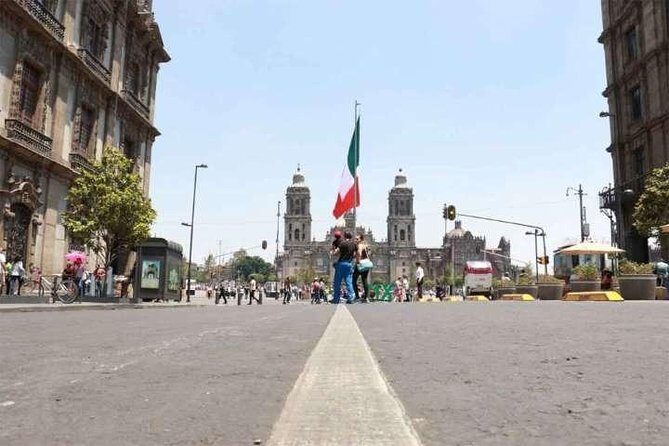
You start at Plaza de la Constitución, the plaza people call El Zócalo. This is the main square of Mexico City and a historic anchor point—named for the Constitution of Cádiz in 1812. It’s also described as the second largest square in the world and the first among Spanish-speaking countries, which tells you this isn’t a small “pretty plaza” stop.
What I love about beginning here is how it fixes your sense of scale. From the Zócalo, you can understand why the surrounding buildings feel like they’re arranged for civic life: the square is big enough that it becomes a stage, not just a stoplight. Even if you’ve seen photos, standing in the space helps you appreciate the city’s “center” concept.
The Zócalo stop is around 1 hour, and that’s a good length for absorbing the views and then moving on before the area gets overwhelming. You’ll get the ticket as free admission, which is a nice start because it reduces decision fatigue early in the day.
Palacio Nacional and the Cathedral zone: where power and faith share the same streets

After the square, you move into the cluster around Palacio Nacional. This area is famous for a few reasons tied together: government authority, colonial-era layers, and the way important buildings sit close enough to compare styles.
One key detail here is that the National Palace area is presented as a seat of Mexican executive power, and you also pass nearby civic buildings described as current headquarters of Mexico City’s government. You’ll also hear about the Old City Hall Palace and the Merchants Portal—terms that matter because they explain the city wasn’t just built “for today,” it was built for trade, administration, and control.
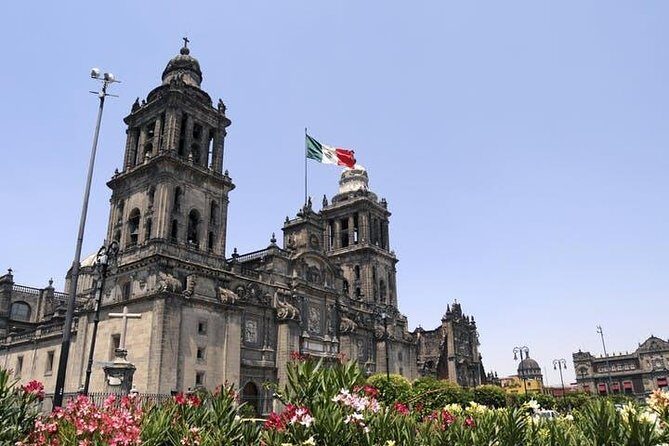
The other big draw is proximity to the Metropolitan Cathedral area. The description you’ll encounter frames it as a multi-century construction and highlights how different Viceroyalty-era styles live in the same space. When you’re on foot, that’s exactly what you want: the ability to look up, compare facades, and then re-orient quickly as the architecture changes.
This stop is around 2 hours, and it’s effectively your deep breath into “how the city organized itself.” It’s also free entry, so you can focus on learning without constantly thinking about paid admissions.
Tacuba Street to Manuel Tolsá Square: street-level Mexico City charm
Now the tour shifts from grand institutions to the street fabric that makes the Centro Histórico feel like a living neighborhood.
You’ll spend time in the Historic Center streets, with Tacuba Street highlighted as a former route—an old road called Mexico-Tacuba Road. That kind of detail helps you understand why some streets feel like connectors even now. You’re not only seeing buildings; you’re walking along a path that mattered historically.
There’s also a specific cultural stop in the description: Café Tacuba. You may notice it as a traditional restaurant presence on the street, described with Talavera mosaic decoration. Even if you don’t eat, it’s a useful landmark because Talavera tiles are one of those visual signals that helps you “read” Mexico City style quickly.
Next comes Manuel Tolsá Square, described as a place of architectural harmony, with major buildings nearby. The tour notes the National Museum of Art as one of the big names in this area. The description also points out the Mining Palace—stated to have austere neoclassical sobriety—and mentions it as the home of the Mining Palace Book Fair.
And then, almost opposite Manuel Tolsá Square area, you’ll get to the Postal Palace, described as a refined building inspired by the architecture of Venice. That’s the kind of contrast that makes walking tours worth it: one minute you’re in a Mexican historic square, the next you’re looking at a building shaped by a European architectural idea.
This stop is around 2 hours and remains free admission during the walk portion. My practical tip: wear comfortable shoes here. This is where the walking time adds up, and it’s also where you’ll likely want to slow down for photos and street observations.
Palacio de Bellas Artes: Art Nouveau outside, Art Deco inside
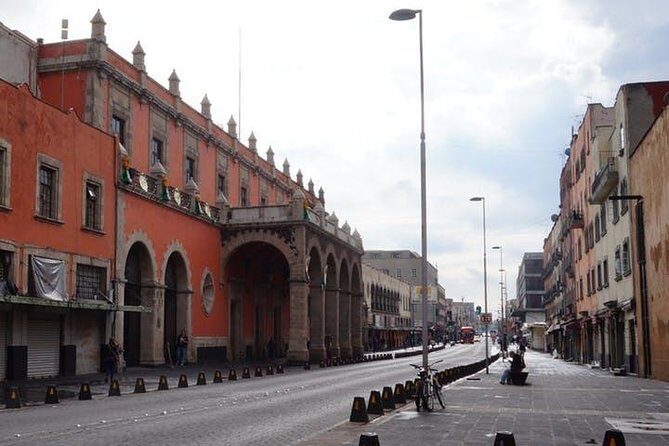
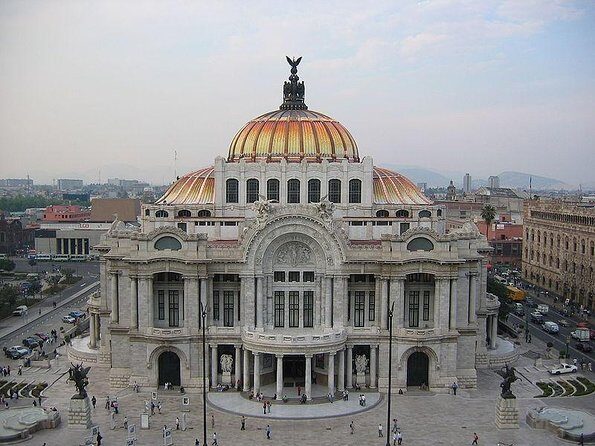
The final star stop is Palacio de Bellas Artes, described as one of the most beautiful concert halls in the world. If you only know it from pictures, it’s worth knowing how the architecture is framed in this tour: the exterior is described in Art Nouveau style with impressive sculptures, while the interior is described as Art Deco with geometric and pre-Hispanic motifs.
That contrast is a big deal. Outdoors, you’ll sense ornament and flow. Indoors, you get a cleaner, more angular feeling, and the motifs add another layer of meaning beyond style labels. If you plan to go inside, think of it as the place where Mexico City’s European-influenced architecture gets filtered through local themes.
Important for planning: admission for Palacio de Bellas Artes is not included. So you’ll need to decide if you want to pay for entry and how much time you want to spend there. The stop is about 1 hour on the tour, so if you add extra time inside, you might want to do it thoughtfully rather than trying to cram everything.




Timing, pace, and the little choices that make it better
A 4–5 hour walking tour in the Centro Histórico is usually a sweet spot. Long enough to see meaningful blocks and settle into the vibe, short enough to keep your legs from turning into noodles.
Because you’ll be walking near major landmarks, it’s smart to arrive with a simple plan:
- Start the day with water in mind (bottled water is included).
- Leave room for photos and quick pauses at the edges of squares and building fronts.
- Keep your indoor ticket decision flexible for Bellas Artes based on what the lines and your energy level look like that day.
Also, this experience requires good weather. If the forecast is rough, the operator may offer a different date or a full refund. That’s not just fine print—it’s genuinely relevant here because so much of the value is in moving around outside.
If you want to maximize your time, go in ready to ask your guide what to notice. Even short questions—like what building matters most and why—can turn an hour of sightseeing into something you remember later.
Value check: what’s covered, what isn’t, and how to budget calmly
Here’s the practical part: a lot of the big-ticket-feeling sights are free on this walk. The tour structure is built so you can see major landmarks without paying admission at every stop.
Included for you:
- bottled water
- all fees and taxes
Not included:
- tickets for Palacio de Bellas Artes
- tickets for MUNAL
So the real value equation is simple. If you’re happy to enjoy Bellas Artes from outside, you’ll spend less. If you want the full indoor experience, plan on adding those ticket costs. Either way, you’re not getting squeezed at every turn—most of what you’ll see during the guided walking segments is free entry.
The tour is also private, meaning only your group participates. That can be great if you want more back-and-forth questions or if you just hate the feeling of being shuffled with strangers at close quarters. The English option also helps you if you want history explained without a language gap.
Pick-up and meeting point: getting started without stress
Your start point is Plaza de la Constitución (Zócalo area). You’ll meet at P.za de la Constitución S/N, Centro Histórico de la Cdad. de México, Centro, Cuauhtémoc, 06010 Ciudad de México, CDMX, Mexico. The activity ends back at the meeting point, so you’re not stuck figuring out a new endpoint.
Pickup is offered in the details: the operator’s guide will have a sign with the name of the person who made the reservation and will identify themselves in the hotel lobby. If you’re staying near the Historic Center, that can make the whole morning easier.
You’ll also use a mobile ticket, and you should receive confirmation at booking. Since it’s near public transportation, it’s also a backup option if your pickup plans change.
Should you book this CDMX Historical Center walk?
Book it if you want a structured, on-foot way to understand Mexico City’s core without spending your whole day buying tickets. The free landmark focus is smart value, and the route is designed to keep your orientation strong: Zócalo first, then government and cathedral zone, then street-level texture, and finally Bellas Artes for the big visual payoff.
Consider passing or switching to a different plan if you know you don’t want to pay for optional indoor access. Since Palacio de Bellas Artes isn’t included and MUNAL tickets are also not included, your experience depends partly on whether you plan to go inside.
My “yes” is strongest for first-timers and for anyone who likes learning while walking—especially if you appreciate when the guide’s explanations stay organized, like Leonardo and Alejandro are credited for in the feedback.
FAQ
Is this tour private?
Yes. It’s listed as a private tour/activity, meaning only your group participates.
How long is the walk?
It runs about 4 to 5 hours.
Do I need tickets for Palacio de Bellas Artes?
No ticket is included for Palacio de Bellas Artes. You’ll need to get that separately if you want to visit.
Are the other stops free?
The stops at the Zócalo, Palacio Nacional area, and the Historic Center walk are listed with free admission tickets.
Does the tour include bottled water?
Yes. Bottled water is included.
Is pickup available?
Pickup is offered. The guide carries a sign with the reservation name and meets you in the hotel lobby.
What if the weather is bad?
The experience requires good weather. If it’s canceled due to poor weather, you’ll be offered a different date or a full refund.