Condesa and Roma Norte are best seen on foot. This tour is built for people who want the feel of the neighborhoods fast, without fighting directions, traffic, or confusing side streets. I like that a local guide leads you turn-by-turn, and I really like the small group size (max 12), so the walk stays human and personal. You get a structured route through parks, squares, mansions, and churches that explain how this part of Mexico City grew into the artsy, design-forward area it is today.
The main drawback is simple: you’ll walk a lot. Even with short rests built into the schedule, plan on moderate effort and solid shoe time, especially since the tour can run a touch longer than the listed 4 hours 30 minutes.
In This Review
- Key things to know before you go
- Condesa and Roma Norte on foot: why this route makes sense
- Meet at Churrería El Moro and get moving fast
- Parque México, Ámsterdam, and Parque España: the Art Deco warm-up
- Quick tip for this section
- Condesa DF rooftop views and the Spanish echoes of Fuente de Cibeles
- Casa Museo Guillermo Tovar de Teresa and the UNAM book mansion
- Parroquia de la Sagrada Familia: neo-Gothic with street-level presence
- Plaza Rio de Janeiro and Edificio Río de Janeiro: a square built for architecture watching
- Casa Basalta, La Romita, and Pushkin Garden: art and calm between the streets
- Avenida Álvaro Obregón: design, shops, and late-afternoon life
- Casa Prunes, Plaza Luis Cabrera, and El Parián: the best pauses for photos and snacks
- Casa Lamm and Calle Orizaba: early 20th-century character at walking speed
- Huerto Roma Verde: a green finish to cap a design-heavy walk
- Price, pacing, and who this walking tour fits best
- Should you book this Condesa and Roma Norte walking tour?
- FAQ
- What is the duration of the Epic Condesa and Roma Norte Walking Tour?
- What time does the tour start?
- Where is the meeting point?
- Where does the tour end?
- Is the tour offered in English?
- How big is the group?
- Do I need tickets for the stops?
- Is it mobile-ticket based?
- What is the cancellation policy?
Key things to know before you go
- Guide-led route: you don’t have to navigate, which matters in busy streets and quick turns.
- Small group (max 12): easier questions and a more flexible pace.
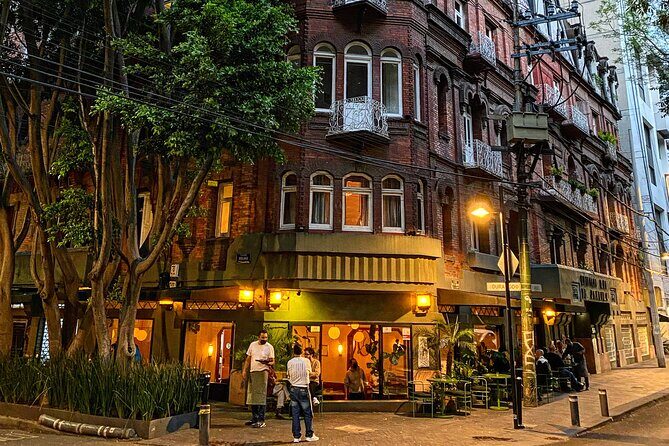
- Architecture focus: Art Deco, neo-Gothic, Art Nouveau, and early 20th-century styling are the theme.
- Lots of free stops: most highlights are outside or in spaces with no ticket cost.
- Long-ish walking time: it’s memorable, but it’s not a slow afternoon stroll.
Condesa and Roma Norte on foot: why this route makes sense
Condesa and Roma Norte sit close enough that you can cover a lot in one afternoon, but far enough that it’s easy to miss things if you’re wandering solo. This tour is planned like a story: parks first, then streets with big design energy, then squares and cultural buildings, ending in a greener, calmer finish.
You’ll also get what’s hard to figure out on your own: which buildings are worth slowing down for, and what to look for beyond the photo. The guide points out details you’d otherwise walk past—street layouts, architectural style shifts, and the reasons certain spots exist.
You can also read our reviews of more walking tours in Mexico City


Meet at Churrería El Moro and get moving fast
The tour starts at Churrería El Moro near Avenida Michoacán in the Hipódromo area. Starting with a famous landmark is practical. You’ll find it easily, you can grab coffee or a quick bite before the walk, and you’re already in the part of the city where Condesa and Roma Norte connect.
The tour runs in the afternoon (start time is 12:00 pm), and it’s designed to be doable without complicated planning. It’s offered in English, and it uses a mobile ticket, which keeps things low-fuss once you’re on the move.
Parque México, Ámsterdam, and Parque España: the Art Deco warm-up
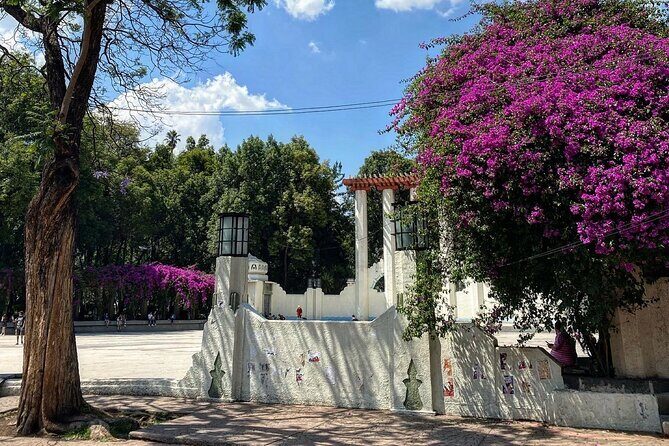
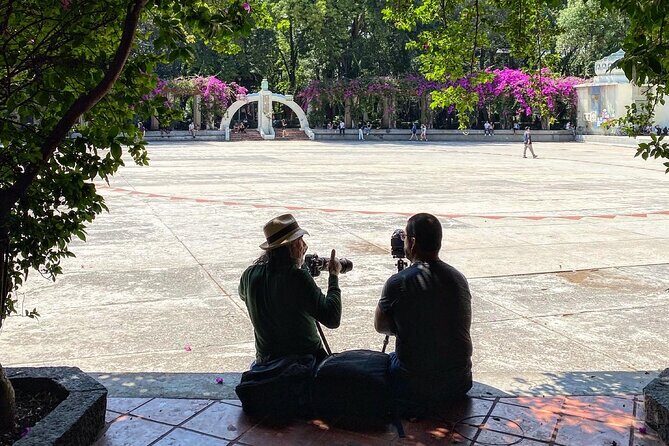
This is where the neighborhood mood clicks. You begin at Parque México, a lush park with paths that feel made for strolling. The best part here is the combination of greenery and design—the Art Deco elements and the way the park pulls you into the neighborhood’s rhythm.
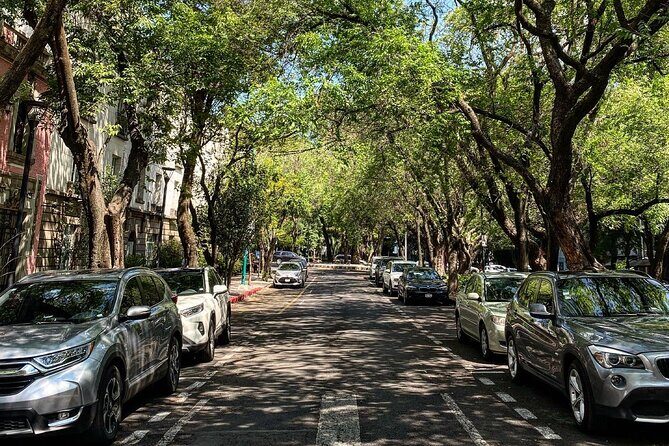
Next comes Ámsterdam, a street with a distinct, elliptical layout tied to a former horse-race track. The street’s shape is the clue. When you understand that history, the odd geometry stops feeling random and starts feeling intentional. Add the tree-lined feel and green spaces, and you get a “Mexico City postcard” street that’s also walkable and photogenic.
Then you head to Parque España for a quieter, more peaceful break. It’s short on the schedule, but it’s a good reset before the walk turns more urban again. Sculptures and historic monuments are the focus, so bring your eyes for details, not just wide shots.
Quick tip for this section
If you like architecture, this is a great moment to slow down. The guide’s job is basically to turn what you see into something you understand in minutes.
Condesa DF rooftop views and the Spanish echoes of Fuente de Cibeles

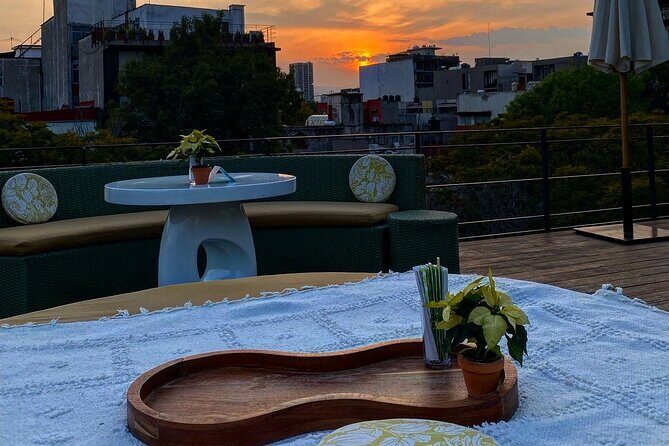
From the parks, you move into a stretch where you can spot the neighborhood’s blend of old and new. At Condesa DF, you’ll get a close look at a mix of modern and colonial vibes, plus a stop at a boutique hotel with strong design cues—especially its rooftop views over Condesa. Even if you don’t linger, this is the kind of stop that helps you place the rest of the walk in context: rooftops, angles, and sightlines become clearer.
Then it’s time for one of the most interesting “why is that there?” stops on the route: Fuente de Cibeles. This is a replica of Madrid’s famous fountain, and the guide explains the symbolism behind Mexico–Spain cultural ties. It’s the sort of detail that makes the tour feel like more than just pretty buildings. You’re learning how influence traveled and got reinterpreted locally.





Casa Museo Guillermo Tovar de Teresa and the UNAM book mansion
A major reason I’d pick this tour over a generic neighborhood walk is that it mixes design with institutions. At Casa Museo Guillermo Tovar de Teresa, you’ll see a beautifully preserved house with art and antiques, tied to the life of one of Mexico’s prominent art historians. This stop feels like a palate cleanser between outdoor architecture and the next church/square segment.
Then you head to Casa Universitaria del Libro UNAM, another “you’ll miss this if you don’t know where to look” style moment. The building itself is part of the appeal, and there are temporary exhibitions to catch if the timing lines up. It’s not a long museum-style visit, but it gives you a sense of how the arts and education show up in the neighborhoods, not just in big ticket venues.
Parroquia de la Sagrada Familia: neo-Gothic with street-level presence
At Parroquia de la Sagrada Familia, the architecture does the talking. You’re looking at neo-Gothic styling, and the guide connects it to the church’s historical significance as one of the older churches in Roma Norte.
This is a smart stop for photo lovers and design fans because churches like this aren’t just decoration. They change the street feel around them—proportion, sightlines, and what people notice first when they walk by.
Plaza Rio de Janeiro and Edificio Río de Janeiro: a square built for architecture watching
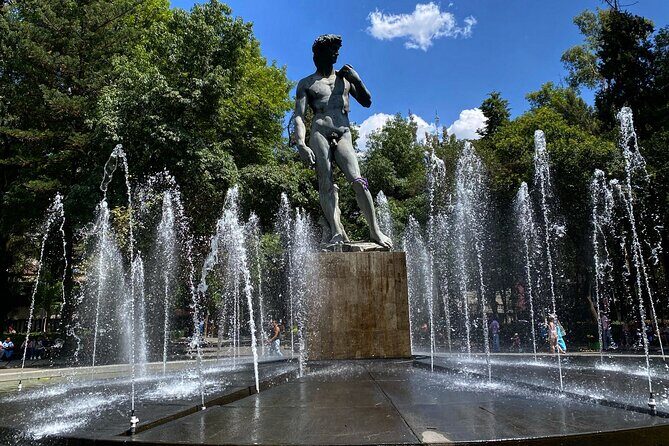
Next you land at Plaza Rio de Janeiro, a relaxed square where you can slow down without stopping the momentum. The iconic replica of Michelangelo’s David is one reason this place gets attention, but the surrounding buildings are the real classroom. This stop helps you practice “architecture reading” at eye level: what stands where, how facades relate to the square, and how the streets guide movement.
Right after that, you’ll look at Edificio Río de Janeiro, an eclectic building that’s become one of the area’s recognizable points. The guide’s commentary is what turns it from a random facade into a story of why it’s remembered. Even a short stop here can sharpen how you see the rest of the walk.
Casa Basalta, La Romita, and Pushkin Garden: art and calm between the streets
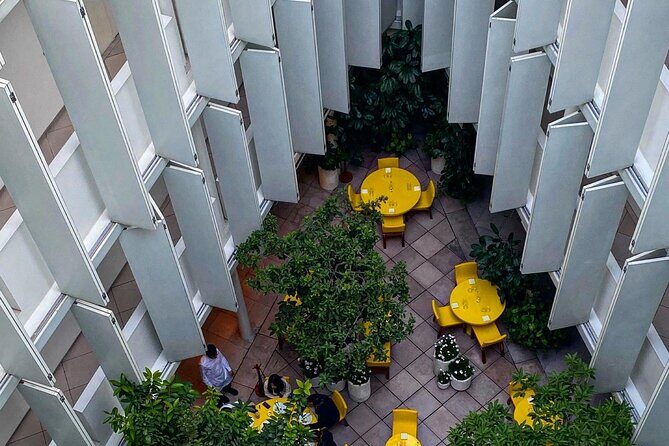
Casa Basalta is a great example of how this area blends culture into everyday life. You’ll see a space that combines a contemporary art gallery setting (MAIA Contemporary art gallery), a meditation center, and restaurants housed in a historic early 20th-century mansion. This stop stands out because it’s not just about architecture—it’s about what people do inside these spaces now.
Then the tour shifts to La Romita, where narrow streets and the Plaza de la Romita create a different mood than the larger avenues. The guide connects the area to pre-Hispanic origins of Aztacalco and how it evolved into what you see today. If you’re the kind of person who likes city layers—old life under new buildings—this is a strong payoff.
After that, Pushkin Garden is a short, relaxing crossing into green calm. It’s named after the Russian poet, and it’s a nice contrast to the busier street sections. Think of it as a palate reset before you hit the shopping-and-nightlife energy of the main avenue.
Avenida Álvaro Obregón: design, shops, and late-afternoon life
Avenida Álvaro Obregón is the big boulevard moment. You’ll walk down a street known for Art Deco architecture, trendy shops, and lively nightlife. Even if you’re not shopping, the “feel” matters. This is where you see how Roma Norte keeps pulling modern city energy into older streets.
If you have food cravings, this is a good stretch to stay alert. The guide often helps with local recommendations, and some tours have included quick food detours like street tacos when the timing and group energy fit. It’s worth paying attention to what the guide suggests, especially if you want a meal that feels local rather than generic.
Casa Prunes, Plaza Luis Cabrera, and El Parián: the best pauses for photos and snacks
You’ll hit Casa Prunes, an Art Nouveau mansion with an incredible restaurant and plenty of small details worth slowing down for. It’s a short stop, but it works as a “stop-and-look” building—ornament, proportion, and the kind of elegance that makes you stop taking quick photos.
Then it’s Plaza Luis Cabrera, a peaceful square with a large fountain and green spaces. It’s the kind of place where your feet finally get to catch up to your brain. If you’re timing your day, this is a good moment for water and a mental recharge.
Next: El Parián, a historic passage dating back to 1926. Today it’s lined with local shops and restaurants. The value here is atmosphere plus choice. Even if you don’t buy anything, it gives you an idea of what this neighborhood offers beyond the big architectural hits.
Casa Lamm and Calle Orizaba: early 20th-century character at walking speed
Casa Lamm Centro de Cultura brings the tour into a cultural center housed in an early 20th-century building. It’s another short stop, but it helps you understand the neighborhood’s creative engine: people come here for art and events, not just for sightseeing.
Then you finish this stretch with Calle Orizaba, known for early 20th-century architecture and a vibrant street feel. This is a “walk it with your eyes” segment. You’ll notice how buildings align, how the street width changes what you see, and how the neighborhood stays readable even when it feels busy.
Huerto Roma Verde: a green finish to cap a design-heavy walk
The tour ends at Huerto Roma Verde, an urban garden and community space known for sustainable practices. Ending here works well because the final impression is calmer and more hopeful. After hours of facades and historical architecture, you get a different kind of point-of-interest: people-driven green space right in the city.
It’s also a practical finish. Once you’re done, you can keep the day going nearby—either with a casual bite or a slower wander while your legs recover.
Price, pacing, and who this walking tour fits best
At $59 per person for about 4 hours 30 minutes, the price feels fair when you consider what you’re buying: a guided, structure-heavy walk where you get interpretation, not just movement. Most stops don’t require entry tickets, so the value is concentrated in the route planning and the guide’s ability to translate architecture and history into street-level understanding.
The pacing is ideal for people who:
- like architecture and want to learn what to notice
- enjoy parks and squares, not just museums
- want a guided introduction to two neighborhoods in one afternoon
- prefer a small group format with room for questions
The tour is not ideal for people who want a slow sightseeing day with long indoor breaks. Even with rests, this is still a lot of walking. The stated fitness level is moderate, and the tour can feel closer to 5+ hours depending on the group and how the guide adapts.
Should you book this Condesa and Roma Norte walking tour?
I’d book it if you want an afternoon that feels like city learning, not random wandering. The combination of guided architecture talk, neighborhood squares, parks, and culture stops is a strong mix. It’s also a smart pick for first-timers to Mexico City who want a safe, organized route through two of the most design-forward areas.
I wouldn’t book it if you’re hoping for mostly indoor time, or if long walking distances are a problem. But if you can handle a steady pace and you enjoy looking closely at streets and buildings, this is exactly the kind of tour that turns a neighborhood into a place you actually understand.
FAQ
What is the duration of the Epic Condesa and Roma Norte Walking Tour?
The tour lasts about 4 hours 30 minutes.
What time does the tour start?
It starts at 12:00 pm.
Where is the meeting point?
The start point is Churrería El Moro, Av Michoacán 27, Hipódromo, Cuauhtémoc, 06100 Ciudad de México, CDMX, Mexico.
Where does the tour end?
The tour ends at Huerto Roma Verde, Jalapa 234, Centro Urbano Pdte. Juárez, Roma Sur, Cuauhtémoc, 06760 Ciudad de México, CDMX, Mexico.
Is the tour offered in English?
Yes, it is offered in English.
How big is the group?
The maximum group size is 12 travelers.
Do I need tickets for the stops?
The tour info lists free admission for the stops included.
Is it mobile-ticket based?
Yes, it uses a mobile ticket.
What is the cancellation policy?
Free cancellation is available up to 24 hours before the experience start time for a full refund. If you cancel less than 24 hours before, the amount paid is not refunded.