REVIEW · SAN MIGUEL DE ALLENDE
Bewitched with our tour to Queretaro
Book on Viator →Operated by J. Jesus Rodriguez · Bookable on Viator
One day, nine stops, zero stress. This Queretaro trip is built for you to see the big architectural and historical hits without wrestling with planning, with hotel pickup and a max 10-person group. You’ll also travel with an English-speaking guide, and you get a mobile ticket so you can keep things simple.
I love how the route teaches you what you’re looking at, not just where to stand. Two standouts for me: the Museo Regional housed in the old convent and the hill and legends around the Hill of the Bells.
One consideration: lunch isn’t included, and one of the later sites lists admission as not included. Also, if you use the tour day to relax, double-check you’re at the correct pickup spot in San Miguel de Allende around 9:00 am, because a reported confusion came down to where people were waiting.
In This Review
- Key highlights worth your attention
- Queretaro in one guided day from San Miguel de Allende
- Hill of the Bells and the Maximilian connection
- Santa Clara’s gold-leaf baroque and the convent story
- Jardin Zenea: a calm pause in the city core
- Museo Regional inside the old San Francisco convent
- Palacio de Gobierno and Josefa Ortiz de Domínguez in 1810
- Plaza de Armas: baroque surroundings and the aqueduct sponsor
- Santuario de La Congregación and the Miguel Cabrera Guadalupe link
- The aqueduct experience: 74 arches and a long look both ways
- Santa Cruz de los Milagros: a hilltop convent and cross-shaped thorns
- Price and timing: what $120 buys you
- Group size and why your guide’s style matters
- Who should book this Queretaro tour (and who might skip it)
- Should you book Bewitched’s Queretaro day tour?
- FAQ
- FAQ
- How long is the Queretaro tour?
- What time does the tour start?
- Where is the meeting point in San Miguel de Allende?
- Is hotel pickup included?
- What language is the tour offered in?
- How big is the group?
- Are there entrance fees included?
- Is lunch included?
- Do I need to bring a printed ticket?
- What are the cancellation terms?
Key highlights worth your attention
- Small-group pacing (up to 10 people) that leaves room for questions.
- J. Jesus Rodriguez as your guide, with a reputation for being friendly and flexible.
- Church interiors with gold-leaf altarpieces at Santa Clara, plus major Guadalupe artwork tied to Miguel Cabrera.
- Museo Regional in a XVI-century San Francisco convent, with Viceroyal-style architecture.
- The aqueduct wall-to-wall experience, built 1726–1738 with 74 arches and a tallest span of 28 meters.
- Independence-era story at the Palacio de Gobierno, where Josefa Ortiz de Domínguez was imprisoned in 1810.
Queretaro in one guided day from San Miguel de Allende
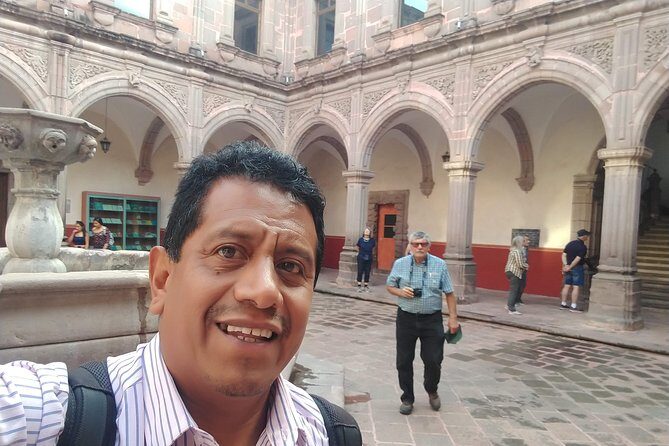
If you’re basing yourself in San Miguel de Allende, this is a smart way to spend one day in another UNESCO-era style city without turning it into a logistics project. The tour runs about 8 hours, starting at 9:00 am from Relox 84, Zona Centro. You end back at that same meeting point, which matters more than you’d think when you’re trying to keep the day easy.
The day is paced around short, timed stops, which keeps it from dragging. That also means you should show up with comfortable shoes and a plan to snack, because lunch isn’t included. The upside: you get a guided connection between places that would feel random if you visited them alone.
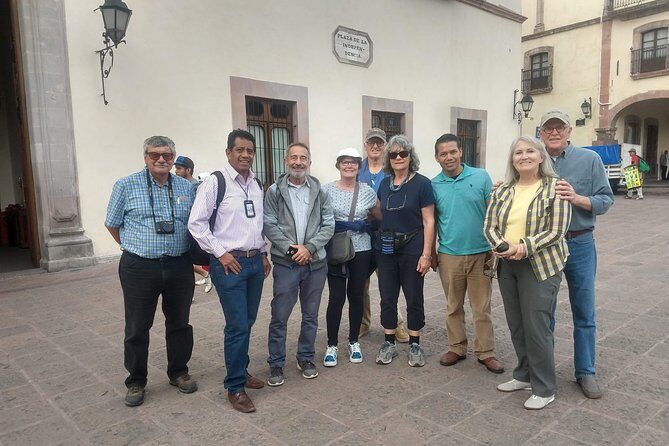
The guide is J. Jesus Rodriguez, and multiple people praised him for being upbeat and adaptable. One thing I like about that: when a group is small, the guide can spend extra seconds on what you’re actually noticing—like how baroque churches are designed to pull your eyes upward.
You can also read our reviews of more tours and experiences in San Miguel de Allende.

Hill of the Bells and the Maximilian connection
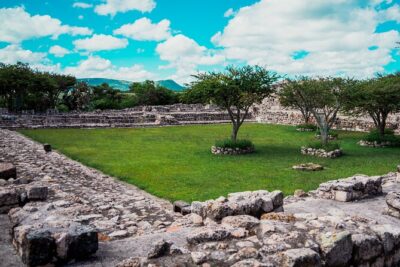
Your first stop is the Hill of the Bells on the outskirts of the city. You’ll learn why it got its curious name, and the place also matters for a grim reason: it’s linked to the execution of Emperor Maximilian of Habsburg.
This stop is 30 minutes and the admission ticket is included, so you don’t have to wonder about extra costs right away. Even if history isn’t your main focus, this kind of stop gives you context. Queretaro isn’t just postcard architecture; it also played roles in major chapters of Mexico’s political story.
Practical tip: it’s outdoors, so bring a light layer if the morning feels cool and plan for sun if the weather is bright.
Santa Clara’s gold-leaf baroque and the convent story

Next comes one of the most visually rewarding stops: Parroquia del Sagrado Corazon de Jesus / Templo de Santa Clara. This nunnery temple dates back to 1607, founded by don Diego de Tapia, connected to one of Queretaro’s founding families.
You’ll get 15 minutes, and this one is free admission. The big draw is what you’re told to watch for: gorgeous altarpieces that are described as covered with gold leaf. Even in a quick visit, that kind of detail makes a church feel less like a hallway and more like a whole world.
Here’s how to enjoy it more: don’t rush to the exit. Spend a minute at the threshold, let your eyes adjust to the interior lighting, then look upward. Baroque design often works by exaggeration—brightness, lines, and layered decoration—so your first look is the start, not the finish.
Jardin Zenea: a calm pause in the city core
Then you step into Jardin Zenea, a green square right in the heart of town. This is a lighter stop—15 minutes and free admission—but it helps break up the church-and-convent sequence.
You’ll see fountains and a kiosk from the early 1900s. The square’s name also carries a local political link: it honors don José Santos Zenea, a beloved governor of the state.
This is the kind of stop I recommend you use strategically. If you need water, this is a good time to reset. Also, it gives your brain a visual breather before the more intense history stops kick back in.
Museo Regional inside the old San Francisco convent
The Museo Regional is where the day starts to feel extra grounded. It’s housed in the old convent of San Francisco from the XVI century, and the setting is part of the show—described as a masterpiece of Viceroyal architecture.
You get 40 minutes, and the admission ticket is included. The route’s value jumps here because museum time is where you can connect the dots between the churches, the colonial buildings, and the monuments you’ve already seen.
What to do with that 40 minutes: don’t feel you have to read every label. Instead, pick a few that match what you’ve noticed outside. The goal is to walk out with a sense of how Queretaro explains itself—through collections, architecture, and the way the convent space supports the story.
If you’re a first-timer, this stop is a payoff. If you’re the kind of traveler who loves architecture, it also helps you train your eye for style differences later in the day.


Palacio de Gobierno and Josefa Ortiz de Domínguez in 1810
At the Palacio de Gobierno / Casa de la Corregidora, you’re in the governor’s palace, and it carries a major independence-era connection. This is the place where doña Josefa Ortiz de Domínguez was imprisoned in 1810.
The story continues right there: she wrote and sent a letter to Captain Allende, a move tied to making the insurgent revolution possible against the Spanish crown.
This stop lasts 20 minutes, and it’s free admission. It’s one of those experiences that gives you emotional weight to the architecture you’re seeing. Without this kind of context, a grand building is just a nice facade. With it, the same walls feel like they held real decisions.
Plaza de Armas: baroque surroundings and the aqueduct sponsor
After that, you head to Plaza de Armas, Queretaro’s main square. You’ll see baroque houses surrounding it, and there are plenty of spots to pause for a snack or a drink on your own time.
The square also includes a monument tied to the aqueduct story: a tribute to Don Antonio de Urrutia y Arana, the Marquiz who sponsored the construction of the aqueduct. This matters because later, when you walk near that aqueduct, you’ll have a name—and a reason—behind the stone.
This stop is 15 minutes and free admission. Treat it like your orienting checkpoint. Look at the square, notice how the streets funnel away from it, and you’ll feel less lost when the day shifts outdoors again.
Santuario de La Congregación and the Miguel Cabrera Guadalupe link
Next is the Santuario de La Congregación de Nuestra Señora de Guadalupe. This church is described as built in 1680, and it’s praised for an impressive facade, altarpieces, paintings, and even a pipe organ.
You also get a specific art connection: here, people venerate a painting of Our Lady of Guadalupe associated with Miguel Cabrera, a well-known colonial master.
This stop runs 15 minutes and free admission. Even if you don’t plan to study religious art closely, the “Guadalupe + Cabrera” detail gives your visit a hook. It turns the church from a quick photo stop into a place with a clear cultural thread.
Practical note: churches can be cooler than outside streets, so if you’re sensitive to temperature shifts, you might want a light layer even in warm months.
The aqueduct experience: 74 arches and a long look both ways
The day then makes room for Queretaro’s most famous hydraulic statement: the aqueduct. It’s described as a proud symbol of the city, built from 1726 to 1738 by Marquis Don Juan Antonio de Urrutia.
Key numbers to know: it stretches 1,280 meters with 74 arches. The tallest arch rises 28 meters high. In the tour, you get to drive along it and see it side to side for a substantial stretch.
If you’ve only ever seen aqueducts from a distance, this is the difference-maker. You start to understand why it’s still referenced as local identity. It’s not just old engineering; it’s how the city once moved water—and how the city remembers that feat.
Wear shoes you can stand in afterward, because the day has multiple quick transitions. This stop is your big “wow, okay, I get why people come here” moment.
Santa Cruz de los Milagros: a hilltop convent and cross-shaped thorns
The final featured stop is Templo y ex-convento de la Santa Cruz de los Milagros. Tradition says the convent was built at the top of a hill called El sangremal, the place where Queretaro was founded on July 25, 1531.
You get 30 minutes here to stroll through patios and corridors that connect you to the former evangelization by Franciscans. There’s also a noted detail that you’ll be told about: a tree that blooms with cross-shaped thorns.
This is the one time admission is listed as not included. So if you’re budget-minded, plan to cover that extra fee on site.
This stop is also the most “wander” friendly of the day. Take your time in the corridors, and look for how the spaces feel slightly different from the big church interiors you’ve already seen. A convent often gives you a sense of daily rhythm—light, quiet, and a slower pace than a town square.
Price and timing: what $120 buys you
At $120 per person, the question isn’t just whether it’s “cheap.” It’s whether it replaces multiple separate decisions. Here, you’re getting pickup, a guide, and entry coverage at several stops.
From the included admission info you do get:
- Hill of the Bells (included)
- Museo Regional (included)
And several major stops are free:
- Santa Clara (free)
- Jardin Zenea (free)
- Palacio de Gobierno (free)
- Plaza de Armas (free)
- Santuario de La Congregación (free)
The trade-off is that lunch isn’t included, and Santa Cruz de los Milagros admission isn’t included. So think of the money as paying for the guided structure plus transport plus the big paid sites, while you cover the last entrance and your own meals.
Timing wise, it’s a full-day trip starting at 9:00 am. That’s ideal for a day you want to be productive, but not so ideal if you’re trying to keep the rest of the day open for long dinners or a slow afternoon nap.
Group size and why your guide’s style matters
A maximum group size of 10 changes the experience. You’re not just being moved from landmark to landmark; you get room for questions and quick clarifications. That lines up with the strong feedback about Jesus and his driver being caring, fun, and flexible.
There’s also value in having a guide who can connect architecture to events. For example, when a building is tied to Josefa Ortiz de Domínguez in 1810, you’re more likely to remember it. When a church is tied to Miguel Cabrera’s Guadalupe painting, you’re more likely to know what you’re looking for.
One more practical point: the schedule uses short stops. That’s only painless if the guide keeps things flowing and respects time. A small group makes that easier.
Who should book this Queretaro tour (and who might skip it)
This tour fits you if:
- You’re staying in San Miguel de Allende and want an easy day trip with pickup.
- You care about Spanish colonial architecture, baroque churches, and the independence-era stories in the buildings.
- You like a plan that still allows brief moments to look around.
You might consider skipping or choosing something else if:
- You hate timed stops and prefer long museum wandering.
- You want lunch included (it isn’t).
- You dislike paying for at-the-site admissions, since Santa Cruz de los Milagros lists admission as not included.
Also, one reported issue involved a “no show” complaint that was later described as a confusion about where people were waiting. My advice: take the meeting point seriously. Be at Relox 84 early enough to catch the pickup window.
Should you book Bewitched’s Queretaro day tour?
If you want a guided Queretaro day that hits the big visual sites plus key historical stories, I’d say yes. The combination of included admissions, a small group, and a guide like J. Jesus Rodriguez makes the day feel efficient rather than rushed.
Book it if you’re the type who enjoys learning what you’re seeing while still having time to walk, look up, and take photos. Skip it only if you need meals included, or if you prefer a slower, fully self-guided pace.
FAQ
FAQ
How long is the Queretaro tour?
It runs for about 8 hours.
What time does the tour start?
The start time is 9:00 am.
Where is the meeting point in San Miguel de Allende?
The meeting point is Relox 84, Zona Centro, 37700 San Miguel de Allende, Gto., Mexico.
Is hotel pickup included?
Yes. Pickup is included.
What language is the tour offered in?
The tour is offered in English.
How big is the group?
The tour has a maximum of 10 travelers.
Are there entrance fees included?
Some admission tickets are included, including Hill of the Bells and the Museo Regional. Several sites are free admission, and Santa Cruz de los Milagros lists admission as not included.
Is lunch included?
No, lunch is not included.
Do I need to bring a printed ticket?
No. You’ll receive a mobile ticket.
What are the cancellation terms?
You can cancel for a full refund if you cancel up to 24 hours in advance of the experience start time.