REVIEW · MEXICO CITY
10 wonders of the Historic Center of Mexico City food and music
Book on Viator →Operated by Walking Tours Mexico Aztlan · Bookable on Viator
Ten wonders in one tight loop.
This small-group tour strings together big-name sights and real food stops in about three hours, starting at the Diego Rivera Mural Museum and ending with the Temple Mayor area. What makes it fun is the pacing: you move quickly through the Historic Center while a guide turns the architecture and street-level culture into something you can actually remember.
I really like two things here. First, you get an efficient sweep of the classics, from the Alameda Central to the Palace of Fine Arts, then on to the Gran Hotel and the Metropolitan Cathedral area. Second, the food breaks up the walking in a satisfying way, with tastes like the bread at La Ideal and a included quesadilla lunch featuring huitlacoche, cheese, and salsa.
One thing to consider: this is still a walking tour. You’ll cover a lot of ground on city sidewalks, and if rain or street closures pop up, your route can shift to keep the group moving.
In This Review
- Key things that make this tour worth your time
- Why the Historic Center feels doable in three hours
- Start at Diego Rivera’s mural museum and get your bearings fast
- Alameda Central: an old park with a big-city pulse
- Palace of Fine Arts and Palacio Postal: two ways Mexico City loves architecture
- House of Tiles and the sweet spot: shopping-adjacent architecture and snack timing
- Temple of Mexican sweets (and Dulceria de Celaya): where the route gets fun
- Gran Hotel’s stained glass and the art-hotel vibe
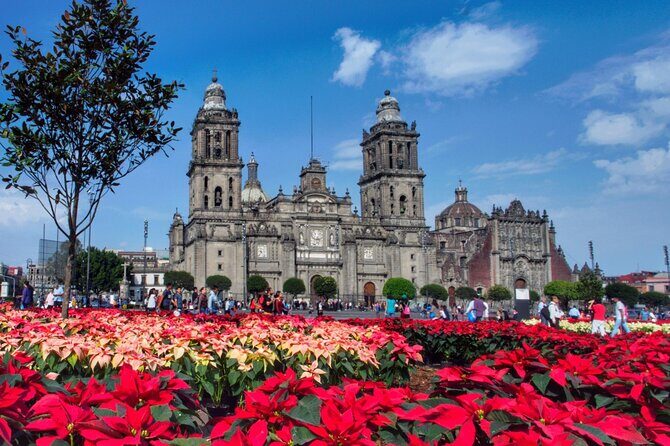
- Metropolitan Cathedral area: huge scale, real symbolism
- Temple Mayor ruins: the photo finish and lunch with a view
- Pacing and what to wear (so the tour feels like a win)
- Value check: does $49 really add up?
- Who should book this, and who should skip it
- Should you book the 10 Wonders Historic Center food and sweets tour?
- FAQ
- How long is the tour?
- What is the group size?
- Is the tour offered in English?
- What food is included?
- Are entry tickets included?
- Where does the tour start and end?
- Is private transportation included?
- Is free cancellation available?
- Is the tour near public transportation?
Key things that make this tour worth your time
- Small-group size (max 15) means you can ask questions and keep up with the guide’s explanations.
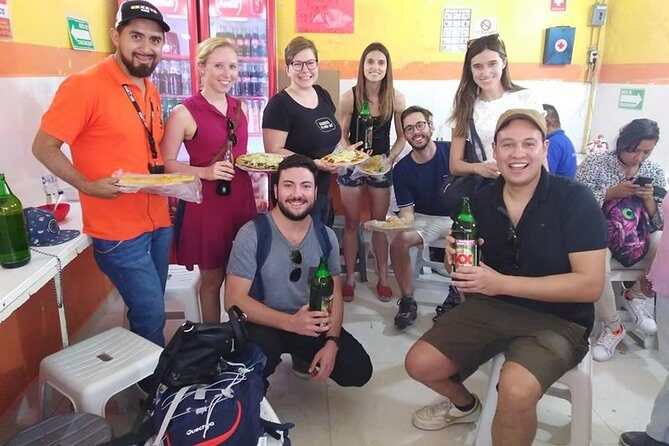
- Food is not an afterthought: bread tastings, Mexican sweets, and a quesadilla lunch are built into the route.
- Iconic stops in a short window: Alameda Central, Palace of Fine Arts, Postal Palace, Gran Hotel, cathedral area, and Temple Mayor ruins.
- Guides who tell stories show up again and again, including Rodrigo and Balaam in feedback.
- Photo-ready finale near Temple Mayor, with viewpoints designed for skyline-and-ruins photos.
Why the Historic Center feels doable in three hours
Mexico City’s Centro Histórico can feel like information overload. One minute you’re staring at a cathedral, and the next you’re trying to figure out where the ruins are hiding under the streets. This tour helps you by building a route that mixes major landmarks with short, useful explanations and then breaks the day with food.
At $49 per person, the value comes from what’s included: your guide, entry tickets, tastings, and an included lunch (a quesadilla). Since you’re also walking to multiple top sights, you’re not spending energy on figuring out transit or piecing tickets together yourself.
The group stays small, with a maximum of 15. That matters because it keeps the pace human, and it makes it easier for your guide to notice questions, small detours, or people who need a moment.
You can also read our reviews of more food & drink experiences in Mexico City



Start at Diego Rivera’s mural museum and get your bearings fast
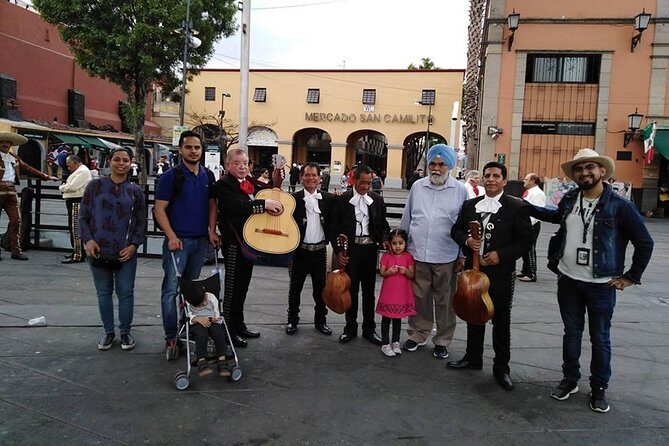
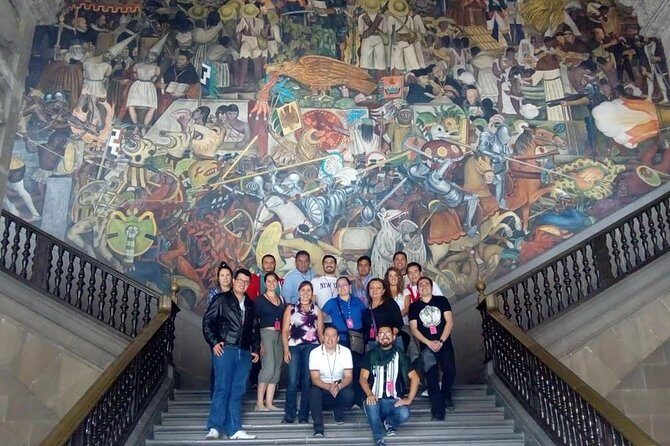
The tour begins at the Diego Rivera Mural Museum (Calle Colón Balderas s/n, Centro). Even if you only know Rivera’s name, this first stop works as a mental warm-up. It sets the tone for how Mexico City blends art, politics, and daily life into the same space.
You’ll look at the mural Dream of a Sunday Afternoon in the Alameda Central. That’s a helpful anchor because it connects the rest of your walk to the Alameda area and the idea of public space as a stage for culture. You also get a quick sense of how to read the city, not just see it.
Tip: give yourself a minute to slow down here. The best experience on this kind of tour comes when you let the guide’s stories land before you start moving again.
Alameda Central: an old park with a big-city pulse
Next is Alameda Central, the oldest park in the Americas. Parks are often just a pause button. Here, it’s a landmark with history baked in, right in the middle of the Centro chaos.
This stop is where the tour’s structure starts to click. You’re not only ticking off a site; you’re learning how this area has served as a gathering point for generations, and how the surrounding buildings relate to that.
If you’re the type who likes city context—why a place exists, not just what it looks like—this is a strong moment. It also breaks up the sightseeing rhythm so your legs aren’t just pounding pavement nonstop.
Palace of Fine Arts and Palacio Postal: two ways Mexico City loves architecture
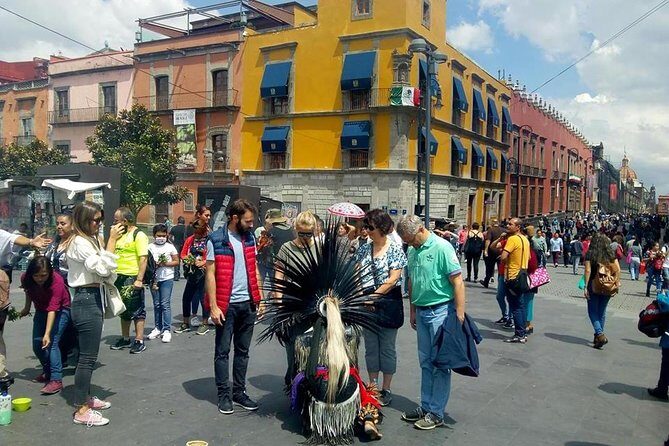
You’ll then head into some of the Centro’s most photogenic structures, including the Palace of Fine Arts and the Postal Palace.
These stops are great for two reasons:
1) They’re visually dramatic, so even a quick glance gives you a clear wow factor.
2) Your guide’s narration helps you connect the building style and design choices to the city’s identity.
For practical reasons, this part of the tour is also good for pacing. You get a few “look up, pause, breathe” moments where the walking doesn’t feel like a sprint.
If you’re visiting in a day when streets are crowded or blocked, your guide can also reroute to keep the sightseeing chunk intact. That flexibility is especially valuable in Mexico City, where plans can change quickly.
House of Tiles and the sweet spot: shopping-adjacent architecture and snack timing
One of the most memorable segments is the run that includes the House of Tiles and then the classic bakery stop at La Ideal.
The House of Tiles is one of those places that turns your brain on. You start noticing details—patterns, materials, surfaces—because the building practically invites you to look closely. It’s the kind of stop that makes your photos better later, because your eye gets trained on what matters.
Then comes the food payoff: La Ideal’s traditional bread. You’ll get tastes of items like conchas and other varieties, with a soft interior and crisp top textures. This is more than a random snack stop. It’s a chance to try an everyday Mexican staple in a place locals have trusted for a long time.
The biggest practical tip: don’t skip breakfast if you have a sensitive stomach. You’re going to be sampling fairly soon, and then you’ll finish with a proper quesadilla lunch later.
You can also read our reviews of more tours and experiences in Mexico City





Temple of Mexican sweets (and Dulceria de Celaya): where the route gets fun
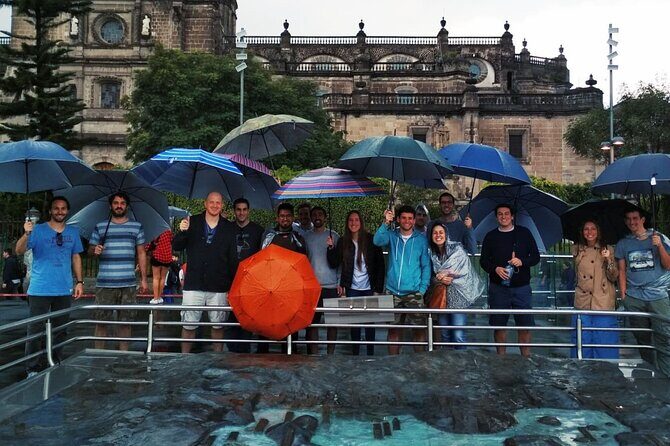
After you’ve had your bread moment, the tour shifts into sweets territory. Dulceria de Celaya is the sweet shop stop you’ll want to pay attention to, especially if you like Mexico’s candy culture.
This segment works because it keeps the tour from turning into a march of stone and history. You get flavors that feel seasonal and local, and your guide can explain what you’re seeing and eating while you’re still in the neighborhood vibe.
Also, sweets are a smart travel tactic in a city like Mexico City: they give you quick energy without slowing the group down.
Gran Hotel’s stained glass and the art-hotel vibe
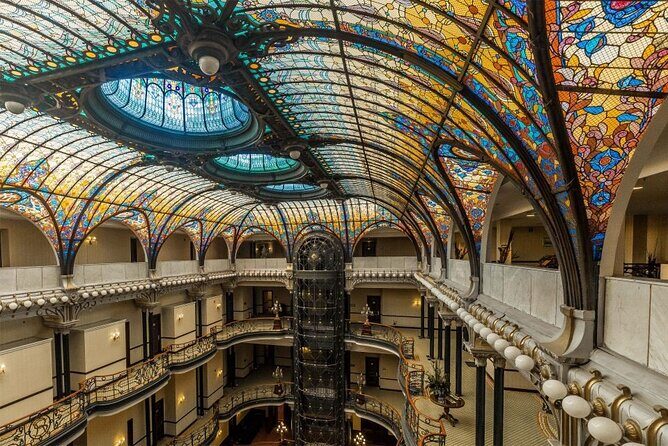
Gran Hotel Ciudad de México (with the Tiffany stained glass ceiling) is one of the stops that brings a different mood. Instead of ruins or street-level life, you get this elegant, grand interior energy.
It’s a useful contrast in the route. After cathedral-scale and monument-scale sights, a luxury hotel interior feels like a reset. It also helps you understand how the Centro isn’t just old—it’s layered. Different eras left different kinds of landmarks.
If you’re a detail person, look for reflections and light patterns around the stained glass. If your time inside is limited due to access rules that day, you can still get the main visual impact from the surrounding viewing areas.
Metropolitan Cathedral area: huge scale, real symbolism
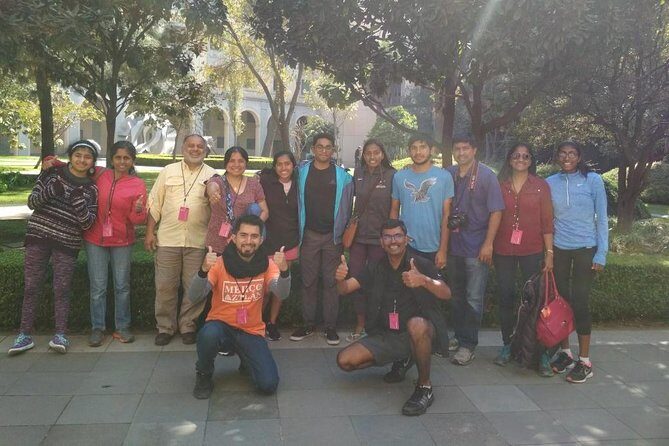
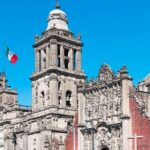
The tour also includes the Metropolitan Cathedral of Mexico City area—one of the largest in Latin America. This is a stop where you quickly feel scale. Even if you’ve seen famous cathedrals elsewhere, Mexico City’s cathedral hits a different register because it sits in the center of a neighborhood that’s constantly alive.
This part of the tour can be a little crowded depending on the day. If the streets are busy, your guide’s job is to keep the group moving while still giving you time to absorb the key points.
A good mindset here: don’t rush your first look. Spend 30 seconds just taking in the façade and the surrounding plaza energy, then let the guide fill in the what and why.
Temple Mayor ruins: the photo finish and lunch with a view
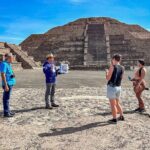
The finale is the Temple Mayor ruins area. This is one of the most satisfying endings because it’s literally about what’s under your feet.
You’ll get a narration about the Aztec remains beneath the current streets, plus traditional Mexican food with a panoramic view that’s perfect for photos. This is a smart way to end a short tour: it ties architecture back to archaeology and makes the whole route feel connected.
Lunch is included as a quesadilla: a soft corn or blue corn tortilla, lightly toasted, folded, filled with melted cheese, huitlacoche (Mexican corn truffle), crispy pork or meat, and finished with red or green salsa.
Practical note: this is usually the time you should pay attention to ingredients. Huitlacoche has a distinct flavor, and you’ll want to know what you’re eating so you can decide if you love it or just admire it from afar.
If you’re the type who likes taking photos, plan to linger slightly after your lunch. The view is part of why the ending works so well.
Pacing and what to wear (so the tour feels like a win)
This tour is about tight efficiency, not slow wandering. Most people can participate, but the route is still walking-heavy.
My advice:
- Wear comfy shoes. Even with rerouting, you’ll be on your feet a lot.
- Bring a water bottle if you tend to get thirsty quickly.
- If there’s rain, you’ll still likely keep moving, so a light layer or umbrella helps.
In feedback tied to real days in the city, the itinerary can adjust if demonstrations block streets or if weather changes. Your guide should keep you on track for the highlights, even if the order or some access points shift.
Value check: does $49 really add up?
Here’s how this price makes sense for a first-time Centro day:
Included value:
- Guide
- Entry tickets for the featured stops
- Tastings (including bread at La Ideal)
- Mexican sweets stop
- Lunch: quesadilla with specified fillings
- Fees and taxes covered
Not included:
- Private transportation
If you tried to do this on your own, you’d likely spend time juggling transit, ticket windows, and figuring out where to eat without missing key sights. For many people, the guide and included admissions are what make the day worth it.
The small-group size also matters. With max 15, you can ask for context without feeling like you’re shouting over a crowd.
Who should book this, and who should skip it
This tour is a strong fit if:
- You want a fast orientation to Centro Histórico
- You like architecture plus food stops that feel local, not touristy
- You prefer a small group and a guide who tells stories clearly
- You’re visiting for a short time and want the “big stuff” covered
You might want to skip or pair it with a different plan if:
- You hate walking or have mobility limits (the tour is mostly on foot)
- You want a slow, museum-by-museum day with long indoor stays
- You already have a full day of food plans and don’t want another scheduled meal
Should you book the 10 Wonders Historic Center food and sweets tour?
Yes, if you want a smart first trip day. This is one of the easiest ways to get the Centro’s main landmarks into your head, while also tasting bread, sweets, and an included quesadilla lunch without adding extra research work.
I’d book it early in your trip. Not because you’ll be perfect on day one, but because the landmarks make later exploration easier. The guide’s route gives you a mental map you can use when you go back on your own.
If you can handle walking and enjoy food as part of sightseeing, this tour is an efficient, genuinely fun way to start Mexico City right.
FAQ
How long is the tour?
It runs for about 3 hours.
What is the group size?
The maximum group size is 15 people.
Is the tour offered in English?
Yes, it is offered in English.
What food is included?
You get tastings, plus lunch. Lunch is a quesadilla with a corn or blue corn tortilla and fillings including cheese, huitlacoche, and crispy pork or meat, finished with red or green salsa.
Are entry tickets included?
Yes. Entry tickets are included in the tour price.
Where does the tour start and end?
It starts at the Diego Rivera Mural Museum (Calle Colón Balderas s/n, Colonia Centro, Centro, Cuauhtémoc, 06040 Ciudad de México, CDMX, Mexico). The activity ends back at the meeting point.
Is private transportation included?
No, private transportation is not included.
Is free cancellation available?
Yes. You can cancel up to 24 hours in advance for a full refund.
Is the tour near public transportation?
Yes, it is near public transportation.