REVIEW · MEXICO CITY
Tour Museum of Anthropology a trip to the past-Small groups
Book on Viator →Operated by Educando con Cultura · Bookable on Viator
The museum feels too big at first. This small-group, English tour uses VIP access and smart pacing so you actually understand what you’re seeing at Mexico City’s National Museum of Anthropology. You’ll focus on standout objects, plus multimedia moments about ancient life and how artifacts are restored.
I especially love the guided storytelling from guides like Jorge and Delta, because they connect artifacts to each other instead of treating them like disconnected displays. One possible drawback: 3 hours is only a highlights tour, so you’ll likely want extra time to wander afterward if you’re a slower reader.
In This Review
- Key Points at a Glance
- A 3-Hour, Small-Group Way Into the National Museum of Anthropology
- VIP Timing at the Museum (and Why It Changes Everything)
- Stop One: Museo Nacional de Antropología, Built Around the Objects That Matter
- The Sun Stone and the “why” behind the symbolism
- Pakal Sarcophagus, placed in a larger story
- How the Guide Turns Spanish-Plenty Labels Into Clear English Understanding
- VIP-Style Viewing Plus Expert Storytelling: What You’ll Actually Experience
- Interactive Multimedia and Restoration Work: Why That Part Matters
- Timing, Duration, and the Reality of Seeing Highlights Only
- Who This Tour Fits Best (and Who Might Skip It)
- Price and Value: Is $98.57 Worth It?
- Practical Game Plan After the Tour
- Should You Book This National Museum of Anthropology Tour?
- FAQ
- How long is the Museum of Anthropology tour?
- What does the price include?
- Is the tour offered in English?
- Is it a small group?
- Where do I meet the guide?
- Can I get a full refund if I cancel?
Key Points at a Glance
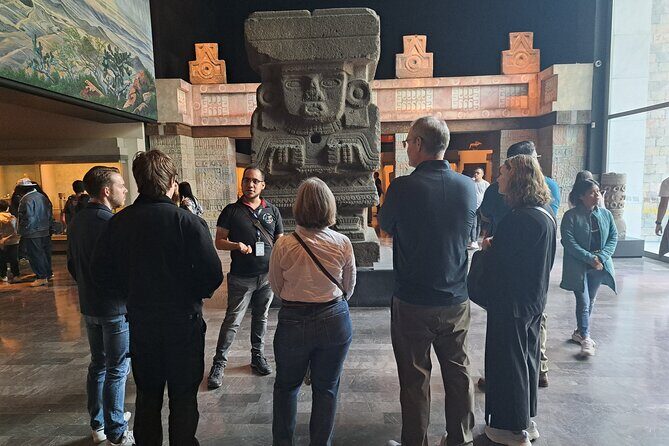
- Small groups (max 15) keep questions flowing and help you move faster without feeling rushed
- VIP-style timing helps you avoid the worst of the crowd crunch in a huge museum
- Iconic targets like the Sun Stone and Pakal Sarcophagus come with the symbols and context that make them click
- English support plus audio help (including an earpiece in practice) helps when labels are mostly in Spanish
- Interactive media and restoration context give you more than just “what is this” answers
- Three hours means partial coverage—you’ll see highlights, not the full collection
A 3-Hour, Small-Group Way Into the National Museum of Anthropology
The National Museum of Anthropology is one of those places where your first instinct is to say, That’s too much. The building is enormous, the galleries are dense, and a lot of the interpretation is in Spanish. This tour fixes that with a 3-hour route built for comprehension, not just walking.
The price—$98.57 per person—also makes sense when you notice what’s included: admission ticket + guide. For many visitors, the real cost isn’t money, it’s time and confusion. A guided plan helps you spend your limited sightseeing hours on the objects that do the most work for understanding ancient Mesoamerica.
This is also a small-group experience, capped at 15 people. That matters. In a museum this large, big groups can turn into a moving slideshow. Here, you get more of the back-and-forth that turns symbols into meaning.
You can also read our reviews of more museum experiences in Mexico City

VIP Timing at the Museum (and Why It Changes Everything)
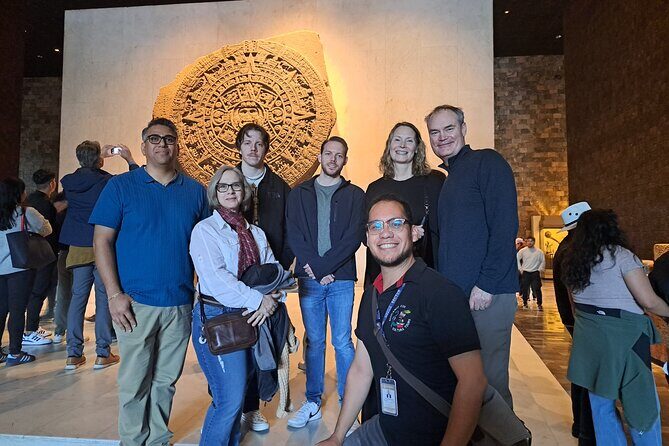
A major selling point is VIP access and special timing designed to keep you away from the biggest crowds. In a museum with heavy foot traffic, crowds aren’t just annoying—they block your view, slow your progress, and make people skim the labels. If you want to actually look at stone, pottery, and carved details, you need breathing room.
You’ll also get a guided flow that prevents the “where do I go first?” spiral. Instead of spending 30 minutes figuring out your route, you start moving with a plan. That’s especially useful here because the museum is big enough that you can easily lose an hour just finding your next must-see.
The meeting point is at the Museo Nacional de Antropología on Av. P.º de la Reforma s/n in Polanco, near the Bosque de Chapultepec. It’s convenient if you’re already in that part of Mexico City, and it’s near public transportation. The tour ends back at the meeting point, so you’re not left trying to navigate the museum exit on your own.
Stop One: Museo Nacional de Antropología, Built Around the Objects That Matter
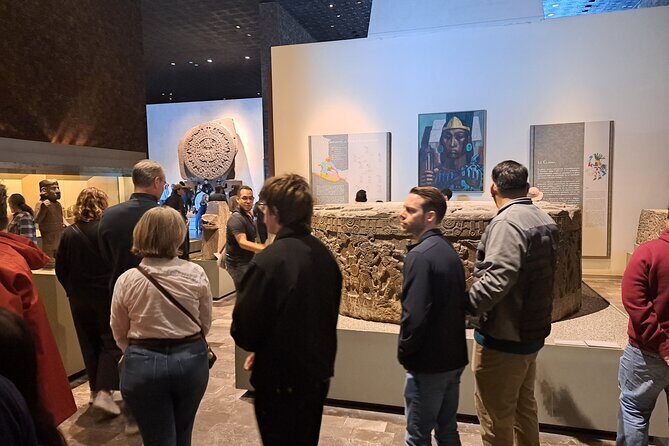
This tour is basically one long, focused visit at the museum—so everything is concentrated into that 3-hour slot. Stop one is where the tour earns its keep, because the guide isn’t just listing what’s on the wall. They’re choosing which pieces to explain first, and which connections to build as you move from room to room.
The Sun Stone and the “why” behind the symbolism
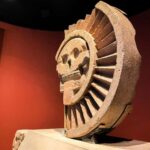
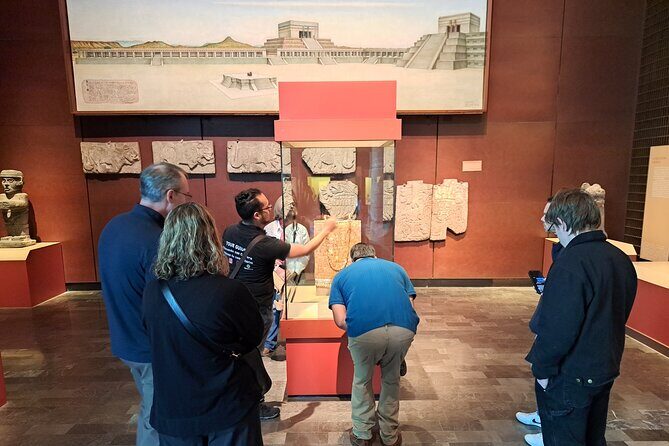
The itinerary specifically calls out the Sun Stone as one of the icons you’ll get to admire. But the real value is what the guide helps you do with it: understand symbolism, not just notice the artwork. A good guide will help you see how images, patterns, and placement can reflect beliefs, power, and timekeeping.
If you’ve only ever seen photos online, this is where it changes shape in your mind. Up close, details become clearer, and the explanation gives you a reason to care about what you’re looking at.
Pakal Sarcophagus, placed in a larger story
The tour also highlights the Pakal Sarcophagus. Again, the object itself is the draw, but the context is the payoff. When someone connects who ruled, what was believed, and what the imagery likely meant, you stop treating the sarcophagus like a museum trophy and start treating it like an artifact of political and spiritual messaging.
One of the best things you can do as a visitor is to look for patterns across galleries. This tour nudges you to do that—so you leave with mental links, not just snapshots.




How the Guide Turns Spanish-Plenty Labels Into Clear English Understanding
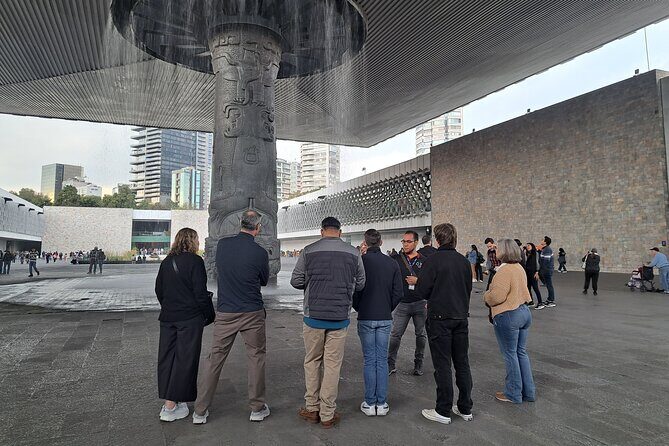
Here’s the honest reality: the museum is huge, and much of the interpretation is in Spanish. Even if you can read some of it, you may miss half the meaning. This tour is offered in English, and the guidance is meant to make the museum understandable without requiring Spanish fluency.
In practice, the guide approach goes beyond translating. It’s about interpretation—pointing out what to notice, giving a timeline that connects regions and cultures, and explaining why some objects look the way they do.
You’ll also benefit from interactive habits that keep you awake and engaged. Some guides use a quick “name what you see” style moment early on—then you circle back at the end. It’s a simple strategy, but it works because it turns symbols from background decoration into something you can recognize.
And yes, audio help is part of the setup. You may receive an earpiece so you can hear the guide clearly while you’re standing close to exhibits. That’s a small detail, but it can be the difference between catching the explanation or losing it to museum noise.
VIP-Style Viewing Plus Expert Storytelling: What You’ll Actually Experience
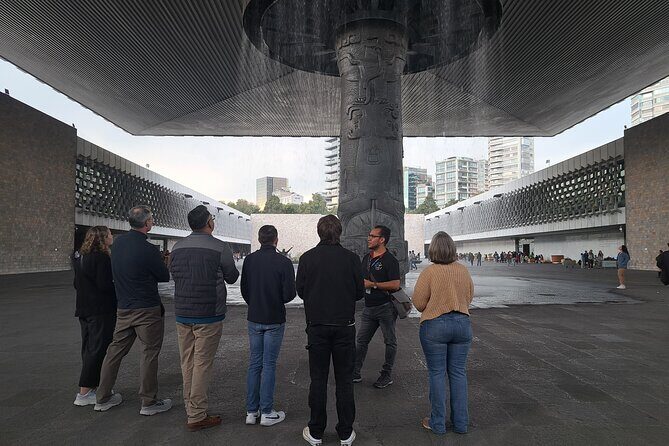
This tour is built around stories, legends, and anecdotes—while still grounding you in the archaeology that supports the interpretation. The guide uses the museum’s layout like a classroom, and you’ll notice the difference if you’ve ever wandered in a museum and felt like you were collecting facts without meaning.
A few things that tend to show up in the best-guided tours here:
- Context first, then objects so the pieces don’t feel random
- Connections across timelines so Teotihuacan-era and later traditions don’t blur together
- Questions that test your own assumptions before the guide fills in the blanks
The guide is also likely to use big-picture maps and charts to show how regions and time periods relate. That’s useful because the museum includes multiple cultural areas, and your brain needs those landmarks to avoid feeling lost.
Interactive Multimedia and Restoration Work: Why That Part Matters
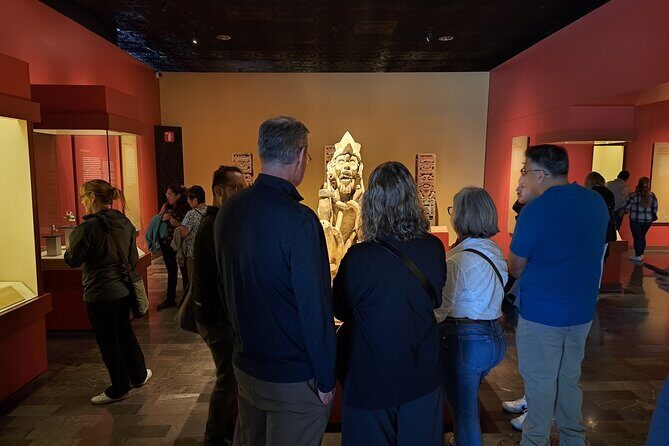
The tour description mentions interactive experiences through multimedia resources, including a look at ancient rituals. It also points to the work behind restoration—how objects are preserved and studied so they survive long enough for you to see them.
This is more than “extra information.” It changes how you interpret what you see. When you understand how artifacts get restored and how museums handle fragile pieces, you start noticing things you might otherwise ignore—materials, wear, tool marks, and display choices.
The multimedia pieces (when you encounter them on the route) also give a bridge between what you see in stone or clay and what people may have experienced in real life. Even if you’re not a “media person,” it helps you anchor the physical objects to human activity.
Timing, Duration, and the Reality of Seeing Highlights Only
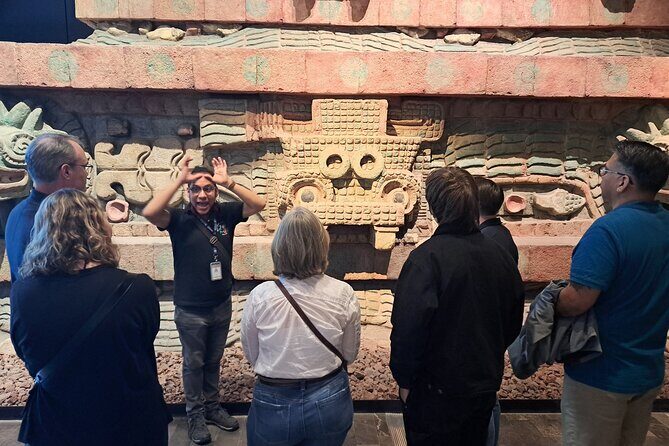
This tour runs about 3 hours. That’s a sweet spot for first-timers who want the museum’s essentials without spending a full day inside.
But here’s the key consideration: you won’t see most of the museum collection in a 3-hour highlights route. The museum is simply too large for that. In fact, you should plan that most of your time will be spent on the best-known pieces plus a few supporting rooms that help the story make sense.
If you love reading labels, you may feel a little itch to slow down after the tour. The good news is you’ll likely return with a clearer sense of what to look for when you do your own wandering.
Also think about timing with museum hours. If you pick a later time slot, you might have less daylight for a return visit on the same day. If you’re staying in Mexico City for more than one day, it’s smart to treat this tour as the “orientation pass,” then plan a slower self-guided visit later.
Who This Tour Fits Best (and Who Might Skip It)
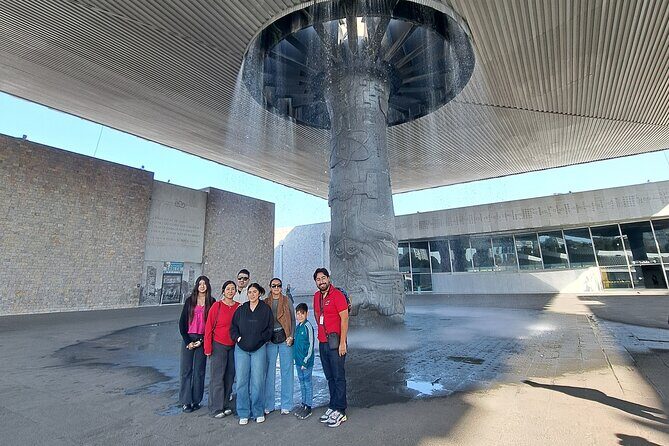
This tour is a strong fit if you want structure. It’s especially helpful if you don’t read Spanish comfortably, because the museum’s signage isn’t built for English-only visitors.
It’s also a good option for:
- Couples who want shared context, not just separate sightseeing
- Solo visitors who don’t want to guess their route
- Families with teens who can handle a guided pace for a few hours
- Anyone who feels overwhelmed by big museums
On the other hand, if you’re the type who loves long, slow gallery time and you already know the museum well, you might prefer self-guided browsing. But even then, a guide can help you choose which rooms are worth your limited energy.
Price and Value: Is $98.57 Worth It?
Let’s talk straight value. At $98.57 per person for about 3 hours, you’re paying for three things: admission, a guide, and a planned route. Admission alone in many museums isn’t cheap, and the guide portion is what turns the building into an actual story.
The museum is huge, and much of the text is in Spanish. That means self-guiding can cost you time and attention. If you spend an hour figuring out where to go and another hour rereading labels you can’t fully parse, your “free” independence starts to feel expensive.
So the real question isn’t, Is the price low. It’s: will you use your time well. If you want a museum you can understand quickly, this tour is priced like a smart time-saver.
You should also consider that group size is capped at 15. That helps you feel like you’re part of a real group experience rather than a large mass event.
Practical Game Plan After the Tour
When you finish the tour, you’ll have two useful advantages: you’ll know where you are in the museum, and you’ll understand what symbols and artifacts are trying to communicate. Use that.
Here’s how I’d handle your next steps:
- Return to 1–2 objects you now understand and look again. That second look is where meaning locks in.
- Avoid trying to do everything. Pick the areas most connected to the story you just learned.
- Bring your questions. If something still confuses you, you’ll know what kind of explanation you’re looking for.
If you’re hoping to read every label cover to cover, give yourself more time than the tour provides. If you’re more interested in the big ideas and the most important artifacts, 3 hours is a well-used chunk of your day.
Should You Book This National Museum of Anthropology Tour?
If you want a guided, English-friendly way to tackle one of Mexico City’s biggest museums, I think this tour is a very solid choice. The small group size, the VIP-style timing, and the focus on iconic pieces like the Sun Stone and Pakal Sarcophagus make it easier to understand what you see.
Book it especially if you’re not fluent in Spanish and you hate feeling like you’re just walking past stone without getting the story. It’s also ideal if you have limited time and want a plan that doesn’t waste hours.
Skip it if you’re committed to a slow, full-day browse and you’re comfortable navigating the museum on your own with minimal guidance. In that case, you might prefer self-guided time.
FAQ
How long is the Museum of Anthropology tour?
The tour is about 3 hours.
What does the price include?
It includes tickets and a guide. Tips and lunch are not included.
Is the tour offered in English?
Yes, it’s offered in English.
Is it a small group?
Yes. The maximum group size is 15 travelers.
Where do I meet the guide?
You meet at Museo Nacional de Antropología, Av. P.º de la Reforma s/n, Polanco, Bosque de Chapultepec I Secc, Miguel Hidalgo, 11560 Ciudad de México, CDMX, Mexico. The tour ends back at the meeting point.
Can I get a full refund if I cancel?
Yes. You can cancel up to 24 hours in advance for a full refund.