REVIEW · MEXICO CITY
Soumaya Museum: the Master of Mexican and Western Art
Book on Viator →Operated by GM International Travel · Bookable on Viator
Six floors, one guided art story.
That is what makes this Soumaya Museum tour such a smart way to see a lot without feeling overwhelmed. You’ll move through themed stops that map the collection from modern experiments to older European influences, then into Mexican art and the celebrated Rodin focus.
What I love most is the way the guide turns a museum that can feel endless into a clear narrative. I also liked how the big-name works people hope for—da Vinci, Rodin, Rivera, Dali, and Monet—fit naturally into the bigger picture, not just as random trophies on walls.
One thing to consider: this is a tightly guided, 2.5-hour style visit with no food included. If you’re hungry, plan a meal before or after, and be ready for a structured pace.
In This Review
- Key points you’ll care about
- Why the Soumaya Museum guide feels like the fast route
- Six floors, one small group: what to expect in 2 hours 30 minutes
- Floor One: Modernity, ars and techné, and how art learned new tricks
- Floor Two: Myths and allegories, from the visible to the invisible
- Floor Three and Four: Old European and New Spain masters, then Romanticism to the avant-garde
- Floor Five: 20 centuries of art in Mexico, where you see change at speed
- Floor Six: Julián and Linda Slim and the Rodin era
- Value: $53.68 for a guided, multi-floor museum entry
- Who this tour suits best (and who should skip it)
- Should you book this Soumaya Museum tour?
- FAQ
- How long is the Soumaya Museum tour?
- What language is the tour offered in?
- How many people are in the group?
- Where does the tour start?
- Is the museum admission included?
- Is food or transportation included?
- What is the cancellation policy?
Key points you’ll care about
- Six themed floors that organize art history by ideas, not just dates
- A bilingual guide delivered in English for clear explanations
- Museum highlights paired with context, including da Vinci and Rodin
- Small group size (max 15) that keeps the tour from feeling rushed
- Mobile ticket and a free admission ticket included with the experience
Why the Soumaya Museum guide feels like the fast route

The Soumaya Museum can be a little intimidating at first glance—big collection, lots of art, and plenty of names you’ve only seen in books. This tour helps you make sense of it quickly by giving you a guided “why this matters” lens. That means you’re not just looking, you’re learning what to look for and what connects the pieces across centuries.
I especially like the tour’s focus on turning art into story. One moment is about how artists use craft and technology. Another moment is about symbolism and myths—what’s shown and what’s left unsaid. Then you land in Mexican art over 20 centuries, where you can see shifts in style and cultural ideas without needing to be a scholar first.
And if your dream is to stand close to major masterpieces, this helps you get there with context. The tour reviews specifically point to an emotional da Vinci moment, plus Rodin, Rivera, Dali, and Monet being part of the experience. That mix is great for both first-timers and people who thought they already knew the famous names.
You can also read our reviews of more museum experiences in Mexico City


Six floors, one small group: what to expect in 2 hours 30 minutes
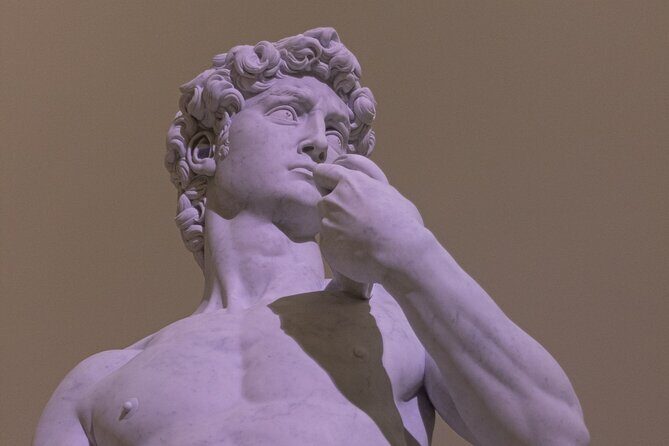
The visit runs about 2 hours 30 minutes and starts at the Museo Soumaya on Blvrd. Miguel de Cervantes Saavedra, Granada, Miguel Hidalgo, right in Mexico City. It ends back at the meeting point, so you’re not left figuring out how to reconnect your day.
This is a small-group format with a maximum of 15 people. That matters because it keeps the guide’s explanations from turning into a lecture you can’t follow. It also makes it easier to ask quick questions if something on a floor doesn’t make sense on the spot.
You’ll get a bilingual guide and the tour is offered in English. You’ll also receive a mobile ticket, and confirmation is sent at booking time. If you like having the details handled so you can focus on the art, that’s a nice touch.
As for pacing, plan on moving through the six floors as part of the guided experience. You won’t have unlimited wandering time, so it’s best if you’re open to a structured visit where the guide points out what to prioritize.
Floor One: Modernity, ars and techné, and how art learned new tricks
The tour begins by introducing the museum through its idea of Modernity: ars and techné. That framing is more useful than it sounds. Instead of treating modern art like a random collection of styles, you get a way to think about how artists experiment with technique and tools.
You can expect the guide to help you notice the mechanics behind the visuals. What materials and methods are doing the work? How does the artist’s approach change what you see? Even if you’re not sure what you’re looking at, the guide’s job is to give you a vocabulary—so you can connect craft to meaning.
This floor is a good entry point because it sets a theme for what comes next. Modern art often gets described as confusing. Here, you’ll learn how to read it as an evolution in thinking, not just an aesthetic jump.
Floor Two: Myths and allegories, from the visible to the invisible
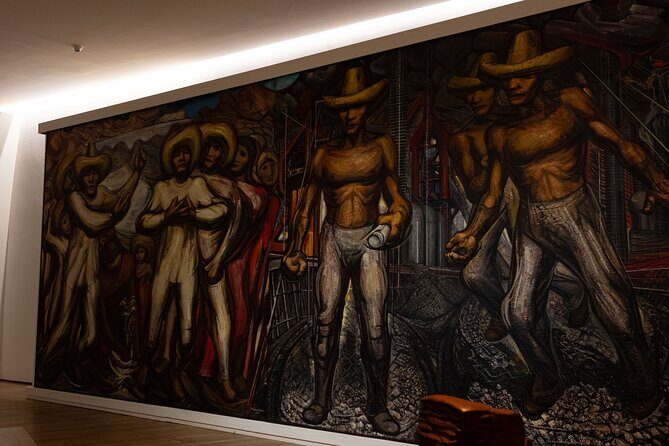
Next up is Myths and allegories: from the visible to the invisible. This is where the tour really earns its keep, especially if you’ve ever walked past symbolic art and thought, I know it means something, but I don’t know what.
Myths and allegories can look obvious on paper and frustrating in real life. The guide’s explanations help you bridge that gap by pointing out how artists turn stories into images. You’ll learn to look for clues: repeated elements, gestures, contrasts, and the overall logic of the composition.
This floor also works well for people who like art that feels like a puzzle. You’ll come away with a better sense of how meaning can hide in plain sight. And once you learn that approach here, you’ll start spotting it again as the tour moves into other periods and regions.
Floor Three and Four: Old European and New Spain masters, then Romanticism to the avant-garde
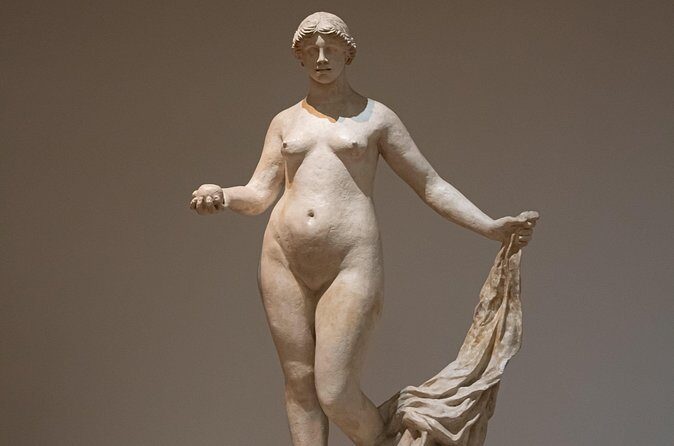
Then the tour expands the time and geography. You’ll spend time in Old European and New Spain Masters and then shift into From Romanticism to the Avant-garde.
These two rooms together are built for comparison. You’ll get help seeing how European traditions and local interpretations shaped what artists made—and how those styles traveled. The New Spain angle is key because it reminds you that art history doesn’t happen in one direction only. Ideas move, adapt, and get reshaped.
The Romanticism to Avant-garde segment is also a smart pairing because it shows transition rather than a hard break. Romanticism can be emotional and dramatic. Avant-garde work can feel like a refusal of rules. Put them close together and the evolution makes more sense.
If you’re chasing big names, this is typically where famous European artists and their influence start to click. The tour experiences you’ll read about include moments tied to the kind of masterpieces people come to see in major European collections—especially da Vinci—though the guide’s context is what makes it more than a checkbox.




Floor Five: 20 centuries of art in Mexico, where you see change at speed
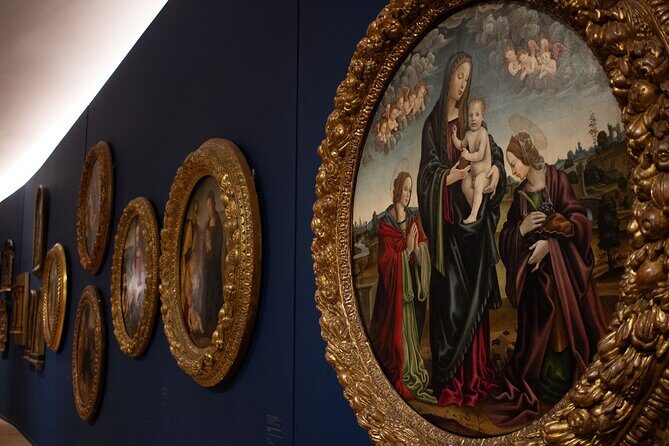
On Room 5: 20 centuries of art in Mexico, the tour focuses on how Mexican art develops across long stretches of time. This is the floor that helps you understand art as a living record of cultural and social shifts.
For me, what works here is the way the guide organizes the chaos. Twenty centuries can feel impossible to process. But when the explanation builds a framework—what changed, why it matters, and how different styles respond to their moment—it suddenly becomes doable.
You’ll also get a stronger sense of Mexican art as more than a set of famous paintings. Even if you only recognize a few names, the guide helps you place what you’re seeing into a timeline of evolving ideas. That makes the visit more rewarding because you’re learning to read the art, not just admire it.
Floor Six: Julián and Linda Slim and the Rodin era
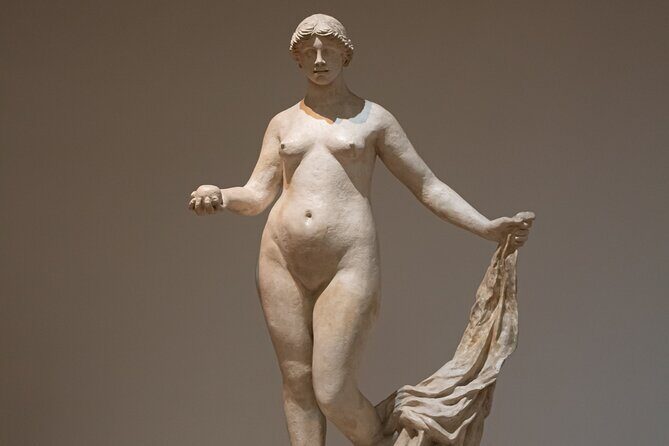
The final stop is Julián and Linda Slim. The Rodin era. This is where the tour’s famous-works energy peaks. The Rodin focus matters because the guide can connect sculpture to its wider cultural moment: how form communicates emotion, how realism can still feel expressive, and how major artists influence what comes after them.
The reason this floor lands so well is that it gives you a strong finish. You move from broad historical framing into a more focused collector-driven era. That helps you leave with a clearer memory of what you saw and what it meant.
And if you’re a fan of well-known art names, this is where the reviews’ highlights really make sense. Rodin shows up in the most glowing comments, and you’ll also hear mentions of other major artists linked to the collection, like Rivera and Monet. The guide’s job is to keep it all connected instead of letting it turn into a scatter of titles.
Value: $53.68 for a guided, multi-floor museum entry
At $53.68 per person, the key question is what you get for the money. Here, you’re paying for a guided walkthrough with a bilingual guide in English that covers six themed floors. You’re also getting an admission ticket free as part of the experience, so you’re not paying extra on top just to get into the museum.
Duration matters too. About 2 hours 30 minutes is enough time to see real sections of a large museum without turning your day into a full museum marathon. And with a group capped at 15, the guide can keep explanations clear rather than disappearing into a crowd.
One practical note: this tour doesn’t include food or transportation. That’s normal for museum tours, but it changes how you should plan your day. If you want a smooth experience, schedule the tour first or second in your museum block and eat somewhere nearby before you arrive or after you finish.
Also, it’s smart to book ahead. This experience is commonly reserved about 17 days in advance, so waiting until the last minute can reduce your choices.
Who this tour suits best (and who should skip it)

This tour is a strong fit if you want structure. If you like art but sometimes feel stuck when there are too many rooms and too little context, the guided floor-by-floor approach helps you move with confidence.
It’s also ideal if you’re chasing a few big names while still wanting meaning. You’ll get guided context around major artists people mention with excitement, while the themes keep you from seeing the collection as just fame.
Consider skipping this option if you prefer a slow, self-paced browse where you spend lots of time lingering on a single work without moving on. This visit is designed to cover the museum’s major themes in one session, so it won’t feel like open-ended wandering.
Should you book this Soumaya Museum tour?
Yes—if your goal is to understand what you’re seeing fast, this is a solid choice. The biggest strength is how the guide connects floors with ideas, so you leave with a memory of themes, not just a list of artists. The tour also has a small-group setup, and the bilingual guide plus English delivery makes it easier to follow along.
I’d book it especially if you want to experience big masterpieces like da Vinci and Rodin as part of a guided story, not as isolated stops. Just plan for a snack or meal outside the tour since food isn’t included, and give yourself time to enjoy the museum before or after so you’re not rushing your whole day.
FAQ
How long is the Soumaya Museum tour?
It’s about 2 hours 30 minutes (approx.).
What language is the tour offered in?
The experience is offered in English, and you’ll have a bilingual guide.
How many people are in the group?
This activity has a maximum of 15 travelers.
Where does the tour start?
The tour starts at Museo Soumaya, Blvd. Miguel de Cervantes Saavedra, Granada, Miguel Hidalgo, 11529 Ciudad de México, CDMX, Mexico.
Is the museum admission included?
The admission ticket is listed as free as part of the experience.
Is food or transportation included?
No. Food and transportation are not included.
What is the cancellation policy?
You can cancel for a full refund up to 24 hours before the experience starts. If you cancel less than 24 hours before, the amount you paid won’t be refunded.