REVIEW · MEXICO CITY
Private Tour with Archaeologist and VR Experience at Teotihuacan
Book on Viator →Operated by Un Joven Arqueólogo Tours · Bookable on Viator
Teotihuacan snaps into focus with VR and an archaeologist. You start at the gates and walk the main ceremonial routes, but you do it with context: why people built the place, what the offerings may have meant, and how the landscape shaped what you see today. This is a private tour, so your questions don’t get shuffled to the next group.
My favorite parts were twofold. First, I love that the route includes the residential areas and the mural-painted spaces most people miss, not just the big pyramids. Second, guide David blends maps and photos with VR goggles so you can picture how buildings and color would have looked in earlier times.
One possible drawback: at $120 per person, it’s a splurge versus a standard ticket-and-walk day, and you’ll be doing several hours of outdoor walking with a moderate fitness level.
In This Review
- Key highlights you should care about
- Why a private Teotihuacan tour beats DIY
- Meeting at La Ciudadela: get your bearings fast
- Calzada de los Muertos: the route that explains the city
- La Ciudadela and the Feathered Serpent pyramid
- Residential zones and mural paintings: where Teotihuacan feels human
- Sun and Moon pyramids: environment, offerings, and theories
- VR and artifacts: how the tech fits the archaeology
- How long it takes, and how the pace feels
- Price and value: what $120 really buys
- Practical tips before you go
- Who this tour suits best
- Should you book this Teotihuacan archaeologist plus VR tour?
- FAQ
- How long is the private Teotihuacan tour?
- What language is the tour offered in?
- Is this tour private or shared?
- Where does the tour start and where does it end?
- What’s included in the $120 price?
- What is not included?
- Does the tour include VR?
- Are there any physical requirements?
- Is there a cancellation refund available?
Key highlights you should care about
- Private, archaeologist-led walking tour through Teotihuacan’s major zones
- VR experience on-site to visualize changes over time
- Access to residential areas and mural-painted spaces that most visitors never reach
- Artifacts and explanatory materials to make the explanations stick
- A kid-friendly pace that can handle lots of questions without rushing anyone
Why a private Teotihuacan tour beats DIY
Teotihuacan is one of those places where the names are easy, but the meaning isn’t. Yes, you can walk among pyramids on your own. But you’ll likely spend a lot of time asking silent questions like: Who lived here, and why is that layout so particular?
That’s where a private archaeologist guide pays off. You’re not just collecting photos. You’re getting a guided story that connects architecture, daily life, and the ideas behind offerings and rituals. Even better, the VR portion turns your mental model from fuzzy to specific. Instead of trying to imagine ancient buildings from bare stone, you can see reconstructions and changes in a way that’s easier to remember later.
This tour also leans into what makes Teotihuacan feel real: the people. The route doesn’t stop at monuments. It moves into areas that help you picture everyday life—streets, layout, and mural painting—so the site feels less like a theme park and more like a living city.
You can also read our reviews of more private tours in Mexico City


Meeting at La Ciudadela: get your bearings fast
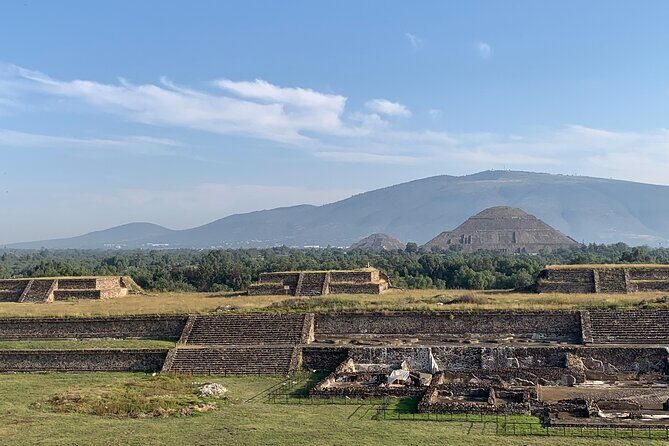
The tour starts at La Ciudadela, at the access to Calzada de los Muertos via Gate 1. That matters because the first minutes set your orientation for everything that follows. You’ll get a site overview right after entering, which helps you understand what you’re about to see before you’re staring at stone and guessing.
From there, the plan is to begin with the Calzada de los Muertos, the main ancient avenue that served as a key connection through the city. A smart first step is learning which structures are on the “main line” of the story and which are supporting characters—because Teotihuacan is large, and even within a single tour you’ll be moving between different kinds of spaces.
You’re also in private mode from the start, meaning the pacing can adjust to your interests. If you’re the type who loves structure and layouts, you’ll get plenty of focus. If you’re more into symbolism, you’ll hear plenty about offerings and meaning. Either way, you should feel like the day is organized around understanding, not just checking boxes.
Calzada de los Muertos: the route that explains the city
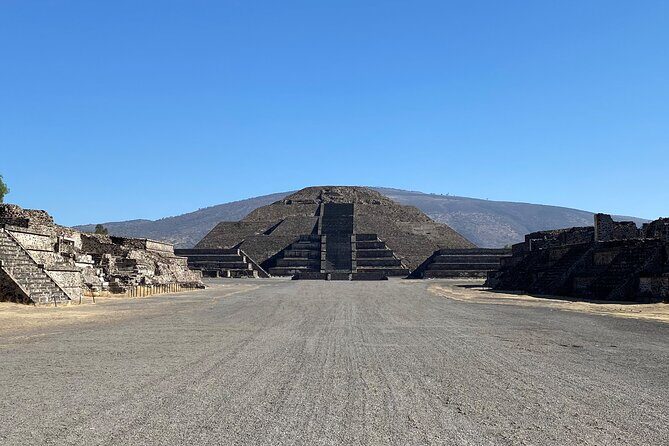
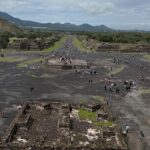
Calzada de los Muertos is the spine of Teotihuacan’s ceremonial landscape, and walking it with an archaeologist guide changes how it lands. On your own, the avenue is just a long straight walk. On this tour, it becomes a “why this space works” explanation.
You’ll hear about how this main access helped organize movement through the city and how major buildings connect to each other along this corridor. You’ll also likely get modern theories and current archaeological findings tied to what you’re seeing on the ground. That’s useful because Teotihuacan doesn’t come with neat labels saying exact dates and exact intentions. The guide’s job is to show how archaeologists reason from evidence.
One practical benefit: the introduction helps you interpret the rest of the day while you’re walking. That means fewer moments of standing still, squinting, and wondering what you’re looking at.
La Ciudadela and the Feathered Serpent pyramid
After getting your footing on the main avenue, you head into La Ciudadela. This is where you visit the pyramid known as the Templo de la Serpiente Emplumada, or Temple of the Feathered Serpent.
This stop is where symbolic architecture becomes more than a slogan. You’ll explore the pyramid and then move beyond it into surrounding areas tied to how the city was organized. The guide’s explanations are built to help you connect features you might otherwise treat as decoration to the larger story: who built what, why it mattered, and how theories about the site fit with archaeological evidence.
A big value here is the balance. It’s not only legends and it’s not only technical notes. You’re getting the “story behind the stone,” plus an explanation of what modern researchers think and why. That gives you something to remember after you’ve left the site and the details start slipping away.
Residential zones and mural paintings: where Teotihuacan feels human
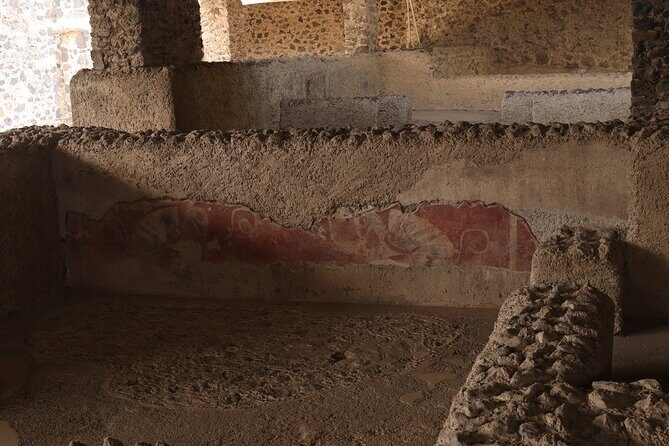
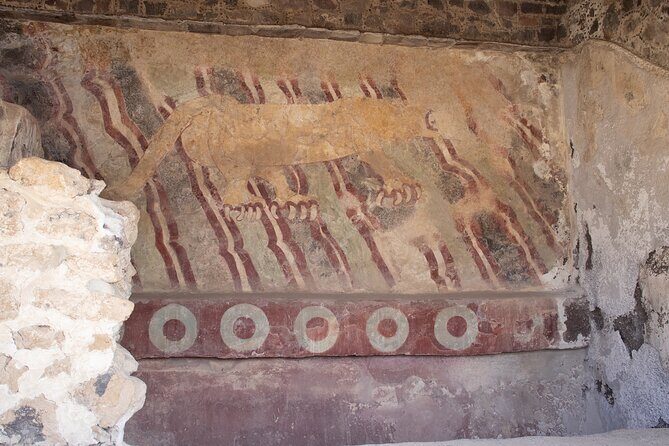
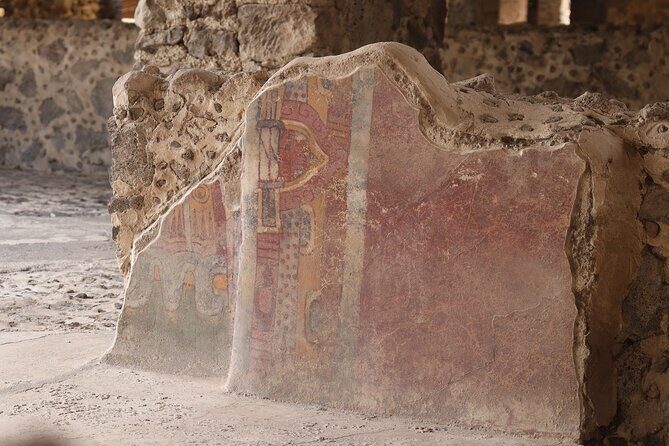
This tour is especially strong because it includes residential areas and mural-painted spaces. Many one-size-fits-all visits focus on the biggest pyramids and leave the rest as an afterthought. Here, you spend real time in parts of the site that help you picture everyday life.
You’ll observe architectural systems and see how structures were built to support living in a dense, organized city. You’ll also look at mural painting and discuss what it suggests about culture, identity, and possibly beliefs tied to ritual life.
This is the section where the tour usually clicks for people who think of Teotihuacan as only pyramids. The city becomes more than a landmark. It becomes a place where lots of people had routines, built homes, and worked within a shared architectural logic.
Guide David also uses tools that help you visualize what you’re seeing. Maps and photos get referenced to help you connect the physical layout with the archaeological interpretation. If you’re traveling with kids, this is also where a lot of the questions usually come alive—because there’s something human to look at, not just large monuments.



Sun and Moon pyramids: environment, offerings, and theories
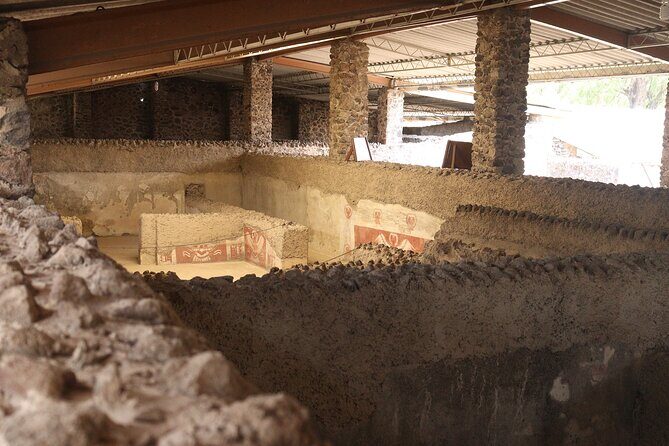
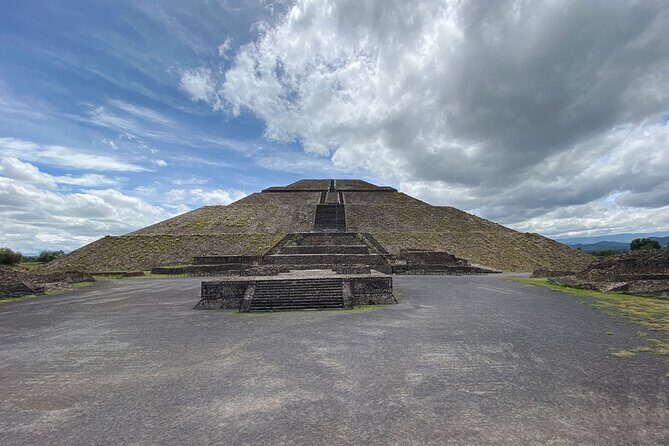
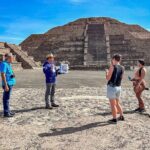
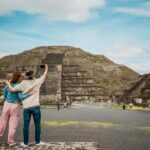
The final major stretch leads you to the pyramids of the Sun and Moon. These are the big names, but the tour approach keeps them from feeling generic. You won’t just hear a quick description and move on.
You’ll discuss modern theories about Teotihuacan and the kinds of archaeological findings that support researchers’ ideas. You’ll also hear meaning behind offerings—what they might signal, how offerings fit into ritual life, and how archaeologists interpret them.
One of the most interesting parts is the relationship between the environment and the ruins. Teotihuacan isn’t floating in space; the surrounding landscape influences how the city developed and how ruins sit in the environment today. That talk helps you see the site as a whole system rather than scattered monuments.
By the time you reach this area, you should feel like you’re reading the site instead of merely looking at it. And once you’ve got that mindset, the pyramids work better as a payoff rather than a stop you quickly photograph.
VR and artifacts: how the tech fits the archaeology
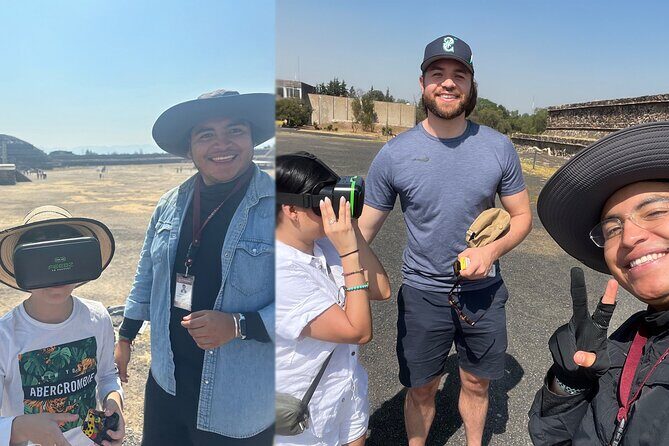
The VR portion is built into the tour, not tacked on at the end. You’ll use virtual reality to visualize changes over time, which is one of the smartest ways to make a site like Teotihuacan understandable. Stone lasts. Color and surfaces often don’t. VR helps bridge that gap.
The guide also shows you some artifacts from the past. Even when you’re outdoors surrounded by massive structures, seeing physical artifacts helps anchor the story. It keeps the explanations from turning into pure visuals or pure theory.
A practical plus: the VR helps you learn in a way that sticks. Instead of relying only on what you can guess from ruins, you get a tool for mental reconstruction. That makes it easier to remember details later, like how certain structures might have looked or how the city could have changed.
If you’re skeptical about VR, consider it like an extra pair of eyes. You’re not replacing the real site—you’re using the reconstructions to understand what the real site might have meant before time stripped it down.
How long it takes, and how the pace feels
The tour runs about 4 to 5 hours, and admission fees are included. That time window is long enough to do more than a quick circuit, but not so long that you’re exhausted before the VR and the meaningful parts of the explanation happen.
Your moderate physical fitness level matters here. Teotihuacan involves walking on uneven surfaces and moving between zones. The good news is that because it’s private, the guide can usually keep the pace aligned with your group’s needs.
Also note that the tour has a clear start and a separate exit point structure. It ends near the Pyramid of the Moon, with two different gates to exit. That’s a small detail, but it can save you stress if you’re trying to plan your next stop without wandering around looking for the “right way out.”
Price and value: what $120 really buys
At $120 per person, this tour is not the cheapest way to see Teotihuacan. But it’s also not just a “guided walk” with a headset and a checklist.
You’re paying for:
- a private archaeologist-led experience
- entrance fees included
- VR experience focused on changes over time
- explanatory educational materials
- artifacts shown during the tour
The value comes from how those pieces work together. Entrance fees get you in. The archaeologist makes the site understandable. The VR helps you visualize what ruins can’t show on their own. And the artifacts plus educational materials keep the lessons from evaporating the moment you step back outside.
In plain terms: you’re paying to reduce guesswork. For many people, that’s exactly what makes Teotihuacan worth it.
Practical tips before you go
Teotihuacan is an outdoor site, so plan like it’s outdoors all day. Wear comfortable shoes with grip and bring sun protection. If you’re sensitive to heat, aim to have a strategy for shade breaks, especially during midday hours.
This tour is offered in English, so if you’re traveling as a multilingual group, make sure everyone can follow along comfortably. The private format is great for questions, so don’t be shy about asking the guide why certain interpretations are proposed or what the evidence is based on.
If you want help getting there without the drive yourself, ask the provider about private hotel pick-up or transportation from Mexico City. Some experiences have included transportation options via the guide, which can be a major convenience for families or anyone who wants a smoother day.
Who this tour suits best
This is a strong fit if:
- you want a deeper explanation of Teotihuacan beyond big-photo stops
- you like interactive learning like VR reconstructions
- you value a guide who can adjust to lots of questions, including from kids
- you care about seeing parts of the site that go past the usual route
It may be less ideal if:
- you want a no-thinking, do-it-yourself day
- you’re on a tight budget and prefer only basic tickets
- you’re not comfortable with a moderate amount of walking
Should you book this Teotihuacan archaeologist plus VR tour?
Yes, if you’re the type who wants meaning, not just monuments. The combination of private archaeologist guidance, VR visualization of changes over time, and site coverage that includes residential areas makes this feel like a real learning day, not a quick sprint through ruins.
If you’re mainly after a low-cost, flexible day at Teotihuacan, then you can DIY it for less. But if you want your visit to click—so you understand why Teotihuacan looks the way it does—this is the kind of splurge that can feel justified.
FAQ
How long is the private Teotihuacan tour?
It runs about 4 to 5 hours.
What language is the tour offered in?
The tour is offered in English.
Is this tour private or shared?
It’s a private tour/activity, with only your group participating.
Where does the tour start and where does it end?
The tour starts at La Ciudadela, at the access to Calzada de los Muertos by Gate 1. It ends near the Pyramid of the Moon, with two different gates to exit.
What’s included in the $120 price?
Included are the private archaeologist tour, supporting educational materials, VR experience, explanatory artifacts, and entrance fees.
What is not included?
Breakfast and lunch are not included.
Does the tour include VR?
Yes. You’ll use virtual reality to visualize changes over time as part of the tour.
Are there any physical requirements?
Travelers should have a moderate physical fitness level.
Is there a cancellation refund available?
Yes. You can cancel for a full refund up to 24 hours in advance of the experience’s start time. If you cancel less than 24 hours before, the amount paid is not refunded.